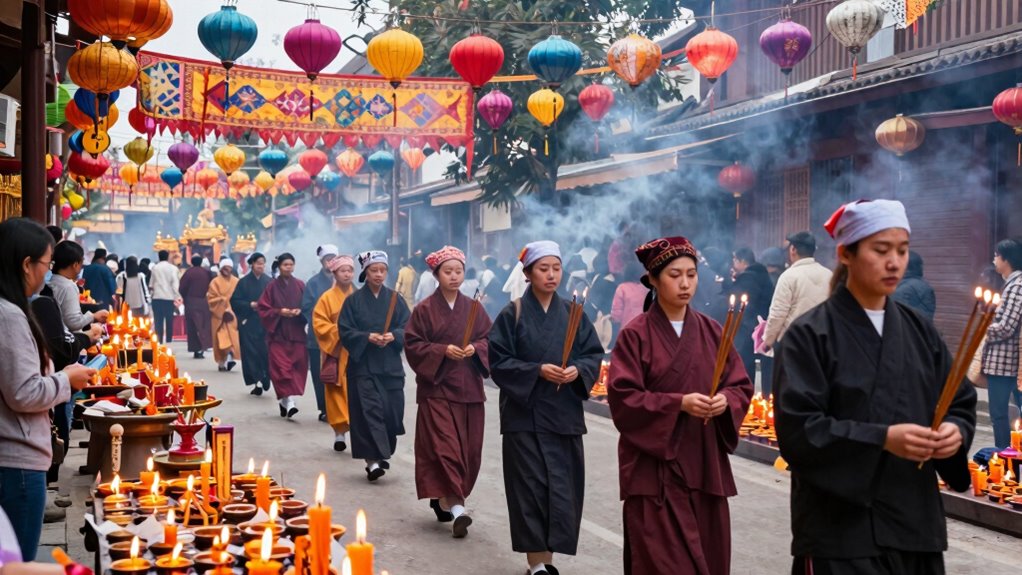

To observe religious festivals respectfully, understand the festival’s spiritual significance and follow community customs. Dress modestly and appropriately, maintain quiet and mindful behavior, and avoid disruptive actions. Respect sacred sites, rituals, and shared spaces by speaking softly and gaining permission before engaging. Stay attentive to traditions and behave with reverence, ensuring your actions honor the celebration’s meaning. If you want to learn how to participate thoughtfully, keep exploring these respectful practices.
Key Takeaways
- Dress modestly and appropriately, aligning with local customs and festival dress codes.
- Keep noise levels low and avoid disruptive behaviors during prayers and sacred rituals.
- Follow instructions, respect personal space, and observe rituals without interruptions.
- Refrain from touching or removing sacred symbols and speak softly in holy sites.
- Maintain a respectful attitude, showing reverence for traditions and environment throughout the celebration.
Why Understanding the Sacred Meaning of the Festival Matters

Why does understanding the sacred meaning of a festival matter? When you grasp its symbolic significance, you connect more deeply with its spiritual understanding. Festivals aren’t just celebrations; they embody core beliefs and values that shape your community’s identity. Recognizing the meaning behind rituals and traditions helps you appreciate their purpose and fosters respect. This knowledge of symbolism allows you to participate meaningfully rather than superficially, enriching your experience. By understanding the sacred aspects, you honor the festival’s spiritual roots and avoid misunderstandings or disrespect. It’s a way to engage authentically, appreciating the deeper message rather than just the outward festivities. Developing this cultural awareness nurtures your connection to faith and tradition, making your participation more thoughtful and respectful. Furthermore, appreciating the spiritual significance can enhance your overall understanding of religious practices and their role in community cohesion. Recognizing the importance of rituals and customs helps you to engage with respect and mindfulness during celebrations.
How to Dress and Behave Respectfully During Religious Festivals
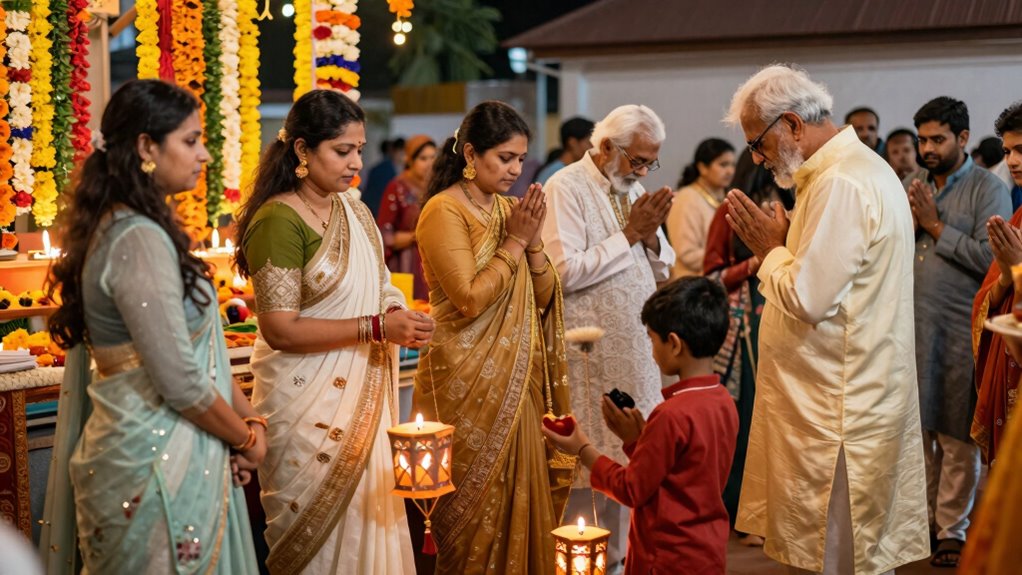
When attending religious festivals, you should choose clothing that shows respect, such as modest and traditional attire. Your behavior should follow local customs, avoiding loud or disruptive actions, and always showing kindness. Remember to interact thoughtfully, listening carefully and respecting others’ beliefs and practices. Additionally, being aware of cultural sensitivities can help you navigate the event smoothly and respectfully.
Respectful Clothing Choices
During religious festivals, dressing appropriately shows respect for the traditions and beliefs of the community. Wearing suitable attire demonstrates cultural sensitivity and helps you blend respectfully into the setting. Opt for modest, clean clothing that aligns with the festival’s customs. Avoid revealing or casual outfits that might offend local norms. To clarify, consider this table:
| Appropriate Attire | Cultural Sensitivity |
|---|---|
| Modest dresses or shirts | Respect traditional dress codes |
| Covered shoulders | Show respect for modesty |
| Avoid bright or provocative colors | Honor the festival’s tone |
| Clean, well-maintained clothes | Demonstrate respect |
| Traditional or local clothing | Embrace cultural norms |
Choosing respectful clothing fosters harmony and shows your genuine regard for the community’s beliefs. Being aware of cultural norms helps prevent unintended disrespect during such occasions, especially since some festivals have specific dress codes that are important to follow. Additionally, understanding local customs and traditions can enhance your experience and demonstrate your sincere appreciation for the community’s heritage. Engaging with community practices thoughtfully can further demonstrate your respect and foster positive interactions during these special events. Recognizing the importance of cultural sensitivity can also help you avoid misunderstandings and build meaningful connections with community members.
Appropriate Behavior Guidelines
How you behave during religious festivals reflects your respect for the community’s customs and beliefs. Maintaining appropriate attire shows your consideration and understanding of the event’s significance. Dress modestly and avoid revealing clothing that might offend cultural norms. Your respectful conduct includes refraining from loud or disruptive behavior, speaking softly, and being attentive to others’ space. Listen carefully, follow instructions, and avoid inappropriate gestures or comments. Remember, your behavior helps create a harmonious atmosphere and demonstrates genuine respect for the traditions being observed. Being mindful of your actions and attire ensures you honor the community’s values and contribute positively to the celebration. Additionally, understanding the Gold IRA markets can inform your investment choices, reflecting a respectful approach to financial planning. Recognizing potential scams and red flags in investments demonstrates your commitment to safeguarding your assets and respecting financial integrity. Consistent auditory feedback therapy techniques can also support better communication during social gatherings, helping you participate more comfortably and confidently. Being aware of cultural sensitivities during these events further enhances your respectful participation and helps foster mutual understanding among attendees. Remember, practicing cultural awareness can significantly improve your experience and interactions at these celebrations.
Mindful Interaction Etiquette
Practicing mindful interaction etiquette during religious festivals shows your respect for the community’s customs and traditions. Dress modestly, avoiding revealing or inappropriate clothing, and follow any specific dress codes. When engaging with others, maintain a mindful conversation by listening actively and speaking gently, showing genuine interest and respect. Use respectful gestures, like bowing or hands together in prayer, when appropriate, to demonstrate humility and reverence. Avoid loud or disruptive behavior, and be sensitive to local customs and traditions. Your respectful attitude fosters a welcoming environment and helps you connect meaningfully with others. Being aware of cultural sensitivities ensures that your participation remains considerate and appropriate. Additionally, understanding the significance of traditional rituals can deepen your appreciation and help you participate more meaningfully. Being informed about community practices allows you to engage more thoughtfully and respectfully, enriching your experience. Incorporating up-to-date recommendations can further enhance your respectful participation. Remember that observing water-related customs can also demonstrate your respect for the specific traditions associated with water in many religious celebrations.
Respecting Holy Places and Rituals
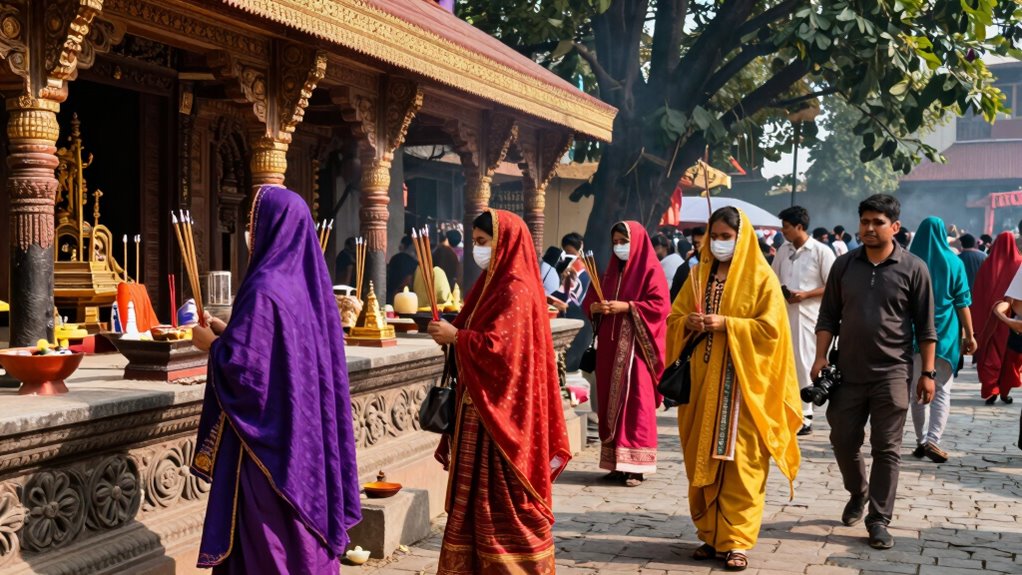
Respecting holy places and rituals is essential to showing reverence for the beliefs and traditions of others. You should understand that many sites hold deep ritual significance, making your respectful behavior crucial. When visiting sacred spaces, follow posted guidelines and listen to local customs. Avoid touching or removing sacred symbols, as they carry spiritual meaning, and never disrespect or trivialize rituals being performed. Dress modestly and speak softly to preserve the solemn atmosphere. Be aware that certain rituals may require specific behaviors or silence, so observe carefully before participating. To ensure safety and proper understanding, familiarize yourself with home charging practices and guidelines before visiting or engaging with the site. Additionally, understanding the navigation and mapping of these locations can help you move respectfully and avoid accidental disturbances. Incorporating cultural sensitivity into your visit demonstrates genuine respect and helps foster mutual understanding and appreciation. Your respectful attitude demonstrates appreciation and acknowledgment of the importance these places and rituals hold for others, fostering mutual understanding and honoring their spiritual significance.
Community Norms: What to Know Before Participating

When you visit a community for a religious festival or event, understanding its norms helps you participate respectfully. Many communities have specific traditions around festive foods, so observe how dishes are prepared, shared, and consumed. Avoid taking food without permission or disrupting the meal arrangements. Offering customs often involve giving gifts or donations; learn whether it’s appropriate to give and how to do so properly. Respect the order of offering and refrain from handling items that aren’t meant for you. Dress modestly and follow cues from locals about participation. Remember, these customs are essential to the community’s spiritual expression, so showing awareness and respect ensures you engage meaningfully without causing disruption or discomfort.
How to Engage Without Disrupting the Celebrations
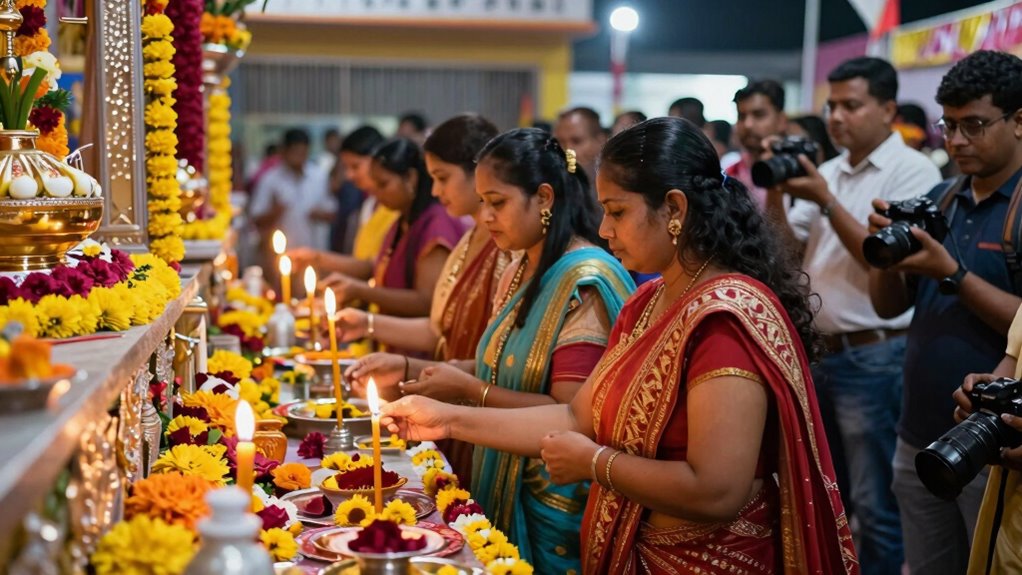
To respect the celebrations, make sure you honor cultural traditions and follow any guidelines provided. Keep your voice low and avoid unnecessary disruptions during quiet moments. Engage thoughtfully by observing respectfully and participating in ways that support the spirit of the event.
Respect Cultural Traditions
Engaging in cultural festivals requires sensitivity and awareness of local traditions. To truly respect these celebrations, understand their cultural significance and honor customs like wearing traditional attire when appropriate. This shows respect and helps you connect authentically with participants. Avoid interrupting rituals or taking photos during sacred moments unless permitted. Be mindful of gestures and language, ensuring you don’t offend local sensibilities. Showing genuine interest and asking polite questions can deepen your understanding without disrupting the flow of the event. Remember, respecting cultural traditions isn’t just about observation—it’s about participation with respect. Your mindful approach fosters appreciation and preserves the integrity of the celebration.
- Learn about the event’s cultural significance beforehand
- Wear traditional attire if encouraged
- Refrain from interrupting sacred rituals
- Ask respectful questions to deepen your understanding
Maintain Quiet Observance
Maintaining quiet during religious festivals shows respect for sacred moments and allows everyone to fully participate in the celebration. You can do this by observing silent prayer when appropriate, which demonstrates reverence and focus. Keep noise levels low, avoiding loud conversations or disruptions that might disturb others’ reflection or worship. Wearing appropriate attire also signals respect for the customs and traditions of the occasion. Dress modestly and neatly, aligning with the festival’s guidelines. Turning off your phone or keeping it silent helps prevent accidental noise. Remember, your quiet presence can enhance the spiritual atmosphere and ensure that everyone feels included in the reverence of the event. By being mindful of your noise level and attire, you contribute positively without disrupting the sacred experience.
Participate Thoughtfully
Respecting the quiet atmosphere you’ve helped create is key when participating in religious festivals. To engage thoughtfully, focus on blending in respectfully and appreciating the traditions. Enjoy festival foods without overindulging or disrupting others’ experience. Listen attentively to ceremonial music, keeping noise levels low if you’re nearby. Avoid interrupting prayers or rituals, and follow any guidance from organizers or hosts. Show respect by observing customs, such as dressing modestly or joining in communal activities quietly. Your mindful participation enriches the celebration for everyone. Remember, your goal is to honor the occasion while maintaining the harmony of the event. Small gestures like these ensure you participate meaningfully without disrupting the sacred atmosphere.
- Savor festival foods quietly and respectfully
- Appreciate ceremonial music without loud interruptions
- Follow customs and listen attentively
- Be considerate during prayers and rituals
Being Respectful and Mindful: Limiting Distractions and Observing Quietly

When participating in a religious festival, it’s important to stay mindful of the environment around you. Practice silent participation whenever possible to show respect and avoid unnecessary disruption. Keep your phone silent and avoid talking loudly, as these actions can distract others and diminish the solemn atmosphere. Focus on observing quietly, listening attentively, and following the customs with reverence. Distraction avoidance helps maintain the sacred space and allows everyone to engage meaningfully in the celebration. If you need to move or adjust, do so quietly and thoughtfully. Remember, your calm presence and respectful silence contribute to a harmonious experience for all attendees, ensuring that the festival remains a time for reflection and spiritual connection.
Frequently Asked Questions
How Do I Handle Language Barriers During Religious Festivals?
To handle language barriers during religious festivals, you should prioritize multilingual communication by learning basic phrases or using translation apps. Be respectful by guaranteeing your translations are accurate and culturally sensitive. If possible, seek out volunteers or guides who can provide respectful translation, helping everyone understand and participate meaningfully. This approach fosters inclusivity, demonstrates respect, and ensures the celebration remains harmonious without disruptions.
What Should I Do if I Accidentally Offend Someone?
Did you know that most people appreciate genuine apology gestures? If you accidentally offend someone, apologize sincerely and promptly. Use respectful communication by acknowledging your mistake and showing understanding. Avoid defensiveness; instead, listen carefully and express remorse. This approach fosters trust and respect, helping to resolve misunderstandings quickly. Remember, a heartfelt apology can turn an awkward moment into a meaningful connection.
Are There Specific Times to Avoid During Festivities?
During festivities, it’s best to avoid disruptive behaviors during peak festive timing, such as important prayer times or cultural ceremonies. You should also respect cultural sensitivity by refraining from loud noises or inappropriate actions that could offend. Pay attention to local customs and community guidelines, and when in doubt, ask locals about specific times to avoid. This shows respect and helps you enjoy the celebration without causing disruptions.
How Can I Participate if I’M Unfamiliar With the Traditions?
You can participate by practicing cultural sensitivity and respectful engagement. Start by observing and listening to others, then ask polite questions if you’re unsure about certain traditions. Follow local customs, dress modestly if required, and avoid interrupting or taking photos without permission. Show genuine interest and respect for the festival’s significance. Your willingness to learn and adapt demonstrates respect, helping you participate meaningfully without disrupting the celebration.
What Are Common Mistakes to Avoid While Observing?
Imagine you’re at a delicate dance, each step requiring awareness and grace. Avoid common mistakes by practicing cultural sensitivity and respectful participation. Don’t assume you understand all traditions instantly; instead, ask questions gently and observe how others engage. Avoid loud disruptions or inappropriate attire. Remember, your goal is to honor the celebration, not overshadow it. Respectful participation guarantees you’re part of the harmony, not the discord.
Conclusion
By embracing these respectful practices, you’ll honor the sacred traditions without turning your visit into a digital Woodstock. Remember, understanding the festival’s meaning, dressing modestly, and respecting rituals help you blend in like a true time traveler. So, approach each celebration with mindfulness and curiosity, ensuring your presence adds to the reverence rather than disrupts it. After all, respecting sacred spaces is timeless—like the enduring legacy of ancient festivals, even in today’s fast-paced world.