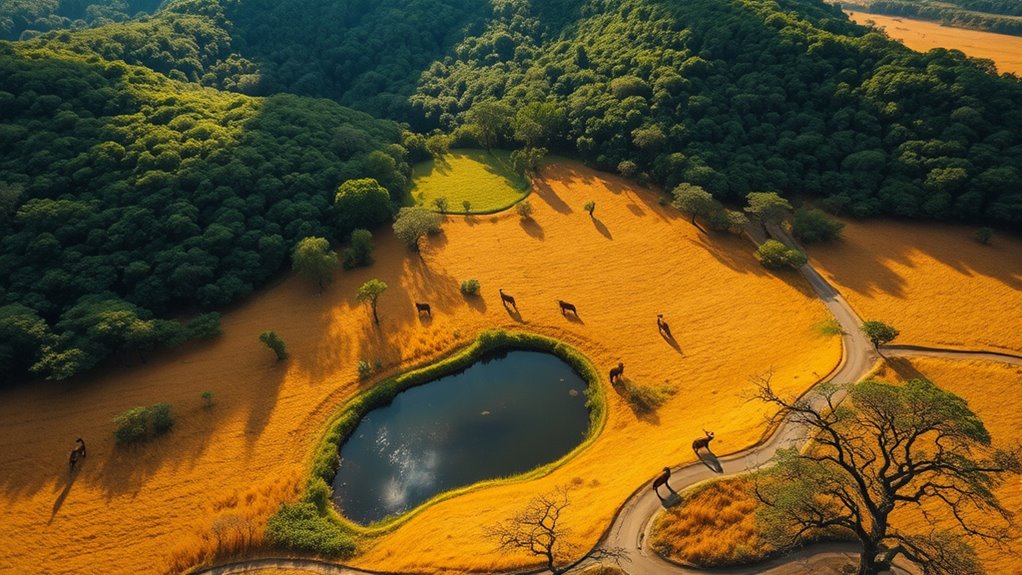

Private reserves play a essential role in conservation by protecting biodiversity and supporting ecosystems. They’re like dedicated sanctuaries for endangered species and habitat restoration. When you visit, your contributions help fund key conservation projects and anti-poaching efforts. These reserves also engage local communities, creating jobs and fostering sustainable practices. By experiencing these efforts firsthand, you’ll not only appreciate the beauty of nature but also see how individual actions can make a difference. Discover more about their impact.
Key Takeaways
- Private reserves protect biodiversity by creating dedicated spaces for endangered species and habitat restoration efforts.
- Revenue from ecotourism in private reserves funds conservation projects and supports local economies.
- Land management strategies, such as controlled burns and reforestation, enhance ecosystem health and wildlife connectivity.
- Community engagement in private reserves fosters sustainable practices and creates job opportunities linked to conservation.
- Visitors can directly support conservation efforts, demonstrating the impact of individual actions on ecological preservation.

Have you ever wondered how private reserves can play a essential role in conservation efforts? These reserves are more than just patches of land; they’re critical for protecting biodiversity and supporting local ecosystems. When you step into a private reserve, you’re not just appreciating nature; you’re also participating in a larger mission to preserve it. One way this happens is through ecotourism benefits, which can greatly enhance conservation initiatives.
Private reserves are vital for biodiversity, allowing visitors to engage in conservation while enjoying the beauty of nature.
When you visit a private reserve, your presence contributes to a sustainable economy that prioritizes the environment. The revenue generated from ecotourism provides funds necessary for conservation projects, helping to protect endangered species and restore habitats. In many cases, these reserves become a lifeline for local wildlife, as the money earned allows for better land management strategies. You might be surprised to learn that your small contribution as a visitor can help support anti-poaching patrols, wildlife monitoring, and habitat restoration efforts.
Private reserves also often implement innovative land management strategies tailored to their specific ecosystems. These strategies might include controlled burns to manage fire-prone areas, reforestation projects to restore native vegetation, or creating corridors that connect fragmented habitats for wildlife. When you witness these practices firsthand, you gain a deeper appreciation for the complexity of conservation work. You’re not just an observer; you’re part of a community working towards a balance between human activity and nature. Additionally, many private reserves focus on creating a cozy ambiance that enhances the visitor experience, making it easier to connect with nature.
By visiting private reserves, you’re also supporting local communities that rely on these ecosystems for their livelihoods. The ecotourism benefits extend beyond just the reserves; they create jobs and stimulate local economies. When local communities see the economic advantages of protecting their natural surroundings, they’re more likely to engage in conservation efforts. You’re helping to foster a sense of stewardship that encourages sustainable practices, benefiting both people and wildlife.
Ultimately, private reserves serve as critical sanctuaries where conservation and ecotourism intersect. They offer unique opportunities for you to engage with nature while supporting essential conservation work. Every visit you make can contribute to a larger narrative of ecological preservation, showcasing the power of individual actions in the face of global challenges. So next time you think about exploring the great outdoors, consider how your adventure in a private reserve can make a lasting difference in the fight for conservation. Your journey might just inspire others to join in on the cause, amplifying the impact of private reserves even further.
Frequently Asked Questions
How Do Private Reserves Differ From Public Conservation Areas?
Private reserves differ from public conservation areas mainly in ownership and management. You’ll find that private reserves often focus on ecotourism development, providing unique experiences while promoting conservation. In contrast, public areas rely on government funding and policies. The land management strategies in private reserves can be more flexible, allowing for tailored approaches to conservation and sustainable use. This often leads to innovative practices that might not be feasible in public settings.
What Are the Economic Benefits of Private Reserves?
Private reserves offer you a treasure chest of economic benefits. They create financial incentives for sustainable practices, attracting eco-tourism and boosting local economies. By fostering ecological stability, these reserves guarantee the land remains vibrant and productive, increasing property values. As you invest in conservation, you also open doors to grants and partnerships, turning nature into a profitable venture. Ultimately, private reserves weave a rich tapestry of environmental and economic rewards for everyone involved.
Can Individuals Create Their Own Private Reserves?
Yes, you can create your own private reserves if you own land. With proper reserve management, you can set aside areas to protect wildlife and ecosystems. By understanding local regulations and gathering resources, you’ll guarantee your reserve meets conservation goals. You’ll actively engage in habitat restoration, species protection, and sustainable practices, enhancing biodiversity on your property. Your commitment to preserving nature contributes to broader conservation efforts and can inspire others to follow suit.
How Is Biodiversity Assessed in Private Reserves?
You assess biodiversity in private reserves through ecological surveys and habitat monitoring. By conducting these surveys, you identify species present, their abundance, and their interactions within the ecosystem. Monitoring habitats helps you track changes over time, ensuring you understand how they support various life forms. By regularly collecting data, you can adapt your management strategies, protect vulnerable species, and enhance overall ecosystem health, ultimately fostering a thriving environment for biodiversity to flourish.
What Role Do Local Communities Play in Private Reserves?
Local communities play a crucial role in private reserves by actively engaging in conservation efforts. Their traditional knowledge about local ecosystems helps you understand biodiversity and make informed decisions. By collaborating with these communities, you not only respect their expertise but also foster stewardship, ensuring that conservation practices are culturally relevant and effective. This partnership enhances the ecological health of the reserve while empowering local people to protect their heritage and environment.
Conclusion
In the dance between nature and humanity, private reserves play a essential role in conservation. You’ve seen how these sanctuaries protect biodiversity and foster a deeper connection to the environment. By supporting and engaging with private reserves, you’re not just preserving wildlife; you’re planting seeds for future generations. Together, we can nurture the earth, creating a vibrant tapestry of life that thrives. So, let’s stand together and champion these crucial havens for our planet’s precious resources.