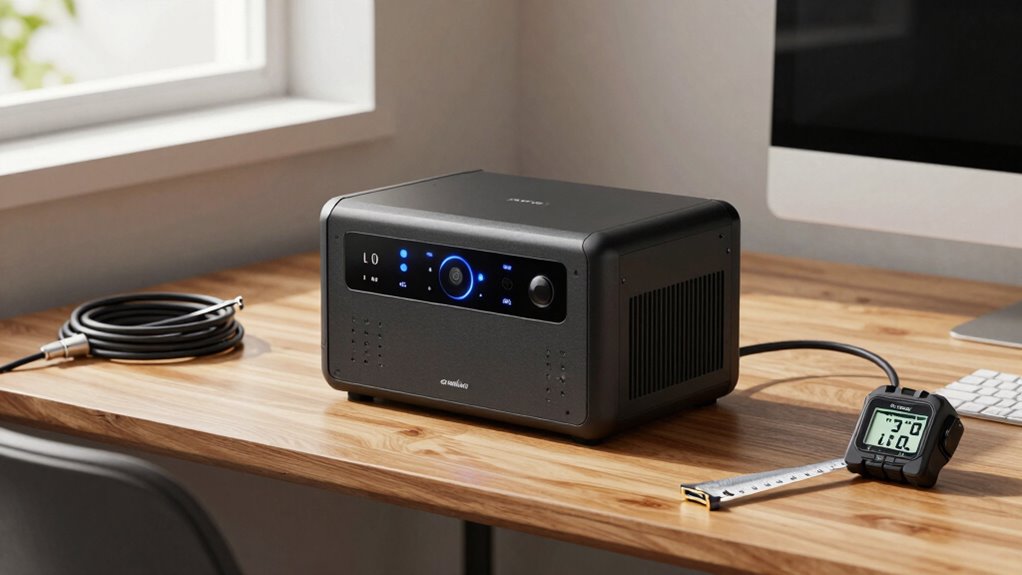

To stop buying the wrong power station, start by quickly evaluating how many devices you’ll need to run at once and their power needs. Check the capacity to make sure it can handle your essential gadgets, like phones or small appliances, without overpaying for extra power. Also, verify the types and number of ports you require. If you keep these tips in mind, you’ll choose a size that fits your needs perfectly. Keep going to learn more about making the best choice.
Key Takeaways
- Determine your device power needs by listing all devices you plan to run simultaneously.
- Check the total wattage or capacity required to ensure your power station can handle your devices.
- Evaluate the number and types of ports (USB, AC, DC) needed for all your gadgets.
- Match the power station’s capacity and port options to your specific usage scenarios for efficiency.
- Avoid overspending by choosing a model that balances capacity and port variety with your actual requirements.
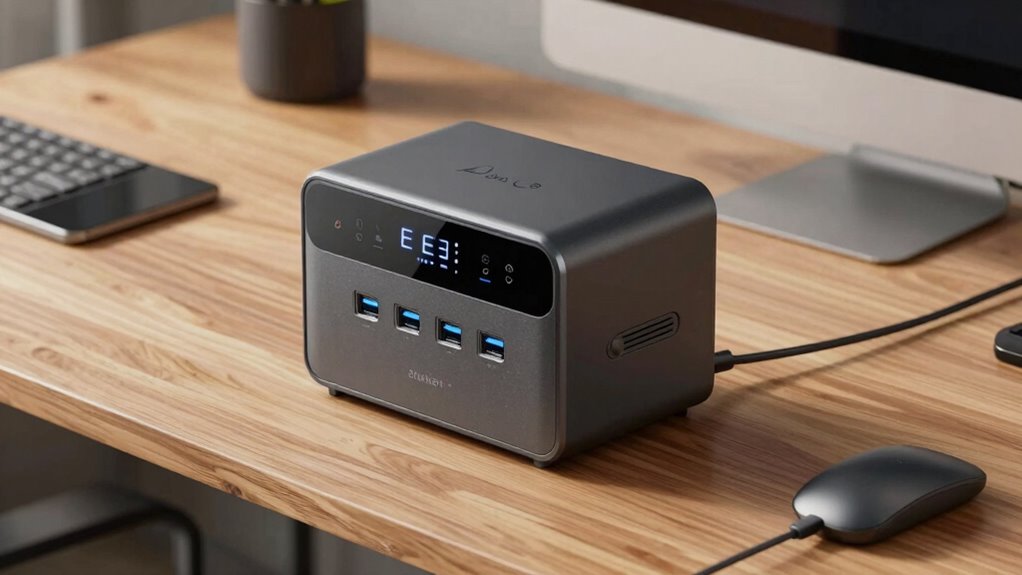
Are you tired of wasting money on power stations that don’t meet your needs? It’s a common frustration. You buy what seems like a good device, only to realize it can’t handle your devices or lacks the ports you need. The key to avoiding this hassle is sizing your power station correctly in just five minutes. Start by considering your battery capacity. How many devices do you plan to run simultaneously? For example, if you want to power a laptop, phone, and small fridge, you’ll need a power station with a higher battery capacity to ensure all your devices stay charged for the duration you require. Not paying attention to battery capacity can leave you stranded with a dead power station when you need it most. So, take a moment to estimate your daily power needs and select a model that offers enough capacity to cover those demands comfortably.
Next, look at the port variety. The number and type of ports determine how many devices you can connect at once and what kinds of devices you can power. If you only need to charge a smartphone and a tablet, a power station with a couple of USB ports might suffice. But if you’re planning to run more substantial gear like cameras, laptops, or even small appliances, you’ll want a unit with a diverse range of ports—standard AC outlets, multiple USB types, DC car ports, and possibly even specialized outputs. The more port options you have, the more versatile your power station becomes, reducing the need for extra adapters or multiple devices. It’s a smart move to check the port variety before making a purchase, ensuring you won’t be limited when you’re out in the field or during a power outage. Additionally, choosing a Suprem fabric that offers durability and high resistance to wear can ensure your power station remains reliable in various conditions.
In just five minutes, you can compare different models based on these two critical factors—battery capacity and port variety. First, decide on your typical power needs, then choose a device that aligns with those needs without overspending on unnecessary features. Remember, bigger isn’t always better; it’s about matching the power station’s specs to what you actually require. Don’t forget to verify that the ports support your gadgets’ charging requirements. By sizing your power station carefully, you’ll avoid buying one that’s either too weak or unnecessarily bulky and expensive. With a quick assessment, you’ll confidently find a device that keeps your devices powered efficiently and reliably, giving you peace of mind no matter where you are.
Frequently Asked Questions
How Do I Determine the Actual Power Needs for My Devices?
You might think it’s complicated, but determining your devices’ power needs is straightforward. First, check each device’s power consumption, usually listed in watts. Then, add up the battery capacity needed to run them simultaneously for your desired time. This helps you select a power station with enough capacity. Remember, understanding your total power consumption guarantees you choose a unit that meets your needs without overpaying.
Can I Upgrade My Power Station Later if Needed?
Yes, you can upgrade your power station later if needed. Many models allow you to expand battery capacity by adding extra batteries or modules. You should also check the available charging options, like solar or AC power, to guarantee future compatibility. Upgrading helps you meet increased power needs without replacing the entire unit, making it a flexible solution for growing energy demands.
What Safety Features Should I Look for in a Power Station?
Did you know that 60% of power station malfunctions are due to safety neglect? You should look for safety features like battery protection, which prevents overheating and overcharging, and overload prevention, safeguarding against excessive power draw. These features guarantee your device stays safe during use, reducing risks of damage or fire. Prioritize power stations with these protections, so you’re always confident in their safety and reliability.
Are Portable Power Stations Suitable for Long-Term Use?
Yes, portable power stations are suitable for long-term use if you consider battery lifespan and portability considerations. You should choose models with durable batteries that offer a high cycle life, ensuring they last over time. Additionally, factor in portability, so you can easily carry and store the station without compromising performance. Regular maintenance and proper charging habits will also extend your power station’s usability for long-term needs.
How Do I Compare Different Brands and Models Effectively?
To compare different brands and models effectively, focus on battery longevity and brand reputation. Check reviews and user feedback to gauge reliability and longevity. Look at battery cycle life to understand how long the power station will perform well. Consider brands known for quality and customer support. By analyzing these factors, you’ll find a power station that offers durability and value, ensuring it meets your long-term needs.
Conclusion
Now that you know how to size your power station in just five minutes, don’t rush into buying the wrong one again. Take a moment, plan like a seasoned explorer before setting sail—no more modern-day “witch hunts” for the perfect device. Remember, the right size keeps your gadgets running smoothly and your wallet happy. So, go forth confidently, and power up wisely. After all, it’s your adventure, and the power’s in your hands.