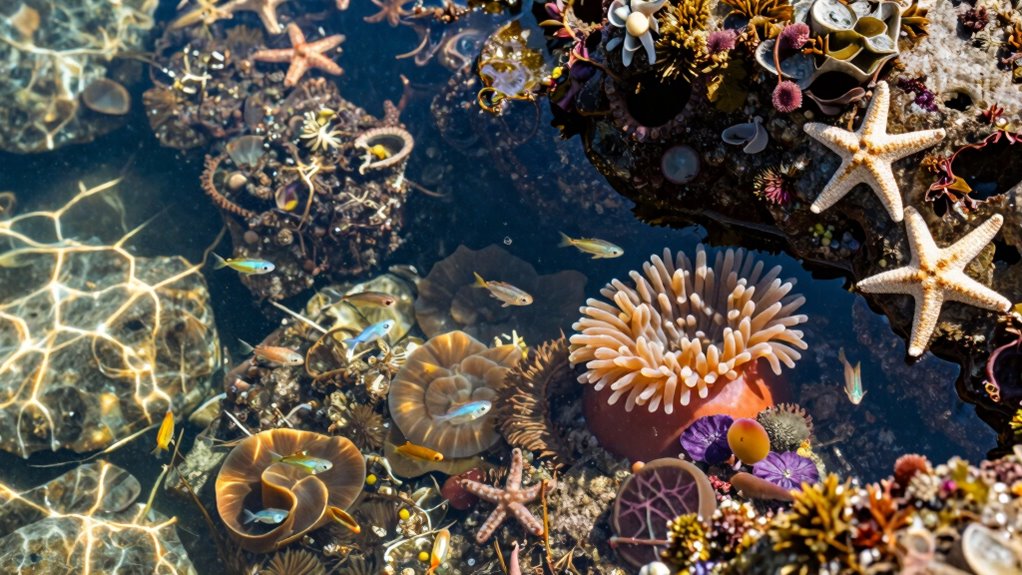

Tide pools are fragile micro-ecosystems that rely on your respect and careful observation. Touching or removing creatures can disrupt microbial communities, harm delicate habitats, and threaten the balance of life within. The hands-off rule helps protect these vibrant communities by encouraging silent watching and gentle discovery. By following this simple guideline, you preserve the micro-world’s health for yourself and future visitors. Keep exploring to discover more ways you can help sustain these precious marine habitats.
Key Takeaways
- The Hands-Off Rule prevents habitat disturbance, protecting delicate tide pool ecosystems and maintaining biodiversity.
- Avoiding contact preserves microbial communities essential for nutrient cycling and ecosystem stability.
- Respecting tide pools ensures species interactions and predator-prey relationships remain balanced.
- Responsible behavior prevents long-term damage caused by removing or disturbing marine life and shells.
- Protecting tide pools supports ecological resilience, biodiversity, and future opportunities for observation and education.
Why Tide Pools Are Vital Marine Micro-Communities
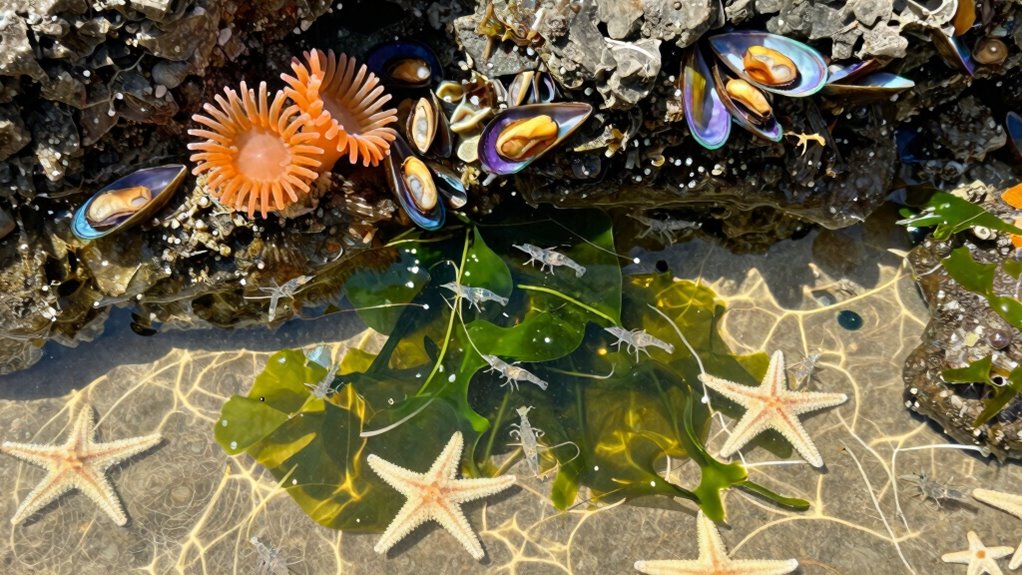
Tide pools serve as essential micro-communities because they provide a unique habitat where marine life can thrive in a protected environment. Within these small ecosystems, marine biodiversity flourishes, offering a variety of species like starfish, anemones, and small fish. This diversity creates a resilient community capable of withstanding environmental changes. Tide pools act as natural laboratories, allowing you to observe interactions among species that contribute to ecological resilience. These micro-communities help maintain the health of coastal environments by supporting a complex web of life. Their protected nature allows marine organisms to develop, reproduce, and adapt, reinforcing the importance of preserving these crucial habitats. Without tide pools, many species would lose critical refuges for survival and growth.
Understanding the Delicate Balance of Tide Pool Ecosystems
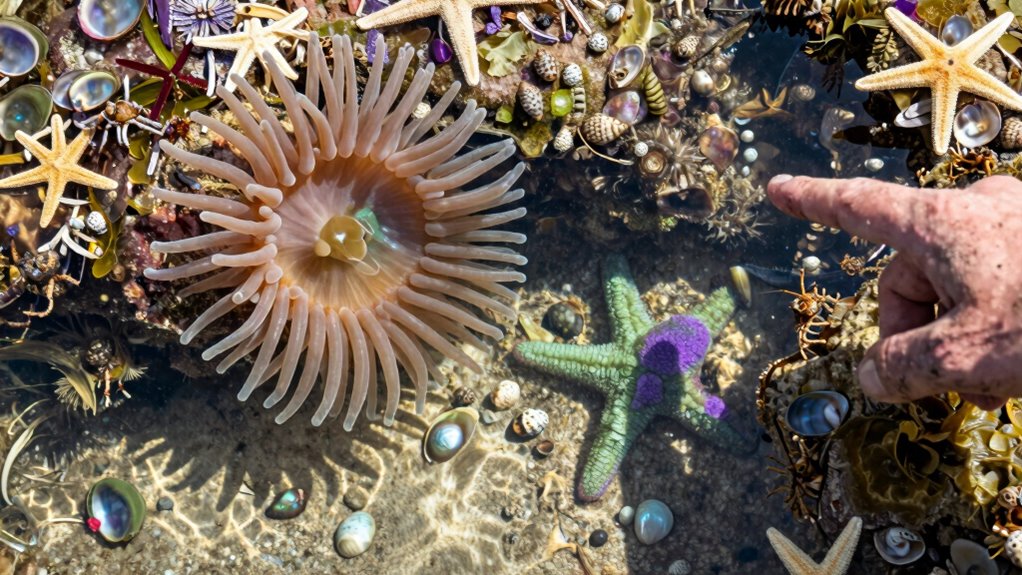
Understanding the delicate balance of tide pool ecosystems requires recognizing how the environment’s organism interactions influence overall stability. You observe how tidal fluctuations constantly change the environment, affecting which organisms can survive. Predator-prey relationships keep populations in balance, ensuring no species dominates or disappears. Microhabitat interactions, like shelter and food sources, also play a vital role in maintaining this fragile ecosystem. Additionally, the color accuracy of the organisms’ visual cues influences their ability to communicate and find mates effectively within the microhabitat. These visual cues are often affected by the light conditions present in tide pools, which can vary greatly with depth and time of day. Changes in water quality can further impact the health of these ecosystems, emphasizing the need for careful preservation. Understanding the ecosystem balance helps highlight how sensitive these environments are to disturbances and the importance of preserving their natural state.
Tidal Fluctuations’ Impact
Because tidal fluctuations cause regular changes in water levels, they play an essential role in shaping the delicate balance of tide pool ecosystems. These fluctuations challenge organisms to adapt quickly, testing the micro ecosystem resilience. During low tide, exposure to air and sunlight forces species to endure desiccation and temperature swings. Conversely, high tide floods the pool, replenishing oxygen and nutrients. This constant cycle maintains diversity but requires species to be adaptable. The variability in environmental conditions underscores the importance of on-page SEO strategies to help these ecosystems gain visibility and awareness.
Predator-Prey Dynamics
Predator-prey interactions are fundamental to maintaining the balance within tide pool ecosystems, where each species plays a role in controlling population sizes. You’ll notice that predators like sea stars and crabs regulate the numbers of prey such as mussels and barnacles. This natural control prevents any one species from dominating, which helps preserve biodiversity. Without these interactions, prey populations could explode, leading to overgrowth and the decline of other species. The delicate balance of the ecosystem depends on these predator-prey relationships working in harmony. When predators keep prey in check, it ensures resources are available for multiple species and promotes a healthy, resilient tide pool environment. This balance is crucial for the micro-world’s stability and diversity. Predator-prey relationships are a key driver of ecological stability in these ecosystems.
Microhabitat Interactions
Microhabitat interactions are essential to maintaining the delicate balance within tide pool ecosystems. These tiny environments rely on the interconnected relationships between organisms and their surroundings. For example, coral bleaching can occur when water temperatures rise or acidity increases, disrupting the symbiotic relationship between corals and algae. Similarly, ocean acidification affects calcium carbonate structures like shells and coral skeletons, weakening them and threatening species that depend on them. When these microhabitats change, the entire tide pool ecosystem can shift, impacting predator-prey dynamics and biodiversity. Understanding how these microhabitat interactions work helps us appreciate the fragile balance that sustains tide pools. Protecting these environments means addressing larger issues like climate change and ocean chemistry, which directly influence microhabitat health. Additionally, the calcium carbonate structures of marine organisms are particularly vulnerable to the effects of increased acidity, highlighting the importance of maintaining stable ocean conditions.
How Human Touch Can Disrupt Tide Pool Life
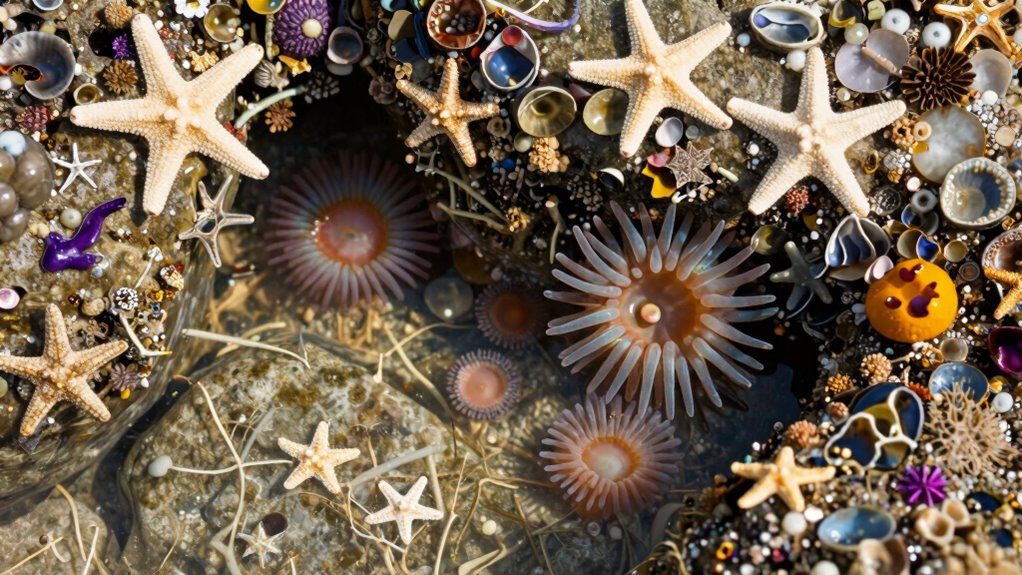
When you touch tide pool creatures, you can change their natural behavior, making them easier prey or less likely to hunt. Your contact can also throw off the tiny microbial communities that keep the ecosystem healthy. Even gentle handling can have lasting impacts on these fragile environments. Additionally, human interference can introduce unwanted contaminants, further disrupting the delicate balance of the tide pool ecosystem air quality, which underscores the importance of observing these environments without direct contact. Incorporating ecosystem balance principles can help preserve the integrity of tide pools and prevent long-term damage. Recognizing the fragility of these habitats is essential to ensure their preservation for future generations. Maintaining environmental integrity is crucial for supporting the diverse life forms that depend on these micro-ecosystems. Protecting these microbial communities is vital because they form the foundation of the tide pool’s complex food web and overall health.
Touching Alters Behavior
Touching tide pool creatures can considerably alter their behavior, often with harmful consequences. When you handle or even lightly touch them, you disrupt their natural touch sensitivity, which they rely on to detect threats and communicate. These behavioral changes can make animals more anxious, less likely to forage, or cause them to retreat into hiding. Such stress weakens their immune systems and hampers their ability to survive. Because tide pool creatures are adapted to specific environmental cues, human contact can throw off their normal responses, leading to disorientation or increased vulnerability. By simply touching them, you unintentionally interfere with their instinctive behaviors, risking their health and disrupting the delicate balance of the micro-ecosystem that depends on their natural actions. Additionally, media literacy is crucial for understanding the impact of human interaction on these fragile ecosystems and promoting responsible behavior among observers. Recognizing the importance of ecosystem balance can help foster more respectful and sustainable interactions with tide pool environments. Understanding the sensitive nature of these creatures can also encourage more mindful observation rather than direct contact. Moreover, biodiversity plays a vital role in maintaining the resilience of tide pool communities, and even minor disturbances can have ripple effects across the entire ecosystem.
Disrupts Microbial Balance
Human contact can considerably disrupt the delicate microbial balance within tide pools. When you touch these environments, you transfer oils, bacteria, and other substances that can alter microbial diversity. This disruption can upset the natural nutrient cycling vital for tide pool health. Microbial diversity supports the decomposition of organic matter and the recycling of nutrients, maintaining ecosystem stability. Introducing foreign microbes or removing existing ones can cause imbalances, leading to overgrowth of certain species or decline of others. These shifts threaten the entire micro-ecosystem, affecting not just microbes but the larger marine life that depends on stable conditions. By avoiding direct contact, you help preserve the intricate microbial relationships that sustain tide pools, ensuring these vibrant micro-worlds thrive naturally without human interference.
Why the Hands-Off Rule Protects Tide Pools: And How It Works
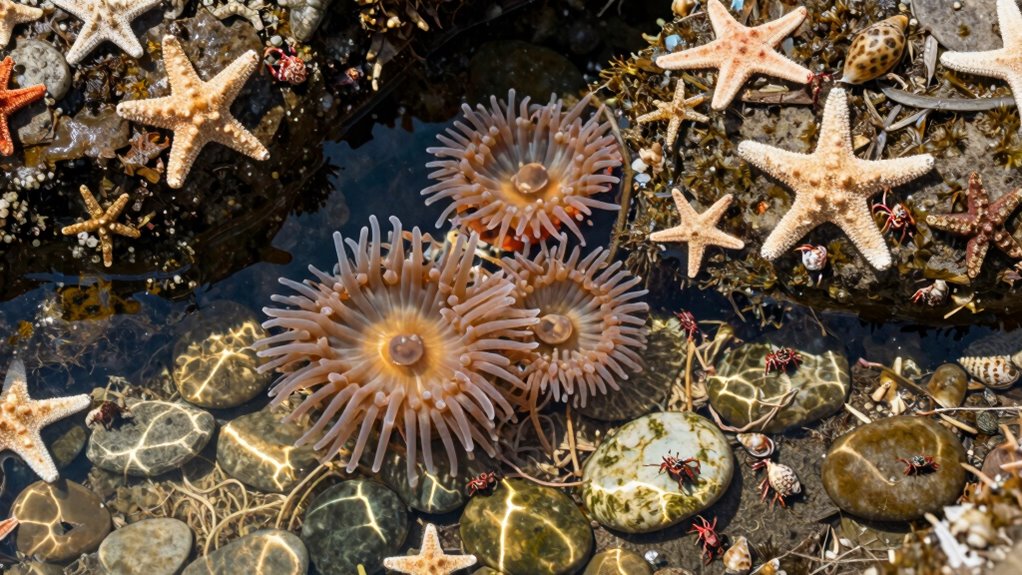
The Hands-Off Rule plays a crucial role in protecting tide pools by limiting human interference and preserving their delicate ecosystems. By keeping visitors from removing creatures or disturbing the environment, this rule helps maintain the natural balance in intertidal zones. When untouched, tide pools support diverse marine life, fostering marine conservation and ecological health. Minimizing human impact is essential for preventing habitat degradation and ensuring the continued survival of vulnerable species. This approach aligns with broader conservation principles that emphasize the importance of ecological preservation in fragile habitats. Implementing regulations and policies that support these practices further ensures the sustainability of marine biodiversity and the health of ecosystems for future generations. Promoting public awareness about the significance of tide pools can help garner community support for these preservation efforts. Floating on Water practices like these are essential for sustaining marine biodiversity and ensuring healthy ecosystems for future generations.
Simple Ways to Observe Tide Pools Without Causing Harm
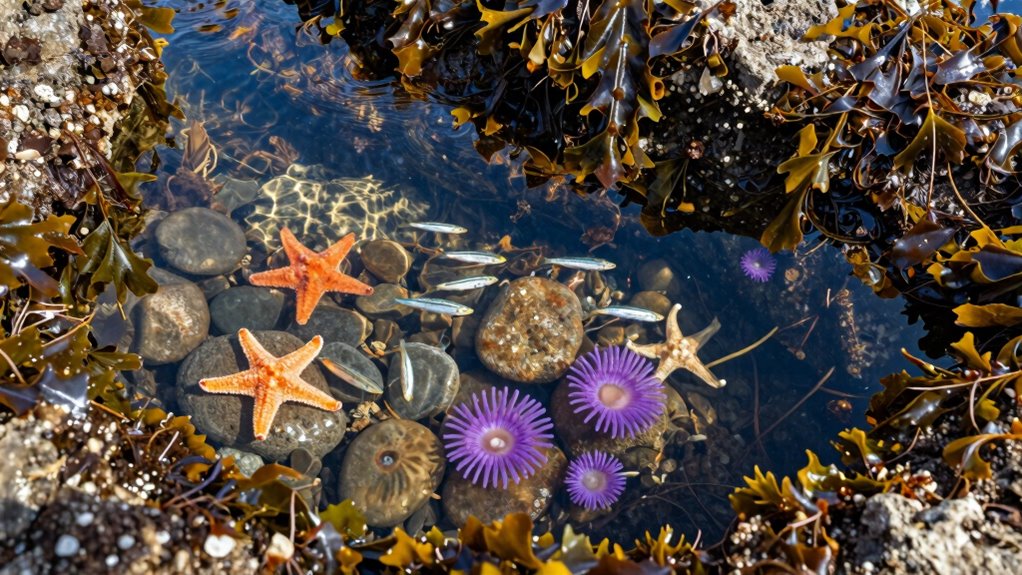
Observing tide pools without causing harm is both simple and rewarding when you follow a few respectful approaches. Stay on designated paths to avoid crushing intertidal flora, which is essential for the ecosystem’s health. Use a gentle touch when exploring, and avoid lifting or removing creatures and shells unless permitted for educational purposes. If you want to collect shells, do so sparingly and only empty ones that are already empty; never take live shells or disturb the inhabitants. Take photos instead of collecting souvenirs to preserve the micro-world’s integrity. Remember, your goal is to observe and appreciate without disrupting the delicate balance of tide pools. Respectful observation ensures these vibrant habitats thrive for future visitors and marine life alike.
Common Mistakes That Threaten Tide Pool Health: And How to Avoid Them
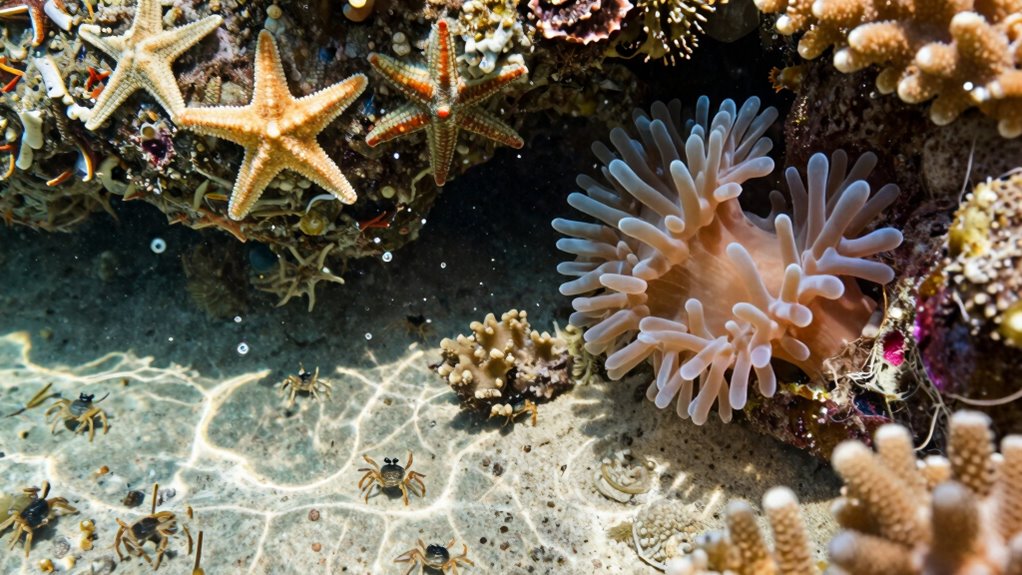
While enjoying tide pools responsibly helps protect these fragile habitats, many visitors unknowingly make mistakes that threaten their health. One common mistake is believing tide pool myths, like thinking you can move creatures to “better” spots or that disturbing them causes no harm. These misconceptions worsen conservation challenges, harming delicate ecosystems. Touching or removing animals, even out of curiosity, can damage their fragile shells and disturb their natural behaviors. Additionally, walking on or stepping over tide pools can crush or displace organisms, disrupting the micro-world. To avoid these mistakes, stick to the hands-off rule, observe quietly, and respect the habitat’s natural state. By debunking myths and practicing mindful observation, you help preserve tide pools for future generations.
How Protecting Tide Pools Ensures Future Generations Can Discover Their Wonders
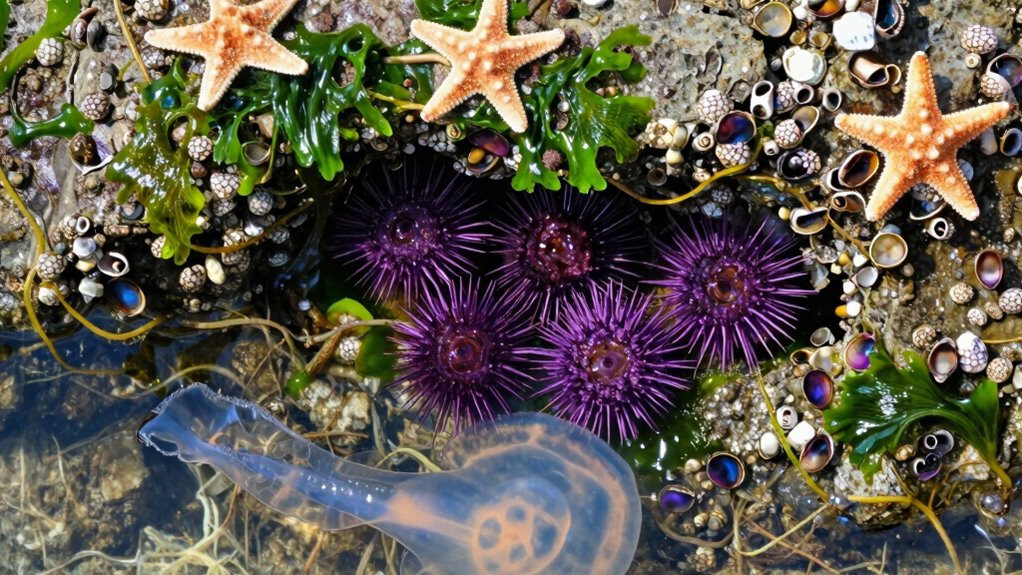
Protecting tide pools today guarantees that future generations can experience their beauty and learn from their delicate ecosystems. When you respect the hands-off rule, you help prevent algae growth from becoming unchecked, which can smother native species. You also minimize sediment disturbance, keeping the environment stable for tiny creatures to thrive. Here’s how your actions make a difference:
- Prevents excessive algae buildup, maintaining ecosystem balance
- Reduces sediment disturbance, safeguarding fragile habitats
- Preserves biodiversity, so future explorers can discover a rich micro-world
- Ensures tide pools remain resilient against human impacts
Get Involved: Support and Conserve Tide Pool Ecosystems
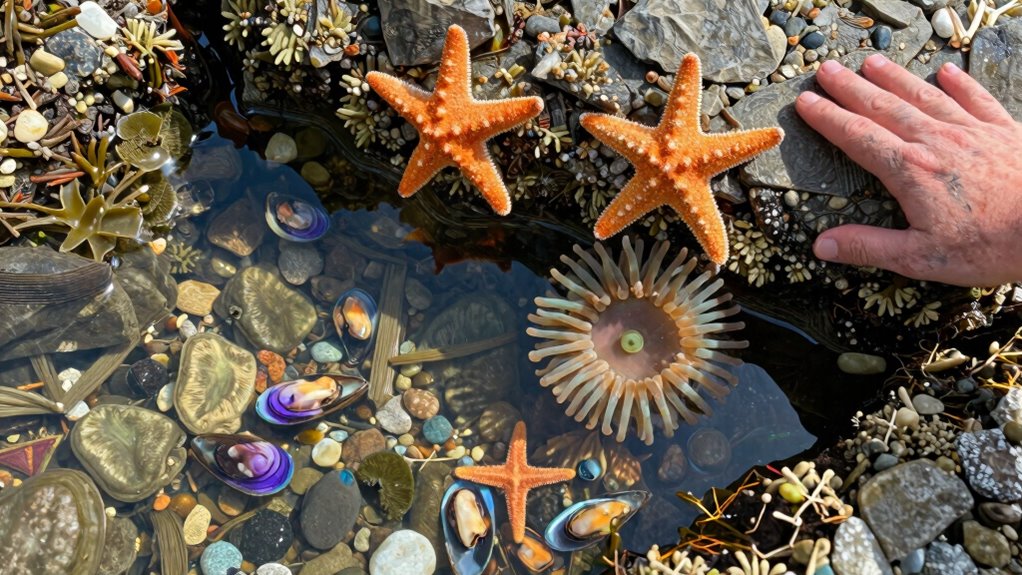
Getting involved in conserving tide pool ecosystems is essential for ensuring their long-term health. You can support efforts that protect algae diversity, which is crucial for maintaining a balanced micro-ecosystem. Healthy algae provide food and shelter for tiny creatures, contributing to the overall stability of tide pools. Additionally, safeguarding shellfish habitats helps preserve key species like mussels and clams, which form the foundation of many tide pool communities. Avoid collecting or disturbing marine life, and stay on designated paths to minimize damage. Volunteer with local conservation organizations or participate in beach cleanups to help remove debris that can harm these delicate environments. Your active support ensures that tide pools remain vibrant, resilient, and accessible for future generations to explore and learn from.
Frequently Asked Questions
Are There Specific Tools or Equipment Recommended for Safe Tide Pool Observation?
You should use marine binoculars to get a closer look at tide pool creatures without disturbing them. A tide pool guidebook is also helpful for identifying species and learning about their habitats. Bring a small, soft brush or your hands for gentle exploration, but avoid touching delicate marine life directly. These tools help you observe safely while respecting the ecosystem, ensuring the tide pools stay vibrant and healthy.
How Do Tide Pools Recover From Accidental Human Disturbances?
When human impact disturbs a tide pool, recovery depends on minimizing further interference and allowing nature to take its course. You can help by avoiding additional contact, giving the ecosystem time to recover naturally. Tide pool recovery may take days to weeks, depending on the extent of the disturbance. Respecting the hands-off rule ensures the delicate balance remains, helping these micro-worlds bounce back and thrive despite human impact.
Can Tide Pools Be Safely Explored During All Seasons?
Sure, you can explore tide pools during all seasons, but stay safe by observing seasonal variations and practicing safety precautions. Spring and summer bring sunnier skies and warmer waters, making exploration easier, while fall and winter require careful cold-weather precautions. Always respect the tide pool’s delicate ecosystem, avoid touching or removing creatures, and check local guidelines. With mindful measures, you can enjoy tide pools safely year-round.
What Are Signs That a Tide Pool Ecosystem Is Unhealthy?
You can tell a tide pool ecosystem is unhealthy if you notice algae overgrowth or water discoloration. Excessive algae can smother other marine life, while murky or discolored water indicates pollution or low oxygen levels. If the area lacks vibrant, diverse species or shows signs of dead or decaying organisms, it’s a sign that the ecosystem is struggling. Healthy tide pools are vibrant, clean, and teeming with life.
How Does Climate Change Impact Tide Pool Biodiversity Over Time?
Climate change acts like a slow-moving storm, gradually eroding tide pool biodiversity. You’ll see climate effects like rising temperatures and ocean acidification, which threaten delicate species. Over time, this leads to biodiversity loss, disrupting the balance of this mini-ecosystem. If these changes continue unchecked, tide pools could lose their vibrant diversity, making them more fragile and less resilient to future environmental shifts.
Conclusion
By respecting the hands-off rule, you help keep tide pools thriving for future generations to marvel at. When you observe without touching, you preserve these delicate micro-worlds and prevent harm. Remember, a little care goes a long way—don’t bite off more than you can chew. By doing your part, you ensure these vibrant ecosystems remain a wondrous sight for all to enjoy, proving that sometimes, less truly is more.