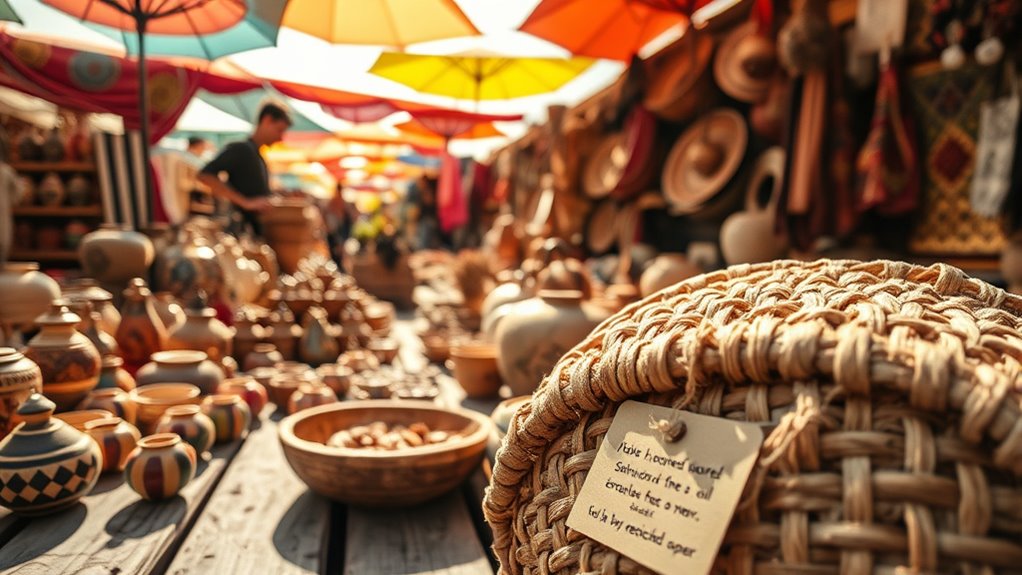

When you’re looking for mindful souvenirs that support artisans, consider unique, handcrafted textiles, locally-made pottery, or stunning artisan jewelry. These items not only showcase local craftsmanship but also tell a story about the culture and traditions of the area. By choosing these meaningful pieces, you’re directly contributing to the livelihoods of artisans and preserving their skills for future generations. You’ll be surprised at how many incredible options there are waiting to be discovered!
Key Takeaways
- Choose unique, handcrafted items like textiles or pottery that reflect local culture and artisans’ skills.
- Participate in workshops to create your own souvenirs while supporting local craftsmanship and learning about traditional techniques.
- Look for ethically-made jewelry that tells a story and connects you to the artisan’s cultural heritage.
- Support community markets or cooperatives that feature a variety of artisans, ensuring your purchases benefit multiple creators.
- Engage directly with artisans to learn their stories, enriching your souvenir experience and fostering cultural exchange.
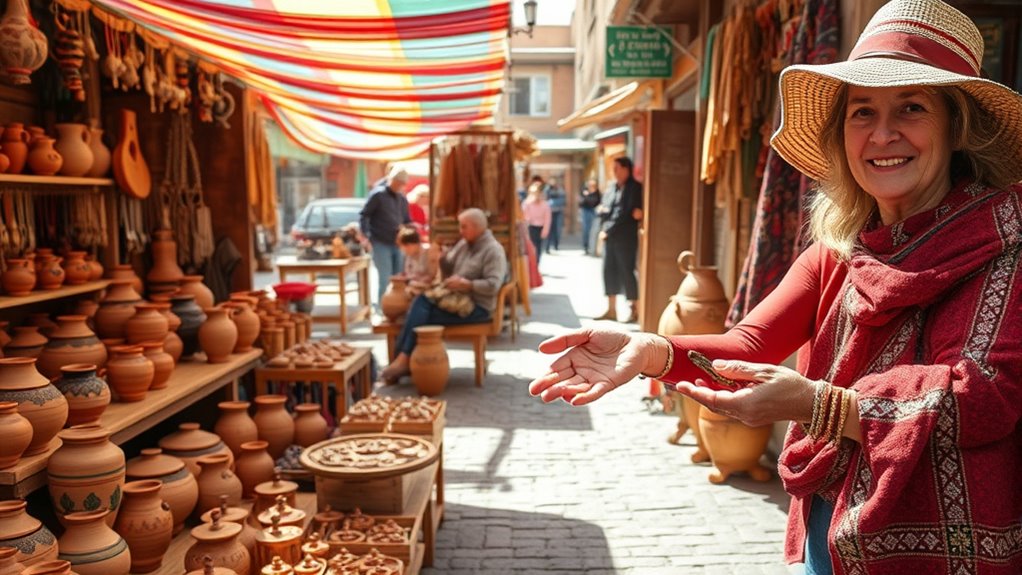
When you travel, picking up souvenirs can be a meaningful way to remember your experiences, especially when those items support local artisans. It’s not just about having a trinket to show off; it’s about engaging in ethical shopping that respects the culture and the people behind the crafts. When you choose to buy directly from artisans, you’re not only taking home a piece of their heritage, but you’re also contributing to their livelihoods. This form of cultural appreciation helps preserve traditional crafts and promotes sustainability.
Think about the vibrant markets you might visit. Instead of heading to the usual souvenir shops filled with mass-produced goods, explore local artisan stalls. You’ll find unique items that tell a story, whether it’s handwoven textiles, pottery, or intricate jewelry. Each piece reflects the skill and creativity of the artisan, making your purchase more memorable. Plus, you get to support local economies in a meaningful way, strengthening the community with every dollar spent.
Consider how your choices impact the environment and local culture. By opting for handmade goods, you’re reducing demand for factory-made items that often exploit workers and deplete resources. Ethical shopping means you’re aligning your purchases with your values, and it encourages artisans to keep their crafts alive. When you buy a handcrafted item, you’re not just getting a souvenir; you’re investing in the future of the craft and the artist.
You might also want to look for workshops that offer classes or demonstrations. Participating in these experiences allows you to connect with the culture on a deeper level. You get to learn firsthand about the techniques and traditions that shape the crafts. This kind of engagement enriches your understanding and appreciation for the artistry involved. Plus, it’s a fantastic way to create lasting memories while supporting the local community.
As you explore, take the time to ask artisans about their work. They often have fascinating stories to share about their craft and how it’s influenced by their culture. This interaction transforms your souvenir shopping into a cultural exchange, elevating your experience beyond mere consumerism. Each item you bring home becomes a reminder not just of a place, but of the people and stories behind the art. Additionally, engaging in mindful decluttering strategies can help you cherish these souvenirs while maintaining an organized space in your home.
Frequently Asked Questions
How Can I Verify if a Souvenir Supports Local Artisans?
To verify if a souvenir supports local artisans, start by checking for authenticity verification labels or certificates. Look for tags that share the artisan story, detailing their background and crafting process. You can also ask shop owners about the origin of the items; they should be able to provide insights into who made them. Supporting local artisans not only enriches your experience but also helps sustain their craft and community.
What Materials Are Typically Used in Artisan Souvenirs?
Artisan souvenirs often weave together the beauty of local culture and nature. You’ll find materials like wood, clay, textiles, and metal, each crafted with unique techniques that tell a story. Sustainable materials, like bamboo or recycled glass, showcase eco-friendly practices, reflecting the artisan’s commitment to the environment. When you choose these pieces, you’re not just buying a souvenir; you’re embracing the craftsmanship and heart that goes into every creation.
Are Artisan Souvenirs More Expensive Than Mass-Produced Items?
Yes, artisan souvenirs are generally more expensive than mass-produced items. The pricing differences stem from the time, skill, and quality assurance that artisans invest in their work. Each piece is crafted with care, often using high-quality materials, which adds to the cost. While you might pay more upfront, you’re supporting local artisans and receiving a unique, one-of-a-kind item that reflects cultural heritage and craftsmanship, making it a worthwhile investment.
Can I Find Artisan Souvenirs Online?
Absolutely, you can find artisan souvenirs online! In the vast virtual marketplace, you’re bound to uncover treasures that come with unique artisan stories. These items often carry the essence of the creators, adding a personal touch that mass-produced goods simply can’t match. So, as you browse, remember that each piece reflects the craftsmanship and history behind it, making your purchase not just a transaction, but a meaningful connection to the artisan’s journey.
How Do I Ensure My Purchase Benefits the Artisan Directly?
To guarantee your purchase benefits the artisan directly, look for vendors who prioritize ethical sourcing and have fair trade certification. Research the brand’s practices and see if they support local communities. Purchasing from artisan markets or cooperatives often guarantees that the profits go back to the creators. Always ask questions about the production process, and choose products that tell a story, connecting you with the artisan behind the craft.
Conclusion
By choosing souvenirs that support artisans, you’re not just bringing home a piece of a place; you’re weaving a story of culture and craftsmanship into your life. Every handcrafted item carries a unique narrative, connecting you to the hands that created it. So, when you shop with intention, you’re not just picking up a trinket—you’re making a difference. Remember, when you give a little love, you get a lot in return!