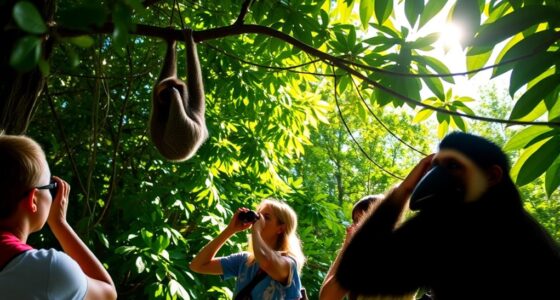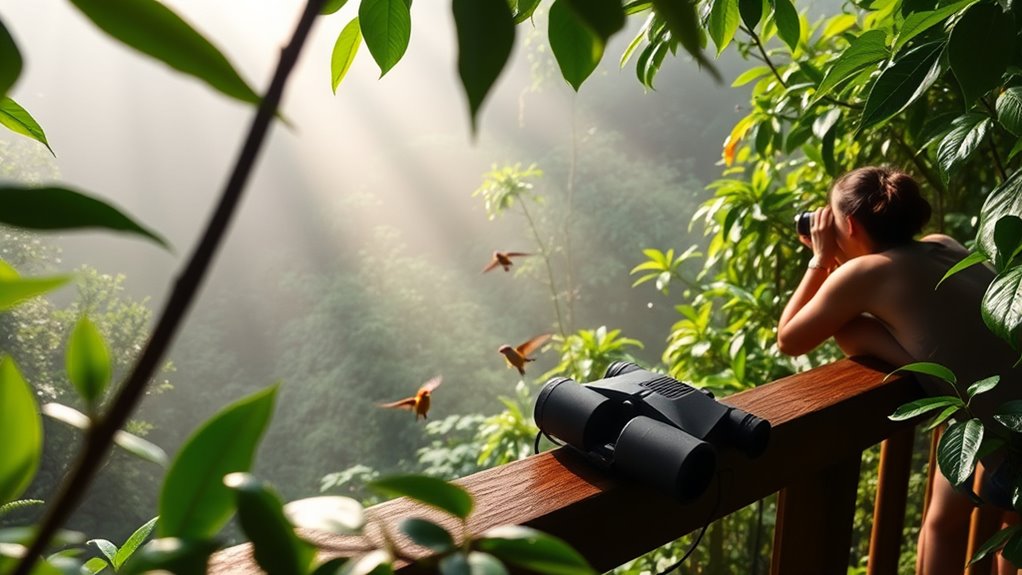

When viewing wildlife in the Monteverde Cloud Forest, keep a respectful distance to avoid stressing the animals. Use binoculars or zoom lenses for photography, and always turn off your flash. Stay on designated trails to protect their habitats and minimize noise to avoid scaring them away. Carry a bag for your trash, leaving no trace behind. By following these etiquette guidelines, you’ll not only enhance your experience but also help preserve this beautiful ecosystem for future visitors. Discover more insights to enhance your adventure!
Key Takeaways
- Maintain a respectful distance from wildlife, using binoculars or zoom lenses for observation instead of approaching them closely.
- Stay on designated trails to protect the delicate flora and fauna of the Monteverde Cloud Forest.
- Keep noise levels low and engage in soft conversation to prevent startling wildlife during your visit.
- Avoid using camera flash to minimize stress on animals and capture images without disrupting their natural behaviors.
- Carry out all trash and leave no trace to help preserve the pristine environment of the cloud forest.
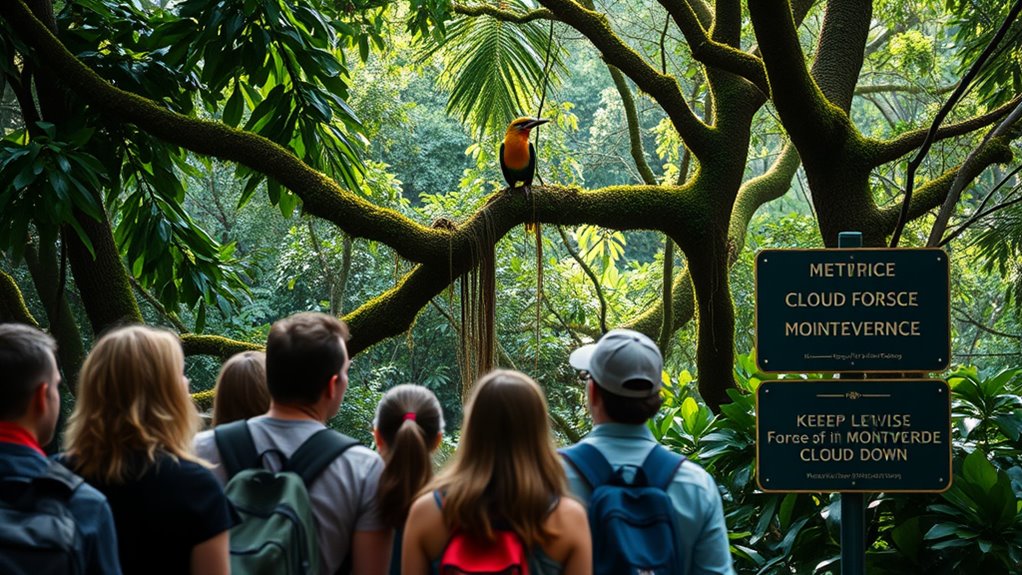
When you venture into the enchanting Monteverde Cloud Forest, you’re stepping into a vibrant ecosystem teeming with diverse wildlife. With its lush greenery and mist-covered trails, this unique habitat offers opportunities to witness some of the most incredible creatures on Earth. However, as you immerse yourself in this natural wonder, it’s vital to practice proper wildlife viewing etiquette to safeguard the well-being of the animals and the preservation of their environment.
First and foremost, always maintain a respectful distance from the wildlife. Getting too close can stress animals, disrupt their natural behaviors, and even endanger them. Use binoculars or a zoom lens for photography instead of approaching them. Not only does this keep you safe, but it also promotes animal conservation by allowing creatures to remain undisturbed. If you’re capturing images, remember to turn off your flash. Bright lights can startle animals, making them flee or hide, which can hinder your chances of seeing them in their natural habitat.
When photographing, it’s important to be mindful of your surroundings. Stay on designated trails to protect the delicate flora and fauna. Straying off paths can lead to habitat destruction, which can have long-term consequences for the creatures that call this forest home. Additionally, take care not to disturb nests or burrows. If you encounter an animal that seems agitated, back away quietly and give it space.
While you’re exploring, try to engage in quiet observation. Loud noises can scare wildlife away, making it difficult for you and others to enjoy the experience. Instead, converse softly with your companions and embrace the peaceful sounds of nature. This approach not only enhances your own experience but also allows others to enjoy the tranquility of the forest.
Lastly, practice responsible waste disposal. Bring along a bag for any trash you generate and make sure to leave no trace of your visit. This simple act contributes markedly to the conservation efforts in the area. By following these guidelines, you can help maintain the well-being of wildlife and ensure that future generations can enjoy the wonders of the Monteverde Cloud Forest.
Frequently Asked Questions
What Is the Best Time for Wildlife Viewing in Monteverde?
The best viewing times for wildlife in Monteverde are early morning and late afternoon. During these hours, you’ll witness peak wildlife activity, as animals are more active in cooler temperatures. Arriving at dawn allows you to catch birds at their most vibrant, while dusk brings out nocturnal creatures. Plan your visits around these times to enhance your chances of spotting diverse wildlife and enjoy the rich biodiversity that Monteverde has to offer.
Are There Any Specific Animals to Look Out For?
Yes, there are specific animals you should look out for! Keep an eye out for the resplendent quetzal, a stunning bird that showcases incredible colors. You’ll also want to watch for sloths lazily hanging in the trees and playful spider monkeys swinging above. Observing their animal behavior can be fascinating. Remember to practice bird identification techniques to spot unique species, making your wildlife experience even more enriching and memorable.
How Can I Prepare for Changing Weather Conditions?
To prepare for changing weather conditions, you should invest in good rain gear and wear layered clothing. It’s a common theory that many travelers underestimate the cloud forest’s unpredictability. By dressing in layers, you can adjust your clothing as temperatures fluctuate. Make certain your rain gear is lightweight yet durable, so you stay dry without overheating. Staying comfortable will enhance your experience, letting you focus on the stunning wildlife around you.
Is It Safe to Explore the Cloud Forest Alone?
It can be safe to explore the cloud forest alone, but you need to take essential safety precautions. Make sure you have a reliable map, a charged phone, and let someone know your plans. Stick to marked trails and stay aware of your surroundings. Keep an eye on the weather, and don’t forget to bring enough water and snacks. Trust your instincts, and if something feels off, it’s best to head back.
Are Guided Tours Necessary for Wildlife Viewing?
Guided tours aren’t strictly necessary for wildlife viewing, but they offer significant benefits. Did you know that guided tours can increase your chances of spotting wildlife by up to 80%? Experienced guides share valuable wildlife spotting tips, helping you notice camouflaged creatures and unique plants you might miss. With their expertise, you’ll gain deeper insights into the ecosystem, making your experience more enriching and enjoyable. So, while you can explore solo, a guide enhances your adventure.
Conclusion
So, as you tiptoe through the lush Monteverde Cloud Forest, remember: you’re a guest in nature’s grand gallery, not the star of the show. While you’re busy snapping photos of that elusive quetzal, the sloth hanging overhead might just be rolling its eyes at your antics. Respect the rhythm of the wild, and you’ll find that the best views come not from your camera, but from the quiet moments shared with the astonishing life around you.