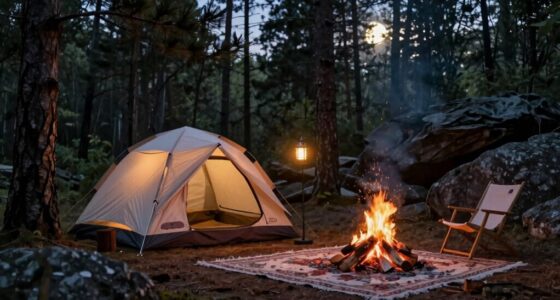
To improve your campsite lighting without overdoing it, strategically place lanterns at different heights near tents, cooking areas, and pathways to create an even, cozy glow. Use energy-efficient options like solar or LED lanterns to save power. Avoid clustering lights to prevent glare and harsh shadows, and regularly maintain your gear for reliability. Properly set up lighting enhances safety, convenience, and ambiance—all while keeping the natural charm intact. Keep exploring to discover even smarter lighting secrets.
Key Takeaways
- Strategically position lanterns to evenly illuminate the campsite, avoiding harsh shadows and creating a cozy atmosphere.
- Use energy-efficient, solar-powered, or LED lanterns to conserve power and promote sustainability.
- Hang lights at different heights and locations to ensure comprehensive coverage without glare or clustering.
- Prioritize proper maintenance and charging to maximize lantern lifespan and reliable performance.
- Incorporate pathway and activity-specific lighting for safety, convenience, and enhanced ambiance.
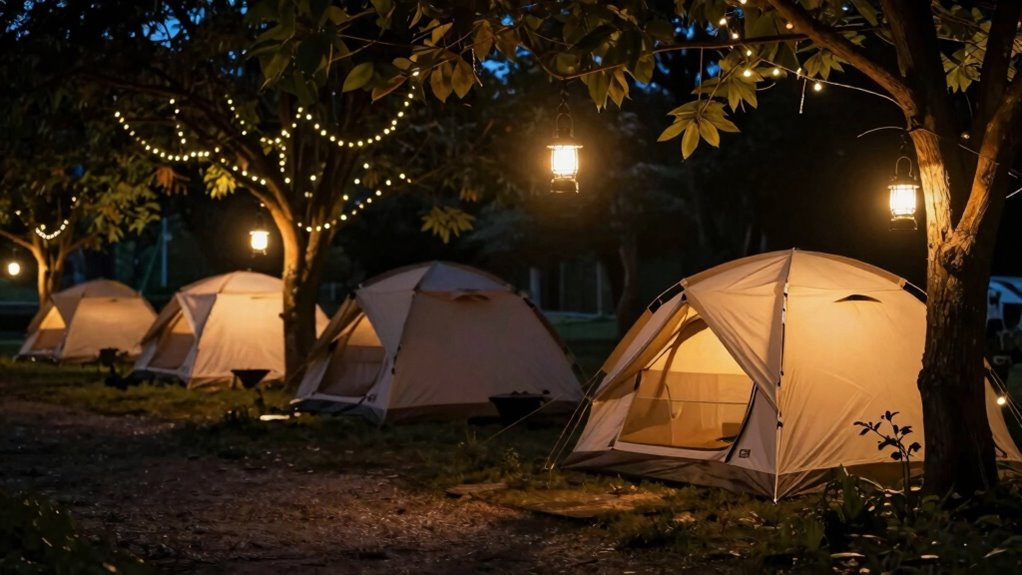
When setting up a camp, proper lighting is essential to guarantee safety, convenience, and a welcoming atmosphere after dark. The key to effective lighting is strategic lantern placement. You want to position your lanterns where they illuminate the entire campsite without creating harsh shadows or overly bright spots. Hanging a lantern from a sturdy tree branch or a dedicated hook at the center of your tent area helps disperse light evenly. If you’re working with multiple lanterns, place them at different heights and spots—near cooking areas, around tents, and along pathways—to ensure every corner is visible. Avoid clustering all your lights in one place, as this can cause glare and reduce overall visibility. Instead, aim for a balanced layout that provides sufficient light coverage while maintaining a cozy ambiance. To extend your camp’s lighting efficiency, consider the benefits of energy-efficient lighting, which can help conserve power during your stay.
Battery life is another critical factor when choosing your lanterns. You don’t want your lights flickering out in the middle of the night, so selecting lanterns with long-lasting batteries is a smart move. Prioritize models that feature high-capacity batteries or those that offer adjustable brightness settings, so you can conserve power when full brightness isn’t needed. Carry extra batteries or portable power banks, especially if you plan to camp for multiple nights. This way, you’re prepared for any unforeseen battery drain, and your campsite stays well-lit throughout your stay. Additionally, solar-powered lanterns can be a sustainable and environmentally friendly option, reducing the need for extra batteries and charging resources. Properly lighting maintenance can help extend the lifespan of your lanterns and ensure reliable performance during your camping trip. Regularly inspecting and cleaning your lanterns, along with charging them overnight, ensures you’re ready for the next evening’s lighting needs and maximizes their lifespan.

Collapsible Portable LED Camping Lantern XTAUTO Lightweight Waterproof Solar USB Rechargeable LED Flashlight Survival Kits for Indoor Outdoor Home Emergency Light Power Outages Hiking Hurricane 4-Pack
- 360° Lighting Coverage: Wide-range LED illumination for rooms and outdoor
- Adjustable Brightness: Pull up to change light intensity
- Compact & Portable: Collapsible design fits in pocket
As an affiliate, we earn on qualifying purchases.
As an affiliate, we earn on qualifying purchases.
Frequently Asked Questions
What Are the Best Battery-Powered Lighting Options for Camping?
You should consider portable lanterns and string lights for the best battery-powered camping illumination. Portable lanterns provide bright, focused light perfect for tents or cooking areas, and many come with long-lasting batteries. String lights add a cozy ambiance around your campsite without draining power quickly. Both options are easy to carry and set up, ensuring your camp stays well-lit and inviting while conserving battery life for extended trips.
How Can I Prevent Light Pollution at My Campsite?
You can prevent light pollution at your campsite by carefully controlling light direction and intensity. Aim your lights downward or inward to keep the glow contained, and set the brightness to a comfortable level so it doesn’t spill into the night sky or neighboring sites. By mindfully managing these aspects, you create a cozy, functional space that respects the environment and preserves the starry view for everyone.
Are Solar-Powered Lights Effective for Nighttime Camping?
Yes, solar-powered lights are effective for nighttime camping. They offer good solar efficiency, charging quickly during the day and providing reliable illumination at night. Plus, their light durability ensures they withstand outdoor conditions, so you don’t have to worry about frequent replacements. They’re eco-friendly and easy to use, making them a smart choice for creating a well-lit campsite without overdoing it or harming the environment.
What Safety Precautions Should I Take With Outdoor Lighting?
Think of outdoor lighting as a guiding star—shine wisely to keep your safety shining bright. Always prioritize campfire safety; keep flames contained and away from wiring. When setting up electrical wiring, avoid overloading circuits and secure cables to prevent trips and sparks. Test lights before use, keep a fire extinguisher nearby, and never leave lights unattended. With these precautions, your campsite becomes a safe haven glowing with confidence and care.
How Do I Choose Lighting That Doesn’t Disturb Wildlife?
To avoid disturbing wildlife, choose lighting that minimizes light sensitivity. Use dim, warm-colored lights, and position them away from animal habitats. Opt for solar or battery-powered lights with adjustable settings to control brightness. Keep lights low and shielded to prevent excessive glare. By being mindful of wildlife disturbance, you help safeguard animals’ natural behaviors and ensure your camping experience remains eco-friendly.
Conclusion
By choosing the right lighting setups, you enhance visibility, create ambiance, and guarantee safety—all without overdoing it. Keep it simple, keep it functional, and keep it cozy. Balance brightness with warmth, practicality with ambiance, and task lighting with mood lighting. When you strike that perfect harmony, your camp becomes a welcoming retreat, a safe haven, and a memorable experience. Light wisely, light thoughtfully, and let your camp shine just enough to make every moment brighter.