To build a smarter three-season outdoor kit, choose versatile gear that adapts to changing weather, like a lightweight tent with good ventilation and insulation, and a sleeping bag rated for cooler temperatures. Layer properly with moisture-wicking base layers, a warm insulating layer, and a waterproof shell. Include essential safety items such as a first aid kit, navigation tools, and emergency gear. Focus on lightweight, multipurpose items that guarantee safety, comfort, and flexibility—continue for more tips on optimizing your kit.
Key Takeaways
- Prioritize multi-purpose, lightweight gear that adapts to varying weather conditions and terrain.
- Include layered clothing for quick adjustments to temperature fluctuations.
- Pack essential safety and emergency tools, such as a first aid kit, navigation aids, and an emergency blanket.
- Research seasonal weather patterns and environmental conditions to select appropriate gear and plan accordingly.
- Optimize packing for weight and space, focusing on versatility and safety without overloading.
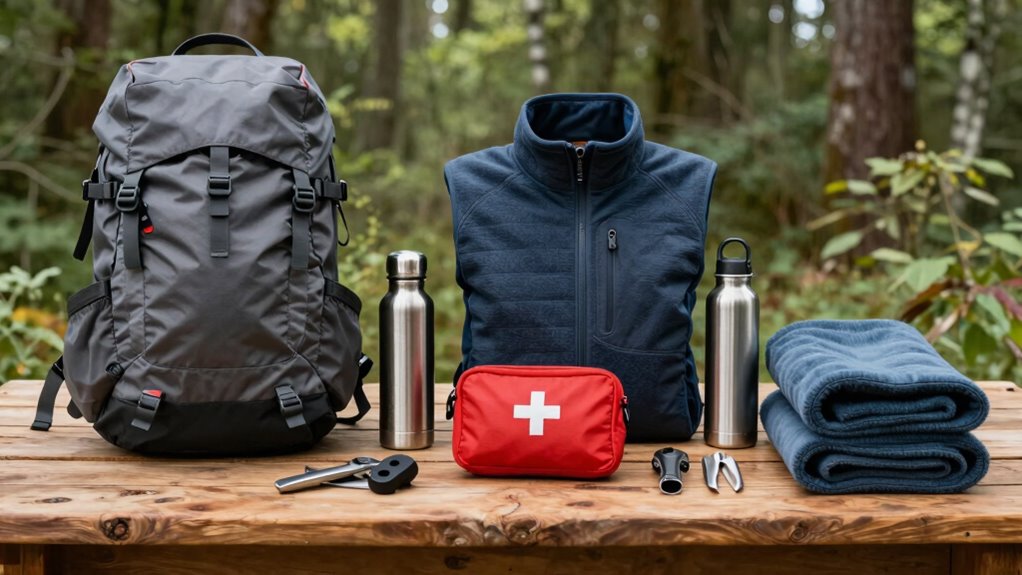
Preparing a three-season outdoor kit isn’t just about tossing a few items into a bag; it’s about thoughtfully selecting gear that keeps you comfortable and safe across variable weather. Your focus should be on weather preparedness, ensuring that no matter what Mother Nature throws your way, you’re ready. Start with versatile camping gear that can serve multiple purposes. Choose a lightweight tent with good ventilation for warm days and enough insulation for cooler nights. Pack a sleeping bag rated for slightly colder temperatures than you expect, so you’re prepared for unexpected dips in temperature. An insulated sleeping pad is essential; it keeps you warm from the ground and adds comfort, especially if you encounter damp or uneven terrain.
Choose versatile, multi-purpose gear to stay comfortable and safe across changing weather conditions.
Layering is key to weather preparedness. Invest in moisture-wicking base layers, a warm insulating layer, and a waterproof outer shell. This combination allows you to adjust quickly to changing conditions — adding or removing layers as needed. A quality rain jacket isn’t just for rain; it shields you from wind and keeps you dry in sudden storms. Pack extra clothing, including hats, gloves, and socks, because staying warm and dry is vital for maintaining energy and preventing hypothermia. When selecting camping gear, don’t overlook items like a multi-tool, headlamp, and a portable stove. These tools enhance your ability to adapt to different situations, whether you need to repair gear, navigate in low light, or prepare hot meals in chilly weather.
In terms of weather preparedness, always check the forecast before heading out, but also plan for surprises. Include emergency gear such as a first aid kit, a whistle, and an emergency blanket. These items can be lifesavers if conditions worsen unexpectedly. A compact, reliable map and compass or GPS help you stay on track in unfamiliar terrain, which is especially important if heavy rain or fog limits visibility. Additionally, understanding biodiversity and how ecosystems respond to weather changes can help you better anticipate environmental conditions and adapt accordingly. This knowledge can also guide you in selecting appropriate gear that is suitable for different terrains and weather conditions. Recognizing the importance of weather patterns can improve your planning and decision-making in outdoor environments. Remember, your goal is to build a kit that’s lightweight enough to carry comfortably but extensive enough to handle a range of weather scenarios. Think about packing items that serve multiple purposes—like a bandana that can be a sweat towel, sun shield, or makeshift sling.
To further enhance your preparedness, consider learning about local climate trends and seasonal variations, which can help you make more informed packing decisions in advance. Ultimately, your three-season outdoor kit should empower you to enjoy nature regardless of weather fluctuations. With careful selection of camping gear and a focus on weather preparedness, you’ll be ready for anything, making your adventures safer and more enjoyable.

Backpacking Tent for Camping 3-4 Person Hiking Ultralight Tent for Waterproof Windproof Outdoor Two Doors Tents Easy Quick Setup Lightweight Instant Tents(3-4 Person)
- Capacity: Fits 3-4 people comfortably
- Weather Resistance: Windproof and rainproof design
- Durable Materials: High-quality, long-lasting construction
As an affiliate, we earn on qualifying purchases.
As an affiliate, we earn on qualifying purchases.
Frequently Asked Questions
What Are the Most Lightweight Gear Options for Three-Season Camping?
For lightweight gear options, prioritize items with low gear weight that boost your packing efficiency. Choose ultralight tents and sleeping bags made from durable, lightweight materials like nylon or titanium. Opt for compact cooking gear and multi-use tools that reduce bulk. Layer clothing smartly to adapt to changing temperatures without adding unnecessary weight. Focusing on lightweight gear helps you move freely and enjoy your three-season camping adventures comfortably.
How Do I Prioritize Items for a Compact Outdoor Kit?
You should prioritize essentials like shelter, sleeping gear, and clothing, then consider gear maintenance needs to keep everything functional. Use packing techniques such as rolling clothes and organizing items in compartments to save space. Focus on multifunctional tools and lightweight options, and regularly check your gear for wear and tear. This approach guarantees your outdoor kit is compact, efficient, and ready to handle changing weather conditions.
Are There Eco-Friendly Materials Suitable for Outdoor Gear?
They say, “Waste not, want not,” and that’s true for outdoor gear too. You can choose gear made from sustainable fabrics like hemp, recycled nylon, or organic cotton, which are eco-friendly options. Look for items in biodegradable packaging, reducing environmental impact. These materials help you stay green while enjoying the outdoors. By selecting eco-conscious gear, you’re making a positive difference for nature and future adventures.
How Can I Customize My Kit for Different Weather Conditions?
You can customize your kit for different weather conditions by adjusting your weather layering strategy, adding or removing layers based on temperature and humidity. Focus on gear durability by selecting versatile, high-quality items that withstand various elements. Incorporate moisture-wicking base layers, insulating mid-layers, and waterproof outer shells to stay comfortable and protected. Regularly assess weather forecasts and adapt your gear choices accordingly, ensuring you’re prepared for any seasonal change.
What Safety Items Should Always Be Included in a Three-Season Kit?
You should always include safety items like emergency preparedness gear and first aid essentials in your three-season kit. Carry a well-stocked first aid kit with bandages, antiseptic wipes, pain relievers, and any personal medications. Add a flashlight, extra batteries, and a whistle for signaling. These items guarantee you’re prepared for minor injuries and emergencies, helping you stay safe and respond quickly to unexpected situations during your outdoor adventures.
Conclusion
Building a smarter three-season outdoor kit keeps you prepared without overloading. Remember, research shows that 78% of outdoor enthusiasts have experienced unexpected weather changes, making a versatile kit essential. By investing in quality gear and tailoring it to your activities, you guarantee safety and comfort on every adventure. So, take the time now to assemble a kit that adapts to unpredictable weather—because being prepared makes all the difference between a good trip and a great one.