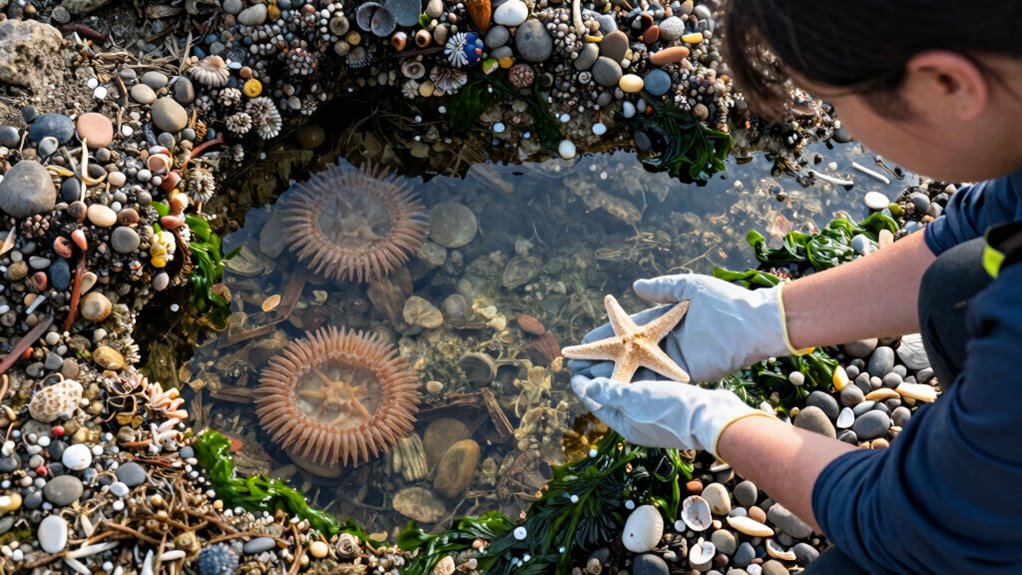

A responsible tide pool visit means staying on designated paths and keeping a safe distance from marine creatures. You avoid touching or removing animals or shells, and you use guides or apps to identify species without interference. You carry trash away and avoid flash photography to protect fragile ecosystems. By practicing these mindful behaviors, you help preserve these habitats for future visitors. Keep exploring—there’s more to learn about enjoying tide pools responsibly.
Key Takeaways
- Staying on designated paths to protect fragile tide pool habitats and prevent damage.
- Observing marine life quietly without touching or disturbing animals or shells.
- Carrying out all trash and removing any debris found in tide pools or along the shoreline.
- Using guides or apps for species identification without interference or harm.
- Supporting conservation efforts by practicing eco-friendly behaviors and respecting protected areas.
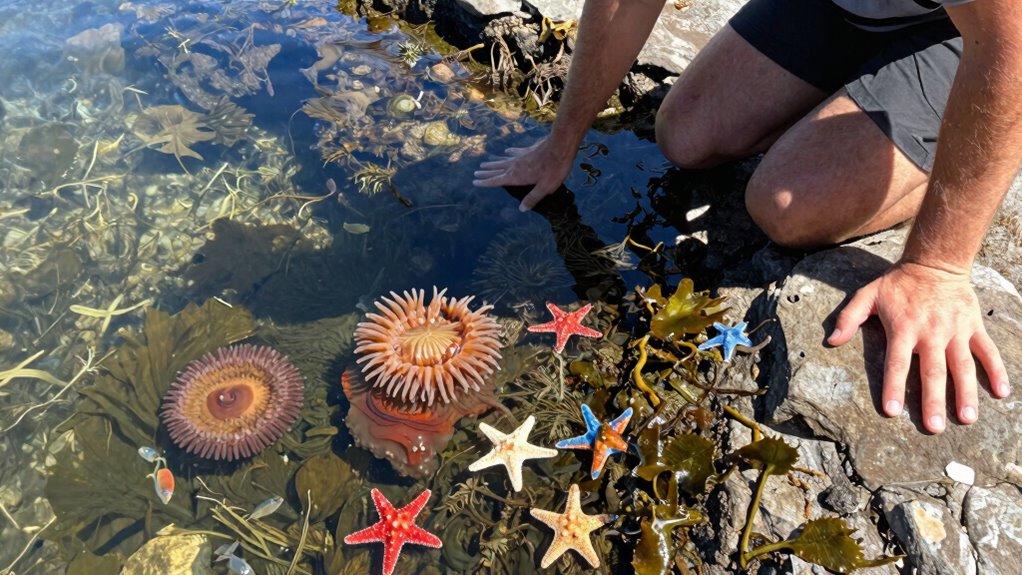
Tide pool visits offer a fascinating glimpse into the diverse marine life that thrives along rocky coastlines. As you explore these natural pools, it’s essential to stay mindful of your impact, practicing eco-friendly habits that support wildlife conservation. When you approach tide pools with respect, you help ensure these ecosystems remain vibrant and healthy for future visitors and marine creatures alike. Refrain from removing animals or shells, as disturbing these organisms can upset the delicate balance of the habitat. Instead, observe quietly and appreciate their natural behaviors, allowing them to go about their lives undisturbed.
Using eco-friendly practices also means being cautious about where and how you walk. Stick to designated paths and avoid stepping on fragile corals or sea plants that serve as shelter and food sources for marine life. Wear appropriate footwear to prevent accidental crushing of tiny creatures underfoot. When taking photographs, avoid using flash, which can startle or harm sensitive marine animals. Remember, your goal is to enjoy and learn, not to interfere with the ecosystem’s natural processes. Understanding marine ecosystems can deepen your appreciation for their complexity and fragility.
Stick to designated paths, wear proper shoes, and avoid flash photography to protect delicate marine life.
Wildlife conservation begins with awareness and responsible actions. If you see litter or debris in the tide pools or nearby shoreline, take the initiative to clean it up. Trash, especially plastics, can be deadly to marine animals that mistake it for food or become entangled. Carry a small bag or container to collect your waste, and dispose of it properly afterward. By doing so, you help reduce pollution and protect the health of these ecosystems. Properly managing human impact is crucial to maintaining the balance of these habitats. Additionally, being aware of marine life behavior can help you better understand how to interact responsibly during your visit. Furthermore, learning about marine protected areas can enhance your understanding of conservation efforts that safeguard these habitats.
Respect wildlife by maintaining a safe distance from creatures such as sea stars, anemones, and small fish. Touching or handling marine animals can cause stress or injury to them, and oils or lotions on your hands can be harmful. Remember, you’re a visitor in their habitat, so observe without interference. If you’re curious about a particular species, consider bringing a guidebook or using a mobile app to identify it without disturbing its environment.
Ultimately, responsible tide pool visits hinge on your commitment to eco-friendly practices and wildlife conservation. Your conscious choices—staying on trails, minimizing touch, picking up trash—make a real difference. By respecting these ecosystems, you help preserve their beauty and diversity, ensuring future generations can also enjoy the wonder of tide pools. When you leave, do so with gratitude for the chance to witness such natural marvels, knowing you’ve played a part in protecting them.
eco-friendly tide pool guidebook
As an affiliate, we earn on qualifying purchases.
As an affiliate, we earn on qualifying purchases.
Frequently Asked Questions
What Should I Wear for a Tide Pool Visit?
For a tide pool visit, you should wear sturdy, non-slip shoes like old sneakers or water shoes to protect marine life and yourself. Dress in layers, including a hat and sunscreen, to stay comfortable. Remember, practicing sustainable practices means avoiding touching or disturbing creatures. Your clothing choices support marine conservation by helping you stay safe and respectful of the fragile ecosystem, ensuring future generations can enjoy tide pools too.
Are Tide Pools Safe for Children?
Think of tide pools as tiny underwater worlds waiting to be explored, but safety comes first. Yes, tide pools are generally safe for children when you follow marine conservation principles and tide pool etiquette. Keep a close eye on them, avoid touching delicate creatures, and teach respect for nature. By doing so, you guarantee a fun, educational experience that nurtures curiosity while protecting these fragile ecosystems.
How Can I Identify Different Tide Pool Species?
You can identify different tide pool species by observing their size, shape, color, and features. Use a field guide or smartphone app focused on marine biodiversity to assist with species identification. Look for distinctive traits like shell patterns, tentacles, or fins. Carefully examine each creature without disturbing it, and take notes or photos to compare later. This helps you appreciate the rich diversity of tide pools responsibly.
What Time of Year Is Best for Tide Pooling?
You might think any time’s fine for tide pooling, but the best season actually aligns with marine conservation efforts—spring and early summer. During this period, tide pool ecology thrives, and you can observe more diverse species. Visiting then minimizes disturbance to fragile ecosystems, helping protect marine life. So, ironically, the busiest times aren’t always the best; choose your visit wisely to enjoy and preserve these vibrant underwater worlds.
Are There Guided Tours Available for Tide Pools?
Yes, plenty of guided tours are available for tide pools. These tours often emphasize marine conservation and ethical collecting, teaching you how to enjoy tide pooling responsibly. Guides help you identify marine life without disturbing habitats or collecting organisms, ensuring you contribute to preservation efforts. Joining a guided tour makes your visit informative and respectful, allowing you to appreciate nature while protecting fragile ecosystems for future generations.
Conclusion
When you visit tide pools responsibly, you become a hero for marine life, ensuring these tiny ecosystems thrive for generations to come. Respect the delicate creatures and their habitat, leave no trace of your visit, and keep a close eye on your surroundings. Remember, a single mindful visit can save an entire tidal community from the brink of disaster—you’re more powerful than you realize! So go out, explore, and protect these incredible underwater worlds like the true champion you are.