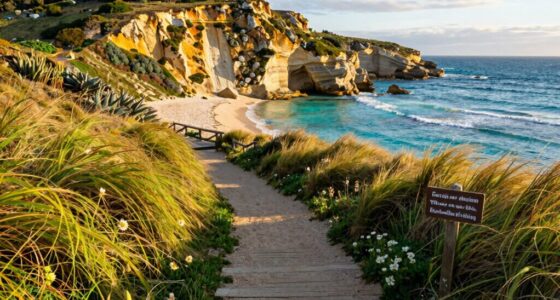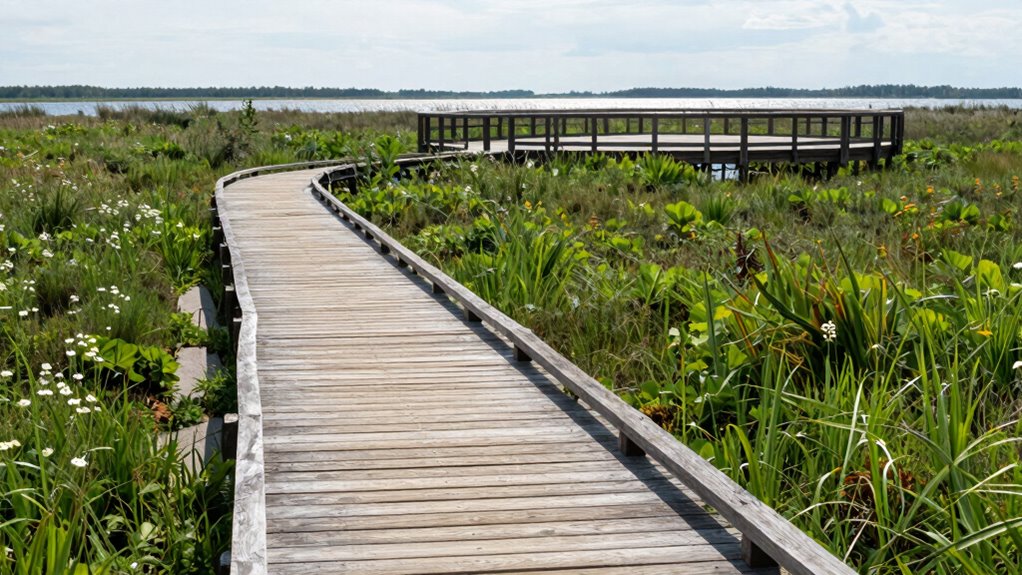
Boardwalks, marked paths, and viewing zones help protect delicate ecosystems by guiding you away from fragile plants and wildlife, keeping natural habitats intact. They also guarantee your safety by providing stable, non-slip surfaces and safe vantage points. These features help manage visitor flow and prevent overcrowding, making your experience more enjoyable. Plus, clear signage and organized trails enhance your understanding of the environment. Stick around to discover more about how these features benefit both nature and visitors.

Get travel and outdoor gear delivered free — and shop member deals
- Fast, free delivery on millions of items
- Access to Prime Big Deal Days deals on October 6–7
- Prime Video, Amazon Music and more included
Key Takeaways
- They protect delicate ecosystems by guiding visitor movement and reducing habitat disturbance.
- They enhance visitor safety through stable, non-slip surfaces and secure viewing areas.
- They facilitate environmental education by providing designated spaces for interpretive signage and learning.
- They help manage visitor flow, preventing overcrowding and minimizing environmental impact.
- They promote sustainable recreation by balancing human enjoyment with conservation efforts.
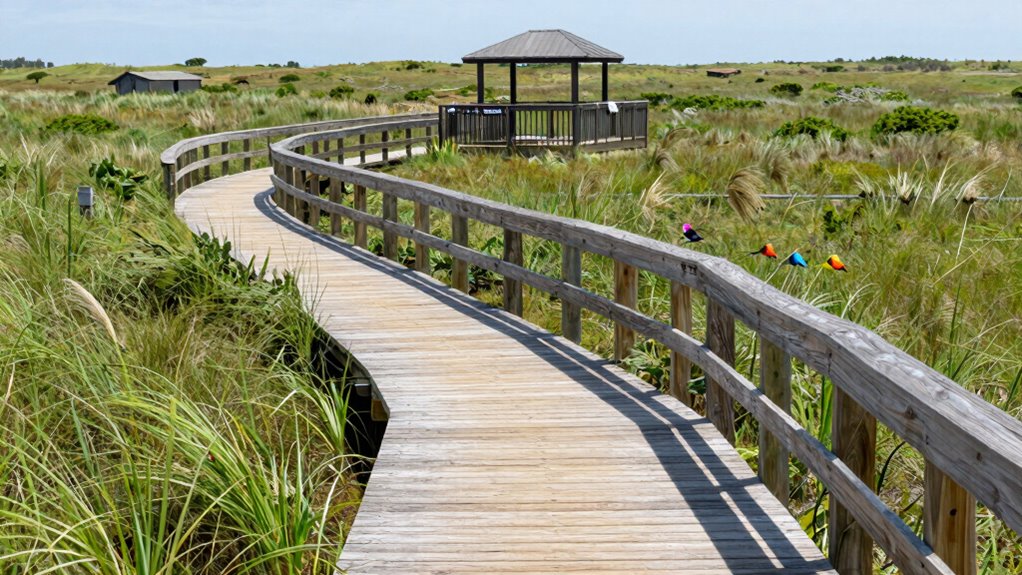
Have you ever wondered why parks and nature reserves invest in boardwalks, marked paths, and viewing zones? It’s because these features play an essential role in protecting the environment while guaranteeing your safety as a visitor. When you walk along a well-designed trail, you help preserve delicate ecosystems and prevent damage to plants and wildlife. These designated pathways guide visitors through natural areas, reducing the likelihood of trampling fragile vegetation or disturbing nesting animals. By sticking to these paths, you’re actively contributing to wildlife preservation, supporting efforts to maintain healthy habitats for a variety of species. Additionally, designated pathways ensure that visitor impact is minimized, helping to sustain the natural beauty for future generations. Properly maintained pathways can also serve as a conservation tool, guiding visitors to appreciate nature while minimizing their footprint.
Following designated trails helps protect ecosystems and supports wildlife preservation.
Visitor safety is another key reason for the existence of boardwalks and viewing zones. Nature can be unpredictable, with uneven terrain, slippery surfaces, or hidden hazards like quicksand or unstable ground. When you use designated walkways, you minimize the risk of accidents or injuries. Boardwalks often feature sturdy railings and non-slip surfaces, providing stability and security, especially in wet or marshy areas. Viewing zones are carefully positioned to give you the best vantage points without encroaching on sensitive habitats or putting yourself in danger. These zones prevent crowding and ensure that everyone can enjoy the scenery without causing harm to the environment or risking their own safety. Moreover, environmental protection is a crucial aspect of sustainable tourism, helping to ensure that natural areas remain vibrant and accessible for future visitors. Incorporating educational signage** along these paths can also inspire visitors to become more mindful of conservation efforts and their role in protecting the environment. Properly designed and maintained pathways help to manage visitor flow, preventing overcrowding** and ensuring a more enjoyable experience for all.
Furthermore, marked paths serve an educational purpose, guiding you through the landscape in an informative way. Signage along these routes can tell you about the local flora, fauna, and conservation efforts, deepening your understanding of the ecosystem. They help you appreciate the natural beauty without feeling lost or overwhelmed, encouraging responsible exploration. When you follow these marked routes, you also help manage visitor flow, reducing congestion and preventing overcrowding in sensitive areas. This organization benefits everyone, allowing you to experience nature at a comfortable pace while protecting the environment.
In essence, the strategic placement of boardwalks, marked paths, and viewing zones balances your desire to explore with the need to preserve wildlife and guarantee safety. These features create a sustainable way to enjoy nature without leaving a heavy footprint. So next time you see a designated trail or viewing platform, remember that it’s there not just for convenience but to help you connect with nature responsibly, safeguarding the environment and your well-being at the same time.
As an affiliate, we earn on qualifying purchases.
Frequently Asked Questions
How Do Boardwalks Impact Local Wildlife Differently Than Natural Terrain?
Boardwalks minimize wildlife disturbance by keeping visitors on designated paths, preventing direct contact with animals and sensitive habitats. Unlike natural terrain, they reduce habitat fragmentation, allowing wildlife to move freely without disruption. You help protect local ecosystems by adhering to boardwalks, as you prevent trampling of vegetation and disturbance to animal homes. This careful approach ensures the preservation of natural behaviors and promotes healthy, thriving wildlife populations.
What Materials Are Best for Building Durable, Eco-Friendly Viewing Zones?
You should choose sustainable materials like recycled wood, bamboo, or composite lumber for building durable, eco-friendly viewing zones. These materials resist wear and require less maintenance, making them ideal. Incorporate eco-friendly design principles by using permeable surfaces and natural finishes to minimize environmental impact. This approach guarantees your viewing zones are long-lasting, environmentally responsible, and seamlessly blend into the natural surroundings, enhancing visitor experience while protecting the ecosystem.
How Can Marked Paths Prevent Visitor Overcrowding in Sensitive Areas?
Ever wonder how you can protect fragile ecosystems while still enjoying nature? Marked paths help prevent visitor overcrowding by guiding your flow of movement, ensuring you stay on designated routes. This crowd control minimizes habitat disturbance and preserves the area’s beauty. When everyone follows the same clear pathways, you contribute to conservation efforts and enjoy a safer, more enjoyable experience. Isn’t it worth taking a few steps to protect what we cherish?
What Are the Maintenance Challenges for Long-Term Boardwalks and Paths?
You’ll face maintenance challenges like overcoming trail erosion and ensuring structural stability over time. Weather, foot traffic, and natural wear weaken the materials, requiring regular inspections and repairs. You must replace rotting wood, reinforce foundations, and manage drainage to prevent erosion damage. Staying proactive helps maintain safe, accessible paths and prolongs the lifespan of long-term boardwalks and paths, ensuring visitors enjoy the experience without risking stability or safety.
How Do Viewing Zones Influence Visitor Behavior and Environmental Awareness?
Viewing zones boost visitor engagement by encouraging wildlife interaction and fostering a sense of connection with nature. When you use designated zones, you’re more likely to observe animals respectfully, reducing disturbance. This setup heightens your environmental awareness, making you more conscious of conservation efforts. By guiding your behavior, viewing zones help protect fragile ecosystems while enriching your experience, ensuring both wildlife and visitors benefit from responsible exploration.
Conclusion
Just as Huck Finn navigates the Mississippi with purpose, your journey through nature benefits from boardwalks, marked paths, and viewing zones. They guide you safely, allowing you to connect deeply without disturbing the wild. These features act as your compass, your gentle hand, ensuring your adventure remains respectful and memorable. Embrace them, and like a seasoned traveler, you’ll discover the harmony of exploring while preserving the beauty that beckons you forward.
Halloween Picks
halloween
As an affiliate, we earn on qualifying purchases.