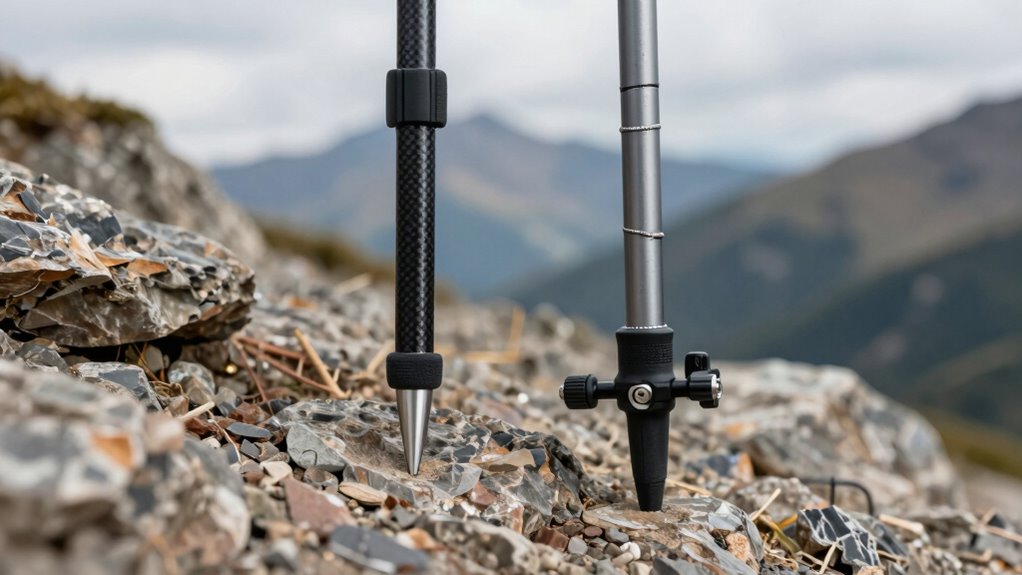

While carbon fiber trekking poles are lightweight and easy to carry, they can be fragile and prone to cracking or snapping under stress. Durability is vital when tackling tough terrains or heavy loads, and high-quality aluminum offers better impact resistance without adding too much weight. Choosing materials that balance strength and weight can guarantee your poles last longer and support you safely. Keep going to discover how to find the best fit for your hiking adventures.

Get travel and outdoor gear delivered free with Prime
- Fast, free delivery on millions of items
- Prime Video, Amazon Music and more included
- Member-only deals all year
Key Takeaways
- Carbon fiber poles are lightweight but tend to be fragile and prone to cracking under stress.
- High-quality aluminum offers greater impact resistance and durability for rough terrains.
- Durability reduces the risk of breakage, ensuring safety during demanding outdoor activities.
- Ergonomic design enhances comfort, which is especially important when using heavier, more durable materials.
- Balancing weight and strength is essential; heavier materials like aluminum can outperform fragile carbon fiber in tough conditions.
Have you ever wondered how trekking poles can enhance your hiking experience? It’s not just about having something to steady yourself on uneven terrain. The right poles can substantially improve your comfort, reduce fatigue, and even prevent injuries. When choosing trekking poles, you’ll notice a variety of materials, but understanding the importance of material durability and ergonomic design can help you make the best choice for your adventures.
Material durability is a key factor that often gets overlooked. While lightweight materials like carbon fiber are popular for their reduced weight, they tend to be more fragile and prone to cracking or snapping under stress. If you’re hiking on rugged trails or carrying a heavier pack, durability becomes essential. Poles made from high-quality aluminum, for example, can withstand more impact and rough handling without compromising their integrity. Aluminum offers a balance of strength and weight, ensuring your poles last longer, especially if you frequently trek challenging terrains. Opting for sturdy materials means you won’t have to worry about sudden breakage when you need your poles the most, providing you peace of mind during your hikes.
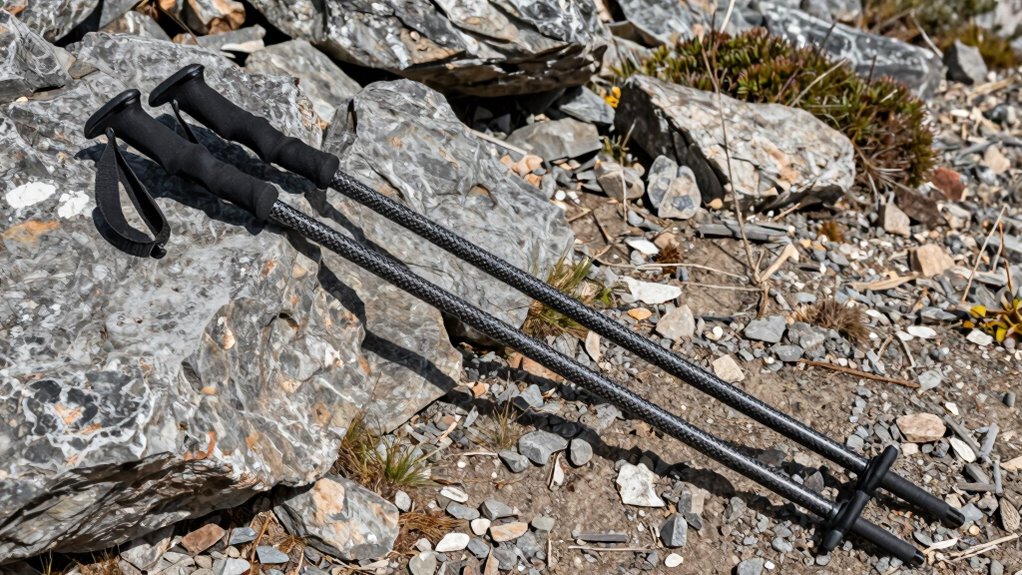
High-quality aluminum trekking poles offer durability and strength for rugged trails and heavy loads.
Another vital aspect is ergonomic design. Even the most durable material won’t make a difference if the poles aren’t comfortable to hold or adjust. The best trekking poles feature ergonomic handles that fit naturally in your hands, reducing strain and preventing blisters or discomfort during long treks. Look for designs with contoured grips, padded sections, or adjustable straps that allow you to customize the fit. An ergonomic design ensures that your hands and wrists stay comfortable, helping you maintain proper posture and exert less effort with each stride. When your poles feel good in your hands, you’re more likely to use them consistently, which in turn improves your stability and reduces fatigue.
While carbon fiber might seem like the ideal choice because of its lightweight nature, it’s important to weigh this against material durability and ergonomic factors. A lightweight pole that’s fragile can end up being more of a hindrance than a help, especially if it breaks during your hike. Conversely, a slightly heavier but more durable and ergonomically designed pole can make your experience safer and more enjoyable. Choosing durable materials and ergonomic design are key to ensuring your trekking poles stand the test of time and terrain. Ultimately, it’s about finding the right balance—material strength that supports your needs and an ergonomic design that keeps you comfortable mile after mile. When you prioritize these aspects, you’ll find that your trekking poles become invaluable tools that enhance every step of your outdoor adventure.
Frequently Asked Questions
Are Carbon Fiber Poles More Environmentally Friendly Than Aluminum?
Carbon fiber poles aren’t necessarily more eco-friendly than aluminum. While they often have a lower weight and longer lifespan, their eco impact during production is higher, and recyclability is limited. Aluminum is more recyclable and has a well-established recycling process, reducing environmental harm. If eco impact and recyclability are your priorities, aluminum trekking poles might be a better choice, as they support sustainability and reduce waste.
How Do Carbon Fiber Trekking Poles Perform in Extreme Cold Conditions?
In extreme cold, carbon fiber trekking poles may become more brittle, reducing their durability. Studies show that at temperatures below -20°C, carbon fiber can lose up to 20% of its impact resistance. You’ll find that cold weather performance suffers because the material’s brittleness increases, making it prone to cracking or snapping under stress. If you hike in freezing conditions, consider poles with reinforced or alternative materials for better reliability.
Can Carbon Fiber Poles Be Repaired if Cracked or Broken?
You can’t easily repair cracked or broken carbon fiber trekking poles because repair challenges are significant. The material’s resilience makes fixing difficult; cracks often weaken the structure further. While some DIY fixes exist, they rarely restore full strength or safety. For reliable performance, it’s usually best to replace damaged carbon fiber poles, as attempts at repair may compromise their integrity and durability.
Are There Differences in Weight Between Carbon Fiber and Other Materials?
You’ll notice that carbon fiber trekking poles are generally lighter than those made from aluminum or other materials. The material weight gives carbon fiber a significant advantage if you’re aiming for lightweight gear. However, weight differences can be subtle, and some aluminum poles are nearly as light, often offering better durability. So, while carbon fiber is usually lighter, consider your specific needs for strength and weight when choosing your trekking poles.
What Are the Long-Term Durability Comparisons of Carbon Fiber Versus Aluminum Poles?
Like a fragile glass fortress, carbon fiber can suffer from material fatigue over time, reducing its long-term durability compared to aluminum. You might find it less repairable, as cracks or breaks are harder to fix without specialized tools. Aluminum poles, though heavier, offer more resilience and easier repairs, making them a better choice for durability in the long run. So, consider your trekking needs before choosing between these materials.
Conclusion
While carbon fiber trekking poles are lightweight and strong, they aren’t always the best choice for everyone. Surprisingly, research shows that carbon fiber poles can be up to 30% more prone to sudden failure than aluminum ones. So, consider your terrain and hiking style before choosing. Sometimes, a sturdier, more flexible aluminum pole might serve you better, especially if you hike rough trails or prefer durability over weight savings. Pick what truly fits your adventure.
Halloween Picks
halloween
As an affiliate, we earn on qualifying purchases.