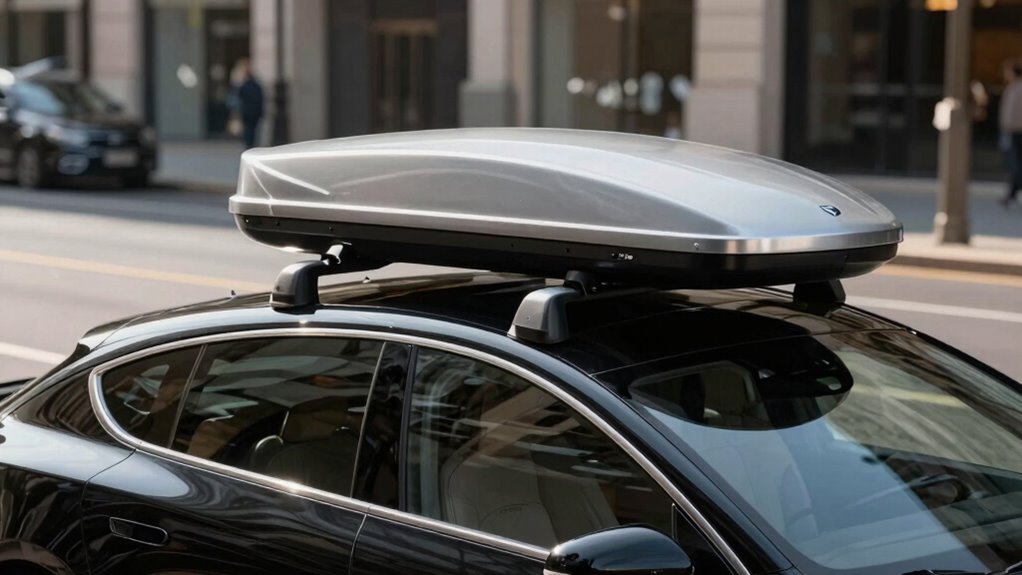

Adding a roof box to your EV increases cargo space but also impacts its aerodynamics, resulting in more wind resistance and drag. This extra resistance causes your vehicle’s motor to work harder, which reduces your range—especially at highway speeds. The size and shape of the box matter; streamlined models cause less disruption. If you want to keep your EV’s efficiency in check, understanding how to choose and install the right roof box can make a difference—you’ll discover more soon.
Key Takeaways
- Roof boxes increase surface area, disrupting airflow and raising aerodynamic drag.
- Added drag from roof boxes causes EVs to consume more energy, reducing range.
- The size, shape, and speed influence how much a roof box impacts vehicle efficiency.
- Proper installation and aerodynamically designed boxes help minimize range loss.
- Removing the roof box when not needed maintains optimal vehicle performance and range.
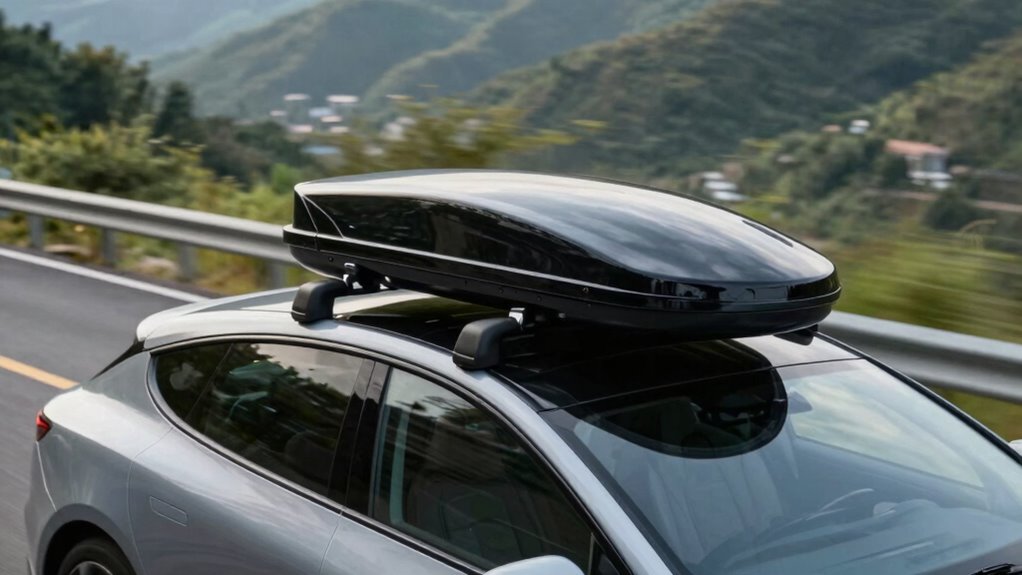
Have you ever wondered how to maximize your electric vehicle’s cargo space without sacrificing style or efficiency? Adding a roof box is an effective way to do so, but it’s essential to understand how it impacts your EV’s performance. When you install a roof box, you’re increasing your vehicle’s cargo capacity, which is great for trips or hauling larger items. However, it’s important to recognize that a roof box can considerably affect the aerodynamic impact of your car. Your EV relies heavily on its aerodynamics to optimize range, and any added surface that disrupts airflow can cause increased drag, leading to reduced efficiency and shorter driving distances.
As you attach a roof box, you alter the way air flows over your vehicle. Without one, your EV’s sleek design is optimized for minimal wind resistance. Once installed, the box protrudes above the roofline, creating additional surface area that forces air to work harder to pass over and around it. This increased drag means your motor has to exert more energy to maintain speed, which in turn drains your battery faster. The result? A noticeable decrease in your vehicle’s range, especially during highway driving where aerodynamics play a more prominent role.
To minimize the aerodynamic impact, you should choose a roof box designed with aerodynamics in mind. Look for models with a smooth, streamlined shape that aligns with your vehicle’s contours. When installing, make sure it’s mounted securely and flush with the roofline to reduce turbulence. Properly fitted roof boxes help maintain a more aerodynamic profile, which can help mitigate some of the range loss. Additionally, keeping the box loaded evenly and removing it when not in use can help preserve your EV’s efficiency. Understanding aerodynamic principles can further help you make informed decisions about vehicle modifications and accessories.
Frequently Asked Questions
Do Roof Boxes Affect EV Charging Speed?
Yes, roof boxes can affect your EV’s charging speed. They increase drag, which boosts wind resistance and forces your vehicle’s motor to work harder. This extra effort can reduce your range, making you need more frequent charges. While your EV doesn’t technically charge slower, the increased drag means you’ll drain your battery faster, leading to more stops at charging stations. Keep this in mind when using roof boxes on long trips.
Are There Specific Roof Box Designs for Electric Vehicles?
Yes, there are specific roof box designs for electric vehicles focused on aerodynamic efficiency. These designs often feature sleek, streamlined shapes and smooth surfaces to minimize drag, helping preserve your EV’s range. You’ll find various design variations tailored to different vehicle sizes and styles, ensuring you can choose a roof box that reduces wind resistance while still offering ample storage. This way, you enjoy better energy efficiency without sacrificing convenience.
How Do Roof Boxes Impact EV Safety Features?
Imagine driving your EV with a roof box that seamlessly blends with your car’s design. Roof box compatibility guarantees you don’t compromise safety features, as modern designs follow strict safety regulations. Properly installed, they don’t interfere with sensors or cameras, keeping your vehicle’s safety intact. Always check that your roof box meets safety standards, so your journey remains secure without sacrificing the convenience of extra cargo space.
Can Roof Boxes Be Removed Easily on EVS?
Yes, roof boxes on EVs can be removed easily if they have detachable roof racks with quick release mechanisms. You just need to unfasten and detach the roof rack, then lift off the roof box. This allows you to reduce drag and improve range when you’re not using the extra storage. Make sure to follow the manufacturer’s instructions for safe and proper removal, ensuring your roof box is securely stored afterward.
Are There Weight Limits for Roof Boxes on EVS?
Yes, there are weight limits for roof boxes on EVs. You should verify your vehicle’s EV roof load capacity to make certain the roof box, including its weight, doesn’t surpass the manufacturer’s maximum. Overloading can affect your EV’s handling and range, so always select a roof box within the recommended roof box weight and EV roof load limits. This way, you keep safe and optimize your EV’s efficiency.
Conclusion
Imagine cruising down the highway with the wind whispering past your roof box, its shape slicing through air like a blade. While it adds extra space, it also whispers a toll on your EV’s range, like a silent weight on your journey. So, before you add that roof box, picture your car’s sleek silhouette transforming into a gusty sail. Balance your storage needs with the wind’s quiet pull, and keep your adventure going further.