
To hike responsibly at Aoraki/Mount Cook, stick to designated trails and follow trail markers to prevent erosion and damage to fragile alpine plants. Practice Leave No Trace by packing out all waste and using eco-friendly gear. Respect wildlife and sensitive areas, and consider guided tours to learn about the environment and indigenous culture. By adopting sustainable practices, you help preserve this stunning landscape for future visitors—continue to explore how you can make a positive impact.

Get travel and outdoor gear delivered free — and shop member deals
- Fast, free delivery on millions of items
- Access to Prime Big Deal Days deals on October 6–7
- Prime Video, Amazon Music and more included
Key Takeaways
- Stick to designated trails and follow signage to prevent erosion and protect fragile ecosystems.
- Use eco-friendly gear made from sustainable, biodegradable, or recycled materials.
- Practice Leave No Trace principles by packing out trash and minimizing wildlife disturbance.
- Join guided tours or ranger-led activities to learn responsible hiking practices and ecological importance.
- Respect wildlife and avoid entering fragile zones to preserve native habitats and prevent damage.
How to Enjoy Aoraki/Mount Cook Responsibly

To enjoy Aoraki/Mount Cook responsibly, you need to be mindful of the fragile alpine environment. Respect the mountain geology by sticking to designated trails and avoiding shortcuts that can cause erosion or disturb the landscape. Learn about local legends tied to the mountain, such as stories of how Aoraki formed and its spiritual significance to Māori. These legends deepen your appreciation while reminding you to honor the land. Pack out all rubbish, stay on marked paths, and keep noise to a minimum to preserve the area’s serenity and natural beauty. By respecting both the geological features and cultural stories, you help protect this iconic mountain for future visitors and maintain its pristine condition. Incorporating innovative sustainable practices can further minimize your environmental impact during your visit.
Understanding Aoraki’s Unique Ecosystem
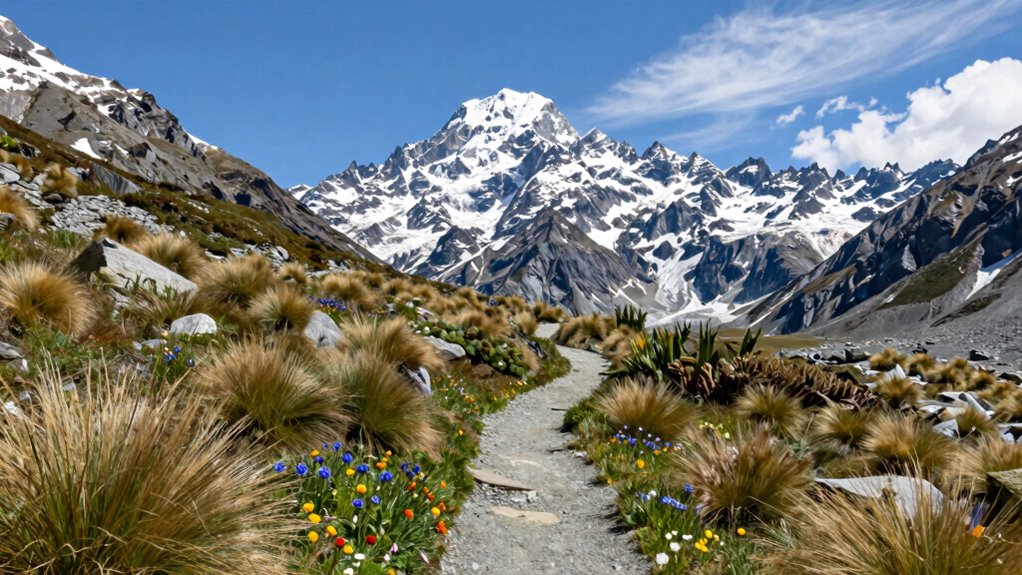
To truly appreciate Aoraki’s ecosystem, you need to understand how alpine plants have adapted to survive in harsh conditions. These specialized plants and the wildlife that inhabit the area face ongoing conservation challenges. Recognizing their delicate balance helps you hike responsibly and protect this unique environment. Supporting biodiversity hotspots can ensure the preservation of these rare and fragile species for future generations.
Alpine Plant Adaptations
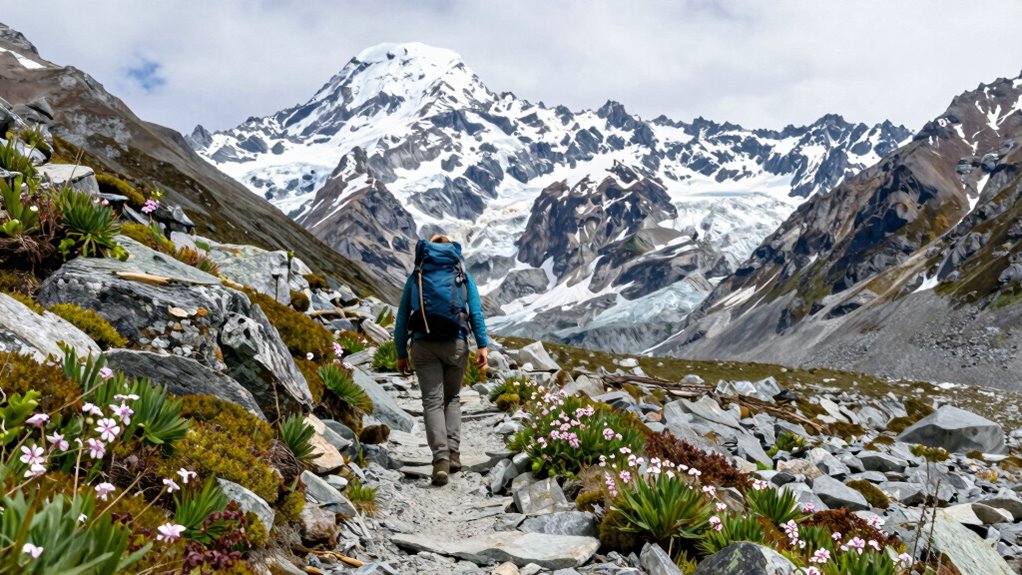
Because of the extreme conditions in Aoraki’s alpine environment, plants have developed remarkable adaptations to survive. These alpine plant adaptations enable the flora to withstand cold temperatures, strong winds, and limited soil nutrients. Many plants grow low to the ground, reducing exposure to harsh winds and conserving heat. You’ll notice their thick, waxy coatings that prevent moisture loss and protect against cold damage. Some alpine flora resilience comes from slow growth rates, allowing plants to allocate resources efficiently. Others produce hardy seeds that can remain dormant until conditions are favorable. These adaptations help the plants endure the short growing seasons and extreme weather, ensuring their survival in this fragile ecosystem. Additionally, the Sun’s energy plays a crucial role in driving the limited growing season, influencing plant growth cycles in this harsh environment. The availability of nutrients in the soil is also limited, prompting plants to develop efficient nutrient absorption strategies to thrive. Furthermore, their ability to adapt to environmental stressors is vital for their persistence in such a challenging habitat. Understanding these adaptations highlights the importance of conserving this delicate ecosystem from human impacts and climate change.
Wildlife Conservation Challenges
Aoraki’s unique ecosystem presents significant conservation challenges due to its fragile and specialized wildlife. The ecological balance depends on maintaining pristine animal habitats, which are easily disrupted by human activity. You need to be mindful that even small disturbances can threaten vulnerable species adapted to harsh alpine conditions. Invasive species, climate change, and increased foot traffic threaten native animals’ survival, making it harder to preserve natural behaviors and breeding grounds. Protecting this delicate environment requires careful management and strict regulations. By staying on designated trails and respecting wildlife, you help minimize impacts on animal habitats. Your awareness and responsible actions are essential to ensuring that Aoraki’s exceptional ecosystem remains resilient, supporting diverse species for generations to come. Implementing conservation strategies tailored to sensitive alpine environments can further aid in safeguarding this unique habitat. Additionally, understanding the importance of native species and their roles can help inform better preservation efforts. Recognizing the impact of human activity on fragile ecosystems is vital for developing effective conservation policies. Engaging local communities and visitors in environmental education initiatives can foster greater stewardship and long-term protection. Promoting public awareness about the ecosystem’s fragility is crucial for fostering responsible tourism and conservation efforts.
Why Protecting Aoraki Matters for Future Generations

Protecting Aoraki guarantees that future generations can experience its awe-inspiring beauty and the essential ecosystems it supports. This mountain holds deep cultural significance for Māori, symbolizing strength and reverence. Preserving Aoraki ensures that these cultural stories and traditions remain alive for those who come after you. Additionally, safeguarding the alpine environment helps combat the impacts of climate change, which threatens to melt glaciers and disrupt local ecosystems. By taking action now, you help maintain the mountain’s natural integrity, ensuring it remains a source of inspiration and connection. Furthermore, supporting vetted conservation efforts ensures that the mountain’s unique environment is preserved responsibly and sustainably. climate change poses a significant risk to the fragile alpine areas, emphasizing the importance of proactive preservation measures. Protecting these areas also helps maintain the biodiversity that is vital for ecological health and resilience. Recognizing the ecological significance of Aoraki encourages ongoing efforts to protect and restore its delicate habitats, ensuring their survival for generations to come.
Planning Your Eco-Friendly Hike at Aoraki
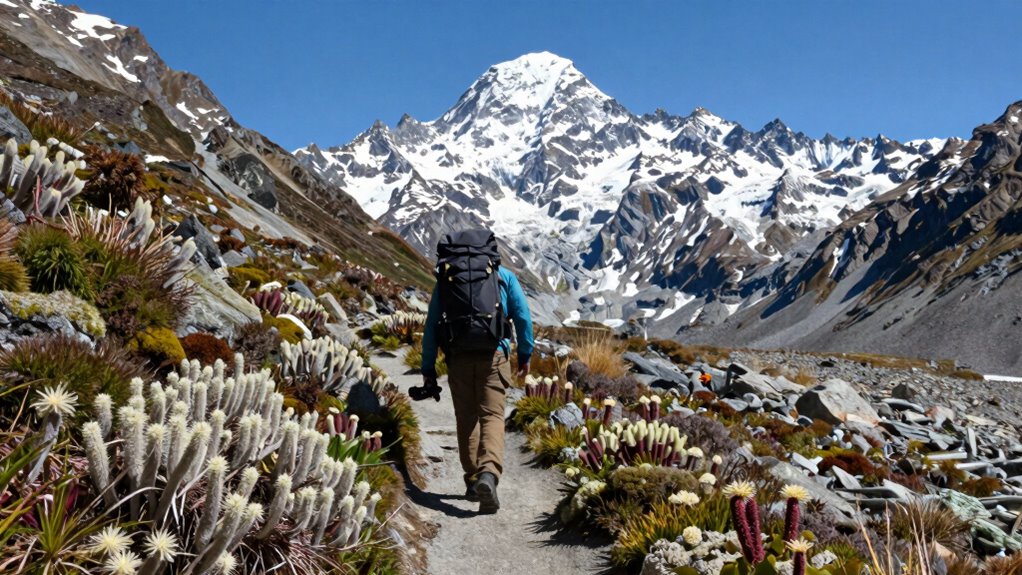
To minimize your impact, start by packing eco-friendly gear that reduces waste and pollution. Make sure to follow trail markers closely to stay on designated paths and protect sensitive habitats. Being mindful of these steps helps preserve Aoraki’s fragile alpine environment for future explorers. Using high-pressure sprayers can help you apply paint more efficiently and with less waste during maintenance projects, similar to how mindful hiking preserves natural spaces. Additionally, choosing sustainable practices aligns with environmental conservation principles essential for maintaining the area’s pristine condition. Practicing Leave No Trace techniques ensures that your visit leaves minimal disturbance on the delicate ecosystem. Incorporating sustainable practices into your visit supports the long-term preservation of the alpine environments, ensuring they remain pristine for generations to come. Adopting plant-based remedies can also reduce reliance on synthetic products, further supporting environmental health.
Pack Eco-Friendly Gear
Planning your eco-friendly hike at Aoraki starts with choosing the right gear that minimizes environmental impact. Focus on eco friendly gear made from sustainable materials, like recycled fabrics or biodegradable products. Opt for lightweight, durable gear to reduce the need for excess packing and lessen your carbon footprint. Sustainable packing involves using reusable containers, avoiding single-use plastics, and selecting items that can be easily repurposed or recycled. Consider bringing a reusable water bottle, eco-friendly utensils, and biodegradable cleaning supplies. By prioritizing sustainable packing, you help protect Aoraki’s fragile alpine environment. Choose gear that’s designed to last, ensuring you won’t need replacements or generate waste after your trip. Your mindful choices in gear help preserve the pristine beauty of this delicate landscape. Incorporating environmentally friendly practices into your packing routine further minimizes your impact and supports conservation efforts. Additionally, selecting eco-conscious materials for your gear can significantly reduce your ecological footprint during your adventure. Being aware of minimal impact hiking techniques also enhances your ability to leave no trace.
Follow Trail Markers
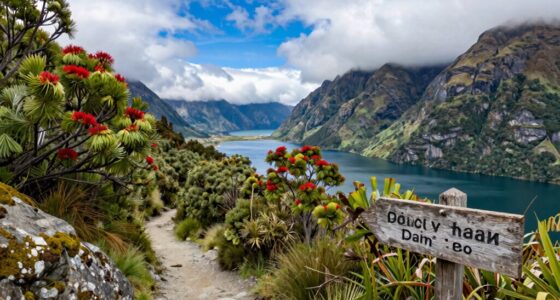
Following the trail markers is key to staying on the right path and minimizing your impact on Aoraki’s delicate environment. Respecting trail etiquette and paying attention to marker importance helps protect fragile alpine areas. Always follow designated paths and avoid shortcuts that can damage vegetation or cause erosion. Keep an eye out for signs and markers—they guide you safely while preserving the landscape’s integrity. Staying on marked trails prevents unnecessary disturbance to wildlife and plant life. Remember, your actions influence the environment’s health.
- Respect trail markers and signage at all times
- Avoid straying from designated paths
- Be mindful of trail etiquette to reduce impact
- Report damaged markers to park authorities
Choosing Trails That Help Preserve the Environment
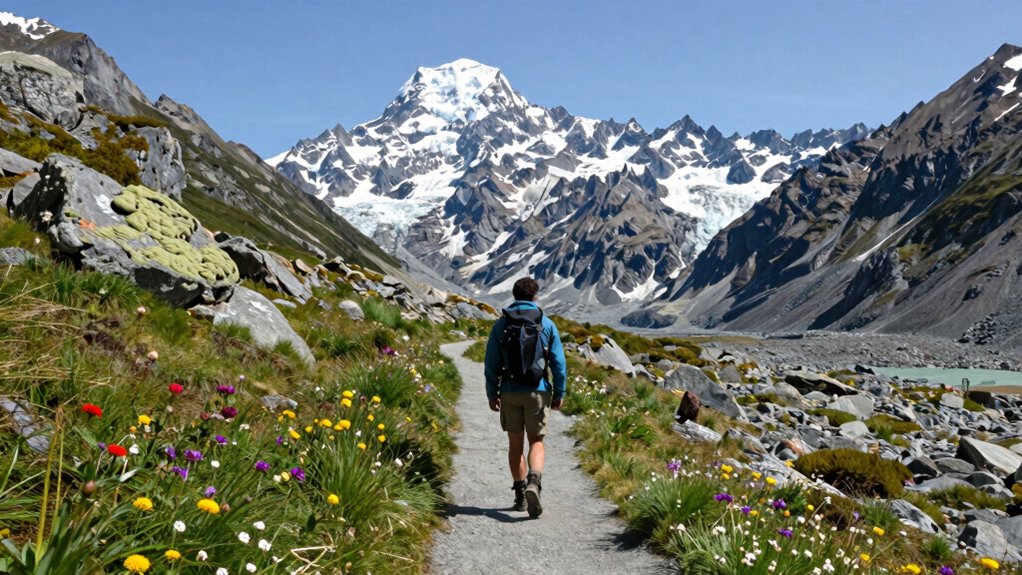
Choosing the right trails is essential for protecting Aoraki/Mt Cook’s fragile alpine environment. When you select well-maintained paths, you help reduce alpine erosion caused by trampling and foot traffic. Avoid unofficial or poorly marked routes, as they often lead to trail erosion and damage sensitive vegetation. Stick to designated trails that are designed to minimize environmental impact, preserving the landscape for future visitors. Be mindful of your steps to prevent widening paths or creating new routes that disturb the terrain. By following established trails and respecting trail signage, you contribute to reducing trail erosion and safeguarding the delicate alpine ecosystem. Your choices play a crucial role in maintaining the area’s natural beauty and ecological health.
How to Practice Leave No Trace at Aoraki
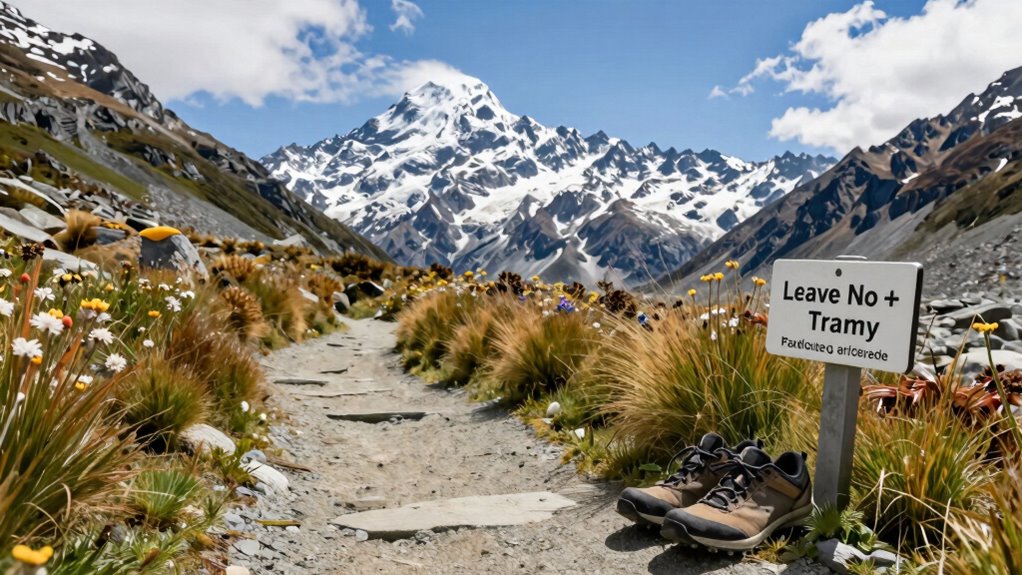
Practicing Leave No Trace principles during your visit guarantees that Aoraki’s delicate alpine environment remains pristine for future adventurers. To do this, always plan ahead and prepare, so you’re aware of eco friendly camping options and how to minimize your impact. Stick to established trails to avoid damaging fragile plants and soil. Pack out all trash, leftover food, and waste, leaving no trace of your presence. Respect wildlife by observing quietly from a distance and never feeding animals. When camping, choose designated sites and use eco friendly camping practices to prevent pollution. Remember, small actions like these help preserve Aoraki’s beauty and ensure future visitors can enjoy its wonder. Your mindful approach is crucial to protecting this pristine landscape for years to come.
How Guided Tours and Rangers Contribute to Conservation
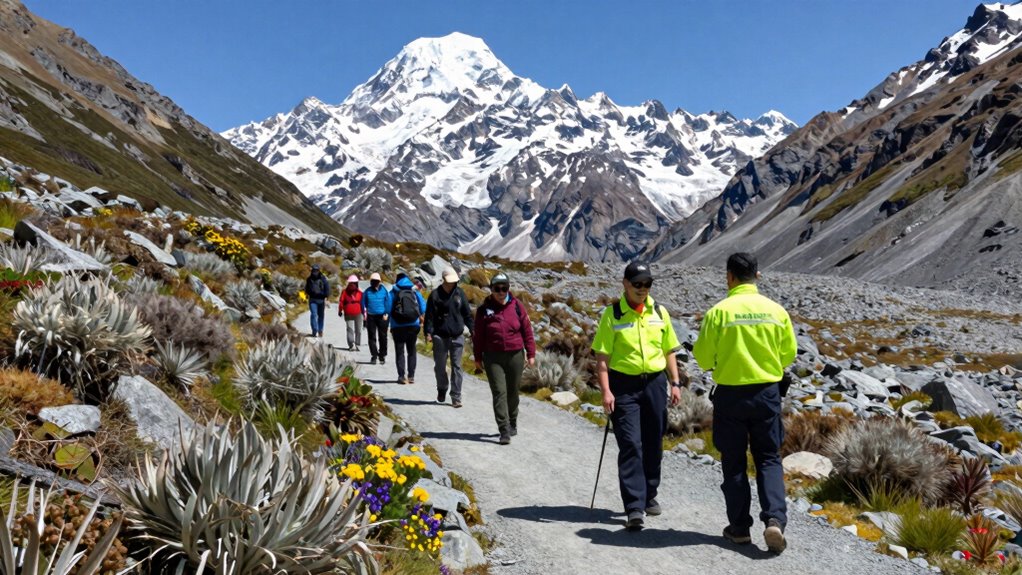
Guided tours and rangers play an essential role in conserving Aoraki’s fragile environment by educating visitors about responsible practices and local ecology. They share indigenous knowledge, highlighting the cultural heritage of the Māori people and their connection to the land. This deepens your understanding of the area’s significance and fosters respect for its preservation. Rangers and guides also monitor trail conditions, ensuring visitors stay on designated paths and avoid sensitive areas. Their presence helps prevent unintended damage, while their stories about indigenous traditions reinforce the importance of protecting natural and cultural resources. By participating in guided experiences, you contribute to ongoing conservation efforts, learning how respecting both the environment and cultural heritage guarantees Aoraki remains pristine for future generations.
Recognizing and Respecting Sensitive Areas

Because certain areas in Aoraki’s alpine environment are especially vulnerable, it’s crucial that you learn to recognize and respect these sensitive zones. These areas are prone to alpine erosion, where foot traffic can quickly degrade fragile soil and rock. Habitat disturbance is another concern, as trampling can harm native plants and wildlife. To protect these zones, stay on designated paths and avoid shortcuts that may cause erosion or disturb wildlife. Look for signs indicating fragile areas and follow all guidelines provided by rangers. Your awareness and careful behavior help preserve Aoraki’s unique landscape. Remember, respecting sensitive areas ensures that future visitors can enjoy the pristine beauty of this alpine environment without causing permanent damage.
- Stay on marked trails
- Avoid shortcuts or off-path walking
- Watch for signs indicating fragile zones
- Respect wildlife and vegetation
How You Can Help Preserve Aoraki for Tomorrow

You can play a pivotal role in preserving Aoraki for future generations by being mindful of your actions during your visit. Small decisions, like sticking to designated trails and cleaning your gear, help prevent the spread of invasive species that threaten native ecosystems. Climate change accelerates erosion and disrupts alpine habitats, so minimizing your impact is essential. Support local conservation efforts and respect signage indicating fragile areas. Educate yourself about invasive species and avoid introducing plants or animals. Your responsible behavior ensures the mountain stays pristine and resilient.
| Action | Impact |
|---|---|
| Stay on marked trails | Prevents habitat destruction and invasive spread |
| Clean gear | Stops invasive species from hitchhiking |
| Follow signage | Protects fragile alpine zones |
| Support conservation | Funds efforts against climate change |
| Respect wildlife | Reduces stress on native species |
Frequently Asked Questions
Are There Specific Times of Year Best for Eco-Friendly Visits?
You should visit during shoulder seasons like late spring or early autumn when the seasonal weather is milder, and there’s less crowds. During these times, wildlife migration is less disruptive, and the fragile alpine areas are less disturbed. Avoid peak summer and winter months, as they can cause more environmental impact. Planning your trip thoughtfully helps preserve the natural beauty and minimizes your ecological footprint in this pristine environment.
How Can I Identify Environmentally Sensitive Areas on the Trail?
You spot trail markers guiding your way, but to recognize sensitive areas, pay attention to signs indicating wildlife habitats or fragile vegetation zones. These markers often highlight regions where human impact can cause harm, so stay on designated paths. By observing these cues, you protect the environment, avoiding trampling delicate plants or disturbing wildlife. Your mindful approach ensures the pristine beauty of the alpine areas remains intact for everyone to enjoy.
What Gear Minimizes Environmental Impact During Hikes?
You minimize environmental impact by choosing sustainable footwear and eco-friendly gear. Opt for boots made from recycled or natural materials that reduce waste and carbon footprint. Carry lightweight, biodegradable supplies and avoid single-use plastics. Use reusable water bottles and containers, and pack out all trash. Your mindful gear choices help protect delicate alpine ecosystems, ensuring these beautiful areas stay pristine for future hikers.
Can I Volunteer for Conservation Efforts at Aoraki?
Yes, you can volunteer for conservation efforts at Aoraki/Mt Cook. Look into local volunteer programs and conservation initiatives that focus on protecting the fragile alpine environment. Your involvement might include trail maintenance, habitat restoration, or educational outreach. Participating in these programs helps preserve the area’s natural beauty while giving you a meaningful way to contribute to its protection. Check with park authorities or conservation groups for current opportunities and requirements.
How Do Local Communities Support Aoraki’s Preservation?
Local communities support Aoraki’s preservation through active local conservation efforts and community initiatives. You can participate by volunteering with conservation groups, attending educational events, and promoting responsible tourism. These initiatives focus on protecting the fragile alpine environment, ensuring sustainable tourism, and raising awareness. Your involvement helps maintain the area’s natural beauty and ecological health, making sure Aoraki remains inspiring for future generations.
Conclusion
Think of Aoraki as a delicate garden, flourishing only if you tread softly. Your mindful steps and respect keep its beauty alive for others to enjoy. By practicing eco-friendly hiking and honoring sensitive areas, you’re like a gentle gardener tending to this precious landscape. Together, we can guarantee Aoraki remains a vibrant, unspoiled sanctuary for generations to come—an enduring masterpiece created by nature and preserved by your care.
Halloween Picks
halloween
As an affiliate, we earn on qualifying purchases.