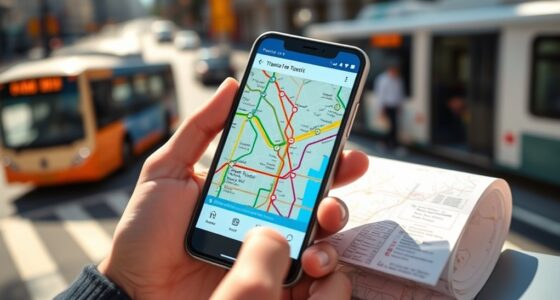

Intercity bus networks now serve as a practical alternative to flights, offering lower costs, greater flexibility, and modern amenities. You can enjoy comfortable seats, onboard Wi-Fi, and real-time tracking, making your journey more convenient. Buses also emit fewer greenhouse gases, making them eco-friendlier. While challenges like delays exist, innovative tech and expanding routes are improving options for travelers seeking an affordable, reliable travel method. If you explore further, you’ll discover how these trends continue to evolve.
Key Takeaways
- Modern intercity buses offer cost savings, especially for short routes, making them a budget-friendly alternative to flights.
- Enhanced amenities like Wi-Fi, entertainment, and spacious seating improve comfort and compete with air travel experiences.
- Advanced ticketing systems and real-time tracking increase convenience, reliability, and transparency for bus travelers.
- Electric and autonomous buses contribute to sustainability, reducing emissions and environmental impact compared to air travel.
- Bus networks provide flexible schedules and direct routes, avoiding airport hassles and peak-hour congestion.
The Rise of Intercity Bus Travel
In recent years, intercity bus travel has experienced a significant resurgence, driven by a combination of cost savings and increased flexibility. To support this growth, operators have invested in extensive bus driver training, ensuring safety and professionalism on the road. Improved ticketing infrastructure, such as online booking platforms and contactless payments, makes purchasing tickets quick and easy, attracting more travelers. These advancements streamline the entire journey, making bus travel a convenient alternative to other modes of transportation. The focus on quality training and modern ticketing systems has helped elevate the reputation of intercity buses, positioning them as a practical, efficient choice for travel today. Additionally, the incorporation of electric vehicles in some fleets is enhancing sustainability and reducing operating costs.
Comparing Costs: Buses vs. Flights
When comparing the costs of intercity buses and flights, you’ll find that buses generally offer a more budget-friendly option, especially for shorter routes. Ticket pricing for buses tends to be markedly lower than flights, making them attractive for cost-conscious travelers. A fare comparison reveals that bus tickets often include fewer fees and are easier to book last-minute. Additionally, buses usually don’t charge extra for checked baggage, unlike many airline policies. You can also find discounts for early bookings or group travel, further reducing costs. Overall, buses provide a more economical way to travel between cities, particularly when budget constraints are a priority. This affordability makes intercity bus networks a compelling alternative to the often higher-priced flights, and many travelers appreciate the cost efficiency of bus options for their travel needs.
Comfort and Amenities on Modern Bus Networks
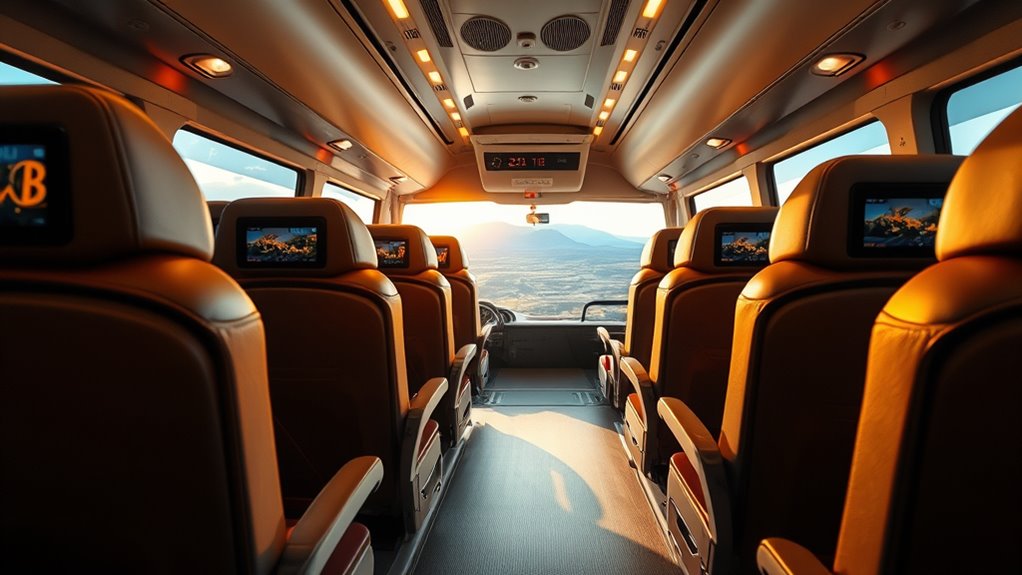
Modern bus networks prioritize your comfort with spacious seating options that make long journeys more relaxing. Many buses also feature onboard entertainment systems to keep you entertained throughout the trip. These amenities help transform bus travel into a more enjoyable experience. Additionally, some services offer extra cushioning and ergonomic seats to further enhance passenger comfort during extended rides.
Spacious Seating Options
Thanks to advancements in bus design, passengers now enjoy spacious seating options that prioritize comfort and convenience. Modern buses feature luxury recliners that allow you to stretch out and relax during long journeys. The extra legroom and wider seats make it easier to settle in without feeling cramped. Many buses also offer onboard dining, so you can enjoy meals without leaving your seat. Additionally, some models include features like adjustable headrests and footrests for added comfort. These improvements turn bus travel into a more luxurious experience, rivaling some flight classes. Unique and Wicked Planters can be a great way to add a touch of greenery to your travel space, making the journey even more enjoyable. Whether you’re commuting or on a road trip, spacious seating options ensure you arrive rested and ready. Traveling becomes more enjoyable when comfort is at the forefront of the journey.
Onboard Entertainment Systems
Onboard entertainment systems have become a key feature of today’s bus networks, enhancing your travel experience considerably. Many buses now offer in-flight movies, keeping you entertained during long journeys. With Wi-Fi availability, you can stream shows, browse the internet, or stay connected with friends and family. These amenities transform bus trips from simple transportation into more enjoyable experiences. You no longer need to bring DVDs or rely solely on your device’s storage, as the onboard system provides a variety of entertainment options. The combination of in-flight movies and Wi-Fi makes your journey feel faster and more comfortable. Whether you’re working, relaxing, or catching up on your favorite series, modern bus networks prioritize your convenience and entertainment needs.
Environmental Benefits of Choosing Buses

Choosing buses over other transportation options helps cut down on your carbon footprint. They emit less carbon dioxide and use less energy per passenger, making them a greener choice. By riding the bus, you contribute to reducing environmental pollution and conserving resources. Additionally, bus networks can be integrated with renewable energy solutions, such as solar-powered bus stops and charging stations, further enhancing their environmental benefits.
Reduced Carbon Emissions
By opting for intercity buses, you considerably reduce your carbon footprint compared to driving alone or flying. Buses are more energy-efficient, emitting fewer greenhouse gases per passenger mile. This helps combat climate change and improves air quality. Plus, bus safety standards ensure a secure ride, making them a greener and safer alternative. Choosing bus travel also offers affordable ticket pricing, encouraging more people to switch from less eco-friendly options. Affiliate disclosures ensure transparency about the environmental benefits associated with supporting sustainable transportation options.
Lower Energy Consumption
Intercity buses are not only effective at reducing emissions but also excel in conserving energy. Their superior fuel efficiency means they use less fuel per passenger compared to cars or planes, leading to significant energy savings. This efficiency results from the ability of buses to carry many passengers simultaneously, spreading the energy cost over more people. Additionally, modern buses incorporate advanced technologies like aerodynamic designs and lightweight materials, further reducing energy consumption. By choosing buses, you contribute to lower overall energy demand, lessening the strain on fossil fuel resources. Efficient transportation methods also play a crucial role in sustainable travel initiatives. This environmental benefit makes bus travel a smarter and more sustainable choice, helping you reduce your carbon footprint while enjoying economical and efficient transportation.
Convenience and Flexibility of Bus Schedules

The convenience and flexibility of bus schedules play a crucial role in making intercity travel accessible and efficient. Reliable bus schedules ensure you arrive on time, reducing stress and uncertainties. Plus, ticket booking ease allows you to secure your seat easily, often online or through apps. You can choose departure times that suit your plans, whether early morning or late at night. This adaptability makes buses a practical alternative to flights, especially for spontaneous trips. Additionally, flexible schedules help avoid crowded peak hours, enhancing comfort during your journey. With consistent bus schedule reliability and simple ticket booking options, you gain more control over your travel experience. Incorporating essential oils for convenience in your travel routine can also promote relaxation and reduce travel-related stress. Overall, these features make intercity bus travel a convenient, flexible choice for many travelers seeking efficiency and ease.
Technological Enhancements in Bus Booking and Tracking
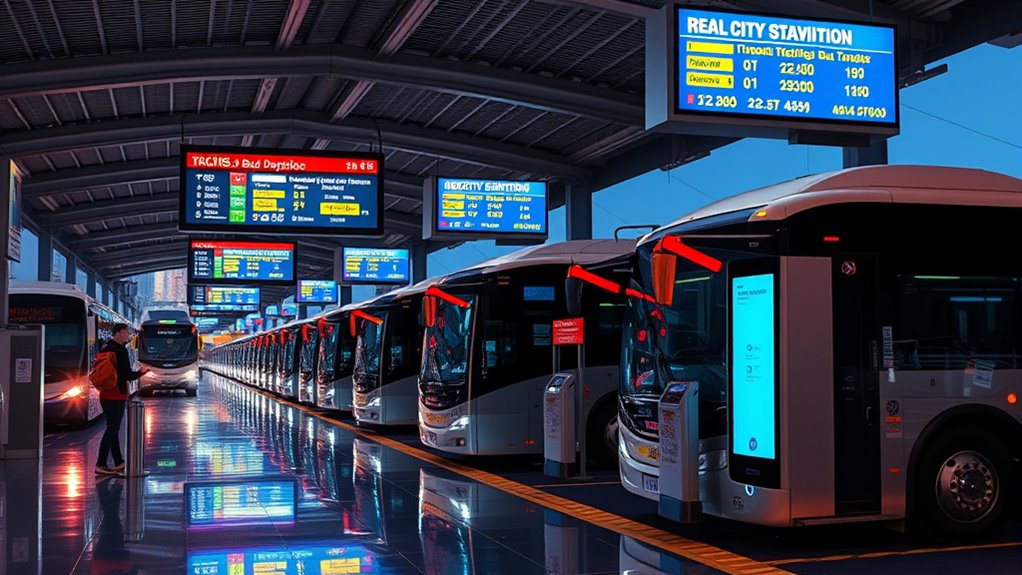
Technological advancements have revolutionized how travelers book and monitor their bus journeys. Automated ticketing systems let you purchase tickets instantly online, eliminating long waits and reducing errors. With just a few clicks, you can select your seat, choose departure times, and receive your ticket digitally. Real-time tracking technology enhances your travel experience by providing live updates on bus locations and arrival times. You can monitor your bus’s progress, receive alerts about delays, and plan accordingly. These innovations make intercity bus travel more convenient, reliable, and transparent. You no longer need to rely solely on station announcements or schedules. Instead, you stay informed at all times, ensuring smoother journeys and better trip management. Knowing the operating hours of bus stations can further help in planning your trips efficiently.
Key Routes and Popular Destinations
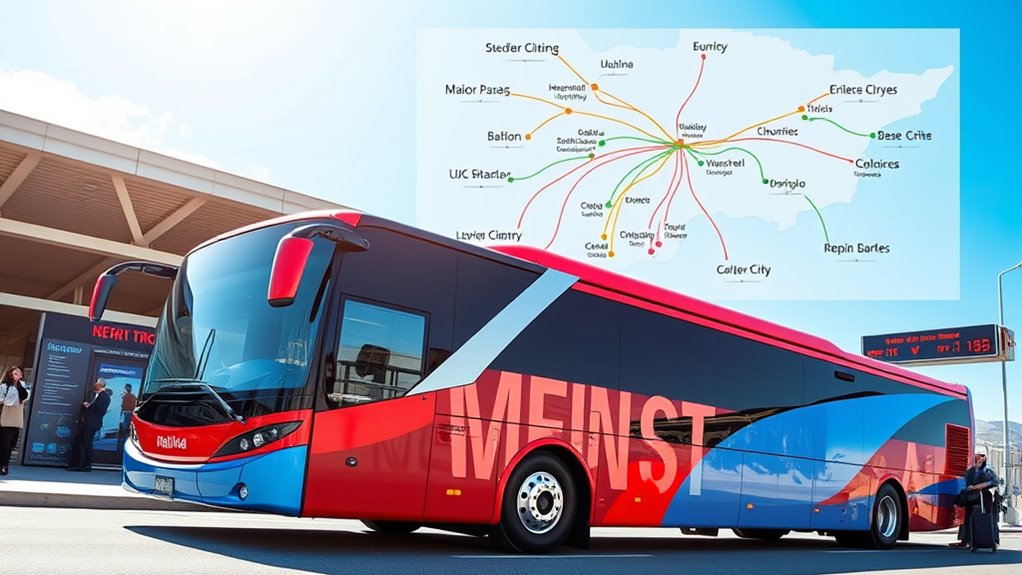
Have you ever wondered which routes connect the most popular destinations and why they stay busy year-round? These key routes are carefully chosen through strategic bus route planning that considers passenger demand and travel patterns. Popular destinations like major cities, tourist hotspots, and economic hubs consistently attract travelers, making these routes crucial. Operators optimize ticket pricing strategies to balance affordability with profit, often offering discounts for frequent travelers or off-peak times to boost ridership. You’ll notice that routes between city centers and airports, university towns, and coastal resorts remain highly trafficked. These routes are essential for both daily commuters and leisure travelers, ensuring steady demand regardless of the season. Their popularity underscores the importance of efficient planning and flexible pricing in the intercity bus network. Additionally, understanding passenger demand and travel trends helps operators adapt to changing conditions and maintain route viability.
Challenges and Limitations of Bus Travel
Despite the high demand for key routes connecting popular destinations, bus travel faces several challenges that can impact reliability and convenience. One major issue is bus delays, often caused by traffic congestion, roadwork, or weather conditions. These delays can disrupt your schedule and make planning difficult. Safety concerns also pose a problem; buses may be vulnerable to accidents, especially on busy highways or poorly maintained roads. Additionally, limited infrastructure and infrequent service on some routes can cause overcrowding or long wait times. These issues reduce the overall appeal of bus travel as a dependable alternative to flying. While buses offer affordability, addressing delays and safety concerns is essential to improving the experience and expanding their viability for intercity travel.
Future Trends in Intercity Bus Transportation
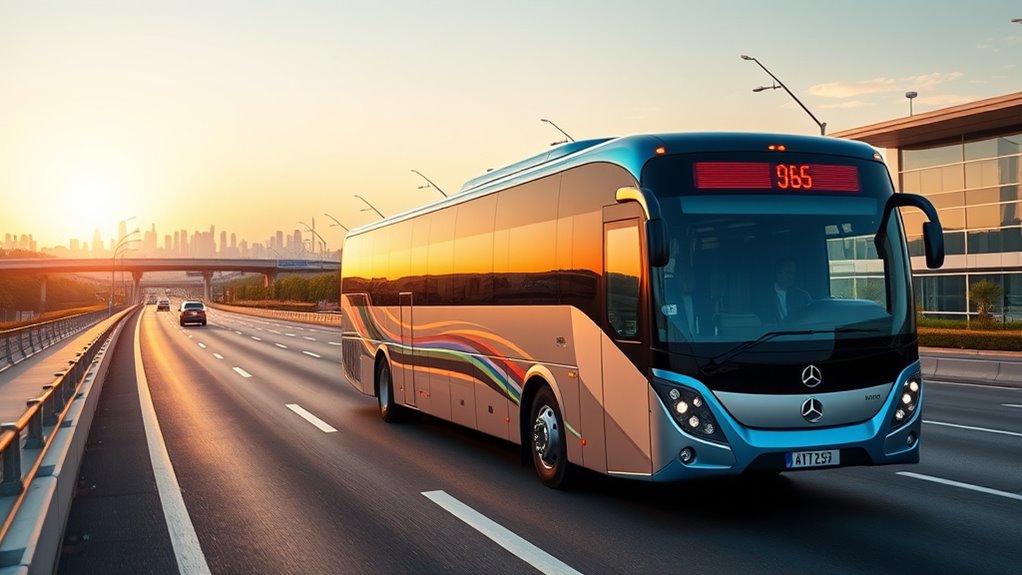
As innovations continue to emerge, the future of intercity bus transportation looks poised for significant transformation. You can expect a shift toward more sustainable and efficient travel options, driven by advancements like electric propulsion and autonomous buses. These technologies promise reduced emissions and lower operating costs, making bus travel more competitive with flights. Autonomous buses will improve safety and reliability, allowing for real-time adjustments and better scheduling. Electric buses will also enable longer routes without fuel stops, enhancing coverage and convenience. Additionally, integrated ticketing systems and smart infrastructure will streamline your travel experience, making intercity bus networks more accessible and user-friendly. Overall, these trends aim to make bus travel a smarter, greener, and more reliable alternative to air travel.
Frequently Asked Questions
Are Intercity Buses Suitable for Long-Distance Overnight Travel?
For long-distance overnight travel, intercity buses can be suitable if you prioritize affordability over comfort. You’ll find bus comfort varies, with some buses offering reclining seats and amenities, but others may be less comfortable. Ticket pricing is generally lower than flights, making buses a budget-friendly option. Just be prepared for potential noise and limited space, and plan your journey accordingly to make certain of a smooth overnight experience.
How Do Bus Networks Handle Unexpected Delays or Cancellations?
Did you know that 85% of bus companies now offer real-time updates? When delays or cancellations happen, your bus network typically provides options like ticket rebooking or alternative routes. They often send notifications promptly, helping you stay informed. You can usually rebook your ticket quickly online or at the station, minimizing disruptions. This proactive approach guarantees you’re kept in the loop and can plan accordingly, even when unexpected issues arise.
What Safety Measures Are Implemented on Modern Intercity Buses?
On modern intercity buses, safety measures are designed to protect you during your journey. You’ll find seat belts in many buses, encouraging you to buckle up for added security. Emergency exits are clearly marked and easily accessible, allowing you to evacuate quickly if needed. Additionally, buses undergo regular safety inspections, and drivers are trained to handle emergencies, ensuring your safety remains a top priority throughout your trip.
Can I Bring Large Luggage or Sports Equipment on Bus Routes?
They say ‘better safe than sorry,’ and that applies to your luggage. On bus routes, you can usually bring large luggage or sports equipment, but check the luggage policies beforehand. Many buses have specific sports gear regulations, often requiring them to be stored properly in the luggage compartment. Always confirm with your bus service to avoid surprises, ensuring your gear arrives safely and hassle-free.
Do Intercity Bus Services Operate During Holidays or Special Events?
During holidays and special events, bus services often change their schedules. You should check the specific holiday schedules and special event services for your route in advance, as some buses might run less frequently or have limited routes. Many companies aim to accommodate travelers during these times, but it’s smart to plan ahead to guarantee you get to your destination on time. Always verify with the bus operator before your trip.
Conclusion
You might think flights are the only fast way to travel, but intercity buses are proving they’re a viable, eco-friendly alternative. With advances in comfort, technology, and affordability, buses could reshape your travel plans. Imagine saving money and reducing your carbon footprint without sacrificing convenience. So, next time you consider flying, ask yourself—could a bus take you there just as well, or even better? The future of travel might be on the road, not in the sky.