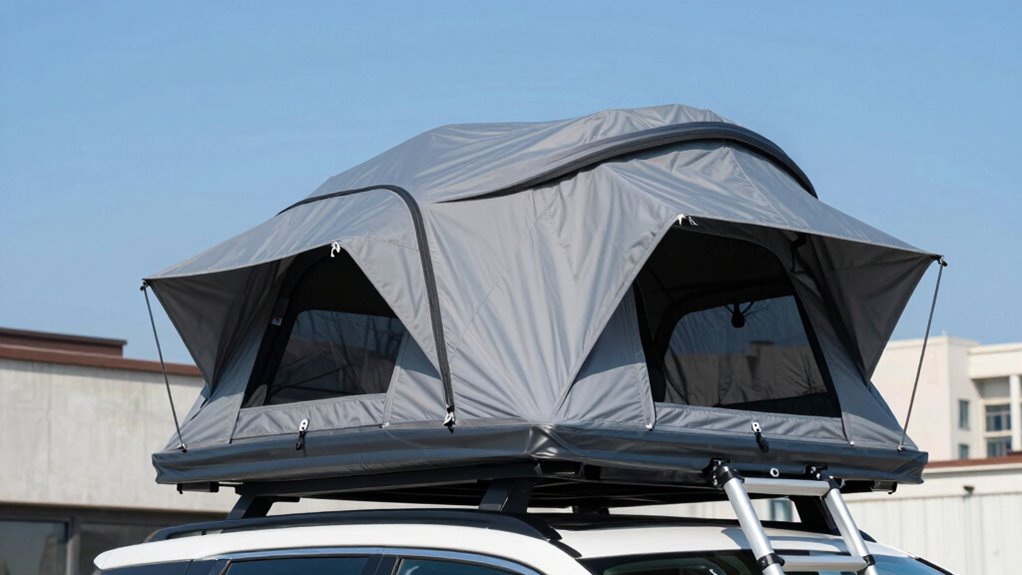

Rooftop tents make camping quick and comfy, offering an elevated sleeping space that boosts comfort and safety. However, they often require vehicle modifications and need a sturdy roof capable of handling extra weight, which can be costly or impractical for smaller cars. Installation and storage can be challenging, and improper setup might even cause damage or safety issues. Curious to find out more? Keep exploring to discover the full story behind rooftop tents‘ hidden advantages and drawbacks.
Key Takeaways
- Rooftop tents offer quick setup and elevated comfort but can be challenging to install safely on certain vehicles.
- Proper installation is critical; improper setup risks damage, safety hazards, and potential detachment during travel.
- They are bulky and heavy, making storage and handling difficult without dedicated space or planning.
- Vehicle compatibility varies; not all cars can support the weight or fit the mounting system, requiring costly upgrades.
- Regular maintenance and careful storage extend tent longevity but add to overall ownership considerations.

Rooftop tents have become a popular choice for adventurers seeking quick, comfortable, and elevated camping solutions. They offer the convenience of setting up camp in minutes and provide a cozy, off-the-ground sleeping space. But before you jump into the rooftop tent lifestyle, it’s important to consider some practical challenges, especially when it comes to installation and storage. Installing a rooftop tent isn’t always straightforward. Many models require bolting onto specific roof racks or crossbars, which means you’ll need to ensure your vehicle can handle the added weight. Some vehicles, particularly smaller cars or those with limited roof load capacity, may not be suitable for rooftop tents, and upgrading your existing roof rack can be costly and time-consuming. You’ll also need tools and a good understanding of your vehicle’s roof structure to secure the tent properly. Incorrect installation can lead to safety issues, such as the tent coming loose during travel, or damage to your vehicle’s roof. It’s wise to carefully follow manufacturer instructions or seek professional help if you’re unsure about the process. Additionally, understanding the roof load capacity of your vehicle is essential to ensure safe use and avoid potential damage. Storage considerations are another vital aspect of rooftop tents that often go overlooked. When not in use, these tents need to be stored somewhere safe and accessible. Since they are bulky and heavy, storing them in your garage or shed can be a challenge if space is limited. Many models are designed to be lightweight for easy setup, but that doesn’t mean they’re compact enough to stash away in a closet. You’ll need a dedicated storage area that can accommodate their size, especially if you plan to leave the tent mounted on your roof long-term. Keep in mind that prolonged exposure to the elements when the tent isn’t in use can cause wear and tear, so proper storage is essential to maintain its longevity. If you’re frequently swapping between vehicle-mounted use and storage, you’ll also need to consider how easy it is to remove and reattach the tent—some models are more user-friendly than others in this regard. Ultimately, rooftop tents offer undeniable convenience and comfort, but they come with notable installation challenges and storage considerations. Before investing, you should evaluate your vehicle’s compatibility, understand the installation process thoroughly, and plan for how you’ll store the tent when it’s not in use. Addressing these issues upfront ensures you’ll enjoy your rooftop camping experience without unexpected setbacks or frustrations.

BAGAIL 8 Set Packing Cubes Luggage Packing Organizers for Travel Accessories-Cream
- Premium Durable Fabric: Resists wrinkles, stains, and wear
- Water-Repellent Material: Protects clothes from spills and leaks
- Lightweight Design: Easy to pack without adding weight
As an affiliate, we earn on qualifying purchases.
Frequently Asked Questions
Are Rooftop Tents Suitable for All Vehicle Types?
Rooftop tents aren’t suitable for all vehicle types. You need to check your vehicle’s compatibility, especially its roof strength and towing capacity, to guarantee it can support the weight safely. Some SUVs and trucks are ideal, but smaller cars or vehicles with limited roof capacity may not handle a rooftop tent well. Always verify your vehicle’s specifications before investing to avoid damage or safety issues.
How Do Rooftop Tents Affect Fuel Efficiency?
Rooftop tents can decrease your vehicle’s fuel economy because of the added weight and aerodynamic impact. The extra weight requires more energy to move, and the tent’s shape can create drag, reducing efficiency. You might notice increased fuel consumption on long trips or highway driving. To minimize this, choose a lightweight tent and keep it streamlined. Being mindful of these factors helps you balance convenience with fuel efficiency.
Can Rooftop Tents Handle Extreme Weather Conditions?
Rooftop tents can handle extreme weather if they’re built with weather resilience and durable materials. Look for tents with waterproof fabrics, sturdy frames, and good insulation for cold or hot conditions. You should also check for features like wind resistance and proper ventilation. While some models excel in harsh weather, others may struggle, so choose one designed specifically for extreme conditions to stay safe and comfortable.
What Is the Average Lifespan of a Rooftop Tent?
You can expect a rooftop tent to last around 3 to 7 years with proper maintenance. Installation challenges and exposure to weather can affect its lifespan. Regularly check for tears, clean the fabric, and tighten hardware to prevent wear. If you stay on top of maintenance requirements and address any issues promptly, your tent can endure harsh conditions and provide reliable shelter longer.
Are Rooftop Tents Theft-Proof or Easily Stolen?
Rooftop tents aren’t theft-proof; they’re like open invitations if you don’t take precautions. You should consider security concerns and theft prevention strategies, like locking mechanisms, alarm systems, or parking in well-lit areas. While they offer convenience, savvy thieves can still target them. To keep your investment safe, always stay vigilant, use additional security gear, and avoid leaving your tent unattended in isolated spots.
Conclusion
Rooftop tents offer incredible convenience and a unique camping experience, but they’re not perfect for everyone. Did you know that over 60% of users report issues with ventilation and weather resistance? While they simplify setup and elevate your adventures, it’s essential to consider these hidden pros and cons before making a choice. Ultimately, understanding both sides ensures you’ll enjoy your outdoor escapes to the fullest—comfortably and confidently.