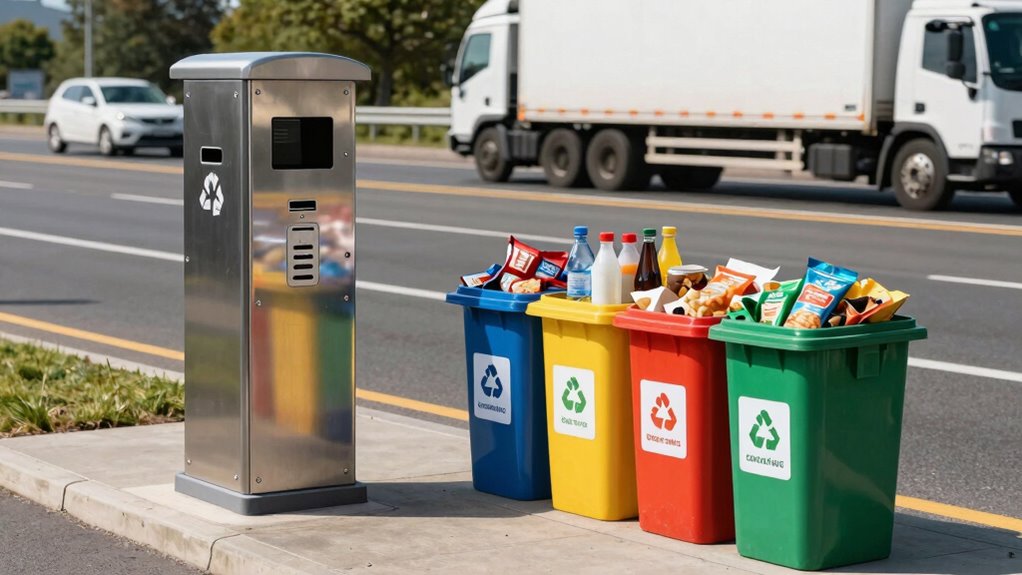

To handle snacks, drinks, and food waste on the road better, use reusable containers, eco-friendly wraps, and refillable bottles to cut down on single-use plastics. Plan your purchases to avoid excess waste, and donate leftovers to local food banks when possible. Always dispose of waste responsibly, using proper recycling and trash bins, and carry small bags for collection. Adopting these sustainable habits helps keep your travel space tidy and benefits the environment—if you keep going, you’ll discover even more ways to improve your journey.
Key Takeaways
- Use reusable containers and bottles to minimize single-use packaging waste during travel.
- Donate leftover snacks and unopened items to local food programs to reduce waste and support communities.
- Plan and pack only necessary snacks, avoiding excess to prevent unnecessary waste.
- Dispose of waste responsibly by recycling and carrying trash until proper disposal is available.
- Incorporate eco-conscious habits to protect environments and promote sustainable travel practices.
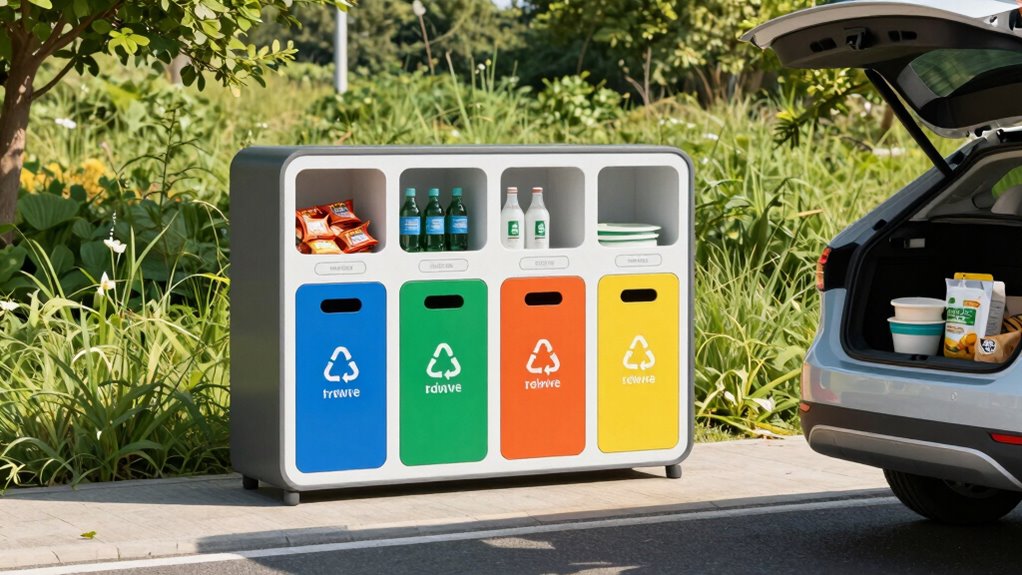
Traveling often means dealing with snacks, drinks, and food waste, but handling these on the road can be messy and inefficient. You might find yourself constantly cleaning up wrappers, bottles, and leftover food, which creates unnecessary clutter and waste. Instead of letting waste pile up or tossing uneaten food in the trash, you can adopt smarter strategies that benefit both the environment and those in need. One effective approach is to prioritize sustainable packaging. Opt for reusable containers, eco-friendly wraps, and refillable water bottles. These choices reduce the amount of single-use plastics and packaging waste that often clutters your car or travel bag. Not only does this lessen your environmental footprint, but it also keeps your travel space cleaner and more organized.
In addition to sustainable packaging, consider integrating food donation programs into your travel routine. If you find yourself with unopened snacks or leftovers that you won’t eat, look for local food donation centers or charities. Many communities have programs that accept non-perishable items, which can then be distributed to those experiencing food insecurity. By donating surplus food instead of discarding it, you’re actively helping others and reducing food waste. This can be especially beneficial during longer trips or when visiting areas with active food rescue initiatives. Incorporating food waste management** practices can further optimize your efforts to reduce environmental impact and support sustainable travel. Practicing waste sorting** and proper disposal methods can significantly improve your contribution to environmental conservation efforts.
Another practical tip is to plan ahead for snack and drink consumption. Pack only what you need and bring along reusable containers for leftovers or unfinished food. This minimizes the chances of excess waste and ensures you’re not left with crumbs or wrappers after every stop. As you enjoy your snacks, drinks, and meals, be mindful of waste by collecting wrappers and bottles in designated reusable or compostable bags. When possible, rinse and reuse containers and utensils, further cutting down on waste.
Finally, develop a habit of disposing of waste responsibly. Use designated recycling and trash bins whenever available, and always carry a small bag to collect waste until it can be properly disposed of. This conscientious approach not only keeps your travel environment clean but also promotes a sustainable mindset. By combining sustainable packaging, food donation programs, and mindful waste management, you create a smarter, greener way to handle your snacks and drinks on the road. It’s a simple shift that makes a big difference for the planet and the communities you visit. Incorporating biodiversity conservation principles into your travel habits can also help protect the natural environments you enjoy exploring.
reusable snack containers for travel
As an affiliate, we earn on qualifying purchases.
As an affiliate, we earn on qualifying purchases.
Frequently Asked Questions
How Can I Reduce Packaging Waste During Travel?
To reduce packaging waste during travel, adopt zero waste tips like using reusable containers and bags. Opt for sustainable packing by choosing minimal or eco-friendly packaging options when buying snacks and drinks. Bring your own reusable utensils and refillable bottles to cut down on single-use items. Planning ahead helps you avoid excess packaging, and supporting brands committed to sustainability makes your travel greener. These small steps make a big difference.
What Are Eco-Friendly Alternatives to Single-Use Snack Containers?
You can opt for reusable containers to store your snacks, drinks, and food, which cut down on waste and are easy to clean. Additionally, biodegradable wraps are a great eco-friendly alternative to single-use snack packaging, as they break down naturally without harming the environment. Combining these options, you’ll minimize your waste footprint while enjoying your snacks on the go, making your travel more sustainable.
How Do I Dispose of Food Waste Responsibly While on the Road?
Think of yourself as a modern-day Robin Hood, but instead of stealing, you’re responsible for food waste. You should practice waste segregation by separating edible leftovers for donation whenever possible, reducing unnecessary waste. When disposal is unavoidable, find designated trash or compost bins on your route. Always look for local food donation centers and recycling stations to responsibly handle food waste, ensuring it benefits others and minimizes environmental impact.
Are There Portable Composting Options for Travelers?
Yes, there are portable composting options for travelers. You can find compact, travel-friendly compost bins that allow you to manage food waste responsibly on the go. These portable composting solutions make travel recycling easier, helping you reduce waste and be eco-conscious wherever you are. Look for lightweight, odor-controlled models designed for camping or road trips, so you can compost food scraps without hassle and stay environmentally friendly.
How Can I Minimize Food Spoilage During Long Trips?
Think of your food as delicate dominoes—once one falls, the chain reaction begins. To minimize spoilage during long trips, focus on meal prep and portion control. Pre-pack snacks and meals in airtight containers, ensuring you don’t overfill or leave leftovers exposed. Keep perishable items cool with insulated bags or coolers. This way, your food stays fresh longer, and you prevent waste, keeping your journey smooth and tasty.
Conclusion
By adopting eco-friendly habits like using reusable containers and composting your food waste, you can substantially reduce your environmental impact on the road. Some experts believe that small daily actions can lead to big change, and recent studies support this idea, showing that collective efforts make a real difference. So, next time you’re on the move, remember: smarter snacking isn’t just good for you — it’s good for the planet too.