
As a digital nomad, you can adopt portable recycling containers to easily sort waste on the go and use waste sorting apps to find local recycling centers and guidelines. Switch to eco-friendly packaging like biodegradable mailers and reusable containers, and get creative with upcycling refuse into useful items. Joining local initiatives and using digital tools can help reduce waste further. Continue exploring these smart solutions to make your travel more eco-conscious and sustainable.
Key Takeaways
- Use portable, lightweight recycling containers compatible with local waste management guidelines during travel.
- Access mobile apps that locate regional recycling centers, drop-off points, and eco-friendly disposal instructions.
- Participate in community clean-up events and recycling campaigns to foster local engagement and responsible waste habits.
- Utilize biodegradable packaging and upcycling techniques to minimize environmental impact on the move.
- Promote eco-awareness within digital nomad communities through social media, shared success stories, and collective initiatives.
Portable Recycling Containers for Mobile Living

As a digital nomad, managing waste while on the move can be challenging, but portable recycling containers make it easier. These portable bins are designed to fit into your travel routine, allowing you to separate recyclables from trash wherever you go. Lightweight and durable, they are perfect for outdoor adventures or city visits. Many recycling stations now accommodate portable bins, making it simple to dispose of recyclables responsibly. With a dedicated container, you can avoid clutter and reduce waste in your temporary living space. Plus, portable recycling containers help you stay environmentally conscious, even when you’re constantly on the move. Incorporating these into your routine supports sustainable living practices and ensures your eco-friendly efforts continue seamlessly, no matter your location.
Local Waste Sorting Apps and Resources
You can easily find local waste sorting apps and resources that help you stay eco-friendly wherever you go. Mobile app directories often list tools tailored for specific regions, making waste management straightforward. Plus, community recycling initiatives connect you with local efforts, amplifying your impact as a digital nomad. Additionally, leveraging color accuracy in your waste sorting visuals can improve clarity and effectiveness of educational campaigns.
Mobile App Directories
Have you ever wondered how to find nearby recycling centers or waste sorting guidelines quickly? Mobile app directories are essential tools for steering through digital waste and understanding local recycling infrastructure. These apps compile information on waste disposal sites, recycling rules, and drop-off points, making it easier for you to manage your waste responsibly while on the move. By using these directories, you gain instant access to updated resources tailored for your current location, saving you time and effort. Many apps also offer notifications for recycling schedules and tips, ensuring you stay informed. Whether you’re in a new city or a different country, these directories help you adapt to local waste management practices effortlessly, supporting your commitment to eco-friendly living wherever you go. Additionally, some apps include electric bike charging station locations, further encouraging sustainable transportation options.
Community Recycling Initiatives
Community recycling initiatives play an essential role in promoting sustainable waste management at the local level. They connect you with neighborhood programs, waste sorting apps, and resources that support zero waste goals. Many communities offer local apps with detailed recycling guidelines, helping you identify what can be composted, recycled, or disposed of properly. These initiatives often include composting tips to reduce organic waste and enhance your zero waste lifestyle. By participating, you contribute to cleaner streets and a healthier environment. You can often find community-led composting programs or workshops through these resources, making it easier to learn sustainable habits. Promoting recycling education within your community encourages better waste separation practices and increases overall participation. Embracing local recycling initiatives helps you stay informed, reduces waste, and promotes eco-friendly practices wherever you go.
Eco-Friendly Packaging Alternatives
Switching to eco-friendly packaging options is a crucial step for digital nomads aiming to reduce their environmental impact. By choosing biodegradable packaging and reusable containers, you cut down on waste and pollution. These sustainable alternatives not only protect the environment but also promote responsible consumption. You can opt for biodegradable packaging made from plant-based materials that break down naturally, or use reusable containers to store food and supplies on the go. Here are some ideas to consider:
Choosing biodegradable packaging and reusable containers helps digital nomads reduce waste and environmental impact.
- Biodegradable mailers for shipping
- Reusable silicone bags for snacks
- Compostable cutlery and plates
- Refillable water bottles
- Eco-friendly wrapping materials
Implementing electric bike options for transportation can further reduce your carbon footprint while traveling. Adopting these options helps minimize waste, lowers your carbon footprint, and encourages sustainable habits wherever you work.
Upcycling and Creative Waste Repurposing
Upcycling and creative waste repurposing offer digital nomads a practical way to reduce clutter and environmental impact by transforming everyday refuse into useful or decorative items. Instead of adding to plastic pollution, you can turn discarded bottles into plant holders or storage containers. This not only minimizes waste but also sparks your creativity. Learning simple composting techniques allows you to recycle organic waste, reducing landfill contributions and producing nutrient-rich soil for local plants. By repurposing materials, you cut down on single-use plastics and lessen your ecological footprint. Incorporating sustainable materials into your projects further enhances your eco-conscious lifestyle. These practices help you stay eco-conscious while on the move, making your lifestyle more sustainable. Embracing upcycling and waste repurposing aligns with your goal to minimize waste and live harmoniously with the environment wherever your travels take you.
Collaborating With Local Recycling Initiatives
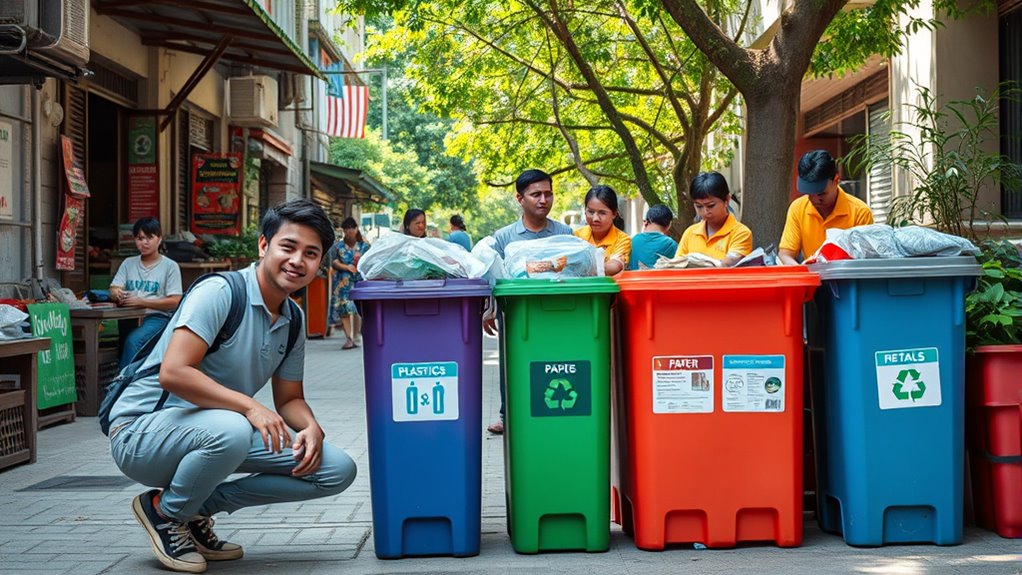
By actively engaging with local recycling initiatives, digital nomads can make a meaningful impact in the communities they visit. Your involvement boosts recycling awareness and promotes waste reduction. You can:
- Volunteer at recycling centers to learn best practices
- Share educational materials on recycling awareness with locals
- Organize community clean-up events to foster collaboration
- Support local businesses that prioritize waste reduction
- Participate in recycling challenges or campaigns to motivate others
- Incorporate privacy and consent management practices when sharing information online to build trust with community members
Reducing Waste Through Digital Tools and Practices

Digital tools and practices offer powerful ways for digital nomads to minimize waste and promote sustainability on the go. With digital composting apps, you can track and manage organic waste, turning food scraps into compost even in limited space. Embracing waste reduction strategies, like digital note-taking and cloud storage, reduces reliance on paper and physical materials. You can also use apps to find nearby recycling centers or eco-friendly stores, making responsible disposal easier. Implementing digital habits, such as meal planning and digital receipts, cuts down on unnecessary waste. These practices help you stay environmentally conscious without sacrificing convenience. By leveraging technology, you actively contribute to waste reduction, lower your ecological footprint, and promote sustainable living, no matter where your travels take you. Additionally, cultivating a positive mindset towards sustainability can reinforce your commitment to eco-friendly habits and inspire others in your community.
Educating and Engaging the Digital Nomad Community
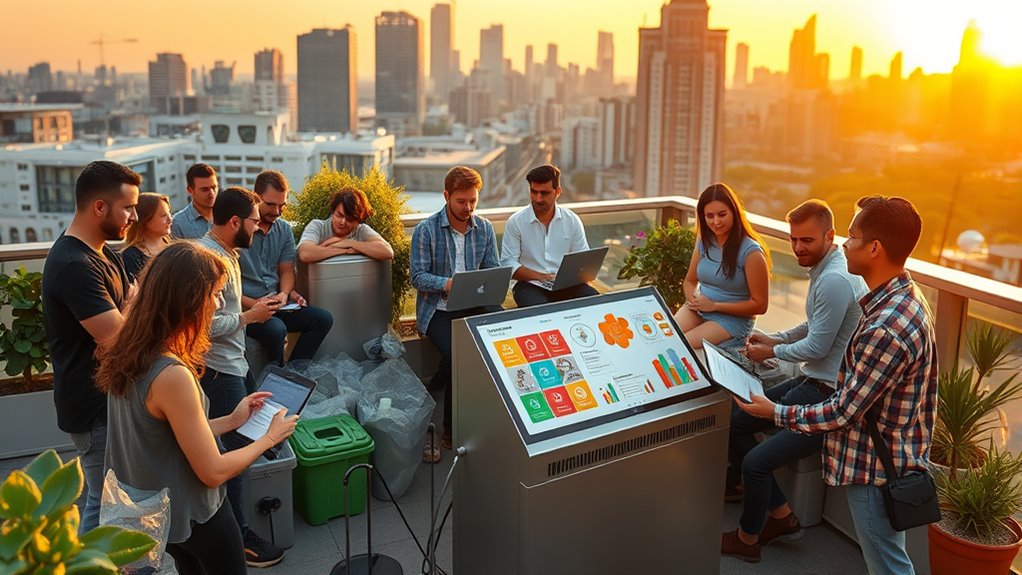
You can make a real impact by raising awareness about environmental issues among fellow digital nomads. Promoting sustainable habits helps create a community that values and practices eco-friendly choices. When you actively engage others, you inspire collective action toward better recycling and conservation efforts. Emphasizing eco-friendly design choices can further motivate community members to adopt sustainable practices in their daily lives.
Raising Environmental Awareness
How can the digital nomad community better understand the impact of their lifestyle on the environment? Raising awareness is key. You can promote understanding through:
- Sharing stories of zero waste success to inspire change
- Highlighting eco innovation in local communities
- Organizing workshops on sustainable living
- Using social media to spread environmental facts
- Encouraging responsible tourism practices
- Incorporating insights from Personality Research to better tailor environmental messaging and foster meaningful engagement.
Promoting Sustainable Practices
Building on the importance of raising environmental awareness, promoting sustainable practices among digital nomads requires proactive education and engagement. You can encourage zero waste habits by sharing tips on reducing plastic use and reusing materials. Composting is another essential practice; learning local composting options helps minimize waste and enriches communities. To make this easier, consider this table:
| Practice | How to Implement | Benefits |
|---|---|---|
| Zero waste | Carry reusable containers and bags | Reduces plastic pollution |
| Composting | Find local compost facilities or start small | Lowers landfill waste |
| Education & Engagement | Attend workshops or online courses | Builds eco-conscious habits |
Building Community Engagement
Ever wondered how to motivate fellow digital nomads to embrace eco-friendly habits? Building community engagement is key. You can start by launching social media campaigns that highlight local recycling efforts and success stories. Organize volunteer programs where nomads participate in cleanup events or recycling workshops, fostering a sense of shared purpose. To deepen involvement, consider creating online groups for idea exchange and support. Encourage peer-to-peer learning, share eco-friendly tips, and celebrate community achievements. Use these strategies to inspire collective action and normalize sustainable habits among digital nomads. Remember, engagement thrives on clear communication, shared goals, and visible impact. By actively involving your community, you help shape a responsible, environmentally-conscious digital nomad culture.
Frequently Asked Questions
How Can Digital Nomads Effectively Track Their Waste Reduction Progress?
When tracking your waste reduction progress, focus on monitoring recycling metrics and practicing waste tracking daily. Use apps or digital tools designed for waste management to log your recycling habits and measure how much waste you divert from landfills. Setting clear goals and reviewing your data regularly helps you stay motivated. By actively tracking your waste, you can identify areas for improvement and make more eco-friendly choices consistently.
What Are the Best Ways to Fund Local Recycling Projects Remotely?
Did you know that over 80% of plastic waste isn’t recycled? You can fund local recycling projects remotely by supporting organizations focused on recycling education and community engagement. Your donations help these groups run awareness campaigns, workshops, and infrastructure improvements. By contributing online, you empower communities to adopt sustainable practices, reducing waste. Your support makes a real difference, fostering lasting environmental change even from afar.
How Do Cultural Differences Impact Recycling Practices for Nomads?
You’ll find that cultural perceptions heavily influence recycling norms in different regions. As a nomad, your understanding of local attitudes toward waste can shape your approach to recycling. Some cultures see it as essential, while others might not prioritize it. By respecting these differences, you can adapt your habits, encourage community participation, and foster more effective recycling practices, making your efforts more impactful across diverse environments.
Are There Global Standards for Eco-Friendly Packaging Suitable for Nomads?
Did you know that over 60% of consumers look for eco labeling when choosing products? Currently, there are no universal standards for eco-friendly packaging suitable for nomads, but packaging innovations are emerging globally. These innovations aim to reduce waste and improve sustainability, making it easier for you to travel lightly and responsibly. While standards vary, staying informed about eco labeling helps you select environmentally conscious options wherever you go.
How Can Nomads Build Sustainable Waste Management Habits Long-Term?
To build sustainable waste management habits long-term, you should focus on recycling education and staying informed about eco-friendly practices. Visit zero waste stores to reduce packaging waste and learn sustainable alternatives. Make a habit of separating recyclables properly and reusing whenever possible. Consistently practicing these steps helps you minimize waste, stay environmentally conscious, and develop long-lasting habits that contribute to a greener planet wherever you travel.
Conclusion
By embracing these recycling solutions, you turn your mobile lifestyle into a force for good. Think of your efforts as a ripple—small actions that create waves of change in communities and ecosystems. Every step you take toward reducing waste, upcycling, and collaborating with local initiatives makes a difference. As a digital nomad, your eco-conscious choices can inspire others, proving that even on the move, you can be a powerful catalyst for a cleaner, greener planet.