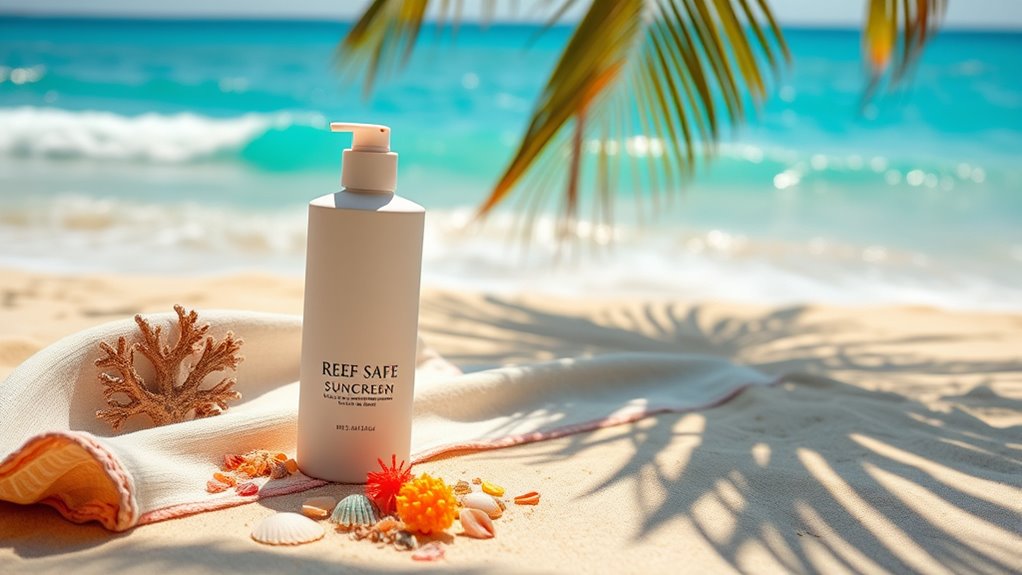

When choosing reef-safe sunscreen, look for products that are free from harmful ingredients like oxybenzone and octinoxate. Opt for mineral-based options with zinc oxide or titanium dioxide, as they create a physical barrier against UV rays and are less likely to harm marine life. Check for eco-labels or certifications that guarantee sustainability. By making informed choices, you contribute to ocean health and coral preservation. There’s more to discover about protecting your skin and the sea!

Get travel and outdoor gear delivered free with Prime
- Fast, free delivery on millions of items
- Prime Video, Amazon Music and more included
- Member-only deals all year
Key Takeaways
- Look for mineral-based sunscreens containing zinc oxide or titanium dioxide for effective and environmentally-friendly UV protection.
- Avoid sunscreens with harmful chemicals like oxybenzone and octinoxate that contribute to coral bleaching.
- Check for eco-labels or certifications indicating the product is reef-safe and committed to sustainable practices.
- Prioritize brands that emphasize ingredient transparency and have positive customer feedback regarding environmental impact.
- Remember that choosing reef-safe sunscreen is a vital step in protecting marine ecosystems for future generations.
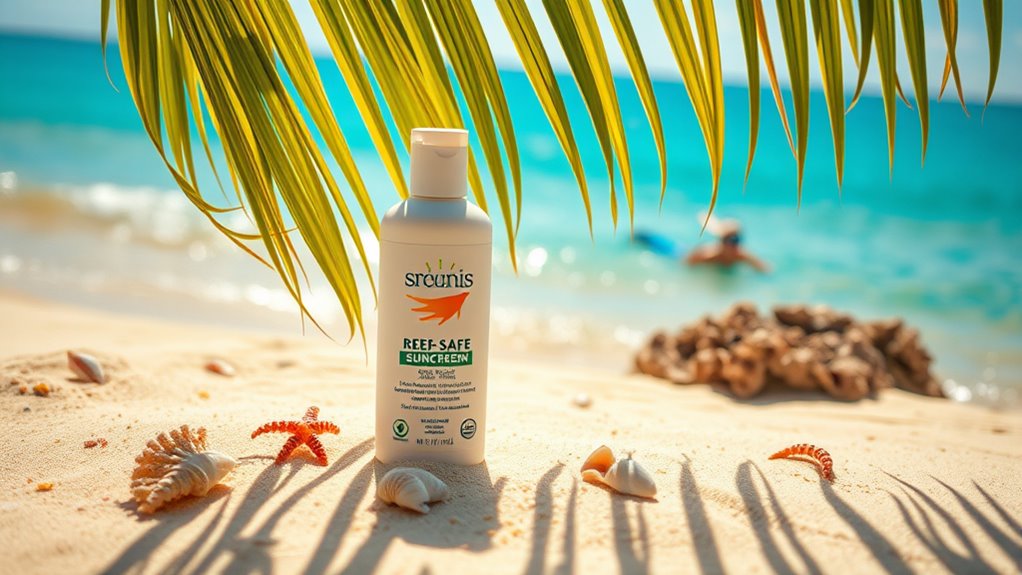
Have you ever wondered how your sunscreen impacts the ocean? It’s a question that’s gaining attention as more people become aware of the harmful effects certain ingredients can have on marine ecosystems. Many popular sunscreens contain chemicals that can contribute to coral bleaching and disrupt marine life. By choosing reef-safe sunscreen, you’re not just protecting your skin; you’re also playing a part in marine conservation efforts.
Choosing reef-safe sunscreen protects not only your skin but also marine ecosystems threatened by harmful chemicals.
When you’re shopping for sunscreen, ingredient transparency should be your guiding principle. You want to look for products that clearly list their ingredients and avoid any that contain harmful substances like oxybenzone and octinoxate. These chemicals have been shown to cause significant damage to coral reefs, which are essential ecosystems that support a diverse range of marine species. By opting for brands that prioritize transparency, you can make more informed choices that align with your values.
Additionally, think about looking for mineral-based sunscreens that use zinc oxide or titanium dioxide as their active ingredients. These options are generally safer for the ocean and provide effective UV protection. Unlike their chemical counterparts, mineral sunscreens sit on the skin’s surface and create a physical barrier against harmful rays. Plus, they’re less likely to leach into the water when you swim, making them a more sustainable choice for beachgoers who care about marine conservation.
Don’t be afraid to dig deeper into the brands you’re considering. Many companies are now committed to sustainable practices, so look for certifications or eco-labels that indicate a product is reef-safe. Reading customer reviews can also give you insights into the efficacy and environmental impact of various products. By being proactive about your choices, you’re contributing to a broader movement that promotes healthier oceans. Regular cleaning processes can enhance the effectiveness of reef-safe sunscreens, ensuring they work as intended when applied.
Incorporating reef-safe sunscreen into your routine is just one small step you can take toward protecting our oceans. Every time you apply sunscreen, you’re making a conscious decision that can help preserve marine ecosystems for future generations. So next time you’re at the beach, take a moment to think about what’s in your sunscreen. By choosing wisely, you’re not just safeguarding your skin; you’re also playing a role in safeguarding the ocean. Making these informed choices today can lead to a healthier planet tomorrow. Remember, your actions matter, and every small change can make a big difference.
Frequently Asked Questions
How Does Reef-Safe Sunscreen Differ From Regular Sunscreen?
Reef-safe sunscreen differs from regular sunscreen mainly in its ingredients. While regular sunscreens often contain harmful chemical ingredients like oxybenzone and octinoxate, reef-safe options use mineral-based compounds like zinc oxide or titanium dioxide. These alternatives provide effective UV protection without endangering coral reefs. By choosing reef-safe sunscreen, you’re actively protecting marine life and promoting healthier oceans, ensuring that your skin’s defense doesn’t come at the expense of the environment.
Is Reef-Safe Sunscreen More Expensive Than Traditional Options?
Yes, reef-safe sunscreen often costs more than traditional options. Think of it like choosing a fine wine over a regular bottle; you’re paying for quality. This price difference usually stems from higher ingredient costs, as reef-safe formulas avoid harmful chemicals and include natural minerals. When you do a price comparison, you might find that the benefits for your skin and the environment make that extra cost worthwhile.
Can I Use Reef-Safe Sunscreen on My Face?
Yes, you can definitely use reef-safe sunscreen on your face! In fact, it’s a great addition to your skincare routines. These formulas provide essential sun protection without harmful chemicals that can damage marine life. Look for lightweight options that won’t clog your pores. Applying reef-safe sunscreen daily helps keep your skin healthy while also protecting the oceans. Enjoy your time outdoors knowing you’re making a positive choice for both your skin and the environment!
How Often Should I Reapply Reef-Safe Sunscreen?
You should reapply reef-safe sunscreen every two hours, or more often if you’re swimming or sweating. It’s essential to follow this application frequency to maintain effective protection against harmful UV rays. For reapplication tips, make sure to apply a generous amount and cover all exposed skin thoroughly. Don’t forget to check the expiration date on your sunscreen, as expired products may not provide the protection you need. Stay safe in the sun!
Are There Any Specific Brands Recommended for Reef-Safe Sunscreen?
When it comes to finding the right reef-safe sunscreen, you’ll want to look for brands that really hit the nail on the head. Think about options like Badger and Raw Elements; they use eco-friendly ingredients and meet certification standards. These brands prioritize your skin and the ocean, so you can enjoy the sun without worry. Remember, choosing the right product makes all the difference for both you and the environment!
Conclusion
When choosing reef-safe sunscreen, you’re not just protecting your skin; you’re safeguarding the vibrant underwater world, too. By picking mineral-based options, avoiding harmful chemicals, and checking for eco-friendly certifications, you’re casting a lifeline to coral reefs. Remember, every time you slather on that sunscreen, you’re making waves of change. So, gear up with the right products, and let your beach days shine bright without dimming the beauty of the ocean.
Fall Picks
fall essentials
As an affiliate, we earn on qualifying purchases.