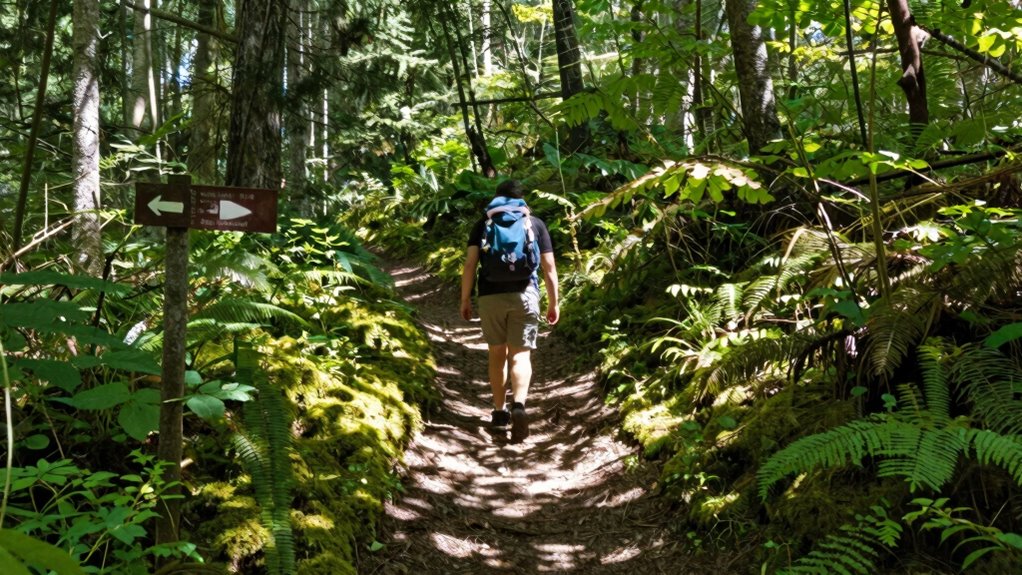

By staying on designated trails, you protect more than just plants. You help prevent wildlife disturbance, safeguarding animals’ feeding and breeding routines. Your responsible trail use reduces habitat fragmentation and soil erosion, keeping ecosystems healthy. Properly managing waste and leashes also supports conservation efforts. When you follow these behaviors, you’re preserving natural landscapes for future generations. Keep exploring how your actions make a bigger difference beyond just the flora.
Key Takeaways
- Staying on designated trails prevents wildlife disturbance and preserves their natural behaviors and habitats.
- Proper trail etiquette minimizes soil erosion and protects native plants and vegetation.
- Avoiding off-trail walking maintains habitat connectivity and reduces habitat fragmentation.
- Responsible trail use supports ecosystem resilience and long-term biodiversity conservation.
- Respecting trail boundaries fosters a conservation culture that benefits entire ecosystems beyond just plants.
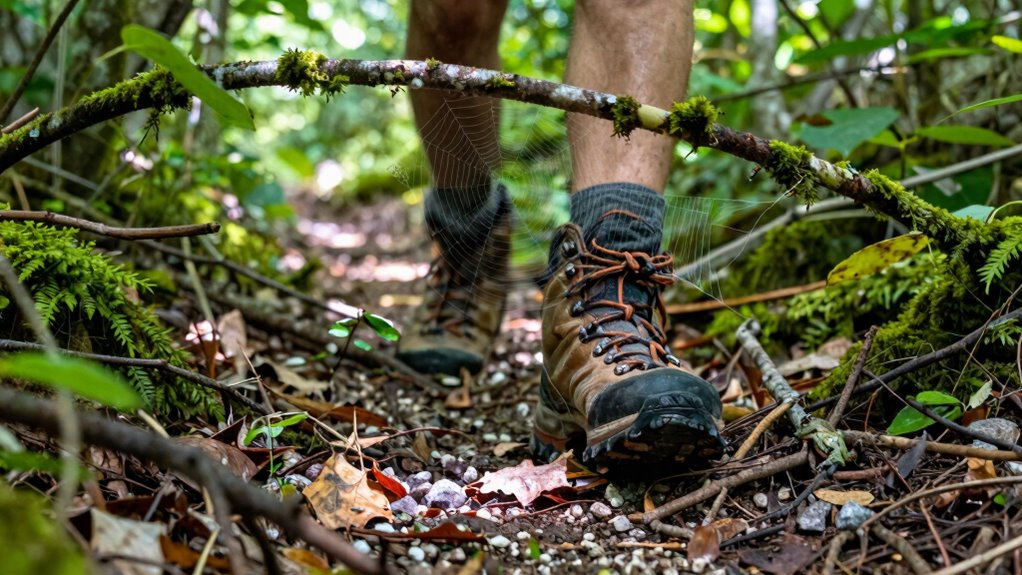
When you stick to designated trails while hiking or walking in natural areas, you’re not just helping preserve delicate plants—you’re also protecting wildlife and maintaining the health of entire ecosystems. Wandering off-trail may seem harmless, but it can cause significant wildlife disturbance. Animals living nearby might be startled or forced to abandon their nests or young, disrupting their feeding and breeding routines. By staying on marked paths, you minimize these disruptions, allowing wildlife to go about their daily activities without unnecessary stress or danger. This simple act helps sustain the natural behaviors that keep ecosystems balanced and resilient. Additionally, staying on established trails supports the preservation of native plant communities, which are essential for maintaining biodiversity and providing habitat for various species. Erosion prevention is another critical reason to stick to designated trails. When hikers stray from established routes, they often trample vegetation that anchors soil in place. This exposes bare ground, making it vulnerable to water runoff and wind, which accelerates erosion. Over time, this process can create ruts, gullies, and degraded landscapes that are difficult to repair. Erosion not only damages the visual beauty of natural areas but also harms plant roots, making it harder for new vegetation to grow. By remaining on designated trails, you help protect the soil structure and prevent the formation of erosion channels that take years or even decades to recover from. Your trail behavior directly impacts the broader health of the environment. Staying on established paths reduces the likelihood of creating new social trails—informal routes that form when visitors veer off the main trail repeatedly. These unofficial paths can fragment habitats, disturb wildlife corridors, and accelerate erosion in areas not designed to withstand heavy foot traffic. Additionally, limiting your footprint helps preserve sensitive plant communities that grow along trail edges and in shaded understories. Protecting these plants ensures the food sources and shelter for many animals remain intact. Moreover, responsible trail use encourages others to follow suit. When you set an example by sticking to designated routes, you promote a culture of conservation and respect for nature. This collective effort helps authorities and conservation groups manage natural spaces more effectively, implementing measures that safeguard ecosystems. Simple actions like keeping your dog on a leash, disposing of waste properly, and avoiding shortcuts reinforce the importance of trail etiquette. Incorporating environmental preservation into your hiking habits amplifies your positive impact on these delicate ecosystems. Being mindful of trail impacts and choosing responsible behavior can significantly reduce the long-term damage caused by foot traffic. In the end, your mindful behavior contributes to the longevity of natural areas, preserving their beauty and ecological functions for future generations to enjoy.
As an affiliate, we earn on qualifying purchases.
Frequently Asked Questions
How Do Trail Behaviors Impact Local Wildlife?
Your trail behaviors directly impact local wildlife by reducing wildlife disturbance and preventing habitat fragmentation. When you stay on designated paths and avoid startling animals, you help minimize stress and disruptions for them. By respecting trail boundaries, you protect their habitats from unnecessary damage, ensuring they have safe spaces to thrive. Responsible trail use promotes healthier ecosystems, benefiting both the wildlife and the overall environment you enjoy exploring.
What Are Common Trail Etiquette Mistakes?
Did you know that improper trail etiquette can lead to significant environmental damage? One common mistake is straying off designated paths, which harms plants and disturbs wildlife. You should always follow Leave No Trace principles and wear proper footwear to minimize your impact. Rushing or loud noises also disrupt animals’ habitats. By staying on trails and respecting nature, you help preserve these areas for everyone’s enjoyment and safety.
How Can Hikers Minimize Their Carbon Footprint?
To minimize your carbon footprint while hiking, choose eco-friendly gear made from sustainable materials. Practice Leave No Trace techniques by packing out all trash, staying on designated trails, and avoiding damage to vegetation. Opt for carpooling or public transportation to reduce emissions before your hike. By making these mindful choices, you help preserve nature’s beauty and reduce your environmental impact, ensuring future generations can enjoy the outdoors as much as you do now.
What Laws Protect Fragile Trail Ecosystems?
You’re protected by laws like conservation policies that safeguard fragile trail ecosystems. These laws often require trail signage to guide hikers, emphasizing responsible behavior. By following posted guidelines and respecting designated paths, you help prevent erosion and habitat destruction. Staying on marked trails and observing signage guarantees you don’t unintentionally harm delicate environments. Your commitment to these laws supports conservation efforts, preserving natural beauty for future hikers and maintaining the health of the ecosystem.
How Do Weather Conditions Affect Trail Preservation Efforts?
Weather patterns profoundly impact trail preservation efforts. Heavy rain or snow can accelerate erosion, making trails more vulnerable and harder to maintain. Strong winds can cause debris to pile up or damage trail structures. To combat this, you need effective erosion control techniques, such as installing drainage systems or reinforcing vulnerable areas. By understanding weather patterns, you can better plan maintenance and protect trails from weather-related damage.
Conclusion
Remember, every step you take on the trail is like planting a seed of respect and care. Just as a gardener nurtures each plant, your mindful actions protect the hidden ecosystems and the silent creatures that call this place home. Your trail behavior becomes an allegory for life—showing that small acts of kindness and responsibility can cultivate a world where nature and humanity thrive side by side. Walk wisely, and let your footsteps be a legacy of harmony.