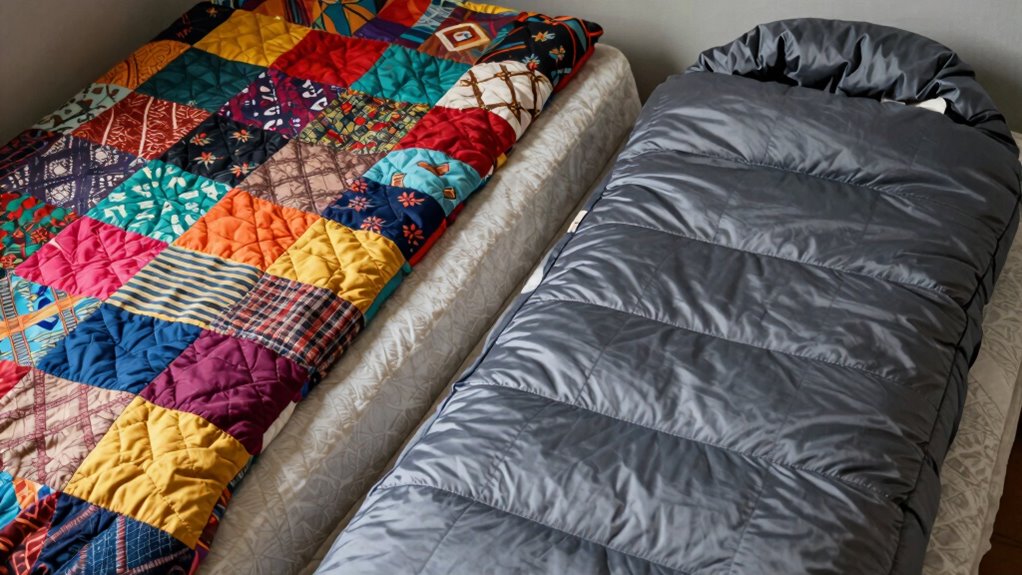

When it comes to warmth, both quilts and sleeping bags can perform well if they have high-quality insulation and proper fit. Sleeping bags, especially mummy-shaped ones, trap heat effectively and are ideal for very cold conditions. Quilts are versatile and can be just as warm when layered correctly and used with good pads. To truly maximize your warmth, you’ll want to think about how each option suits your climate and setup—more details lie ahead.
Key Takeaways
- Sleeping bags with mummy shapes and full enclosure typically trap heat more effectively than quilts.
- High-quality insulation in sleeping bags often provides more consistent warmth in cold conditions.
- Quilts rely on proper layering and insulation underneath to match the warmth of sleeping bags.
- The warmth of either option depends heavily on insulation material, thickness, and fit, not just design.
- In extremely cold environments, sleeping bags generally offer superior warmth due to their enclosed design.
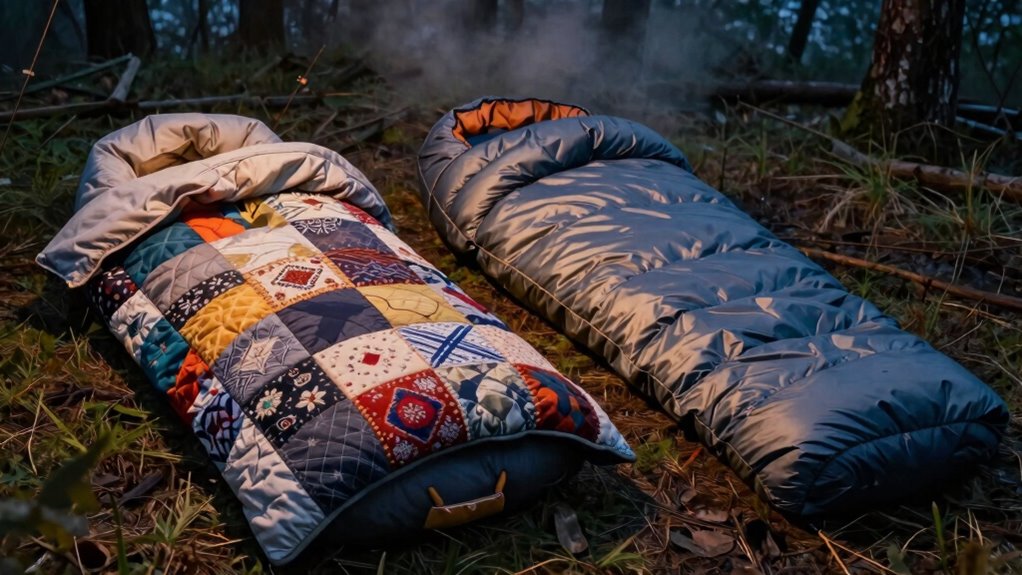
When choosing between quilts and sleeping bags for your outdoor adventures, understanding their differences can help you make the best choice. One of the key factors to consider is insulation materials, which directly impact warmth and comfort, and pack weight, essential when you’re carrying gear over long distances. Sleeping bags typically use insulation materials like down or synthetic fibers. Down offers excellent warmth-to-weight ratio and compressibility, making it a favorite for backpackers who want to minimize pack weight. Synthetic insulations, on the other hand, are less expensive, retain heat even when damp, and tend to be more durable. Quilts, especially those designed for backpacking, often use similar insulation materials but tend to be more customizable in how you use them. Because you can leave them unzipped or adjust their positioning, quilts may provide better temperature regulation and allow you to adapt to changing conditions more easily. Additionally, the design of sleeping bags often includes features like hoods and draft collars to enhance warmth, but quilts generally offer more flexibility in layering options. When it comes to pack weight, quilts generally come out ahead because they are often lighter and less bulky than traditional sleeping bags. Their open design reduces material use and allows for easier compression, which saves space in your pack. If weight savings are your priority, a well-insulated quilt could be the better option. However, some sleeping bags now incorporate ultralight insulation materials and advanced construction techniques, narrowing the gap. Still, quilts usually have the advantage in weight reduction, especially for minimalist setups. Warmth is another vital aspect. While many assume sleeping bags are inherently warmer, this isn’t always true. The warmth of either option depends on insulation quality, thickness, and how well it fits your body. Sleeping bags often have a mummy shape that traps heat efficiently and prevent cold spots, but quilts rely on your sleeping pad and proper layering to achieve similar warmth. A quilt’s open design means heat can escape if not properly insulated underneath, but using a high-quality pad and adjusting the quilt’s position can mitigate this issue. Conversely, sleeping bags provide full enclosure, which can be advantageous in very cold climates, but they might be more restrictive and less versatile than a quilt. Ultimately, choosing between quilts and sleeping bags boils down to your specific needs—how much weight you want to carry, the insulation materials you prefer, and the conditions you expect to face. Both can provide excellent warmth if selected carefully, but quilts tend to offer a lightweight, adaptable, and often more comfortable option for those willing to fine-tune their setup. Recognizing the importance of insulation materials can help you select the best gear for your outdoor adventures.
Frequently Asked Questions
How Do Sleeping Bag Shapes Affect Warmth?
You’ll find that sleeping bag shapes impact warmth by fitting your body more snugly, reducing drafts. Mummy shapes, for example, offer better insulation because they minimize space around you, while rectangular bags provide more room but may sacrifice some heat retention. Good pillow support keeps your head warm, and fabric breathability guarantees moisture escapes, helping you stay dry and cozy. Choose a shape that balances warmth, comfort, and breathability for a better night’s sleep.
Can Quilts Be Used Effectively in Winter Conditions?
Yes, quilts can be effective in winter camping if you choose one designed for outdoor warmth. Some quilts are specifically insulated and crafted to handle cold temperatures, making them suitable for winter conditions. Keep in mind, you’ll want to layer properly and consider a quilt with high-quality insulation. With the right setup, quilts can keep you warm and comfortable during winter outdoor adventures.
What Materials Provide the Best Insulation for Quilts?
You’ll want quilts with high-quality insulation materials like down or synthetic fills. Down quilt fillings offer excellent warmth-to-weight ratios and compressibility, making them ideal for cold conditions. Synthetic insulation materials, such as PrimaLoft, provide good warmth even when wet and are more affordable. Both types trap heat effectively, but your choice depends on your needs for weight, moisture resistance, and budget. Choose the right insulation to stay warm in chilly temperatures.
Are Sleeping Bags Suitable for Side Sleepers?
Sleeping bags can be suitable for side sleepers, but you should prioritize furniture comfort and proper sleep posture. Look for bags with a broader, more ergonomic shape that contours to your body’s curves, reducing pressure points. Choose bags with extra insulation around the torso and knees, which helps maintain warmth while allowing freedom of movement. This guarantees you stay comfortable and properly supported, improving your sleep quality even on colder nights.
How Does Layering Influence Warmth With Quilts or Sleeping Bags?
Layering markedly boosts warmth, with studies showing that multiple insulation layers can increase heat retention by up to 30%. When using quilts or sleeping bags, layering techniques trap air between insulation layers, creating a thermal barrier. You should add extra blankets or liners to improve warmth, especially in cold conditions. Proper layering ensures you stay cozy all night, regardless of whether you’re using a quilt or sleeping bag.
Conclusion
As you settle in for the night, you realize it’s no coincidence that the quilt’s cozy embrace feels just as warm as your sleeping bag. Whether you wrap yourself in a quilt or zip into a sleeping bag, comfort often depends on the moment—and the gentle whisper of a cool breeze reminds you that warmth is as much about comfort as it is about gear. In the end, your choice makes every night a little more peaceful.