
To save your back while hammock camping, aim for a hang angle of about 30 degrees from horizontal. That creates a gentle curve that evenly distributes weight and reduces pressure points. Use a digital angle finder or a simple cord to measure and adjust your straps accordingly. Properly securing your setup with the right tension not only boosts comfort but also keeps you safe. Keep going, and you’ll discover more tips to perfect your hang and sleep soundly.

Get travel and outdoor gear delivered free with Prime
- Fast, free delivery on millions of items
- Prime Video, Amazon Music and more included
- Member-only deals all year
Key Takeaways
- Aim for a 30-degree hang angle to evenly distribute weight and prevent back strain.
- Use a digital angle finder or cord to measure and maintain the correct hang angle.
- Adjust the straps gradually to achieve the optimal 30-degree incline before settling in.
- Avoid steep or flat angles, which can cause discomfort or instability during sleep.
- Regularly verify the angle and setup to ensure maximum comfort and back support.
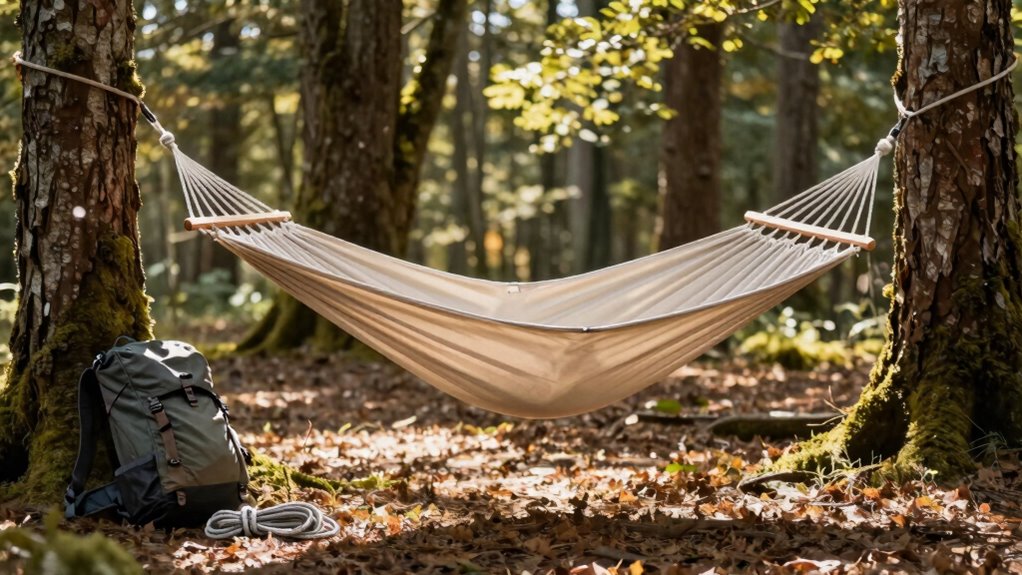
Ever wondered if there’s a more comfortable way to camp? Hammock camping offers a unique experience, but to make it truly enjoyable, you need to master the hang angle that keeps your back happy. The first step is understanding how to select the right trees and set up your gear properly. When choosing trees, look for ones that are healthy, sturdy, and spaced about 12 to 15 feet apart. Avoid trees with dead branches or signs of decay. The ideal trees have a good diameter—around 6 to 12 inches—to guarantee your straps won’t slip or damage the bark. Once you find suitable trees, use tree-friendly straps that won’t harm the bark, and make sure they’re tight enough to keep your hammock stable without causing excessive pressure. Properly assessing your environment can also prevent damage to the trees and ensure a safer setup.
Next, consider your sleeping gear. Your sleeping pad and sleeping bag are vital for comfort and insulation. Since hammocks elevate you off the ground, you need to guarantee your gear is suited for this setup. Invest in a sleeping pad that fits snugly inside your hammock or use a specialized hammock pad. This layer adds comfort and prevents you from feeling the ridges or knots underneath. Your sleeping bag should be rated for the temperature you’ll camp in, and a sleeping liner can add extra warmth and comfort. Avoid bulky or overly heavy gear if you’re aiming for a lightweight setup, but never compromise on warmth or comfort—your back will thank you.
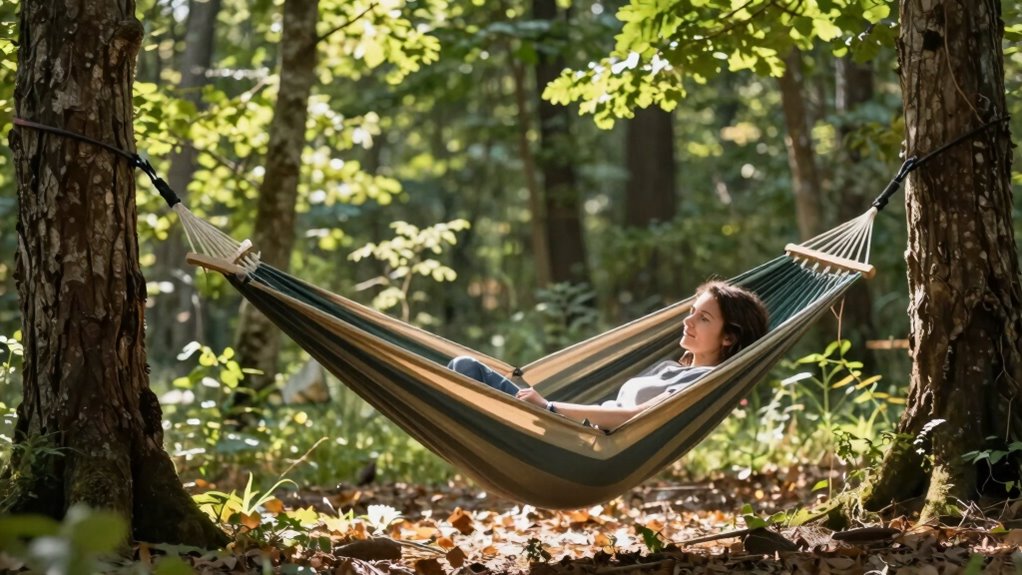
Now, the key to a good hang is setting the right angle. The ideal hang angle is roughly 30 degrees from horizontal, which creates a gentle curve in your hammock. This angle distributes your weight evenly and minimizes pressure points on your back. To achieve this, attach your straps to the trees and pull the hammock to that 30-degree angle before tightening. You can measure this by hanging a small cord or using a digital angle finder for precision. Too steep an angle, and you’ll feel like you’re sliding downhill; too shallow, and you’ll be lying flat, which can cause back strain and reduce comfort. Adjust the straps until you get this perfect angle, then double-check your knots and attachments for security. Remember, hang angle is a crucial factor in preventing back pain and ensuring a restful night.
Frequently Asked Questions
Can I Hammock Camp in Winter?
Yes, you can hammock camp in winter, but you need the right gear. Make sure to use cold weather gear like insulated sleeping pads and sleeping bags rated for low temperatures. Elevate your hang angle slightly to improve insulation and keep your back comfortable. Dress in layers, and consider a tarp to shield against snow and wind. With proper preparation, winter hammock camping can be a rewarding experience.
What Is the Best Hammock for Side Sleepers?
For side sleepers, the best hammock is one with a wider, flatter design, like a gathered-end hammock made from durable, breathable materials. You should choose a hammock with ample room to prevent shoulder compression, and pair it with a quality sleeping pad for added comfort and insulation. Opt for a hammock material like nylon or polyester that offers strength and flexibility, ensuring a comfortable sleep position all night.
How Do I Prevent Mosquito Bites While Hammock Camping?
To gently sidestep pesky bites, you should invest in quality mosquito netting that surrounds your hammock, creating a nearly invisible barrier. Applying a trusted insect repellent on your skin also offers an extra layer of defense. Make certain the netting is well-secured and free of gaps, and consider wearing long sleeves and pants during peak mosquito hours. With these precautions, you’ll enjoy your hammock retreat with minimal fuss.
Is It Safe to Hammock Camp Alone?
Yes, hammock camping alone can be safe if you follow proper campground safety and solo camping tips. Always inform someone about your plans, carry a reliable communication device, and choose well-populated or monitored sites. Prepare for emergencies by packing a first aid kit and knowing the area. Trust your instincts, stay alert, and make sure your hammock is securely hung. With these precautions, solo hammock camping can be a safe and rewarding experience.
How Do I Pack a Hammock for Backpacking?
To pack your hammock for backpacking, start by choosing a lightweight hammock with minimal weight. Fold it neatly, then use packing techniques like rolling or stuffing to save space. Place the hammock in a small, durable dry bag or stuff sack to keep it protected from moisture. Attach any accessories, like suspension straps, separately to your backpack. This guarantees your gear stays organized and lightweight for easy carrying on your hiking adventure.
Conclusion
Now that you know the importance of the right hang angle, you’re all set to hit the trail with confidence. Remember, a good setup can make all the difference between a rough night and a restful sleep. Don’t let small mistakes spoil your adventure—sometimes, it’s the little things that make a big difference. So, get your hammock just right, and enjoy the great outdoors without a hitch. Happy camping!
Fall Picks
fall essentials
As an affiliate, we earn on qualifying purchases.