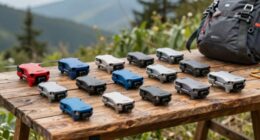
To practice leave no trace cooking, pack minimal gear and opt for simple, one-pot or foil-wrapped meals to reduce mess. Use biodegradable utensils and wipe dishes with a damp cloth instead of running water. Wash cookware at least 200 feet from water sources, keeping cleanup quick and eco-friendly. Always pack out all trash and leftover scraps. Stay mindful of your impact, and if you keep exploring, you’ll discover even smarter ways to cook responsibly in the wild.
Key Takeaways
- Use minimal, biodegradable utensils and packaging to reduce waste and environmental impact.
- Plan simple, low-mess meals requiring fewer dishes and less water for cleanup.
- Wash dishes away from water sources with minimal water and biodegradable soap.
- Pack out all trash and leftover scraps, leaving the site pristine.
- Build fires responsibly in designated areas, extinguishing completely to protect the environment.
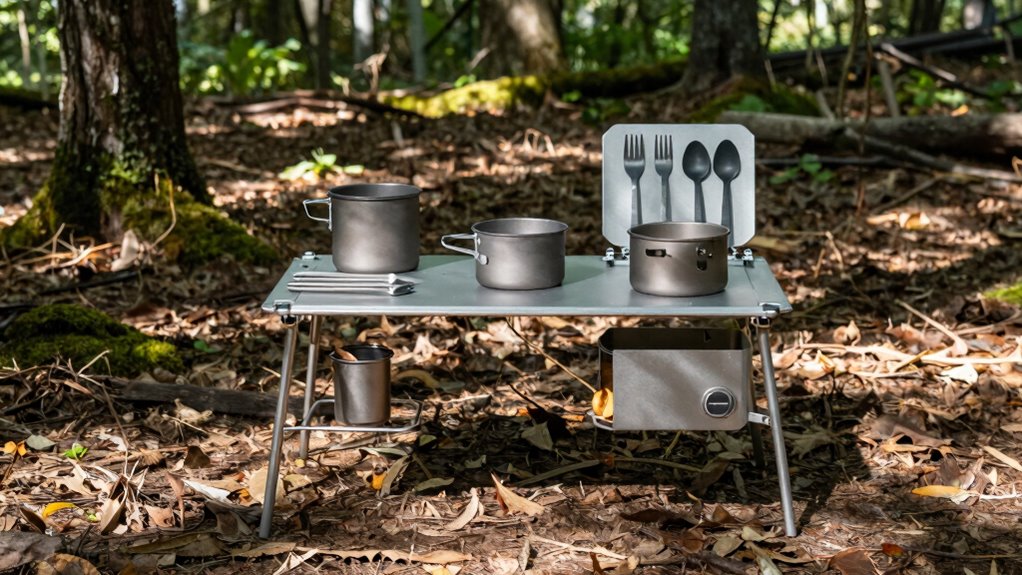
Have you ever wondered how to enjoy a delicious meal in the great outdoors without harming the environment? It’s possible when you practice Leave No Trace principles, especially with your cooking setup. The key is to minimize your impact while still savoring hearty campfire meals. One of the most important aspects is campfire safety. Before you start cooking, ensure your fire is built in a designated fire ring or a cleared area free of overhanging branches and dry grass. Keep the fire small and manageable, and never leave it unattended. Always have water or a fire extinguisher nearby to extinguish it completely when you’re done. A safe campfire not only protects the environment but also keeps you and fellow campers safe.
Using biodegradable utensils is another essential step toward eco-friendly camp cooking. Traditional plastic utensils can linger in the environment for hundreds of years, polluting the land and water. Instead, opt for biodegradable options made from bamboo, cornstarch, or other compostable materials. They’re just as functional but won’t contribute to long-term waste. After your meal, pack out all trash, including used biodegradable utensils, or compost them if facilities are available. This way, you leave behind nothing but footprints. Remember, even biodegradable items need to be disposed of properly; tossing them in a regular trash bin defeats their purpose. When packed out, they decompose naturally in a proper composting environment.
Another effective practice is to plan simple, low-mess meals that require minimal cookware and utensils. Think foil-wrapped vegetables, one-pot stews, or dehydrated meals rehydrated on-site. This reduces the amount of dishwashing and water use, making cleanup easier and less impactful. When it’s time to clean, use minimal water and wipe down cookware with a damp cloth rather than running it under a stream. If you must wash dishes, do so at least 200 feet from water sources to prevent contamination, and use biodegradable soap if available. Always pack out the used water and leftover scraps, leaving the area as pristine as when you arrived. Incorporating Natural Pool Principles can further ensure your outdoor experience remains environmentally friendly and sustainable.
Frequently Asked Questions
What Are the Best Materials for Low-Mess Camp Cookware?
You should choose lightweight, durable materials like titanium or anodized aluminum for low-mess camp cookware. Titanium offers an excellent durability comparison and is incredibly lightweight, making it perfect for backpacking. Anodized aluminum is also durable and slightly heavier but still easy to carry. Both materials resist rust and corrosion, helping you keep your gear clean and efficient, aligning with the low-mess cooking system’s goal of minimal cleanup and environmental impact.
How Do I Clean up After Leave No Trace Cooking?
After leave no trace cooking, you should clean your cookware promptly with minimal water, wiping away food residues and avoiding soap to protect the environment. Make sure to pack out all trash, scraps, and leftover food to prevent wildlife attraction. Practice campfire safety by ensuring your cooking area is cool before leaving, and maintain wildlife awareness by keeping food secured. This way, you preserve nature and stay safe.
Can This System Be Used for Gourmet Camping Meals?
Imagine the campfire as your modern-day alchemy lab—you can definitely use this system for gourmet meal preparation. While it’s designed for simplicity, it’s versatile enough to handle advanced cooking techniques like sous vide or pan-searing. With some prep, you can elevate your camp cuisine to restaurant quality, all while keeping your setup minimal and eco-friendly. It’s the perfect way to enjoy gourmet meals without leaving a trace.
What Are Compact Storage Options for the System?
You can keep your system compact with collapsible containers that fold flat when not in use, saving space in your pack. Stackable storage options also work well; they allow you to organize and maximize limited space efficiently. Use these solutions together to guarantee your camp kitchen stays organized, lightweight, and easy to carry. This way, you’ll have everything you need without sacrificing precious pack space.
Is the System Suitable for Solo or Group Camping?
Yes, you can use the system for both solo and group camping. It’s versatile enough to cater to your solo adventures, making packing and cooking straightforward. For group camping, it’s scalable — you can add extra components or share the setup with others. Its compact storage makes it easy to carry, whether you’re heading out alone or with a group, ensuring efficient, low-mess cooking in any camping situation.
Conclusion
By embracing the Leave No Trace cooking method, you become a steward of the wilderness, like a gentle breeze whispering respect through the trees. Your actions leave behind only footprints of care, not chaos. When you cook with intention, you’re nurturing both your adventure and the land it thrives on. Remember, each mindful meal is a seed of harmony, growing a future where nature and nourishment coexist peacefully—your simple act becomes a lasting symbol of respect.