
To help protect coral reefs, you can take simple daily actions like using reef-safe sunscreen, reducing plastic waste, and avoiding chemical runoff. Practice responsible snorkeling and diving by not touching or disturbing marine life and following local guidelines. Supporting conservation efforts and spreading awareness also make a difference. These small behaviors prevent huge damage, ensuring reefs stay healthy for marine ecosystems and future generations. Keep exploring to learn more ways you can make an impact.
Key Takeaways
- Use reef-safe sunscreen and avoid chemical pollutants to prevent coral bleaching and toxicity.
- Practice responsible snorkeling and diving by not touching or disturbing corals and marine life.
- Reduce plastic waste by choosing reusable items to prevent debris from damaging reef structures.
- Support sustainable tourism and conservation efforts to promote healthy reef ecosystems.
- Properly dispose of trash and minimize chemical runoff to protect reefs from pollution and sedimentation.
What Are Coral Reefs and Why Do They Matter?
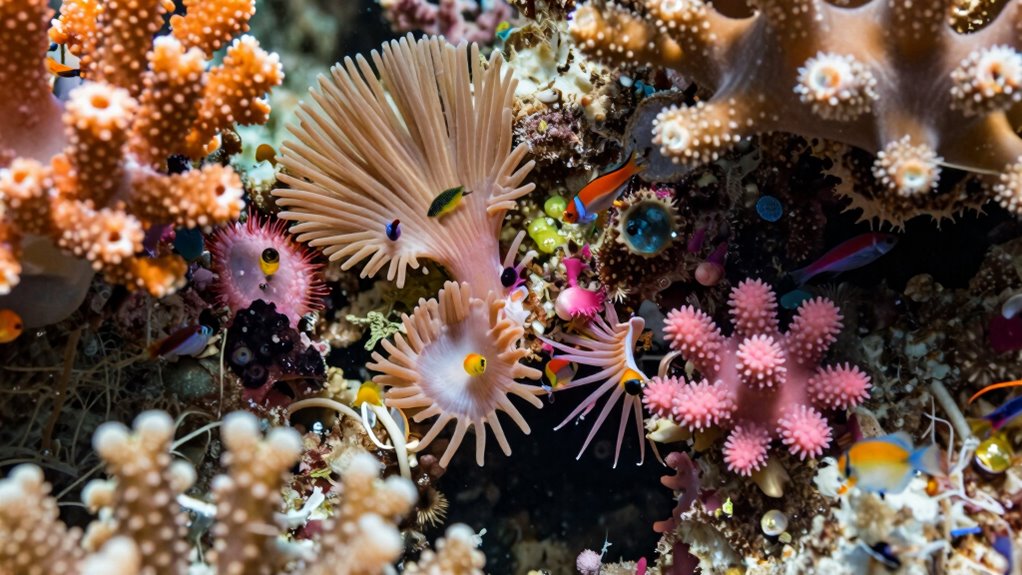
Have you ever wondered what makes coral reefs so essential to the ocean and life on Earth? Coral reefs are vibrant underwater ecosystems built by tiny animals called corals that form a crucial part of marine life. They thrive through coral symbiosis, where corals and algae work together, providing nutrients and energy that keep reefs healthy. This partnership supports incredible reef biodiversity, hosting thousands of species, from fish to invertebrates. Reefs act as nurseries for many marine creatures and protect coastlines from erosion and storm damage. Their complex structures create habitats that sustain a wide variety of life forms, making them indispensable for ecological balance. In short, coral reefs are the backbone of marine ecosystems, essential for maintaining ocean health and supporting global biodiversity. Maintaining these ecosystems requires healthy coral growth, which depends on minimizing human impacts and pollution.
What Threatens Coral Reefs and Why It’s Urgent?
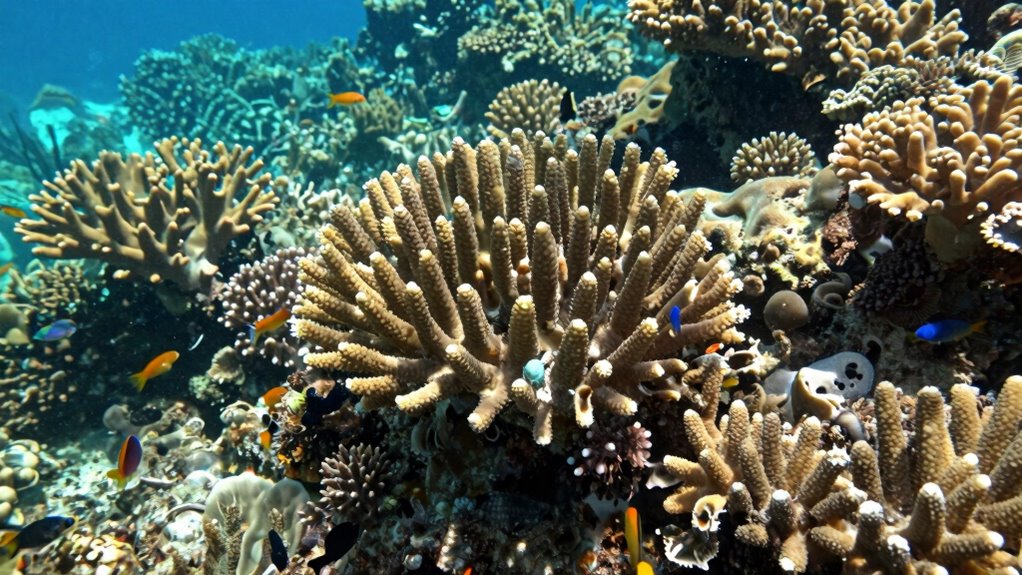
Coral reefs face numerous threats that endanger their survival, many of which are driven by human activities. Climate change causes ocean temperatures to rise, leading to coral bleaching and weakened resilience. Overfishing disrupts the balance of reef ecosystems, removing key species and damaging habitats. These issues accelerate reef decline, putting biodiversity and coastal protection at risk. Here’s a quick overview:
| Threat | Impact | Urgency |
|---|---|---|
| Climate change | Bleaching, weakened corals | Critical, accelerating |
| Overfishing | Loss of fish, habitat destruction | Immediate concern |
| Pollution | Toxic runoff, sedimentation | Increasing threat |
In addition, marine debris such as plastics can physically damage coral structures and introduce toxins that impair reef health. Managing and reducing pollution is essential for the long-term health of reefs, as it exacerbates the damage caused by other threats. You play a role in addressing these threats by supporting sustainable practices and reducing harmful activities. Color accuracy in monitoring and understanding reef health can help target conservation efforts more effectively.
Simple Things You Can Do Every Day to Protect Reefs
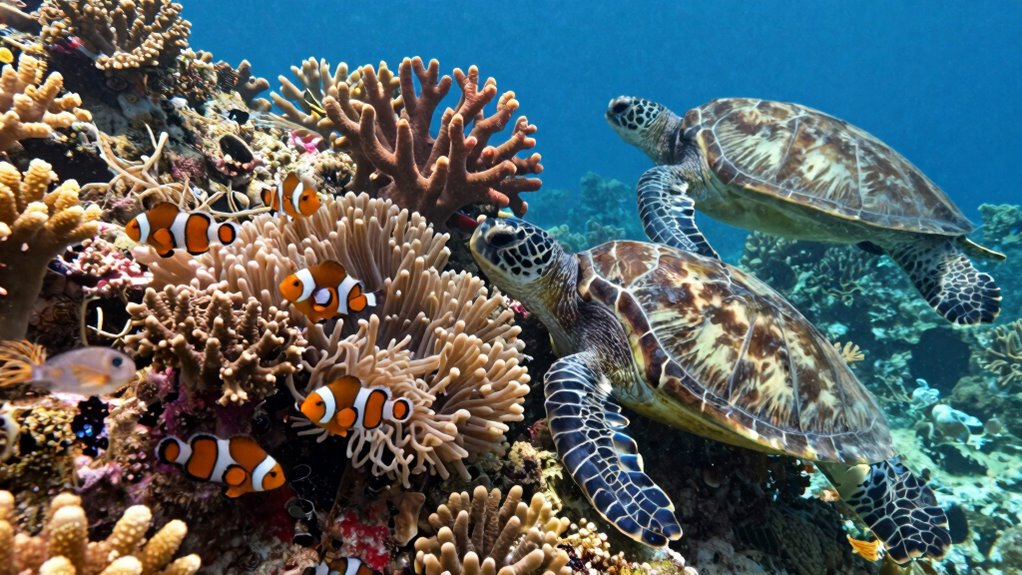
Many everyday actions can help protect coral reefs from further damage. One simple step is choosing reef friendly sunscreen whenever you head to the beach. Conventional sunscreens often contain chemicals that harm corals, so switching to reef safe options makes a big difference. Additionally, maintaining trash free beaches is vital. Always pick up your litter and dispose of waste properly to prevent pollutants from washing into the ocean. Avoid single-use plastics and opt for reusable items to reduce debris. Be mindful of water runoff by not over-watering lawns or using harmful chemicals near coastal areas. Small daily choices like these help minimize chemical pollution and physical damage to reefs, ensuring these vibrant ecosystems survive and thrive for generations to come. Incorporating sustainable practices into your daily routine can further amplify your positive impact on marine environments. Supporting environmentally friendly products and initiatives also contributes to the health of coral reefs. Being aware of local pollution sources and advocating for better waste management policies can further protect these delicate ecosystems. Making informed choices about marine conservation can help ensure these ecosystems remain resilient and vibrant for future generations. Engaging in community efforts to reduce pollution can create a broader positive influence on reef preservation.
How to Practice Responsible Snorkeling and Diving?
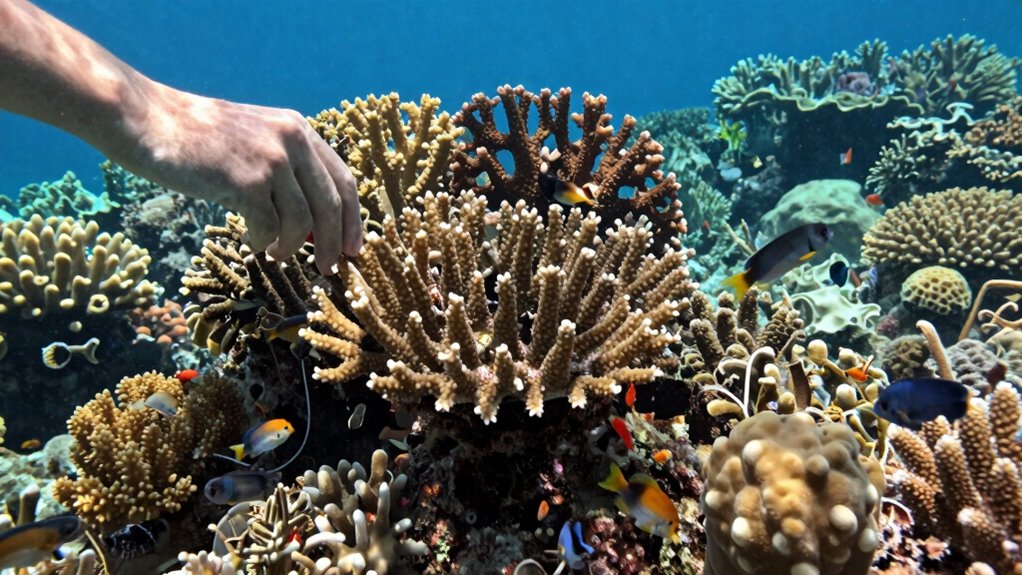
To practice responsible snorkeling and diving, it’s essential to be mindful of your movements and interactions with the reef. Follow proper marine etiquette by avoiding contact with coral and marine life, which can cause damage or stress. Keep your fins gentle to prevent stirring up sediment that can smother delicate organisms. Always handle your equipment with care, making sure your gear is secure to prevent accidental scrapes or falls. Use reef-safe sunscreen to prevent chemical damage. Respect local guidelines and avoid touching or collecting anything from the reef. Your conscious actions protect these fragile ecosystems, ensuring they remain vibrant and healthy for future generations. Practicing mindful marine etiquette and caring for your equipment helps minimize your impact and supports reef conservation efforts. Additionally, being aware of your at‑home beauty devices and their proper maintenance can help you avoid inadvertently introducing pollutants that could harm marine environments. Being informed about environmentally friendly products can further enhance your efforts to reduce pollution.
How You Can Support Coral Reef Conservation Efforts

Supporting coral reef conservation starts with your choices and actions. You can make a difference by practicing sustainable tourism—respect local guidelines, avoid touching corals, and choose eco-friendly operators. Reducing plastic use is also essential; carry reusable bags, bottles, and straws to prevent plastic waste from reaching reefs. Understanding the importance of food security can also motivate responsible behaviors that protect marine environments. Incorporating water conservation practices in your daily routine can significantly reduce the strain on natural resources and benefit reef ecosystems. Additionally, being aware of the maintenance costs associated with reef-related tourism activities can help you make more sustainable choices. Being informed about marine biodiversity highlights the significance of protecting diverse reef species and ecosystems. Recognizing the impact of climate change on coral bleaching emphasizes the need for global efforts to reduce carbon emissions. Here’s a simple way to visualize ways to support reef health:
| Action | How It Helps | Tips |
|---|---|---|
| Choose eco-tours | Minimize environmental impact | Verify operators’ eco-credentials |
| Reduce plastic use | Prevent pollution and debris | Use reusable items |
| Support conservation orgs | Fund reef protection efforts | Volunteer or donate |
| Be mindful of waste | Avoid littering near reefs | Properly dispose of trash |
| Spread awareness | Educate others about reef care | Share tips and info |
Frequently Asked Questions
How Do Coral Polyps Communicate With Each Other?
You might not realize it, but coral polyps communicate through coral chemical signaling, which helps them coordinate their actions. When a threat or change occurs, they send chemical signals that trigger polyp synchronization, allowing the entire colony to respond collectively. This tiny but essential communication process guarantees the reef’s health, helping polyps work together to feed, reproduce, or defend against stressors effectively.
What Role Do Algae Play in Coral Reef Health?
Imagine a vibrant coral reef thriving because of algae symbiosis. Algae, living within coral tissues, provide crucial nutrients through photosynthesis, fueling coral growth and resilience. In reef algae management, protecting these algae guarantees healthy reefs. When algae flourish, corals stay healthy and withstand stress better. Conversely, algae overgrowth, often from pollution, harms corals. Your efforts to minimize runoff help maintain this essential algae-coral balance, safeguarding reef health.
Can Coral Reefs Recover From Severe Bleaching Events?
Yes, coral reefs can recover from severe bleaching events if conditions improve quickly. Your actions that support coral resilience, like reducing carbon footprints and avoiding physical damage, help promote bleaching recovery. While some corals may die, many have the ability to bounce back if stressors lessen. By protecting these ecosystems, you guarantee that natural processes like bleaching recovery continue, giving reefs a fighting chance to restore their vibrant health.
Are There Specific Fish Species That Help Protect Reefs?
Yes, certain fish species play essential roles in protecting reefs through symbiotic relationships and reef cleaning. Parrotfish and surgeonfish, for example, help control algae that can smother corals, maintaining a healthy balance. Cleaner fish, like wrasse, remove parasites from larger fish, promoting their health and reducing disease spread. By engaging in reef cleaning, these fish contribute to the reef’s resilience, helping it stay strong against threats.
How Does Climate Change Accelerate Coral Reef Deterioration?
Climate change accelerates coral reef deterioration by increasing carbon emissions, which trap heat and cause ocean temperatures to rise. This leads to coral bleaching, where corals lose their vibrant colors and essential symbiotic algae. Additionally, higher carbon levels cause ocean acidification, weakening coral skeletons and making them more vulnerable to damage. You can help by reducing your carbon footprint to slow these harmful effects and protect these delicate ecosystems.
Conclusion
By making small, mindful choices every day, you hold the power to protect these vibrant underwater worlds. Think of coral reefs as delicate tapestries, woven with tiny behaviors that can unravel with a single careless act. Your actions—whether choosing eco-friendly products or practicing responsible snorkeling—are the threads that keep this masterpiece alive. Don’t let apathy be the silent villain in this story; instead, be the hero who preserves these wonders for generations to come.