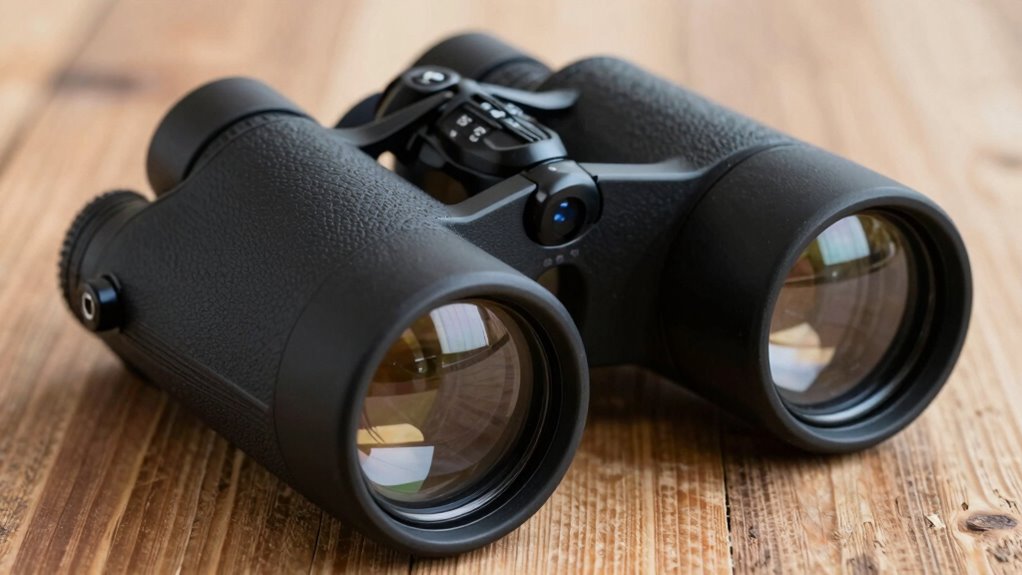
Binocular specs include key details like magnification, objective size, and eye relief that impact your viewing experience. Magnification (like 8x or 10x) shows how much closer objects appear, while the objective lens size (such as 42mm or 50mm) affects how much light enters for brighter images. Eye relief determines how far from your eyes you can hold the binoculars comfortably without losing the field of view. Want to understand how these specs work together? Keep exploring to learn more.
Key Takeaways
- Magnification (e.g., 8x, 10x) indicates how much closer objects appear through the binoculars.
- Objective size (e.g., 42mm, 50mm) determines light-gathering ability and brightness of the image.
- Larger objectives provide brighter images but add weight and reduce portability.
- Eye relief is the distance from the eyepiece to see the full field of view comfortably.
- Longer eye relief (15mm or more) benefits eyeglass wearers by preventing vignetting and blackouts.
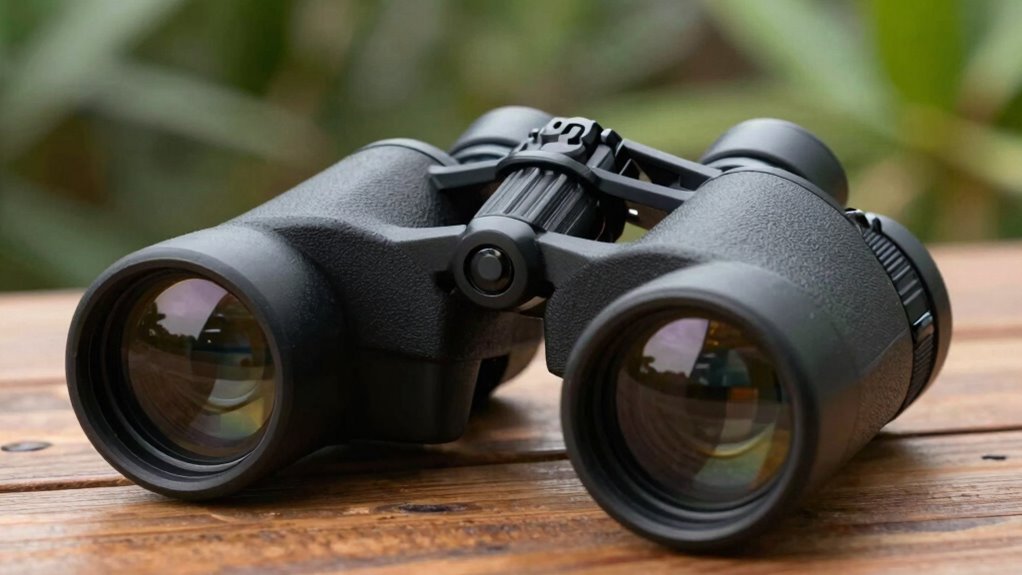
Ever wondered what makes a good pair of binoculars? It all comes down to understanding the key specs that influence your viewing experience. One of the most important factors is binocular image quality. High-quality optics deliver sharp, clear images with accurate color reproduction, so you can see details without strain. When evaluating binoculars, look for lenses and prisms made from premium glass, such as BaK-4 or ED glass, which notably enhance image clarity and reduce distortions. Coatings on the lenses also play a role; fully multi-coated lenses maximize light transmission, ensuring brighter images even in low-light conditions. Durability features are equally essential because your binoculars might face rough handling, weather, or outdoor elements. Look for models with sturdy, rubber-armored bodies that absorb shocks and provide a non-slip grip. Waterproof and fog-proof construction, achieved through sealed O-rings and nitrogen or argon purging, keeps your binoculars functional in rain, snow, or humid environments. These durability features extend the lifespan of your binoculars and guarantee performance over time, regardless of the conditions. Additionally, understanding the optical design helps in selecting binoculars that balance performance and ease of use for outdoor activities. Magnification and objective size are other critical specs that shape your viewing experience. The magnification power, indicated by the first number in the binoculars’ specifications (like 8x or 10x), determines how much closer distant objects appear. Higher magnification offers a more detailed view but can also make the image shakier and narrower your field of view. The second number, the objective lens diameter (such as 42mm or 50mm), affects how much light enters the binoculars. Larger objectives gather more light, resulting in brighter images, especially in dim environments like dawn, dusk, or dense forests. However, bigger lenses also mean heavier binoculars, so balance your need for brightness with portability. Eye relief is another consideration, especially if you wear glasses. It refers to the distance you can hold your eyes from the eyepiece while still seeing the full image. Longer eye relief, typically 15mm or more, allows comfortable viewing for eyeglass wearers without vignetting or blackouts around the edges. Shorter eye relief might be fine if you don’t wear glasses but can cause discomfort or limited views for those who do.
Frequently Asked Questions
How Do Weather Conditions Affect Binocular Performance?
Weather conditions can considerably impact your binocular performance. Fog interference, for example, can cloud your view and make details hard to see, while rain or snow may cause reflections or water spots on the lenses. Wind can also shake your hands, reducing stability. Keep your binoculars protected and consider models with waterproof or fog-proof features to minimize weather impact, ensuring clearer, more consistent viewing regardless of the conditions.
Are Expensive Binoculars Always Better Than Cheaper Options?
You get what you pay for, but expensive binoculars aren’t always better. It’s wise to compare prices and consider brand reputation before making a purchase. While high-end models often have superior optics and durability, some cheaper options offer excellent performance for casual use. Focus on your needs and budget; a well-chosen pair can outperform pricier ones if they suit your activities. Don’t judge a book by its cover.
What Is the Best Magnification for Bird Watching?
For bird watching, a magnification of 8x or 10x is ideal. It provides a good balance between a wider field of view and enough detail to identify birds clearly. Consider eye relief too, especially if you wear glasses; longer eye relief makes viewing more comfortable. Higher magnifications narrow your field of view, making tracking birds harder, so stick to 8x or 10x for the best experience.
How Should I Store and Maintain My Binoculars?
Think of your binoculars as a delicate garden needing tender care. Store them in a padded case, away from extreme temperatures and humidity, to keep their lenses pristine. Regularly clean the lenses with gentle cleaning tips—use a microfiber cloth and avoid harsh chemicals. When not in use, keep the focus on storage solutions that protect against dust and scratches, ensuring your view remains crystal clear for every adventure ahead.
Can Binoculars Be Used for Astronomy and Stargazing?
Yes, you can definitely use binoculars for astronomy and stargazing. They’re perfect for observing the night sky, star clusters, and even some planets. With a good pair, you’ll enjoy wider views of celestial objects and better light collection. Just choose binoculars with higher magnification and larger objective lenses, and you’ll find it easier to spot details in the dark sky. Keep them steady for the best experience.
Conclusion
Now that you understand the ins and outs of binocular specs—magnification, objective size, and eye relief—you’re ready to choose the perfect pair. But here’s the thing: the right binocular can transform your entire experience, revealing details you never knew existed. Will you opt for a compact model for quick adventures or a powerful one for distant views? The choice is yours, and the next step could open a whole new world of clarity and wonder.