To handle luggage on trains and trams, keep your bags close and avoid blocking pathways. Have your tickets ready and use designated luggage areas while waiting. Store smaller bags in overhead racks and larger items at your feet to keep aisles clear. Be mindful of safety practices and help others when possible. Prepare your belongings early before disembarking to avoid leaving anything behind. There’s more to know for a hassle-free journey ahead!
Key Takeaways
- Keep bags close and organized at the station to facilitate quick boarding and prevent blocking pathways.
- Use luggage carts for larger items and store smaller bags in overhead racks to save space.
- Prepare belongings early before disembarking to avoid leaving items behind and maintain flow.
- Always keep an eye on your luggage to prevent theft or loss during travel.
- Offer assistance to others when possible, fostering a friendly and efficient travel environment.
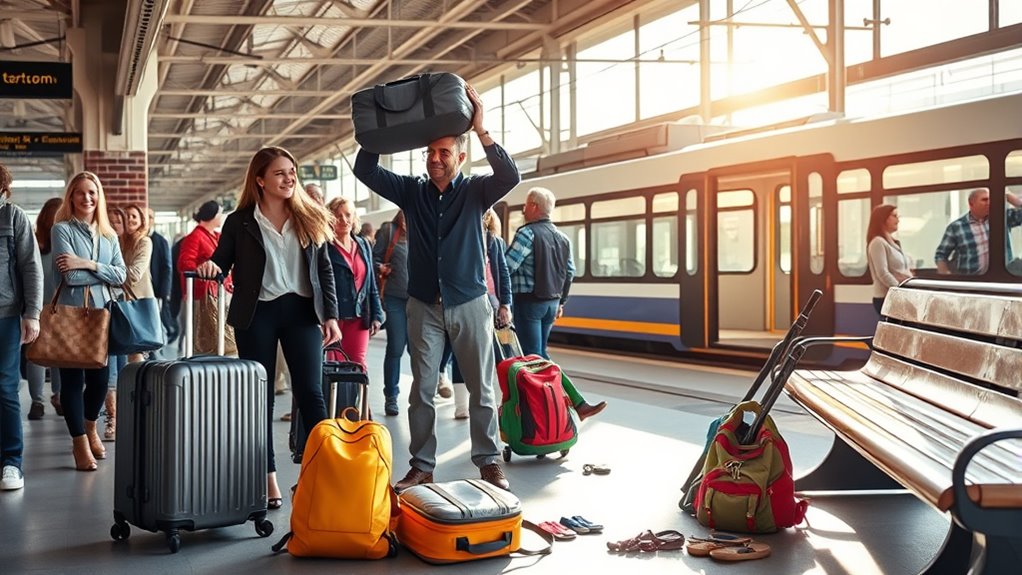
When you travel by train or tram, handling your luggage efficiently can make your journey smoother and more enjoyable. To start, it’s essential to be aware of train station etiquette. This involves keeping your bags close to you and avoiding blocking pathways as you navigate crowded platforms. When you arrive at the station, make sure to have your ticket ready. This way, you won’t need to fumble around with your luggage while trying to find it, which can be distracting and disruptive to other travelers.
Once you’re at the platform, look for designated areas to place your bags. Many stations provide space to keep your luggage while you wait for your tram or train. If you’re traveling with larger bags, consider using a luggage cart to help transport your items to the train. Keeping your bags organized will help you board more quickly and reduce the risk of leaving something behind.
When you board, pay attention to tram accessibility features, especially if you’re traveling with heavy or bulky luggage. Many trams have low floors and ramps, making it easier for you to get on and off with your bags. If you see someone who may need assistance, like an elderly traveler or a parent with a stroller, it’s considerate to offer help. This fosters a friendly atmosphere and makes everyone’s experience a bit better.
While on board, find a suitable spot for your luggage. If there are overhead racks, use them to store smaller bags, but be sure to keep larger items close by your feet. This not only keeps the aisle clear but also ensures you can keep an eye on your belongings. If the tram is crowded, make sure your luggage doesn’t obstruct others’ movement. Additionally, understanding the importance of safety practices in public transport can enhance your overall travel experience.
When you’re nearing your destination, prepare to disembark. Gather your belongings early and ensure you’re ready to step off as soon as the tram or train stops. This helps maintain the flow of passengers and shows respect for fellow travelers. Once you’re off, take a moment to check that you’ve got everything.

194Pcs Vintage Patriotic Party Supplies Set- American Flag Dinnerware - 9"+7" Plates, Cutlery, Napkins, Cups & 2 USA Flag Tablecloths-Patriotic Decoration for 4th of July, Birthday, Memorial Day BBQs
🇺🇸USA Flag Party Value Package: 24*dinner paper plates, 24*dessert paper plates, 24* napkins (6.5in), 24*paper cups (7oz), 24...
As an affiliate, we earn on qualifying purchases.
Frequently Asked Questions
Are There Luggage Size Restrictions for Trains and Trams?
Yes, there are luggage size restrictions for trains and trams. These restrictions can vary by service provider, but generally, you’ll find limits on both the weight and dimensions of your baggage. You should always check the specific guidelines before your journey to avoid surprises. Make sure your luggage size fits within the allowed limits, as exceeding these baggage restrictions might lead to extra fees or denied boarding.
Can I Bring a Bicycle or Sports Equipment on Board?
Yes, you can bring a bicycle or sports equipment on board, but you’ll need to verify the specific bike storage and sports gear regulations for your train or tram service. Many allow bikes, but some require you to reserve a space. For sports gear, ensure it fits within size limits to avoid extra fees. Always secure your items properly to keep the aisles clear and make your journey smooth and enjoyable.
What Happens if My Luggage Is Lost or Damaged?
If your luggage is lost or damaged, you should immediately report it to the train or tram staff. They’ll guide you through the lost property procedures, which often require filling out a form. If you have luggage insurance, contact your provider to start a claim. Keep all receipts and documentation handy, as they’ll be essential for any compensation. Staying calm and proactive can help resolve the issue more smoothly.
Are There Any Additional Fees for Larger Luggage Items?
When you’re steering the world of travel, oversized baggage can feel like a storm cloud over your plans. Yes, there are often additional fees for larger luggage items, especially if they exceed standard size limits. Many transport services charge for luggage storage based on size, so it’s wise to check specific policies in advance. Avoid surprises by measuring your bags and knowing what to expect before you set out on your journey.
How Do I Secure My Luggage While Traveling?
To secure your luggage while traveling, use luggage locks and always keep valuables in your carry-on. Consider using baggage storage options at stations if you need to explore without your bags. When on public transport, keep your luggage close and within sight, preferably on your lap or between your feet. Trust your instincts—if something feels off, don’t hesitate to move or ask for assistance. Safe travels!

Childom 3 Pack Patriotic Tablecloths 4th of July Decorations,Disposable Plastic Tablecloths 54"x108",Patriotic Themed Party Table Cloth for Kids Birthday Party Supplies,Outside,Picnic,Camping,Memorial
Patriotic Themed Party Decorations Includes: 3 Pcs patriotic themed plastic tablecloth, a great way as kids birthday decorations,...
As an affiliate, we earn on qualifying purchases.
Conclusion
In conclusion, handling luggage on trains and trams requires you to be organized, aware, and courteous. You’ll want to pack efficiently, store your bags wisely, and keep your belongings close. By planning ahead, respecting fellow passengers, and following the rules, you’ll make your journey smoother and more enjoyable. So, embrace the adventure, navigate the platforms, and enjoy the ride, knowing you’ve mastered the art of traveling with your luggage in tow.

Childom 152 Pack 4th of July Decorations,Patriotic 4th of July Plates Set
Patriotic 4th Of July Decorations:The American themed party decorations is great for patriotic party decorations, red white and...
As an affiliate, we earn on qualifying purchases.

Tbsone 3 Pack 4th of July Patriotic Tablecloth, Disposable Red White and Blue Plastic Table Cloth, USA Party Decorations, Independence Day Supplies for Outdoor Picnic, Camping, Memorial, or Home
Festive 4th of July Design: Showcase your American pride with this vibrant red, white, and blue tablecloth featuring...
As an affiliate, we earn on qualifying purchases.