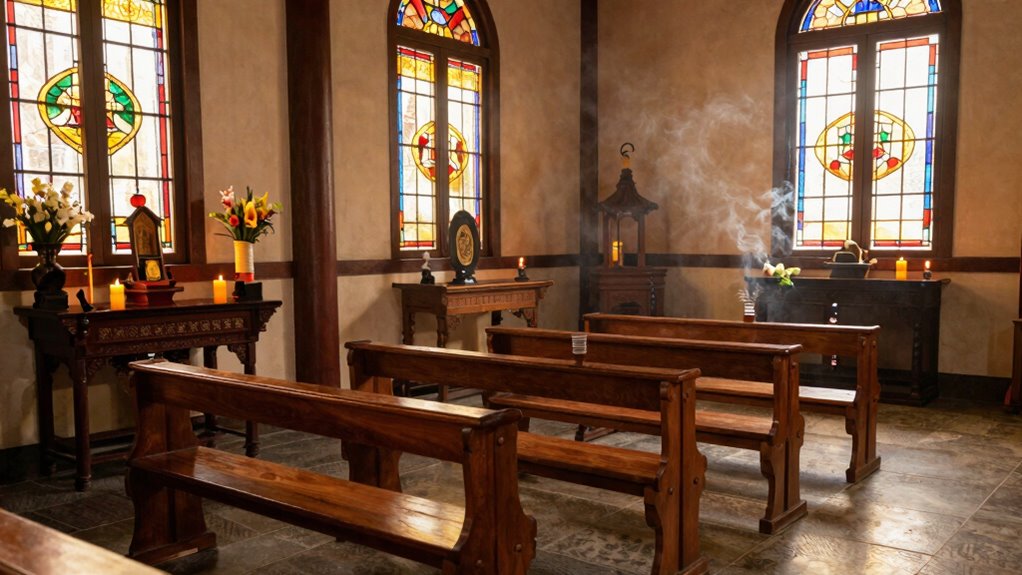

When visiting religious, sacred, or quiet spaces, approach with humility and an open mind. Observe customs like removing shoes, covering your head, or keeping noise low, and follow the example of others. Respect boundaries, avoid restricted areas, and be mindful of photo rules. Recognize different traditions may have unique practices, and always behave quietly to preserve a reflective atmosphere. If you want to understand how to show deep respect, there’s more to discover about proper behavior in these spaces.
Key Takeaways
- Approach the space with humility, respecting its spiritual significance and customs.
- Observe and follow signs, symbols, and behavioral cues to show reverence.
- Keep noise levels low and behave calmly to maintain a peaceful environment.
- Respect restricted areas and boundaries, avoiding disruptive or inappropriate actions.
- Be open to cultural differences, approaching practices with understanding and an respectful attitude.
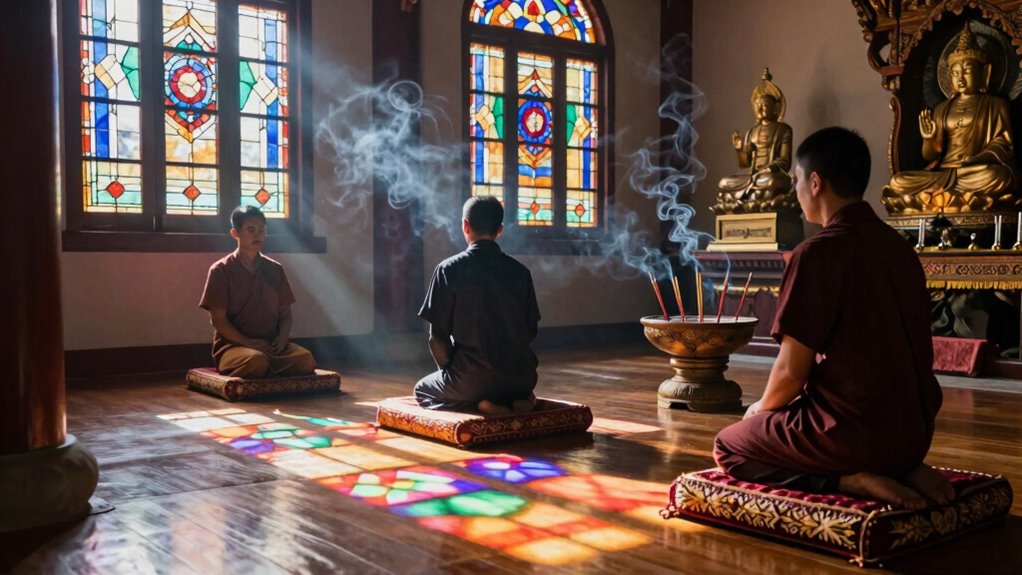
Have you ever wondered how to respectfully handle religious and sacred spaces? Navigating these areas requires more than just good manners; it demands cultural sensitivity and a genuine effort to observe customs with respect. When you enter a sacred space, your first priority should be to approach it with an open mind and a humble attitude. Recognize that these places hold deep significance for those who worship or find solace there. Your actions should reflect an understanding that this isn’t just a public area but a site of personal meaning and spiritual devotion.
Respectful observation is key. Pay attention to signs, symbols, and behaviors that indicate how people interact within this space. For example, some places might require you to remove your shoes before entering, or you might need to cover your head or dress modestly. These are not arbitrary rules but expressions of reverence and tradition. Observe what others are doing and follow suit without drawing unnecessary attention to yourself. If you’re unsure about what’s appropriate, it’s perfectly acceptable to ask politely or look for guidance from staff or community members. Showing a willingness to learn and adapt demonstrates your respect for their customs.
Keep noise levels low and avoid disruptive behaviors. Sacred spaces are meant for reflection, prayer, or quiet contemplation, so your voice should be calm, and your movements gentle. Remember, even small actions like taking photos may be inappropriate unless explicitly permitted. Always respect designated areas for worship or meditation, and avoid wandering into restricted zones. Your goal should be to blend in respectfully, not to stand out as someone unfamiliar or inattentive. Additionally, understanding the importance of cultural sensitivity helps prevent misunderstandings and shows your genuine respect for diverse traditions.
Cultural sensitivity also involves understanding that different traditions have distinct practices. What’s acceptable in one sacred space might not be in another. For instance, some places may encourage participation in certain rituals, while others might require silence and distance. Approach each situation with an open mind and a respectful attitude, refraining from making assumptions or judgments. Showing appreciation for their customs, even if they differ from your own, creates a more respectful and enriching experience for everyone involved.
Handling religious and sacred spaces well isn’t just about following rules; it’s about honoring the beliefs and practices of others. Your respectful observation and cultural sensitivity help foster an environment of mutual respect and understanding. By approaching these spaces thoughtfully and with humility, you show that you value their significance and are committed to engaging with them in a considerate way. This attitude not only enriches your experience but also upholds the dignity of the traditions you encounter.

Hophor Saudi Niqab with Buckram Headband,Black Face Veil with Adjustable Tie Headband,Breathable Mesh Niqab for Women Muslim Modest Wear
- Premium Saudi Niqab: Reinforced headband for secure fit
- Adjustable Tie-Back: Customizable fit with secure tie system
- Versatile Modest Wear: Pairs with hijab, abaya, and outfits
As an affiliate, we earn on qualifying purchases.
As an affiliate, we earn on qualifying purchases.
Frequently Asked Questions
What Should I Wear When Visiting Sacred Spaces?
When visiting sacred spaces, wear appropriate attire that covers your shoulders and knees to show respect. Avoid flashy or casual clothing that might be considered inappropriate. It’s best to dress modestly and comfortably, reflecting respectful conduct. Remember to remove shoes if required, and keep noise to a minimum. By dressing thoughtfully and behaving considerately, you show reverence for the sacred environment and honor the traditions of those who hold it dear.
Are Photography and Phone Use Allowed in These Areas?
Photography and phone use often depend on the specific sacred space, so always check the photography etiquette and phone usage guidelines beforehand. In many places, photography is prohibited or limited out of respect, especially during services or ceremonies. You should silence your phone and avoid taking photos if it’s not allowed. Respect the rules, stay discreet, and prioritize the reverence of the space to make certain you don’t disturb others.
How Should I Behave Around Worshippers or Religious Leaders?
Channel your inner knight and approach with respect. You should behave around worshippers or religious leaders with respectful silence and polite gestures. Avoid interrupting or making loud noises, and follow their cues for appropriate interaction. Show genuine reverence, listen attentively, and maintain a respectful distance when necessary. Your humble attitude and understanding will foster harmony, allowing everyone to focus on their sacred practices without distraction.
Can I Bring Children Into Sacred or Quiet Spaces?
Yes, you can bring children into sacred or quiet spaces, but you should manage their behavior and noise carefully. Keep an eye on them to guarantee they remain respectful and quiet, as loud noises or disruptive actions can disturb others’ experience. Encourage children to be mindful of the space’s significance, and consider bringing quiet activities or toys to help manage noise levels and keep everyone respectful.
What Are Common Gestures of Respect in Religious Settings?
You show respect by bowing your head gently or clasping your hands softly in prayer-like gestures, like offering a silent greeting. Be mindful of cultural sensitivities—what’s polite in one tradition might differ in another. Gesture etiquette often includes removing shoes or covering your head. Imagine a peaceful pond; your gestures should be as gentle and unobtrusive, honoring the sacred space without disrupting its tranquility.
Conclusion
Respecting sacred spaces shows your understanding and sensitivity. Remember, over 70% of people worldwide consider their places of worship or quiet areas essential to their well-being. When you enter these spaces with humility and awareness, you foster trust and harmony. By honoring their significance, you create a welcoming environment for everyone. So, next time you step into a sacred or quiet place, do so with reverence—you’ll leave a positive impression and deepen mutual respect.