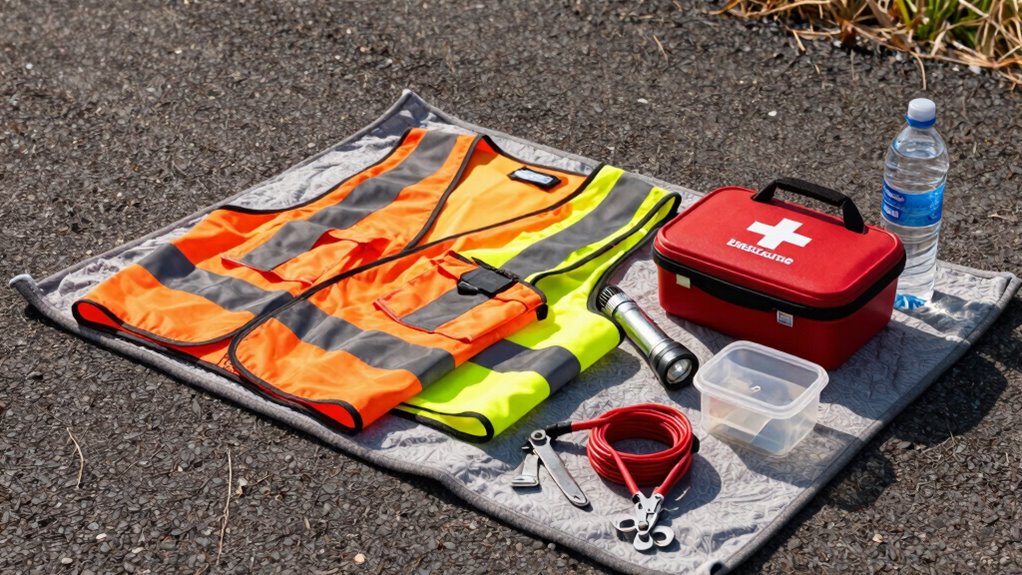

A good roadside kit for longer trips should include essential safety items like a first aid kit, reflective triangles, and a flashlight with extra batteries. It should also have vehicle maintenance basics such as a spare tire, jumper cables, and fluid check tools. Comfort items like water and snacks, along with environmentally friendly supplies, are important too. Preparing for different weather conditions and keeping everything organized guarantees you’re ready for any situation. Keep going to discover more essentials to stay safe and prepared.

Get travel and outdoor gear delivered free with Prime
- Fast, free delivery on millions of items
- Prime Video, Amazon Music and more included
- Member-only deals all year
Key Takeaways
- Include comprehensive emergency supplies like first aid kits, flashlights, reflective triangles, and non-perishable snacks for extended safety and comfort.
- Carry vehicle maintenance tools such as spare tires, jumper cables, and fluid checks to prevent breakdowns during long trips.
- Tailor the kit with climate-specific items like extra windshield washer fluid and safety gear suited for terrain and weather conditions.
- Ensure all items are organized in durable, easily accessible containers for quick response during emergencies.
- Incorporate communication essentials like portable phone chargers and knowledge of emergency procedures for effective assistance.
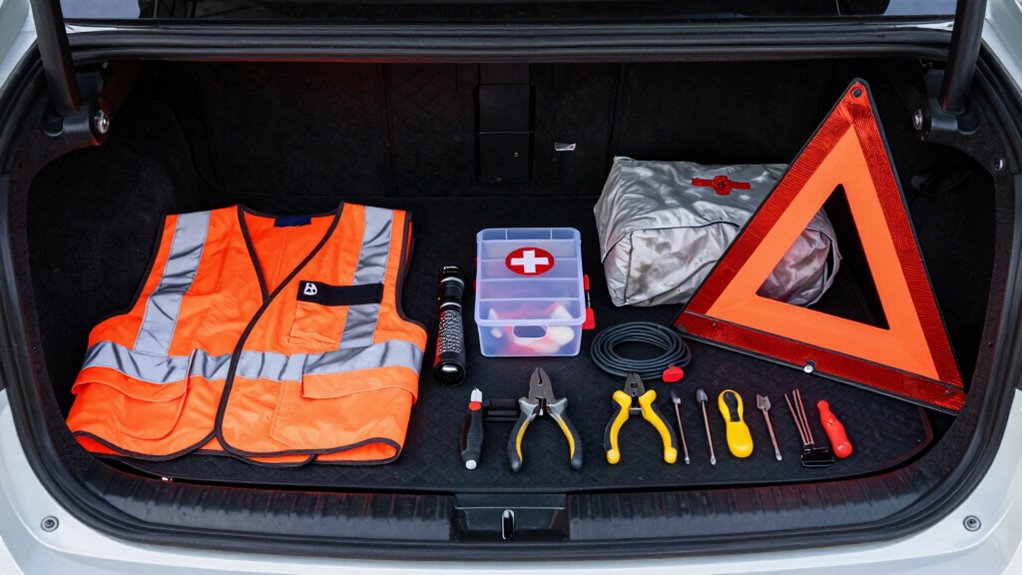
Starting on longer trips requires more than just a good playlist and a full tank of gas; it demands preparation for unexpected situations. A well-stocked roadside kit can be a lifesaver when you’re miles away from help. To make sure you’re truly prepared, you need to focus on emergency preparedness and vehicle maintenance. These two elements are the backbone of a reliable roadside kit, ensuring you’re ready to handle a variety of scenarios.
First, prioritize emergency preparedness. Your kit should include essentials like a first aid kit, flashlight with extra batteries, and reflective warning triangles or flares. These items help you respond quickly to injuries and improve your visibility if you’re stranded after dark. A multi-tool or Swiss Army knife is also invaluable, providing multiple functions in one compact device. Keep a supply of bottled water and non-perishable snacks to stay hydrated and energized if you’re delayed longer than expected. It’s also wise to include a blanket or emergency thermal wrap for warmth if you’re stuck in cold weather. Everything should be stored in a durable, easily accessible container, so you can grab what you need without rummaging around. Additionally, understanding the importance of biodiversity can inspire you to protect the environment during your travels and ensure natural habitats are preserved for future journeys. Having knowledge about vehicle maintenance can help you identify signs of trouble early, potentially preventing breakdowns before they happen. Incorporating preventative maintenance into your routine can also extend the life of your vehicle and reduce the risk of breakdowns on the road. Regularly reviewing your kit and understanding emergency procedures can help you stay calm and effective during stressful situations.
Vehicle maintenance is equally important. Before heading out, ensure your vehicle is in optimal condition. Check tire pressure and tread, and carry a spare tire along with a jack and lug wrench. Regularly inspecting your vehicle’s fluids—oil, coolant, brake fluid—can prevent breakdowns. Also, include jumper cables in your kit; dead batteries happen, especially in extreme temperatures. A basic set of tools like pliers, screwdrivers, and an adjustable wrench can help you make minor repairs on the spot. A tow strap or rope can be a lifesaver if you need to pull someone out of a tricky spot. Remember, a well-maintained vehicle is less likely to break down, but being prepared for the worst is what keeps you safe.
Finally, tailor your roadside kit to your specific trip and vehicle. Consider the climate, terrain, and length of your journey. Adding items like extra windshield washer fluid, a tire inflator, or even a portable phone charger can make a difference. The goal is to cover all bases—emergency preparedness and vehicle maintenance—so you’re ready for whatever the road throws your way. Being proactive with your roadside kit means less stress when things go wrong and keeps you focused on the adventure ahead.
As an affiliate, we earn on qualifying purchases.
Frequently Asked Questions
How Often Should I Update My Roadside Kit?
You should update your roadside kit at least once a year to guarantee emergency preparedness and vehicle maintenance supplies stay current. Regular updates help you replace expired items, check for damaged equipment, and add new essentials based on your travel plans. Keeping your kit fresh means you’re better prepared for unexpected situations on longer trips, ensuring safety and peace of mind wherever your journey takes you.
Can I Customize a Roadside Kit for Specific Emergencies?
Yes, you can absolutely customize your roadside kit for specific emergencies. Imagine the relief of having exactly what you need when disaster strikes—emergency supplies tailored to your vehicle, climate, or travel destinations. Proper kit organization is key, allowing quick access to essentials like first aid, tools, or extra warmth. Personalizing your kit guarantees you’re prepared for any situation, giving you confidence and peace of mind on those longer trips.
What Safety Items Are Essential for Night Driving?
For night driving, you need essential safety items like a flashlight, reflective triangles, and a high-visibility vest to stay visible. Make certain your vehicle maintenance is up-to-date to prevent breakdowns. Keep an emergency contact list in your roadside kit, so you can quickly reach help if needed. These items help you stay safe, alert, and prepared for any unexpected situations during your trip.
How Do I Choose the Right Size Roadside Kit?
Choose a roadside kit that matches your vehicle size, driving distance, and typical needs. A compact kit suits smaller cars, while larger vehicles require more all-encompassing supplies. Pack emergency snacks and vehicle maintenance items, balancing portability with necessity. Remember, a well-sized kit ensures quick access to essentials without clutter. Think about your trip length and potential risks, and select a kit that keeps you prepared, safe, and comfortable on the road.
Are There Eco-Friendly Roadside Kit Options Available?
Yes, eco-friendly roadside kits are available. You can choose kits with biodegradable products like compostable gloves, wipes, and containers that reduce waste. Additionally, look for solar-powered tools such as flashlights or chargers, which eliminate the need for batteries and minimize environmental impact. These options help you stay prepared for emergencies while supporting sustainability, making your longer trips safer and greener.
Conclusion
Having the right roadside kit transforms a potential nightmare into a manageable hiccup, turning your journey into a smooth sail even when the road gets rough. Think of it as your trusty compass in a storm—preparedness keeps you calm and confident. So, pack wisely, check your kit before each trip, and remember: a well-stocked roadside kit is your best friend on the road, ensuring you’re ready to face any unexpected bumps ahead.
Halloween Picks
halloween
As an affiliate, we earn on qualifying purchases.