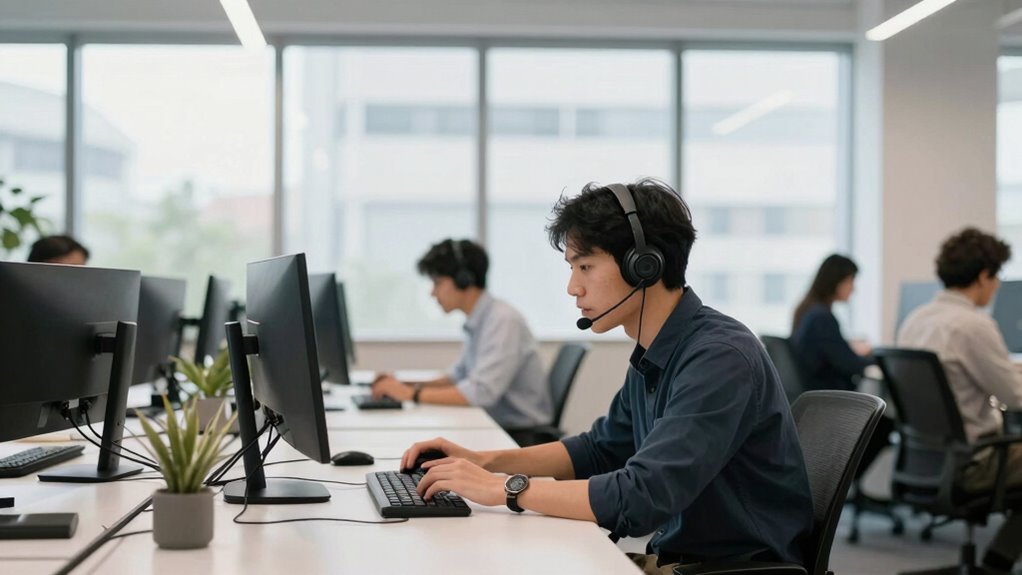

Controlling noise can boost your productivity more than adding new technology because it creates a calmer, focused environment. Acoustic treatments reduce echo and noise, helping you concentrate better and work longer with fewer mistakes. Sound masking covers distractions and enhances privacy. By managing sound effectively, you improve mental clarity, reduce stress, and foster better collaboration. If you want to learn how sound management outranks tech upgrades, keep exploring the benefits of acoustic solutions.
Key Takeaways
- Acoustic treatments effectively reduce noise and echo, creating a calmer work environment that boosts focus and productivity.
- Sound masking covers distractions, enhancing speech privacy and minimizing interruptions without costly tech upgrades.
- Managing sound levels decreases mental fatigue, enabling longer, more accurate work sessions and better decision-making.
- Acoustic solutions improve comfort and collaboration, leading to higher-quality work without relying solely on technological enhancements.
- Prioritizing sound control supports employee well-being and reduces stress, often providing greater productivity gains than new tech investments.
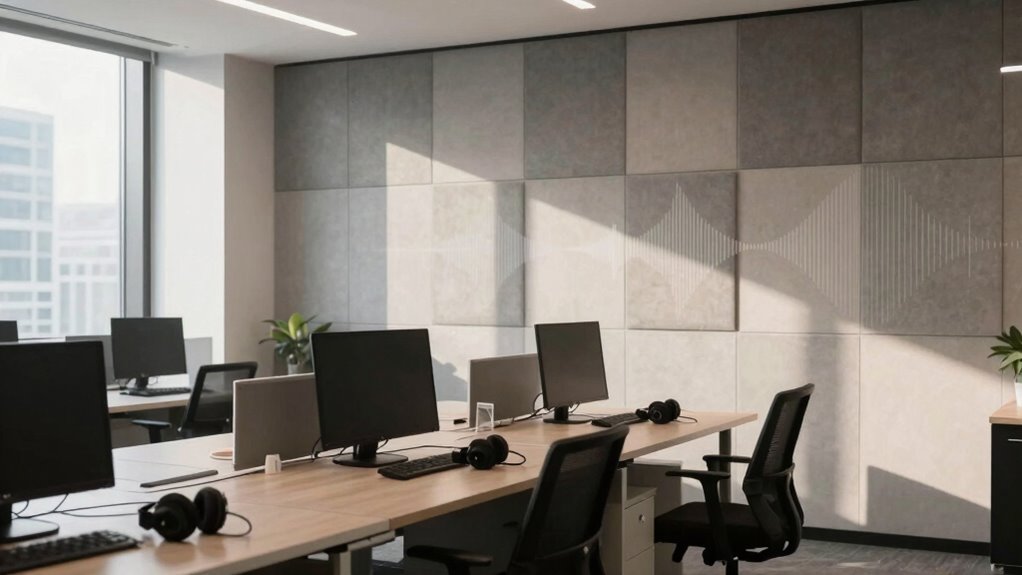
While investing in the latest technology can boost productivity, controlling noise levels often delivers even greater results. When your workspace is noisy or full of distracting sounds, it becomes difficult to focus, communicate clearly, or stay engaged. That’s where acoustic treatments come into play. These solutions, like sound-absorbing panels, ceiling baffles, or carpets, help manage echo and reduce overall noise levels. By dampening sound waves, acoustic treatments create a calmer environment, allowing you to concentrate better and work more efficiently. They’re a cost-effective way to transform a noisy office into a more productive space without the need for expensive gadgets.
Controlling noise with acoustic treatments boosts focus and productivity without expensive gadgets.
Sound masking is another powerful tool that often gets overlooked but can make a significant difference. Unlike traditional background noise, sound masking introduces a subtle, consistent ambient sound that blends with existing noises to cover distracting conversations or sudden loud sounds. Think of it as a gentle fortress that shields your focus from external interruptions. This technique not only reduces the impact of distracting sounds but also enhances speech privacy, making conversations less disruptive to others nearby. When combined with acoustic treatments, sound masking can create a harmonious acoustic environment, fostering better concentration and smoother communication.
You might believe that more technology equals better productivity, but noise control strategies prove otherwise. They directly influence your ability to think clearly and make decisions. For instance, a quiet space minimizes mental fatigue caused by constant background noise, allowing you to work longer and with fewer errors. When noise levels are kept in check, collaboration becomes easier because people can communicate without shouting or straining to hear each other. This reduces misunderstandings and saves time, ultimately boosting your overall efficiency. Additionally, sound absorption techniques help in creating an environment that promotes sustained focus and mental clarity. Incorporating acoustic treatments can be a proactive step toward fostering a healthier work environment that naturally enhances productivity. Moreover, understanding how sound management impacts cognitive performance underscores the importance of prioritizing acoustic solutions alongside technological upgrades. A well-designed acoustic environment can also contribute to employee well-being and reduce stress levels.
While some workplaces focus on upgrading computers, software, or hardware, paying attention to sound management can often yield even greater returns. Implementing acoustic treatments and sound masking doesn’t just improve comfort; it impacts your performance at a fundamental level. It’s about creating an environment where your mind can focus without unnecessary disruptions. When noise is controlled, you’re more likely to stay engaged, be creative, and produce higher-quality work. Studies have shown that noise reduction can significantly improve concentration and overall work quality, making it a vital aspect of workspace design. Ultimately, managing sound is a smarter, often overlooked investment that can elevate your productivity far beyond what more tech alone can achieve.
sound absorbing wall panels for office
As an affiliate, we earn on qualifying purchases.
As an affiliate, we earn on qualifying purchases.
Frequently Asked Questions
How Does Noise Affect Employee Concentration and Focus?
You’ll find that noise considerably impacts your concentration and focus. Acoustic barriers help block disruptive sounds, creating a quieter workspace. Meanwhile, sound masking adds background noise to cover distractions, making it easier to stay on task. By implementing these solutions, you can boost your productivity, reduce stress, and improve overall work quality. Noise control is a more effective upgrade than simply adding more tech, as it directly enhances your ability to concentrate.
What Are Cost-Effective Noise Reduction Solutions for Offices?
Think of your office as a symphony—balance is key. To cut noise cost-effectively, consider installing soundproof partitions to create quiet zones and acoustic ceiling tiles to absorb sound. These solutions are affordable, easy to implement, and considerably improve focus. You’ll boost productivity without breaking the bank, ensuring your team stays engaged and efficient amid a more peaceful environment.
Can Noise Control Improve Mental Health at Work?
Yes, controlling noise can improve your mental health at work. Sound masking creates a calming background noise, reducing distractions and stress. Acoustic zoning separates noisy areas from quiet spaces, helping you focus better and feel less overwhelmed. By implementing these noise control strategies, you create a more comfortable environment where you can concentrate, relax, and maintain better mental well-being throughout your workday.
How Quickly Can Noise Reduction Measures Impact Productivity?
Noise reduction measures can quickly boost your productivity, often within days of implementing soundproofing techniques and acoustic treatments. Once you install barriers or add sound-absorbing materials, you’ll notice a decrease in distractions and an increase in focus. These measures work fast because they target the root cause of noise issues directly, creating a calmer environment that allows you to work more efficiently and with fewer interruptions.
Are There Industry-Specific Noise Control Strategies?
Think of your industry as a symphony—each part needs its own quiet space. Yes, industry-specific noise control strategies exist. For example, sound masking works wonders in open-plan offices, while acoustic zoning is essential in manufacturing plants or healthcare settings. You can tailor these strategies to your industry, making your workspace more productive. Implementing sound masking or acoustic zoning can dramatically reduce distractions, helping your team focus and perform at their best.
Conclusion
By controlling noise, you create focus, foster calm, and boost efficiency. You reduce distractions, improve concentration, and enhance productivity. You clear the chaos, invite clarity, and cultivate calm. In prioritizing noise control, you build a workspace that supports your best work, encourages creativity, and drives success. When noise is managed, everything else falls into place—your focus sharpens, your energy rises, and your results improve. Noise control isn’t just an upgrade; it’s a game changer.