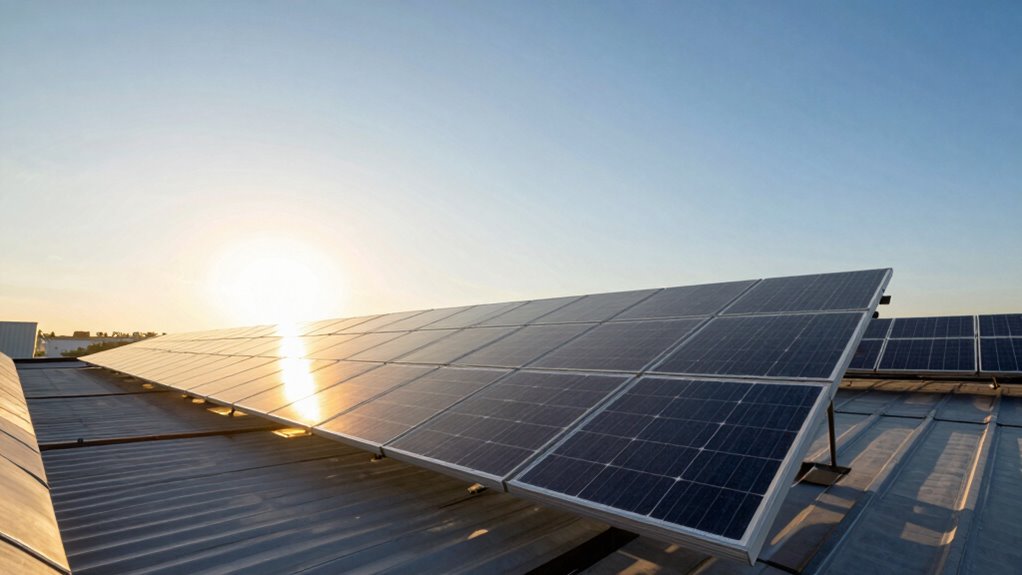

Seasonal sun angles change because Earth’s tilt and orbit cause the sun’s position in the sky to shift throughout the year. When the sun appears higher in summer, it delivers more direct sunlight, boosting solar panel efficiency. In winter, the lower sun angle results in less intense sunlight, reducing energy output. These fluctuations impact your mobile solar system’s performance. Want to understand how to optimize your setup all year round? Keep exploring to find out more.

Get travel and outdoor gear delivered free with Prime
- Fast, free delivery on millions of items
- Prime Video, Amazon Music and more included
- Member-only deals all year
Key Takeaways
- Earth’s tilt causes the sun to follow different paths across the sky throughout the year.
- Seasonal variations in the sun’s angle affect the intensity and duration of sunlight reaching panels.
- Higher summer sun angles increase solar energy potential, while lower winter angles reduce efficiency.
- Changes in the sun’s position influence shading patterns from surrounding objects seasonally.
- Adjusting panel tilt and orientation based on seasonal sun angles optimizes mobile solar performance year-round.
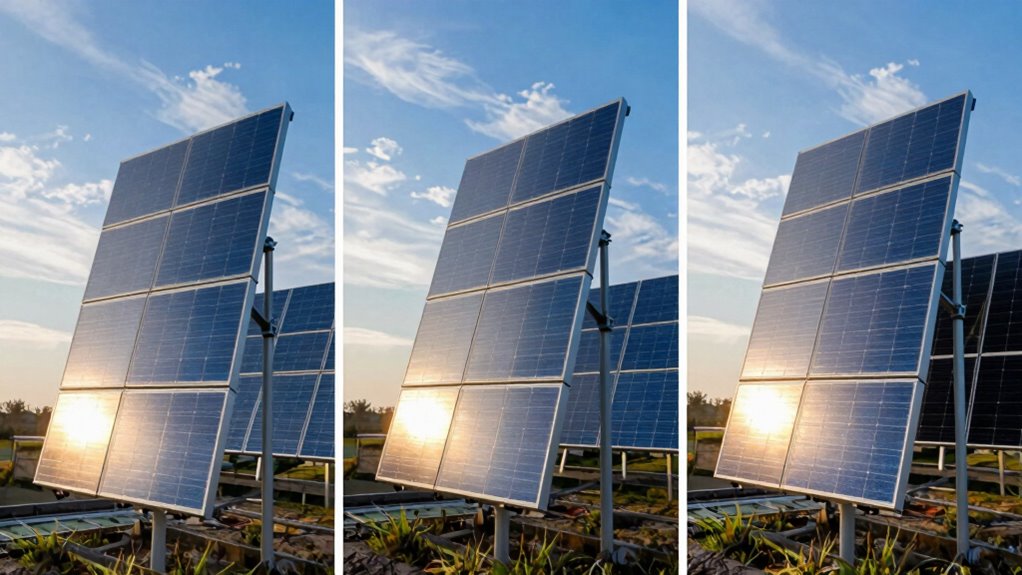
Have you ever wondered why the sun’s position changes throughout the year? It’s a question that directly impacts your expectations for solar energy production. As the seasons shift, the sun doesn’t stay in one place; instead, it follows a natural path across the sky that varies with the Earth’s tilt and orbit. This movement causes the sun’s rays to strike your solar panels at different angles, affecting how much sunlight they receive daily. During summer, the sun appears higher in the sky, resulting in more direct sunlight and longer daylight hours. Conversely, in winter, the sun is lower, and the rays hit at a more oblique angle, reducing the intensity and duration of sunlight exposure. These variations markedly influence your solar system’s efficiency.
The sun’s position varies seasonally, impacting solar panel efficiency through changing angles and daylight hours.
Cloud cover plays a critical role in this dynamic, often complicating expectations. On cloudy days, the sun’s rays are diffused and scattered, creating shading effects that limit the amount of solar energy your panels can capture. Even when the sun is high overhead, thick cloud cover can diminish the sunlight reaching your panels, leading to unexpected drops in energy output. This variability makes it essential to consider local weather patterns when planning and installing a solar system. Seasonal changes in cloud cover can sometimes negate the advantages of longer daylight hours in summer, especially if your area experiences frequent overcast conditions during certain months. Recognizing the impact of weather patterns helps in designing a system that can better adapt to these fluctuations and optimize energy production throughout the year.
Shading effects caused by surrounding objects, such as trees, buildings, or terrain, also change with the seasons. In the winter, deciduous trees shed their leaves, reducing shading and allowing more sunlight to reach your panels. During summer, the foliage may grow denser, increasing shading and decreasing efficiency. The sun’s lower angle in winter means shadows cast by nearby structures are longer, but the overall shading impact may be less if trees are leafless. Conversely, in summer, the higher sun creates shorter shadows, but the increased foliage can block more sunlight, especially if your panels aren’t ideally positioned. These shading effects vary throughout the year, impacting your expectations for energy generation and highlighting the importance of proper panel placement and orientation. Additionally, understanding the seasonal sun angles helps in optimizing panel tilt and orientation to maximize energy capture year-round. It is also beneficial to monitor shading patterns over the course of the year to ensure your system remains efficient as surroundings change. Being aware of how seasonal variations influence shading can assist in planning maintenance and adjustments to keep your system performing at its best.
adjustable solar panel tilt mount
As an affiliate, we earn on qualifying purchases.
As an affiliate, we earn on qualifying purchases.
Frequently Asked Questions
How Do Seasonal Sun Angles Vary Across Different Geographic Locations?
You’ll notice that the sun path and solar altitude vary across different locations and seasons. In higher latitudes, the sun path is lower, meaning the solar altitude is lower, especially in winter. Near the equator, the sun stays higher in the sky year-round, with less variation. These differences affect how much sunlight your mobile solar system receives, impacting its efficiency and energy output throughout the year.
What Impact Do Weather Conditions Have on Solar Energy During Different Seasons?
Weather conditions influence solar energy by reducing efficiency through cloud cover and temperature fluctuations. When clouds block sunlight, your solar panels receive less power, especially during overcast days or storms. Temperature swings can also decrease panel performance, as high heat reduces output, while colder temperatures may enhance it. You need to contemplate these weather patterns year-round, knowing that cloudy skies and fluctuating temperatures can considerably impact your solar energy production.
Can Solar Panel Orientation Compensate for Seasonal Sun Angle Changes?
Yes, adjusting your solar panel orientation can compensate for seasonal sun angle changes. You can optimize panel tilt to match the sun’s position, maximizing energy absorption. Installing tracking systems allows your panels to follow the sun throughout the day and seasons, further boosting efficiency. By regularly adjusting tilt or using tracking, you guarantee your system captures the maximum sunlight, regardless of seasonal shifts in the sun’s angle.
How Do Seasonal Sun Angles Affect Solar Energy Storage Efficiency?
Think of seasonal sun angles as a shifting dance partner, affecting your solar energy storage efficiency. When the sun’s position changes, it influences how well your system captures sunlight. Using sun tracking and adjusting panel tilt can maximize energy collection, even during low-angle seasons. Proper alignment guarantees your batteries store enough power, making your system more reliable year-round, despite the sun’s seasonal waltz.
What Technological Advancements Help Optimize Solar Energy Year-Round?
Technological advancements like improved solar panel materials, such as perovskite and bifacial panels, help you optimize solar energy year-round. These materials boost energy conversion efficiency by capturing more sunlight at various angles and under different weather conditions. Additionally, tracking systems adjust panel orientation throughout the day, maximizing sunlight exposure despite seasonal sun angle changes. Together, these innovations guarantee you get consistent, efficient solar energy regardless of the season.
Conclusion
Understanding how seasonal sun angles shift isn’t just a minor detail—it’s the secret sauce to maximizing your solar energy. When you grasp these changes, you’ll discover the full potential of your solar setup, turning your system into a powerhouse that could outshine even the brightest star. Don’t let seasonal variations dim your solar dreams; embrace the sun’s dance and make every ray count. Your solar journey just got a whole lot smarter—and brighter!
Columbus Day / Indigenous Peoples' Day Picks
long weekend sales
As an affiliate, we earn on qualifying purchases.