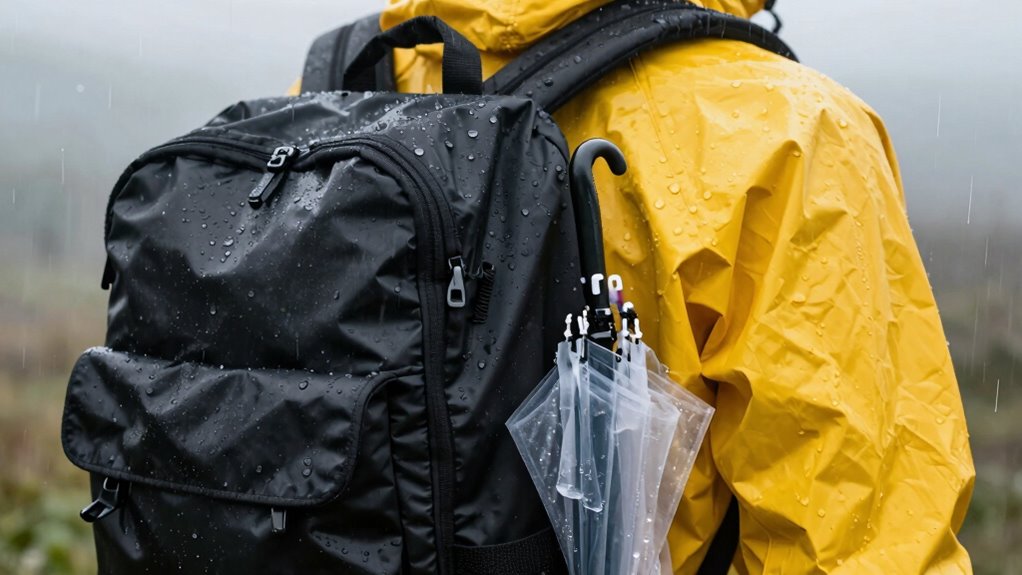

To pack effectively for rain, focus on a reliable waterproofing system that combines waterproof fabrics like Gore-Tex with sealed-seam jackets and waterproof pants. Don’t forget essentials like waterproof hats, gloves, and footwear, plus accessories like dry bags and gaiters. Properly maintain your gear and check weather forecasts before heading out. Staying prepared guarantees you stay dry and comfortable regardless of the weather. Keep exploring to discover the best strategies for staying dry during rain.

Get travel and outdoor gear delivered free — and shop member deals
- Fast, free delivery on millions of items
- Access to Prime Big Deal Days deals on October 6–7
- Prime Video, Amazon Music and more included
Key Takeaways
- Invest in high-quality waterproof fabrics like Gore-Tex or eVent for reliable rain protection.
- Use sealed seam waterproof jackets, pants, hats, and footwear to prevent water ingress.
- Protect gear with waterproof accessories such as dry bags, backpack covers, and gaiters.
- Regularly maintain and reapply waterproof treatments to sustain fabric effectiveness.
- Always check weather forecasts and pack appropriate waterproof gear to stay dry and comfortable.
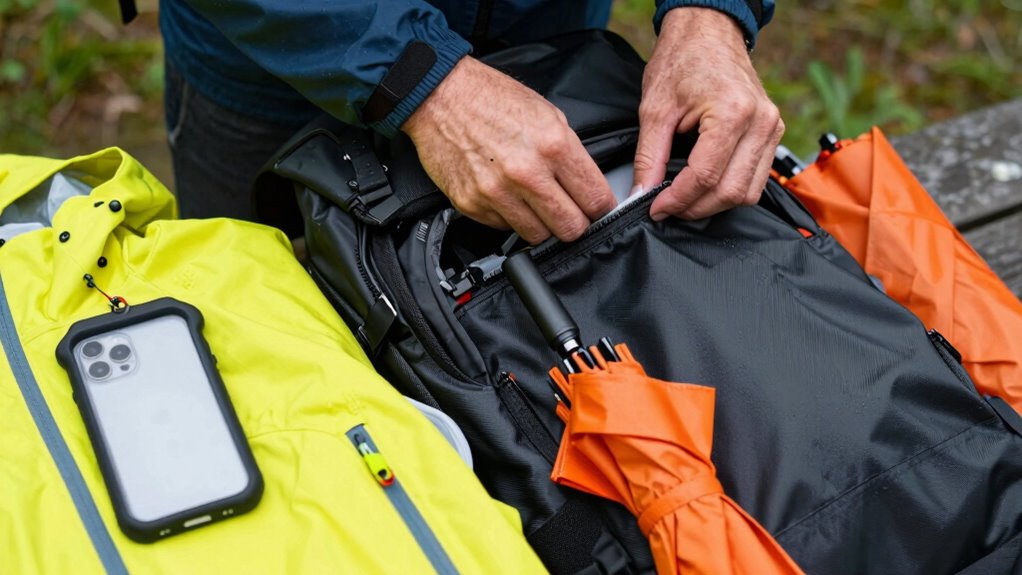
Rain can catch you off guard, so packing smart is vital for any outdoor trip. When you’re out in the elements, having the right waterproof fabrics and rain gear essentials can make all the difference between an enjoyable adventure and a miserable, wet experience. The key is to prepare with a reliable waterproofing system that keeps you dry and comfortable, regardless of what the weather throws your way.
Start by focusing on waterproof fabrics. Modern materials like Gore-Tex, eVent, or coated nylon are engineered to resist water while remaining breathable. These fabrics are the backbone of quality rain gear because they prevent moisture from seeping in, yet allow sweat to escape. When selecting your clothing, prioritize items made from these waterproof fabrics. A waterproof jacket with sealed seams, for example, can block rain from penetrating through tiny gaps. Pair that with waterproof pants or over-trousers to keep your lower half dry during heavy downpours. Remember, investing in gear made from durable waterproof fabrics is a strategic move that pays off in the long run, especially if you frequently venture outdoors.
Focus on waterproof fabrics like Gore-Tex and coated nylon for durable, breathable rain gear.
Your rain gear essentials should also include a waterproof hat or hood. A wide-brimmed hat with a water-resistant brim or a hood that fits snugly around your head can shield your face and neck from rain. Consider packing a pair of waterproof gloves if the weather is cold or if you’ll be handling wet gear. Waterproof footwear is equally imperative; boots or shoes made from waterproof materials prevent soggy socks and blisters, helping you stay comfortable and dry from the ground up. It’s worth investing in waterproof socks or gaiters if your trips involve walking through puddles or muddy terrain.
In addition to clothing, don’t forget waterproof accessories like a dry bag or waterproof backpack cover. These protect your electronics, clothing, and other essentials from getting soaked. Having a quick-drying towel or microfiber cloth on hand can also help you wipe off excess water to stay dry and comfortable.
Furthermore, understanding waterproofing systems and their proper maintenance can extend the lifespan of your gear, ensuring it continues to keep you dry in the most challenging weather.
Finally, always check the weather forecast before heading out, and pack accordingly. Even the best waterproof fabrics and rain gear essentials won’t do much good if you’re caught unprepared. With the right waterproofing system—comprising quality fabrics, essential gear, and thoughtful packing—you’ll be ready to handle rain confidently. No matter how heavy the downpour, you’ll stay dry, comfortable, and focused on enjoying your outdoor adventure rather than worrying about the weather.
Frequently Asked Questions
How Long Does a Waterproofing System Typically Last?
A waterproofing system typically lasts between 5 to 10 years, depending on the material longevity and durability lifespan. You can extend its effectiveness by regular maintenance and inspections. High-quality materials, like rubberized coatings or membrane systems, tend to offer longer-lasting protection. Keep in mind that environmental factors, such as exposure to sun, moisture, and wear, can influence how long your waterproofing system remains effective.
Can Waterproofing Be Applied to Existing Structures?
Like a skilled artist, you can apply waterproofing to existing structures, transforming them into water-resistant shields. Historical waterproofing methods paved the way for modern techniques, making retrofitting easier. You’ll find that the cost comparison varies, but applying waterproofing now can save you money long-term by preventing costly repairs. So, yes, waterproofing isn’t just for new builds—it’s a smart move for protecting your current structures.
Is Waterproofing Effective Against All Types of Rain?
Waterproofing can be highly effective against most rain types, but it’s not a cure-all. Some waterproofing myths suggest it works perfectly for all rain intensity, which isn’t true. Heavy, relentless rain might test your system’s limits. You need to select the right waterproofing solution and maintain it properly. By understanding rain intensity and avoiding myths, you ensure your structure stays dry and protected, no matter what weather comes your way.
What Maintenance Is Required for Waterproofing Systems?
Think of your waterproofing system as a loyal guardian; it needs regular checkups to stay fierce. You should perform routine maintenance checks, inspecting for cracks or wear. When you spot issues, use repair techniques like sealing or patching to mend vulnerabilities. Keep it clean and dry, and your system will stand strong through storms. Consistent care guarantees your guardian remains vigilant, protecting you from rain’s unwelcome surprises.
Are Waterproofing Materials Environmentally Friendly?
Many waterproofing materials are now eco-friendly options that minimize environmental impact. You can choose products made from sustainable practices, such as recycled or biodegradable materials, reducing your carbon footprint. Look for certifications like LEED or Green Seal, which guarantee environmentally responsible choices. By selecting environmentally friendly waterproofing options, you support sustainability and protect the environment while keeping your property dry and secure.
Conclusion
Now you’re ready to face the storm with confidence, armed with a waterproofing system that’s as reliable as a lighthouse guiding ships home. No matter how fierce the rain pours or how dark the clouds gather, your gear will stand firm like a sturdy shelter in a tempest. With this system, you’ll glide through wet weather like a boat sailing smoothly on calm waters, turning rainy days from obstacles into mere ripples on your adventurous journey.
Fall Picks
fall essentials
As an affiliate, we earn on qualifying purchases.