Even a tiny misalignment in your solar panel’s angle or a small shadow from nearby trees or buildings can drastically reduce your energy output. Shading during peak sunlight hours or improper tilt decreases how much sunlight hits the panels, killing charging efficiency. A slight mistake in positioning or ignoring potential shading sources can have a big impact on system performance. Want to learn how to avoid these hidden pitfalls and maximize your solar power? Keep going to discover more tips.

Get travel and outdoor gear delivered free with Prime
- Fast, free delivery on millions of items
- Prime Video, Amazon Music and more included
- Member-only deals all year
Key Takeaways
- Small shading from nearby objects can drastically reduce solar panel efficiency, even during peak sunlight hours.
- Incorrect tilt angle or orientation causes suboptimal sun exposure, leading to significantly lower energy production.
- Overlooking seasonal adjustments in tilt or shading risks diminishing system performance throughout the year.
- Shadows cast by trees or structures during critical times can nullify gains from proper panel positioning.
- Regular site assessments and using sun-path tools help identify and mitigate tiny shading issues that kill charging efficiency.
Understanding solar angle and shade is essential for optimizing sunlight exposure and energy efficiency. When setting up your solar panels, the way you position them—known as solar panel orientation—can dramatically influence how much sunlight they receive throughout the day. If your panels aren’t facing the right direction, they won’t capture optimal sunlight, leading to reduced energy production. Typically, in the Northern Hemisphere, pointing panels south maximizes exposure, while in the Southern Hemisphere, facing north is best. But it’s not just about direction; the tilt angle matters too. Adjusting the tilt to match your latitude ensures your panels catch the sun at the right angle, especially during different seasons.
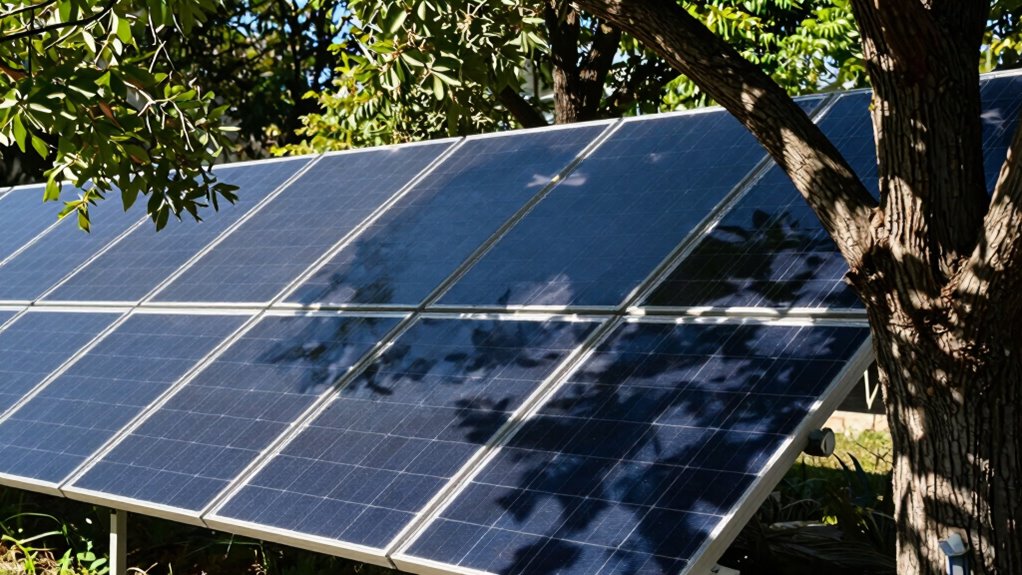
Shade plays a crucial role in how well your solar system performs. Even small shading effects caused by nearby trees, buildings, or other obstructions can significantly reduce your panels’ efficiency. Shade isn’t always obvious at first glance; it can occur during certain times of the day or year when the sun’s position changes. This is why understanding the solar angle is so important—if your panels are installed without considering the sun’s path, shading effects can create shadowed areas that diminish your system’s output. A single shadow cast during peak sunlight hours can cut your energy production by a large margin, making your system less effective and potentially increasing your payback time.
Even small shading from trees or buildings can significantly reduce solar panel efficiency during peak sunlight hours.
You need to evaluate your installation site carefully. Use tools or apps that simulate the sun’s path across different seasons to identify potential shading issues. Think about the height and placement of nearby objects, and consider trimming or removing trees that cast shadows during critical times. Properly orienting your panels and avoiding shading effects ensures you maximize sunlight exposure, especially when the sun is at its lowest or highest points in the sky. Remember, even a tiny mistake in angle or placement can drastically kill your charging capacity, especially if shade blocks direct sunlight. Regularly inspecting your panels for new shading sources or changes in the environment helps maintain optimal performance.
In short, the success of your solar setup hinges on understanding the solar angle and carefully managing shading effects. Your goal should be to keep your panels in direct, unobstructed sunlight as much as possible. A small mistake in orientation or overlooking shading can significantly reduce your energy output, costing you money and efficiency. By paying close attention to these factors, you’ll ensure your system works at its best, delivering maximum sunlight exposure and reliable energy production year-round. Additionally, leveraging solar simulation tools can help identify potential shading issues before installation, saving time and money later.
Frequently Asked Questions
How Does Temperature Affect Solar Panel Efficiency?
You’ll notice that higher temperatures decrease your solar panel’s efficiency because ambient temperature causes thermal expansion in the materials. As panels get hotter, their ability to convert sunlight into electricity drops, reducing power output. Cooler temperatures help maintain ideal performance, so keeping panels well-ventilated or shaded can prevent overheating. Remember, even a small increase in temperature can greatly impact your system’s energy production, so managing ambient temperature is essential.
Can Shading Impact Battery Lifespan?
Shading impact on your battery is like a small leak slowly sinking a boat; even minor shade can cause uneven charging, accelerating battery degradation. When parts of your solar panel are shaded, it forces the system to work harder, stressing the battery and shortening its lifespan. Over time, this degradation means reduced capacity and efficiency, making shading a critical factor to contemplate if you want a long-lasting, healthy battery.
What Are the Best Practices for Outdoor Solar Panel Placement?
To maximize outdoor solar panel placement, guarantee you choose the right solar orientation—generally true south in the northern hemisphere—and set the correct mounting angle to maximize sun exposure throughout the year. Avoid shaded areas like trees or buildings, and keep panels clean for consistent performance. Regularly check and adjust the tilt if necessary, especially after seasonal changes, to maintain ideal charging efficiency and prolong your panel’s lifespan.
How Often Should I Clean My Solar Panels?
You should clean your solar panels at least twice a year, but if you live in a dusty area or near trees, quarterly cleaning might be your new best friend. A regular cleaning schedule prevents dirt accumulation, which secretly sabotages your system’s efficiency. Don’t wait for a noticeable decline—think of it as giving your panels a spa day to keep them humming at full power.
Do Different Panel Types Respond Differently to Shading?
Yes, different panel types respond differently to shading. Monocrystalline panels are more efficient and handle shading better, while polycrystalline panels are more affected. Your panel orientation also matters; facing panels south or southwest maximizes sun exposure. To improve shading mitigation, consider strategic placement and using bypass diodes. Regularly check for shading issues and trim nearby branches to make certain your panels operate at peak efficiency, regardless of panel type.
Conclusion
Don’t let a small mistake in your solar setup turn your energy dreams into a dead end. Pay close attention to the solar angle and avoid shadows, or your panels might as well be turned off. Think of it like watering a plant—you need the right conditions for growth. By getting these details right, you’re steering your solar journey clear of hidden pitfalls. Remember, a tiny oversight can block the sun, and your energy goals might fade away.
Halloween Picks
halloween
As an affiliate, we earn on qualifying purchases.