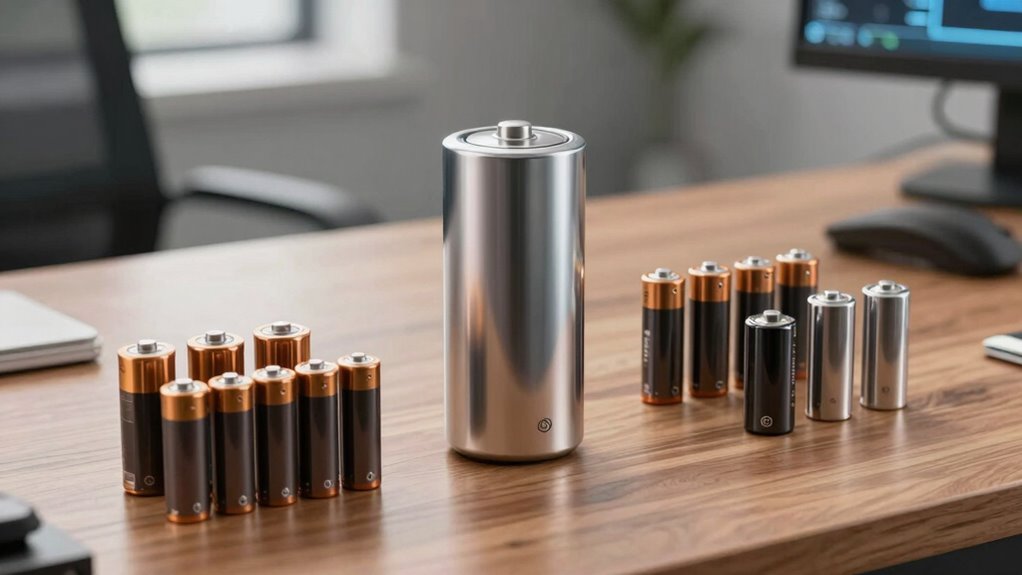

To decide between one big battery and several small ones, consider your energy needs, space, and flexibility goals. Large batteries may cost less upfront but need more space and are less flexible. Smaller units allow for easier expansion, targeted maintenance, and better placement near loads to reduce losses. Think about your future plans and maintenance capacity to choose the best fit. Keep exploring to discover how each option impacts your overall system efficiency and costs.

Get travel and outdoor gear delivered free — and shop member deals
- Fast, free delivery on millions of items
- Access to Prime Big Deal Days deals on October 6–7
- Prime Video, Amazon Music and more included
Key Takeaways
- Assess your total energy capacity needs and operational scenarios to determine the most suitable configuration.
- Consider space availability; distributed smaller batteries optimize limited or complex layouts.
- Evaluate flexibility requirements; modular small units allow easier scaling and targeted maintenance.
- Weigh initial costs versus long-term efficiency; large batteries may be cheaper upfront, smaller units can reduce future expenses.
- Account for system reliability; multiple small batteries prevent total system failure if one unit degrades.
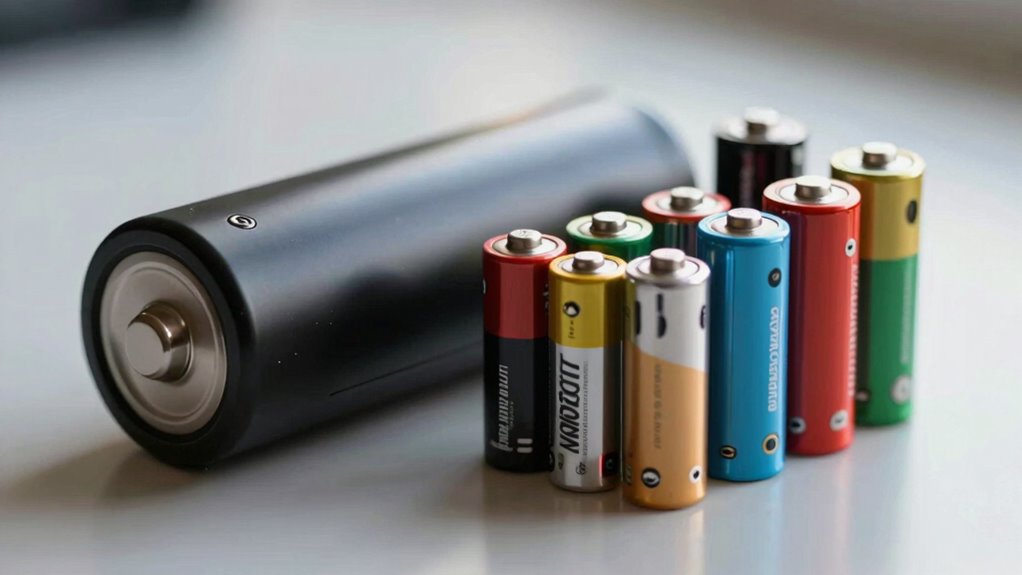
When choosing between one large battery and several smaller ones, understanding your specific energy needs and application context is essential. Your decision hinges on factors like cost efficiency, space constraints, system flexibility, and maintenance. If you’re aiming to minimize upfront costs, a single large battery might seem appealing because it often offers lower initial expenses per unit of capacity. However, on closer inspection, multiple smaller batteries can sometimes provide better cost efficiency over time. They allow you to scale capacity gradually, avoiding unnecessary expenditure on oversized systems you might not fully utilize immediately. Additionally, smaller batteries can be replaced individually if they degrade, which can save money and extend the overall lifespan of your energy system. Energy storage options can also influence your decision, as different configurations may better suit specific applications and operational requirements.
Choosing between one large or multiple small batteries depends on your energy needs, cost, space, and maintenance considerations.
Space optimization is another critical consideration. A large battery typically requires a dedicated, spacious area and can be more challenging to fit into limited spaces. Conversely, several smaller batteries can be distributed across different locations, making better use of available space. This distribution can be especially advantageous in settings where space is at a premium or where you want to avoid a single point of failure. With smaller units, you can also position batteries closer to the loads they serve, reducing wiring complexity and energy losses, which in turn improves overall system efficiency. The modularity of smaller batteries also makes upgrades more straightforward, allowing you to adapt your system as your energy needs grow or change over time. Additionally, smaller batteries provide greater system flexibility, enabling tailored solutions for diverse operational scenarios.
Your application’s operational flexibility also influences your choice. Multiple small batteries enable more granular control, allowing you to operate only what you need at any given time. This setup supports modularity—adding or removing units as your energy demands evolve—without overhauling your entire system. On the other hand, a big battery can be easier to manage and maintain because it involves fewer components. But if the large battery fails or needs servicing, your entire energy reserve might be compromised during downtime. Proper planning for system scalability can help mitigate such risks and optimize long-term performance. Furthermore, understanding the potential for future expansion can help you make a more informed decision aligned with your long-term energy goals.
large home battery storage system
As an affiliate, we earn on qualifying purchases.
As an affiliate, we earn on qualifying purchases.
Frequently Asked Questions
What Are the Environmental Impacts of Large Versus Small Batteries?
Large batteries often have a bigger environmental impact due to more raw materials and energy density, making recycling more challenging. Smaller batteries are easier to recycle individually, reducing waste. However, they may require more frequent replacements, increasing overall resource use. You should weigh these factors, considering battery recycling processes and energy density, to minimize environmental harm. Smaller batteries can be more sustainable if properly recycled, while large ones demand careful resource management.
How Do Cost Differences Compare Over the Battery Lifespan?
You might think bigger batteries save money, but a thorough cost analysis shows they often don’t over their lifespan. Small batteries, while initially pricier, tend to have easier replacements, lowering total costs. The lifespan comparison reveals that multiple small units can be more economical long-term, especially if one fails. So, ironically, splitting your investment might actually save you money, making the big battery seem less appealing in the end.
What Maintenance Is Required for Big Versus Small Batteries?
Big batteries generally require less maintenance because they have fewer connection points and are easier to monitor, which helps extend their lifespan. Small batteries, with more individual units, need regular checks on each, including inspecting for corrosion and balancing charging cycles. Both types benefit from proper charging, avoiding overcharging or deep discharges to maximize battery lifespan. Consistent maintenance ensures peak performance and longevity, regardless of size.
Are There Safety Concerns Unique to Large or Multiple Small Batteries?
Think of large or multiple small batteries like different fire hazards in your home. Large batteries pose a bigger fire risk if damaged, requiring strict handling procedures. Multiple small batteries may seem safer individually, but their interconnected risks can multiply. Always follow proper handling procedures to prevent fire hazards, whether you’re working with one big battery or several small ones. Stay vigilant, and guarantee safe storage and disposal to avoid potential safety issues.
How Do Installation Times Differ Between Single Large and Multiple Small Batteries?
Installation times differ considerably between a single large battery and multiple small ones. With a large battery, you’ll face longer installation times due to its higher capacity and more complex setup, requiring specialized equipment and safety precautions. Conversely, installing several small batteries tends to be quicker and simpler, as each unit has lower capacity and less complexity. This modular approach allows for easier handling, faster setup, and easier future upgrades or maintenance.
Conclusion
So, next time you’re faced with choosing one big battery or several small ones, remember—sometimes bigger isn’t always better, and multiple small batteries can surprise you with their flexibility. Ironically, what seems like a straightforward decision can turn into a tricky puzzle. In the end, it’s all about balancing your needs and preferences. Who knew that choosing a battery could be such a power move? Happy deciding!
Halloween Picks
halloween
As an affiliate, we earn on qualifying purchases.