
When flying with a bike, you should guarantee it’s well-prepared and properly packed to avoid damage. Start with a quick maintenance check, tighten loose parts, and lubricate moving components. Use a sturdy bike case or box, padding the frame with bubble wrap or foam to absorb impacts. Make sure the bike is easy to unpack for security screening, label it clearly, and consider fragile stickers. Following these packing rules helps keep your bike safe, and there’s more to learn about perfect packing techniques.

Get travel and outdoor gear delivered free — and shop member deals
- Fast, free delivery on millions of items
- Access to Prime Big Deal Days deals on October 6–7
- Prime Video, Amazon Music and more included
Key Takeaways
- Use a sturdy, high-quality bike case or box designed for air travel to protect against impacts.
- Thoroughly pad the bike with bubble wrap, foam tubing, or bike-specific padding before packing.
- Conduct a bike maintenance check, tighten bolts, lubricate parts, and remove fragile components for safe transit.
- Clearly label the case with handling instructions and contact information to guide airline staff.
- Pack tools and small parts separately for easy security inspection and to prevent loss or damage.

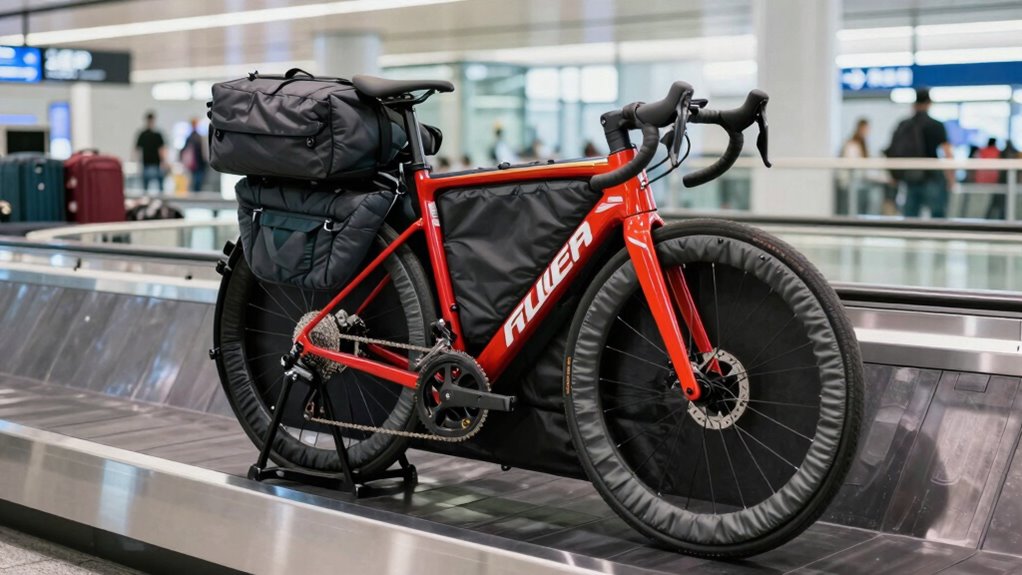
Ever wondered how to fly with your bike without hassle? The key is understanding the proper packing rules that protect your bike and make airport security smoother. Before you even get to the airport, focus on bike maintenance. Give your bike a quick check-up: tighten loose bolts, lubricate moving parts, and remove any fragile components like pedals or handlebars that might get damaged en route. Ensuring your bike is in good shape not only prevents damage during transit but also simplifies the packing process. When you’re ready to pack, use a sturdy bike box or a specialized bike bag designed for air travel. Properly padding your bike with bubble wrap, foam tubing, or bike-specific padding prevents scratches and dents. Remove or secure items that could shift or break, and make sure your bike frame is well-protected. Additionally, selecting a high-quality bike case can significantly reduce the risk of damage during handling.
At the airport security checkpoint, a smooth process starts with clear preparation. Most airlines require that you declare your bike as checked luggage, so be sure to check their specific policies beforehand. When passing through security, you’ll likely need to remove your bike from its case for inspection, so pack it in a way that makes this easy. Consider attaching clear, visible labels with your contact info and instructions for handling. It’s wise to carry extra padding or fragile stickers to alert security staff to the delicate nature of your gear. Keep your bike tools and small parts in a separate, easily accessible bag to avoid delays or lost items during security checks. If your bike is packed in a hard case, it’s less likely to be mishandled or damaged, which saves you stress later.
Frequently Asked Questions
What Are the Best Bike Cases for International Flights?
For international flights, you want the best bike cases that offer sturdy protection and easy handling. Look for hard-shell cases like the Thule RoundTrip Pro or the SKB Bike Case, which keep your bike safe during transit. Remember to do bike maintenance before packing, such as tightening bolts. Follow packing tips like removing pedals and deflating tires to prevent damage, ensuring your bike arrives in perfect condition.
Are There Size Restrictions for Bike Luggage?
Yes, there are size restrictions for bike luggage, typically around 62 linear inches (length + width + height). You should focus on bike weight and disassembly; lighter bikes are easier to pack and handle. Disassemble your bike properly to fit it within airline size limits, often removing pedals, handlebars, and wheels. Always check your airline’s specific guidelines, as restrictions can vary, and make sure your bike case stays within these dimensions for smooth travel.
How Early Should I Arrive at the Airport With My Bike?
Time flies when you’re planning your trip, so arrive at least 2 hours early with your bike. This gives you enough time to navigate airport bike storage and handle airline policies smoothly. Think of it as giving your bike a red carpet welcome, ensuring all paperwork and packing are perfect. Arriving early prevents stress, allows for inspection, and helps you avoid last-minute mishaps, making your journey hassle-free.
Can I Insurance My Bike During Air Travel?
Yes, you can insure your bike during air travel. Doing so helps protect your investment and guarantees bike safety in case of damage or loss. Make sure to use proper packing materials, like padded cases or bubble wrap, to prevent damage. When insuring, provide detailed info about your bike’s value and take photos for documentation. This way, you’ll have peace of mind and a smoother travel experience.
What Are Common Damages to Watch Out For?
Think of your bike as a delicate sculpture in transit. Common damages include bent frames, which you can prevent with proper frame protection, and flat or torn tires, often caused by inadequate tire security. Watch out for loose components or scratches on the paint. Ensuring tight, secure packing helps protect your bike from these mishaps, keeping it safe and ready for your adventure once you land.
Conclusion
So, next time you’re flying with your beloved bike, remember these foolproof packing rules. After all, what’s more thrilling than risking a hefty baggage fee or a crushed frame just for the sake of adventure? Follow the guidelines, pack with care, and embrace the chaos. Because nothing says “vacation” like explaining to TSA how your bike turned into modern art overnight. Happy flying—may your wheels stay true and your patience stay intact!
Halloween Picks
halloween
As an affiliate, we earn on qualifying purchases.