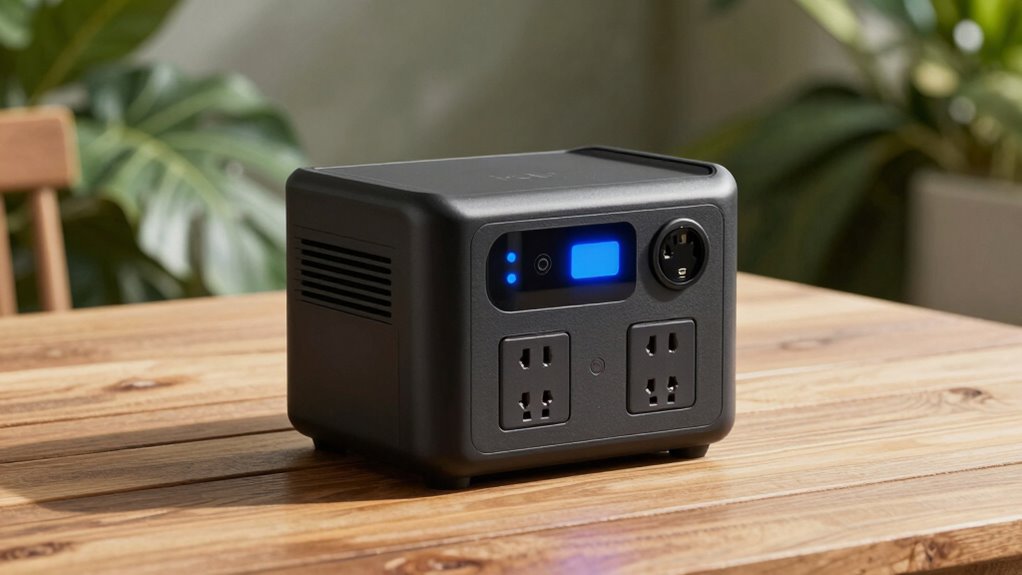

A portable power station with dual AC outlets lets you run or charge two plug-in devices at once, but capacity and continuous output determine what those outlets can actually handle. My best overall pick is the BLUETTI Elite 30 V2, which pairs a 288Wh battery with a stated 600W output in a compact class. For a larger energy reserve, the 500W, 519.48Wh model stands out, while the BLUETTI Apex 300 with B500K expansion battery is the expandable option for buyers planning a bigger backup setup. The main tradeoffs are runtime versus carry weight, battery longevity versus upfront simplicity, and outlet count versus usable AC power. Read on for how the ten options differ and which one fits your devices and plans.

Get travel and outdoor gear delivered free with Prime
- Fast, free delivery on millions of items
- Prime Video, Amazon Music and more included
- Member-only deals all year
Complete the kit


Key Takeaways
- The BLUETTI Elite 30 V2 leads on output for its capacity class: its stated 600W rating is higher than the 300W figures attached to several compact choices, but actual runtime still depends on the device load.
- The 500W, 519.48Wh model prioritizes energy reserve: its larger stated capacity is more relevant to longer sessions than simply having two AC outlets, though buyers should check its weight and output details.
- The Apex 300 with B500K is a different kind of purchase: its expansion battery points toward a scalable backup setup, not the simplest grab-and-go choice among these small stations.
- LiFePO4 appears across several compact picks: ALLWEI, Dyness, DaranEner, the 192Wh model with carry bag, and the Elite 30 V2 list this chemistry, while capacities and output still vary.
- Dual outlets do not mean two high-draw appliances can run together: the 300W-class models share limited output, so combined device demand matters more than outlet count.
| EnginStar 300W Portable Power Station with 296Wh Lithium Battery |  | Best Overall for Dual AC Outlets | Battery capacity: 296Wh | Maximum output: 300W | AC outlets: 2 × 110V pure sine wave | VIEW ON AMAZON | See Our Full Breakdown |
| ALLWEI 300W Portable Power Station with 256Wh LiFePO4 Battery |  | Best for Long Cycle Life | Battery capacity and chemistry: 256Wh; LiFePO4 | Continuous and peak output: 300W continuous; 600W peak | AC output: 1 × 120V pure sine wave outlet | VIEW ON AMAZON | See Our Full Breakdown |
| BLUETTI Apex 300 Portable Power Station with B500K Expansion Battery |  | Best for Home and RV Backup | Battery capacity: 7.8kWh | Running and surge wattage: 3,840W running; 7,680W surge | Voltage: 120V/240V | VIEW ON AMAZON | See Our Full Breakdown |
| Dyness 300W Portable Power Station, 256Wh LiFePO4 Battery |  | Best Compact LiFePO4 Option | Battery capacity and type: 256Wh; LiFePO4 | Continuous and starting wattage: 300W continuous; 600W starting | AC outlet: 1 × 110V pure sine wave | VIEW ON AMAZON | See Our Full Breakdown |
| 300W Portable Power Station, 299.7Wh |  | Best for Port Variety | Capacity: 299.7Wh | AC output: 300W pure sine wave | Output ports: 9 total: 2 USB, 1 QC 3.0, 2 PD, 2 AC, 2 DC | VIEW ON AMAZON | See Our Full Breakdown |
| BailiBatt Portable Power Station, 300W, 266Wh |  | Best Lightweight Pick | Capacity: 266Wh | AC output: 300W, 110V pure sine wave | AC outlets: Not specified | VIEW ON AMAZON | See Our Full Breakdown |
| DaranEner 192Wh Portable Power Station with LiFePO4 Battery |  | Best for Long Battery Life | Capacity: 192Wh | Battery chemistry: LiFePO4 | Battery cycle life: 3,500+ cycles | VIEW ON AMAZON | See Our Full Breakdown |
| Portable Power Station 300W (600W Surge) 192Wh LiFePO4 Battery Solar Generator with Carry Bag & 2 AC Outlets, Fast Charging AC DC USB Ports for Laptop, Camping, Home Use, Emergency |  | Best for Easy-Carry Camping | Capacity: 192Wh | Battery type: LiFePO4 | AC output: 300W continuous, 600W surge | VIEW ON AMAZON | See Our Full Breakdown |
| BLUETTI Elite 30 V2 Portable Power Station, 288Wh, 600W |  | Best for UPS-Style Backup | Capacity: 288Wh | Continuous output: 600W | Power Lifting Mode: Up to 1,500W | VIEW ON AMAZON | See Our Full Breakdown |
| 500W Portable Power Station, 519.48Wh |  | Best for Longer Off-Grid Runtime | Capacity: 519.48Wh | AC output: 500W, 110V pure sine wave | AC outlets: 2 | VIEW ON AMAZON | See Our Full Breakdown |
| portable power station with dual ac outlet | AC outlets | AC output | Capacity | Weight |
|---|---|---|---|---|
| EnginStar 300W Portable Power | 2 × 110V pure sine wave | — | — | — |
| ALLWEI 300W Portable Power Sta | — | 1 × 120V pure sine wave outlet | — | — |
| BLUETTI Apex 300 Portable Powe | 6 | — | — | — |
| Dyness 300W Portable Power Sta | — | — | — | — |
| 300W Portable Power Station | — | 300W pure sine wave | 299.7Wh | 7.7 lb |
| BailiBatt Portable Power Stati | Not specified | 300W, 110V pure sine wave | 266Wh | 6.5 lb |
| DaranEner 192Wh Portable Power | 2 | 300W continuous, 600W surge | 192Wh | 5.73 lb |
| Portable Power Station 300W | 2 | 300W continuous, 600W surge | 192Wh | 5.5 lb |
| BLUETTI Elite 30 V2 Portable P | — | — | 288Wh | 9.5 lb |
| 500W Portable Power Station | 2 | 500W, 110V pure sine wave | 519.48Wh | 18 lb |
More Details on Our Top Picks
EnginStar 300W Portable Power Station with 296Wh Lithium Battery
The EnginStar is the clearest fit for a roundup focused on two AC outlets: it has two 110V pure sine wave sockets, unlike the ALLWEI 300W and Dyness 300W, which each list just one. Its 296Wh capacity also gives it more stored energy than those two compact LiFePO4 models, though capacity alone does not determine runtime. At 6.5 lb, it remains easy to carry for camping or to move between rooms during a short outage. USB and DC connections let me keep smaller devices powered alongside AC gear. The tradeoff is its 300W ceiling, which rules out many high-draw appliances, and its roughly seven-hour AC recharge is slower than the ALLWEI’s listed recharge time. Solar charging also requires a separate compatible panel.
Pros:- Two pure sine wave AC outlets offer more simultaneous AC connections than the ALLWEI and Dyness models.
- 296Wh capacity is higher than the 256Wh ALLWEI and Dyness stations.
- At 6.5 lb, it is practical to carry for camping and travel.
- AC, car, and compatible solar charging provide several ways to replenish it.
Cons:- The 300W output limit excludes many heaters, microwaves, and other high-draw appliances.
- AC recharging takes about seven hours, longer than the ALLWEI’s listed AC recharge.
- The solar panel is sold separately.
Best for: Campers and outage-prepared households that specifically want two AC outlets in a lightweight station for phones, laptops, lights, and other modest loads.
Not ideal for: Buyers who need to run high-wattage appliances, want a longer-life LiFePO4 battery, or expect fast wall recharging.
- Battery capacity:296Wh
- Maximum output:300W
- AC outlets:2 × 110V pure sine wave
- Other outputs:3 USB ports, including 1 × USB-C 18W; 12V car port; 12V DC; 24V DC barrel port
- Recharge options:AC adapter, 12–25V solar panel, or car charger
- AC recharge time:About 7 hours
- Weight and dimensions:6.5 lb; 9 × 5.5 × 7.5 in
- Recharge cycle life:Up to 1,000 cycles
- Warranty:12 months
Our verdict“Choose the EnginStar if two AC outlets and easy portability matter more than LiFePO4 longevity or faster recharging.”
ALLWEI 300W Portable Power Station with 256Wh LiFePO4 Battery
The ALLWEI is a better match for frequent use than the EnginStar if battery cycle life matters more than having two AC sockets. Its LiFePO4 battery is rated for 3,000 cycles, and the listed five-year warranty also gives it a longer stated coverage period than the EnginStar or the Dyness. The key compromise for this dual-outlet roundup is plain: it has one AC outlet, so it cannot power two AC devices directly at once. A 60W USB-C PD port, four recharge approaches—including AC and solar together—and a compact SOS light make it versatile for smaller electronics and camp use. Its 300W continuous output still limits appliance choices, while 256Wh is less capacity than the EnginStar’s 296Wh. Choose this for repeated cycling and charging flexibility, not AC outlet count.
Pros:- LiFePO4 battery is rated for 3,000 cycles.
- USB-C PD output supports charging compatible devices at up to 60W.
- Can recharge by AC, car, solar, or combined AC and solar input.
- Listed five-year warranty is longer than the EnginStar’s 12-month and Dyness’s two-year coverage.
Cons:- Only one AC outlet, unlike the two-outlet EnginStar and 299.7Wh model.
- 256Wh capacity is lower than the EnginStar’s 296Wh and the 299.7Wh model.
- The 300W continuous limit restricts use with higher-power appliances.
Best for: Frequent campers and emergency-prepared users who value a LiFePO4 battery, varied recharging, and USB-C laptop charging more than two AC connections.
Not ideal for: Buyers who need to run two AC-powered devices at the same time or want more stored energy than 256Wh.
- Battery capacity and chemistry:256Wh; LiFePO4
- Continuous and peak output:300W continuous; 600W peak
- AC output:1 × 120V pure sine wave outlet
- Other output ports:2 DC5521, 1 car port, 1 USB-A 18W, 1 USB-C PD 60W
- Recharging methods:AC, 12V car, solar, or AC + solar
- Recharge time:3.5–4 hours via AC or car; 4–5 hours with a 100W solar panel; 2–2.5 hours via AC + solar
- Weight and dimensions:6.4 lb; 9.25 × 5 × 6.81 in
- Battery cycle life:3,000 cycles
- Warranty:5 years
Our verdict“Pick the ALLWEI for frequent cycling and flexible charging if a single AC outlet is enough for your setup.”
BLUETTI Apex 300 Portable Power Station with B500K Expansion Battery
The BLUETTI Apex 300 with B500K is in a different class from the compact EnginStar and ALLWEI: its 7.8kWh capacity and 3,840W running output are suited to larger backup loads, while six AC outlets make it easy to connect several devices without a separate power strip. It also provides 120V/240V output, a capability the small 300W stations in this roundup do not offer. The LiFePO4 battery is rated for over 6,000 cycles, which suits regular backup or off-grid use. That capacity comes with a major portability tradeoff: at 83.8 lb, this is not a grab-and-go camping station. The B500K expansion battery ships separately, so buyers should check the package contents. For someone who only needs two outlets for small electronics, this setup is far more station than necessary.
Pros:- 7.8kWh stored energy greatly exceeds the compact stations in this roundup.
- Six AC outlets and 120V/240V output support a wider range of backup setups.
- 3,840W running and 7,680W surge ratings allow substantially larger loads than 300W models.
- LiFePO4 battery is rated for over 6,000 cycles.
Cons:- At 83.8 lb, it is much less portable than the 6–8 lb compact options.
- The B500K expansion battery ships separately, so included components need checking.
- Its capacity and output are excessive for buyers who only need portable power for small electronics.
Best for: RV owners and households seeking high-capacity backup with 120V/240V output and several AC connections for larger loads.
Not ideal for: Campers seeking a lightweight carry-around station or buyers who only need to power a few low-wattage devices.
- Battery capacity:7.8kWh
- Running and surge wattage:3,840W running; 7,680W surge
- Voltage:120V/240V
- AC outlets:6
- Charging options:Solar, AC, car, lead-acid, or generator
- Battery chemistry and cycle life:LiFePO4; 6,000+ cycles
- Weight and dimensions:83.8 lb; 20.67 × 12.87 × 12.6 in
- Included components:AC charging cable, B500K expansion battery (ships separately), CA90 battery connection cable, car charging cable
Our verdict“Choose the Apex 300 bundle for substantial home or RV backup, not for lightweight portability or a simple two-outlet setup.”
Dyness 300W Portable Power Station, 256Wh LiFePO4 Battery
The Dyness keeps the footprint small and pairs a 256Wh LiFePO4 battery with 300W continuous output, but its single AC outlet makes it a weaker match for buyers who specifically need dual AC connections. Compared with the EnginStar, which has two AC outlets and more capacity, the Dyness is a simpler choice for powering one AC device while using USB or DC ports for smaller gear. It offers AC, solar, car, and dual-input recharging, giving users several ways to replenish it, though no recharge times or cycle-life rating are provided in the supplied specs. Its 600W starting wattage may help with brief startup demand, but does not raise the continuous limit. The two-year warranty is longer than the EnginStar’s stated coverage, but the ALLWEI lists a longer warranty and a defined 3,000-cycle rating.
Pros:- Compact 9.3 × 5 × 6.8 in body is easy to pack and store.
- LiFePO4 chemistry and 600W starting wattage are specified.
- AC, compatible solar, car, and dual-input recharging provide flexible options.
- Two-year warranty is longer than the EnginStar’s listed 12 months.
Cons:- One AC outlet cannot meet a direct two-AC-device need, unlike the EnginStar.
- 256Wh capacity is lower than the EnginStar’s 296Wh and the 299.7Wh model.
- The supplied specs do not state a battery cycle-life rating or recharge times.
Best for: Light-travel campers who want a compact LiFePO4 station for one AC device plus smaller USB or DC equipment.
Not ideal for: Buyers who need two AC outlets, more than 256Wh capacity, or published recharge-time and battery-cycle figures.
- Battery capacity and type:256Wh; LiFePO4
- Continuous and starting wattage:300W continuous; 600W starting
- AC outlet:1 × 110V pure sine wave
- Other output ports:1 USB-C, 1 USB-A, 2 DC outputs, 1 car outlet
- Recharge methods:AC wall outlet, compatible solar panel, car charger, or dual input
- Dimensions:9.3 × 5 × 6.8 in
- Model:PPS300-4
- Warranty:2 years
Our verdict“Choose the Dyness for compact LiFePO4 power and varied charging inputs when one AC outlet is sufficient.”
300W Portable Power Station, 299.7Wh
This 299.7Wh station is the most direct alternative to the EnginStar for shoppers who need two AC outlets: both offer dual AC connections and a 300W ceiling, while this model adds nine total output ports and multiple charging routes. That port mix can help a small group run AC and USB devices at once, including compatible USB-C gear through its PD ports. Its nearly 300Wh capacity is also slightly above the EnginStar’s 296Wh, although actual runtime depends on the connected loads. At 7.7 lb, it is heavier than the EnginStar and ALLWEI, and the supplied data does not specify the AC outlet voltage or a recharge time. The 300W limit remains a firm constraint for high-draw appliances. Solar charging uses a separately purchased 60W panel, and the warranty is 12 months.
Pros:- Two AC outlets suit simultaneous use of two compatible AC devices.
- 299.7Wh capacity is marginally higher than the EnginStar’s 296Wh.
- Nine output ports include USB, QC 3.0, PD, AC, and DC connections.
- Wall, PD, car, solar, and combined wall-plus-PD charging provide several recharge paths.
Cons:- 300W output limits use with high-draw appliances.
- At 7.7 lb, it is heavier than the EnginStar and ALLWEI compact options.
- The 60W solar panel is separate, and the listed warranty is 12 months.
Best for: Campers and small-group users who want two AC outlets plus a broad mix of USB, PD, and DC connections for several modest devices.
Not ideal for: Buyers who need a lightweight station, fast documented recharge times, long warranty coverage, or power for high-wattage appliances.
- Capacity:299.7Wh
- AC output:300W pure sine wave
- Output ports:9 total: 2 USB, 1 QC 3.0, 2 PD, 2 AC, 2 DC
- Maximum input rate:Up to 185W
- Charging methods:Wall outlet, PD port, car charger, 60W solar panel, or combined wall outlet and PD
- Weight:7.7 lb
- LED light:Bright, flash, and SOS modes; up to 50 hours runtime
- Warranty:12 months
Our verdict“Pick this model over the EnginStar when port variety matters most, but check its weight and 300W ceiling against your use.”
BailiBatt Portable Power Station, 300W, 266Wh
The BailiBatt is a practical choice when keeping weight down matters more than running demanding gear. At 6.5 pounds, it is easier to carry to a campsite than the 18-pound 500W Portable Power Station, while its 266Wh capacity exceeds the 192Wh DaranEner and the 192Wh backpack-style model. Its two 110V pure sine wave AC outlets suit small electronics and other compatible loads within the 300W limit; the extra USB, car, and DC connections add flexibility for a mixed set of devices.
The LCD makes remaining charge and power flow easier to track, and the SOS light adds a useful emergency function. The tradeoff is modest output and capacity: this is not for high-draw appliances or extended backup. Its two USB-C ports also have different power ratings, and solar charging requires a separately purchased panel.
Pros:- Two 110V pure sine wave AC outlets for compatible small loads
- 6.5-pound weight is easier to carry than the 18-pound 500W model
- LCD displays input, output, and remaining battery
- Multiple USB, car, and DC outputs plus a three-mode LED light
Cons:- 300W output rules out many higher-draw appliances
- Solar panel is sold separately
- USB-C ports have different output ratings
Best for: Campers and road trippers who want a lightweight station for phones, small electronics, and occasional low-wattage AC use.
Not ideal for: Buyers planning to run higher-power appliances or seeking long-duration backup; its 300W output and 266Wh capacity are limiting, and solar panels are not included.
- Capacity:266Wh
- AC output:300W, 110V pure sine wave
- AC outlets:Not specified
- USB-C outputs:2: 24W and 18W
- USB-A outputs:2 QC3.0
- Other outputs:12V car port and DC output
- Weight:6.5 lb
- Display and light:LCD; bright, strobe, and SOS modes
- Warranty:24 months
Our verdict“Choose the BailiBatt if you want dual AC outlets and a useful mix of ports in a lightweight station for modest loads.”
DaranEner 192Wh Portable Power Station with LiFePO4 Battery
The DaranEner’s main distinction is its LiFePO4 battery rated for 3,500+ cycles, a strong fit for buyers expecting frequent camping trips or repeated emergency use. It also has two AC outlets with 300W continuous output and 600W surge capacity, plus a 60W USB-C port—more USB-C power than the BailiBatt’s 24W and 18W ports. Six-device simultaneous charging gives a small group more connection options, though it does not increase the limited 192Wh energy reserve.
At 5.73 pounds, it is slightly lighter than the BailiBatt and the 192Wh carry-bag model. The compromises are its small capacity and 300W ceiling, which exclude many appliances and constrain runtime. Solar input is supported, but the panel and car charging cables are not included.
Pros:- LiFePO4 battery rated for 3,500+ cycles
- Two AC outlets with 300W continuous and 600W surge output
- 60W USB-C PD port and support for up to six devices at once
- Light 5.73-pound design with AC, car, and solar charging options
Cons:- 192Wh capacity limits runtime for multiple or energy-hungry devices
- 300W continuous output is unsuitable for higher-power appliances
- Solar panel and car charging cables are not included
Best for: Frequent campers and preparedness-minded buyers who prioritize a long-cycle LiFePO4 battery, dual AC outlets, and 60W USB-C charging.
Not ideal for: People who need to power appliances above 300W or run equipment for long stretches; its 192Wh capacity is smaller than the BailiBatt’s and solar accessories are separate.
- Capacity:192Wh
- Battery chemistry:LiFePO4
- Battery cycle life:3,500+ cycles
- AC output:300W continuous, 600W surge
- AC outlets:2
- USB-C output:60W PD
- USB-A outputs:2, 18W QC3.0
- Weight:5.73 lb
- Solar input:60W DC maximum
Our verdict“Pick the DaranEner if frequent use and a long-cycle battery matter more to you than carrying extra capacity.”
Portable Power Station 300W (600W Surge) 192Wh LiFePO4 Battery Solar Generator with Carry Bag & 2 AC Outlets, Fast Charging AC DC USB Ports for Laptop, Camping, Home Use, Emergency
This 192Wh model makes a case for itself through its included water-resistant backpack-style carry bag and compact 5.5-pound build. For hikers or campers who want to keep the station protected and together with its accessories, that package is more convenient than the DaranEner, whose solar panel and car charging cable are not included. Both offer two AC outlets, 300W continuous output, and LiFePO4 chemistry, but this model specifies a 45W USB-C port and an 80% wall recharge in about three hours.
Those charging and carrying details suit short trips, but the 192Wh capacity remains the limiting factor for longer outages or power-hungry gear. Its 600W surge rating helps with brief startup demands, not sustained loads above 300W. The supplied bag is a useful extra, but it cannot compensate for the modest energy reserve.
Pros:- Two AC outlets with 300W continuous and 600W surge output
- 5.5-pound weight and included water-resistant carry bag
- LiFePO4 battery chemistry
- Specified 80% wall recharge time of about three hours
Cons:- 192Wh capacity can run down quickly with multiple or higher-draw devices
- 300W continuous output excludes many appliances
- Solar panel is not listed among the included accessories
Best for: Campers and road trippers who want a light station with dual AC outlets, an included carry bag, and fast wall recharging for short trips.
Not ideal for: Buyers seeking extended blackout coverage or sustained power for larger appliances; its 192Wh capacity and 300W continuous limit restrict those uses.
- Capacity:192Wh
- Battery type:LiFePO4
- AC output:300W continuous, 600W surge
- AC outlets:2
- USB-C output:45W
- USB-A outputs:2, 18W each
- Weight:5.5 lb
- Dimensions:8.7 × 5.1 × 7.2 in
- Wall charging:About 80% in 3 hours
Our verdict“Choose this model over the DaranEner if its included carry bag and stated fast wall recharge better suit your short-trip routine.”
BLUETTI Elite 30 V2 Portable Power Station, 288Wh, 600W
The BLUETTI Elite 30 V2 is the strongest pick here for buyers who need dual AC outlets alongside 600W continuous output and UPS backup. Its listed transfer time of 10ms or less can help keep compatible connected devices powered through a brief interruption, a capability not specified for the BailiBatt or the two 192Wh models. It also offers 288Wh capacity, more than those smaller stations, and reaches 80% charge from a wall outlet in 45 minutes.
That extra output and fast recharge come with a clear portability tradeoff: at 9.5 pounds, it is heavier than the compact DaranEner and carry-bag model. The 288Wh reserve is still limited for extended use, and Power Lifting Mode’s 1500W figure should not be confused with the 600W continuous rating. This is better for brief backup and moderate loads than prolonged appliance use.
Pros:- 600W continuous output exceeds the 300W limit of the BailiBatt and 192Wh models
- UPS transfer time of 10ms or less for compatible connected devices
- Wall charging reaches 80% in 45 minutes according to the supplied specs
- Multiple charging options, including solar, car, lead-acid battery, and generator
Cons:- 9.5-pound weight is higher than the compact options in this group
- 288Wh capacity can limit runtime with higher-power loads
- 1500W Power Lifting Mode is not its continuous output rating
Best for: Home users who need a portable dual-AC station for brief outages, compatible electronics, and fast wall recharging.
Not ideal for: Buyers prioritizing the lightest camping setup or long appliance runtimes; it weighs 9.5 pounds and its capacity is still 288Wh.
- Capacity:288Wh
- Continuous output:600W
- Power Lifting Mode:Up to 1,500W
- Voltage:120V
- Total power outlets:9
- Weight:9.5 lb
- UPS switch time:10ms or less
- Wall charging:0–80% in 45 minutes; 0–100% in 70 minutes
- Charging sources:Solar, AC, car, lead-acid battery, and generator
Our verdict“Choose the Elite 30 V2 if UPS-style backup and 600W continuous output matter more than minimum weight or long runtime.”
500W Portable Power Station, 519.48Wh
If usable stored energy matters more than a small carry weight, this 519.48Wh station stands apart from the 192Wh DaranEner and backpack-style model. It has two pure sine wave AC outlets rated for 500W, giving compatible small appliances and electronics more headroom than the 300W options in this roundup. The broad mix of USB-A, 60W USB-C, DC, car, and wireless charging outputs can also support several kinds of gear without relying on the AC outlets for every device.
The tradeoff is portability: at 18 pounds, it is much less appealing for walking to a campsite than the BailiBatt or DaranEner. Its 500W ceiling still rules out larger appliances, and the solar panel is separate. Wall charging takes six to seven hours, so the faster recharge of the BLUETTI Elite 30 V2 is a better fit when turnaround time matters more than capacity.
Pros:- 519.48Wh capacity is substantially larger than the 192Wh and 288Wh options
- Two 110V pure sine wave AC outlets with 500W output
- 60W USB-C, three QC 3.0 USB-A ports, DC, car, and wireless charging
- Supports wall, car, and compatible solar-panel charging
Cons:- 18-pound weight makes it less suitable for carrying on foot
- 500W output limit excludes higher-power appliances
- Solar panel is not included, and wall recharging takes six to seven hours
Best for: Car campers and household backup buyers who want more stored energy for small devices and appliances rated at 500W or less.
Not ideal for: Hikers or buyers who need a lightweight station, faster wall recharging, or power for appliances above 500W.
- Capacity:519.48Wh
- AC output:500W, 110V pure sine wave
- AC outlets:2
- USB-A outputs:3 QC 3.0 ports, up to 18W each
- USB-C output:1 PD port, up to 60W
- Weight:18 lb
- Dimensions:11.57 × 7.95 × 7.95 in
- Wall recharge time:6–7 hours
- Solar recharge:6–9 hours with a 100W panel in full sun
Our verdict“Pick this model for longer runtimes and dual AC outlets if you can accept an 18-pound station and a 500W appliance limit.”

How We Picked
I compared these ten options through the specific needs of buyers seeking two AC outlets: whether the listed continuous output can support likely devices, how much stored energy is available, and whether the battery chemistry and expansion options suit repeated or longer use. I also weighed portability cues, charging flexibility, and clarity of the listed specifications. A pair of outlets is useful only when the station has enough output for both devices and enough capacity to run them for the required time.
The ranking favors a balance of usable AC output, capacity, and practical fit rather than the largest number in any one spec. That puts the BLUETTI Elite 30 V2 ahead for its stated 600W output in a compact-capacity class, while the 519.48Wh model earns attention for stored energy and the expandable Apex 300 setup suits a different, more scalable use case. Compact 300W options follow when their listed capacity, chemistry, or portability better suits lighter loads. Where product names provide limited information, I avoid treating unlisted features as confirmed advantages; buyers should verify exact outlet, charging, weight, and output specifications before purchase.
Factors to Consider When Choosing Portable Power Station With Dual Ac Outlets
Two AC outlets are a starting point, not a guarantee that a station suits your gear. I would match the station to the devices, runtime, and carrying distance first, then compare battery type and charging needs.
Add Up Device Wattage, Not Just Outlet Count
Check the running wattage of every AC device you might connect at the same time and compare the total with the station’s continuous output rating. A 300W-class station may run two small devices whose combined draw stays below its limit, yet struggle with a heater, kettle, or other high-draw appliance. Surge ratings describe brief startup capacity, not a level the station can sustain. Leave a margin below the continuous limit because some devices draw more power when starting or under heavier use. If the product listing does not state a clear continuous rating, do not infer it from the outlet count or battery capacity.
Estimate Runtime From Usable Energy
Watt-hours help compare how much energy a station stores, but they do not translate directly into AC runtime because conversion losses reduce the energy available to plugged-in devices. As a rough planning method, divide listed watt-hours by the combined device wattage, then expect real AC runtime to be shorter. A 519.48Wh model offers a larger stated reserve than the 192Wh options, but a higher-power device can still drain it quickly. For overnight use, include the full duration and any standby draw in your estimate. Avoid choosing by battery capacity alone if the station’s output cannot run your equipment.
Choose Battery Chemistry for Your Use Pattern
Battery chemistry affects service life, weight, and suitability for frequent cycling, so it matters more for regular use than for an occasional short outage. Several options here specify LiFePO4, including the ALLWEI, Dyness, DaranEner, and BLUETTI Elite 30 V2; other listings identify lithium batteries without the same chemistry detail. Check the manufacturer’s cycle-life and warranty information rather than assuming every LiFePO4 unit has identical durability. A station used often for camping or routine backup may justify prioritizing documented cycle life. For infrequent emergency use, clear storage and maintenance guidance may matter more than a feature you will rarely use.
Balance Capacity Against Carrying Weight
More capacity usually means a larger, heavier unit, so think about how far you will carry it and where it will sit during use. A compact 192Wh station may be easier to take on short trips, while a 519.48Wh model better fits buyers who value a longer energy reserve over easy carrying. Product names do not provide enough information to compare the exact weights across this lineup, so check dimensions and listed weight before buying. A handle or included bag can help with transport but does not make a heavy station lightweight. For car camping, capacity may take priority; for walking to a campsite, portability deserves more weight.
Check Charging Inputs and Solar Compatibility
Charging options determine how readily you can refill a station between uses, especially when a wall outlet is unavailable. Verify supported AC and vehicle charging methods, solar input limits, connector requirements, and stated recharge times in the manufacturer’s specifications. A product described as solar-ready may still require a separately purchased panel, and panels with incompatible voltage or connectors may not work. Fast charging is useful only if the input method and available power source match your situation. For emergency planning, know how long a full recharge takes before relying on the station for repeated outages.
Decide Whether Expandability Is Worth the Complexity
An expandable setup such as the BLUETTI Apex 300 with B500K can suit buyers who expect their backup needs to grow, but it is not automatically the most convenient choice for occasional portable use. Expansion can add capacity while also increasing the system’s footprint, cost, and setup decisions. Confirm which batteries are compatible and whether the listed package includes the components needed for your intended configuration. If your goal is to power a few small devices on a weekend trip, a self-contained station may be simpler. Pay for expansion only when you have a clear plan for the added energy.
Frequently Asked Questions
Can I run two appliances at once from a station with dual AC outlets?
Yes, if the appliances’ combined running wattage stays within the station’s continuous AC output limit and neither device exceeds any per-outlet restriction. The outlets do not provide separate power budgets; they draw from the same inverter. Check startup or surge demand for appliances with motors or compressors, since their brief draw can be higher than their normal running wattage. For example, two low-draw electronics may be a better pairing than two heating appliances. Consult the unit’s manual for its specific limits.
Is a 300W station enough for a laptop and a small appliance?
It can be, but the answer depends on the appliance’s wattage and how long you need both devices to run. Add the laptop’s charging draw to the appliance’s running wattage, then compare the total with the station’s continuous output rating. Check for a higher startup draw if the appliance contains a motor or compressor. Capacity is a separate question: a station may support the load but run out of stored energy before your session ends. If the appliance approaches the 300W limit, choose a model with more output headroom.
Should I choose a 519.48Wh station or a 600W station?
Those figures describe different strengths: watt-hours indicate stored energy, while watts describe how much power the unit can provide at once. The 519.48Wh model may run modest loads longer, while the BLUETTI Elite 30 V2’s stated 600W output may accommodate a higher combined load within its capacity limits. Neither number alone tells you the full fit. Compare both the devices’ wattage and the hours you need them to operate, then review actual weight and charging details. If you need long runtime and high output, verify that the model offers enough of both rather than choosing by one headline figure.
Does LiFePO4 matter if I only use a power station during occasional outages?
It may matter less for occasional use than for a station that is cycled often, though battery longevity is still relevant over years of ownership. Look at the maker’s stated cycle life, warranty, storage recommendations, and replacement support instead of relying on chemistry alone. A long-lasting battery will not help if the station is stored outside the recommended charge range or left unattended without periodic checks. For rare emergencies, ease of charging and clear storage guidance can be just as useful. Several compact picks in this roundup list LiFePO4, but their capacity and output are not interchangeable.
Is an expandable power station a good choice for camping?
It can work for car camping or a base camp where extra capacity is useful and carrying the added components is manageable. For trips that involve walking with gear, an expandable system may be bulkier and more involved than a single compact unit. The Apex 300 with B500K is the lineup’s clearest expansion-focused option, while smaller stations make more sense when portability and simple setup lead the decision. Check the total configured weight, charging requirements, and compatibility before buying. Choose expansion for a specific future need, not just because it is available.
Conclusion
For the best overall balance, I would start with the BLUETTI Elite 30 V2: its stated 600W output distinguishes it from the 300W-class compact picks, though its 288Wh capacity still calls for realistic runtime planning. The best value-style fit for longer sessions is the 500W, 519.48Wh model if its full specifications, weight, and charging options match your needs. For a premium, expandable setup, the BLUETTI Apex 300 with B500K suits buyers planning for more backup capacity. Beginners who want a straightforward compact station can compare the ALLWEI and Dyness 300W LiFePO4 models, checking the exact runtime and charging details before deciding. For specific lightweight or short-trip needs, the 192Wh DaranEner and 192Wh model with carry bag are worth a closer look; pick the one whose verified output and carrying details suit your gear. Across every choice, confirm combined device wattage before treating two AC outlets as permission to run any pair of appliances.