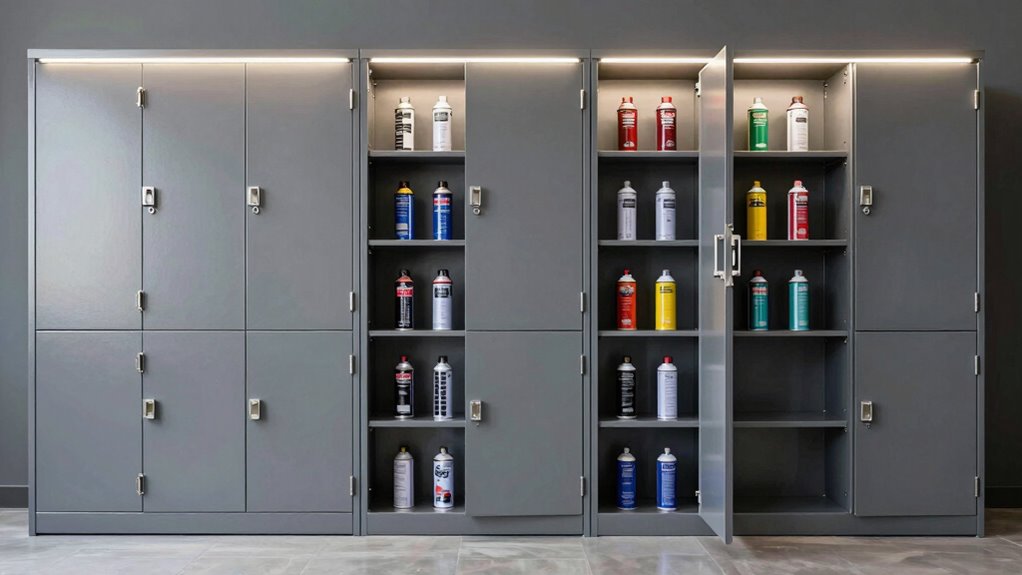

Choosing a safety storage cabinet for aerosols means balancing secure storage, usable capacity, and a layout that suits the work area. My best overall pick is the Justrite Sure-Grip EX, which is purpose-built for aerosol cans and adds roll-out shelves, a leak-tight sump, and a grounding connector. The Eagle 1976RED is the larger-format option for buyers who need broad, heavy-duty shelving, while the Durham Manufacturing cabinet suits maintenance teams that value drawers and mixed-item organization over dedicated aerosol features.
The tradeoff is not simply small versus large. Justrite gives the clearest aerosol-specific design, Durham offers a compact freestanding utility layout, and Eagle lists a 24-gallon capacity with shelves rated for substantial loads. I rank them by how directly their stated design and features serve aerosol storage, while noting where the supplied details leave important safety questions unanswered. Check the manufacturer’s current documentation and your workplace requirements before storing flammable products.
Complete the kit


Key Takeaways
- Justrite is the only option here specified for up to 24 aerosol cans, with two roll-out shelves, a 2-inch sump, and a grounding connector.
- Durham’s two drawers, two doors, and adjustable shelf make it a better mixed-tool organizer than a clearly documented aerosol safety cabinet.
- Eagle provides the largest stated capacity at 24 gallons and shelves rated for 350 pounds, but the listing does not specify aerosol-can capacity.
- Justrite’s 21 × 27 × 18-inch benchtop footprint suits work areas with limited floor space; its capacity may be too small for bulk storage.
- Before buying Durham or Eagle for flammable aerosol storage, verify applicable safety certifications and cabinet-specific storage features with the manufacturer.
| Justrite Sure-Grip EX Aerosol Can Benchtop Safety Cabinet, Yellow, 21 × 27 × 18 in. |  | Best Overall — the clearest aerosol-specific choice | Dimensions: 21 × 27 × 18 in. | Capacity: Up to 24 aerosol cans | Shelves: 2 roll-out shelves | VIEW ON AMAZON | See Our Full Breakdown |
| Eagle 1976RED Aerosols Cabinet, 24 Gallon, Red |  | Best for Larger Storage — high-capacity shelf layout | Model: 1976-RED | Capacity: 24 gallons | Dimensions: 43 in. W × 12 in. D × 44 in. H | VIEW ON AMAZON | See Our Full Breakdown |
| Durham Manufacturing Specialty Storage Aerosol Utility Cabinet |  | Best for Mixed Maintenance Storage — drawers and adjustable shelving | Model: 056-95 | Dimensions: 32.75 in. H × 19.875 in. W × 12.75 in. D | Material: Metal | VIEW ON AMAZON | See Our Full Breakdown |
| safety storage cabinet for aerosol | Dimensions | Shelves | Material | Capacity |
|---|---|---|---|---|
| Justrite Sure-Grip EX Aerosol | 21 × 27 × 18 in. | 2 roll-out shelves | 18-gauge double-wall welded steel | Up to 24 aerosol cans |
| Eagle 1976RED Aerosols Cabinet | 43 in. W × 12 in. D × 44 in. H | 3 | Alloy steel | 24 gallons |
| Durham Manufacturing Specialty | 32.75 in. H × 19.875 in. W × 12.75 in. D | 2, including 1 adjustable shelf | Metal | — |
More Details on Our Top Picks
Justrite Sure-Grip EX Aerosol Can Benchtop Safety Cabinet, Yellow, 21 × 27 × 18 in.
For buyers who want a cabinet described and equipped specifically for aerosol cans, the Justrite Sure-Grip EX is the most straightforward match in this lineup. Its stated capacity of up to 24 cans and two roll-out shelves make the contents easier to reach than a fixed-shelf arrangement, particularly when the cabinet sits on a bench. The compact 21 × 27 × 18-inch form also saves floor space, though buyers should check the full can size and internal fit before treating the listed capacity as a guarantee for every aerosol container.
Its safety-oriented feature set is more clearly documented than Durham’s: the Justrite has welded double-wall steel, a 2-inch leak-tight sump, a grounding connector, and a key-locking, self-latching door. The chemical-resistant powder coating adds a practical layer of protection for a working shop environment. The product information also states NFPA Code 30 and OSHA compliance; I would still confirm current documentation for the exact model and the intended use rather than relying on a short listing alone.
The main compromise is scale. This is a benchtop cabinet with a defined capacity, not the broad storage solution represented by Eagle’s 24-gallon cabinet. It is also manual-close, so it lacks an automatic-closing feature in the supplied specifications. I would choose Justrite when aerosol storage is the primary purpose and its capacity fits the inventory; for a large assortment or a mixed-item workstation, Eagle or Durham may better match the layout, but their aerosol-specific details need closer verification.
Pros:- Stated capacity of up to 24 aerosol cans across two roll-out shelves.
- Includes a 2-inch leak-tight sump and grounding connector.
- Welded double-wall steel with a chemical-resistant powder coating.
- Key-locking, self-latching door and listed NFPA Code 30 and OSHA compliance.
Cons:- Compact capacity may not suit bulk storage or a growing inventory.
- Door is manual-close, according to the supplied specifications.
- Benchtop dimensions require a stable, suitable supporting surface.
Best for: Workshops and maintenance areas needing a compact, lockable cabinet with stated capacity for up to 24 aerosol cans and clearly listed containment features.
Not ideal for: Sites storing substantially more than 24 cans, buyers needing a large floor-standing cabinet, or anyone requiring an automatic-closing door.
- Dimensions:21 × 27 × 18 in.
- Capacity:Up to 24 aerosol cans
- Shelves:2 roll-out shelves
- Material:18-gauge double-wall welded steel
- Door:Manual-close, key-locking self-latching door
- Sump:2-inch leak-tight bottom sump
- Coating:Lead-free hybrid epoxy and polyester powder paint
- Listed compliance:NFPA Code 30 and OSHA regulations
Our verdict“I rank Justrite first because it combines the clearest aerosol-can capacity with the most explicitly documented safety-oriented features in this comparison.”
Eagle 1976RED Aerosols Cabinet, 24 Gallon, Red
The Eagle 1976RED is the lineup’s larger-format choice: its stated storage capacity is 24 gallons, and it has three shelves plus a drawer in the supplied description. The shelves are listed with a 350-pound capacity, which points toward a sturdier load-bearing role than Justrite’s compact benchtop layout. For a utility room that needs more volume and a floor- or wall-mount configuration, Eagle may be a better physical fit than the smaller Justrite.
There is a meaningful difference between a gallon rating and a can count. The Eagle listing does not say how many aerosol cans fit, nor does the supplied information describe shelf spacing or the drawer’s intended contents. I would measure the actual cans and compare their dimensions with manufacturer drawings before deciding that this cabinet offers more usable aerosol capacity. It is described as an aerosols cabinet, but the available specs do not list the grounding connector, leak-tight sump, locking arrangement, or door details that make Justrite’s safety profile easier to evaluate.
The alloy-steel construction and chemical-resistant finish suit a demanding storage area, but they do not fill those documentation gaps. Its listed dimensions, 43 × 12 × 44 inches, indicate a tall, relatively shallow cabinet compared with Justrite’s bench unit. Eagle is my pick for buyers prioritizing a larger shelf-based cabinet, but I would verify mounting instructions, actual weight, and safety features with the manufacturer before using it for flammable aerosols. The supplied weight figure is unusually light for the stated dimensions and material, so I would confirm it rather than plan installation around it.
Pros:- Stated 24-gallon storage capacity in a larger cabinet format.
- Three shelves and a drawer support separated storage.
- Shelves are listed with a 350-pound capacity.
- Chemical-resistant alloy-steel construction and floor- or wall-mount options are listed.
Cons:- Aerosol-can count and shelf spacing are not provided in the supplied details.
- Sump, grounding, locking, and door features are not specified here.
- The listed weight should be confirmed before planning mounting or installation.
Best for: Buyers who want a larger cabinet footprint, a stated 24-gallon capacity, and high-load shelving for an organized utility or maintenance area.
Not ideal for: Anyone who needs a clearly stated aerosol-can count, documented leak containment and grounding, or complete installation details before purchase.
- Model:1976-RED
- Capacity:24 gallons
- Dimensions:43 in. W × 12 in. D × 44 in. H
- Material:Alloy steel
- Shelves:3
- Shelf capacity:350 lbs
- Additional storage:1 drawer
- Mounting:Floor mount or wall mount listed
- Finish:Chemical-resistant finish; red
Our verdict“I recommend Eagle for buyers seeking more stated volume and heavy-duty shelving, provided they verify aerosol-specific safety details and installation information first.”
Durham Manufacturing Specialty Storage Aerosol Utility Cabinet
Durham takes a different approach from the two cabinets described directly as aerosol storage options. Its two doors, two drawers, and two shelves make it look useful for a maintenance station that needs to separate small parts, tools, and supplies rather than devote every inch to cans. One shelf is adjustable, giving the buyer more flexibility than the fixed two-shelf arrangement listed for Justrite. It is also freestanding and lockable, with a stated maximum weight capacity of 125 pounds.
That versatility comes with the biggest documentation tradeoff in this group. The supplied description calls it a specialty storage aerosol utility cabinet, but it does not provide a can count, dedicated aerosol shelf dimensions, sump, grounding connector, or construction details comparable to Justrite’s double-wall welded steel. Its metal build and lock are useful general-storage attributes, but I would not assume they establish suitability for flammable aerosol storage. Compared with Eagle, Durham offers a more compartmentalized layout; compared with Justrite, it provides less explicit evidence about aerosol-specific containment and capacity.
At 32.75 inches high, 19.875 inches wide, and 12.75 inches deep, it has a relatively compact freestanding footprint. That can help in a shop that lacks bench space, although the drawers and divided layout may reduce room for larger cans. I would put Durham on the shortlist for mixed maintenance organization only after confirming its intended use and safety documentation with the manufacturer. Buyers whose priority is dedicated aerosol storage should start with Justrite; those needing more listed volume should compare Eagle, while checking its missing specifications too.
Pros:- Two drawers and two doors help separate small items from shelf storage.
- One adjustable shelf allows the interior layout to be changed.
- Locking freestanding metal cabinet for a maintenance area.
- Maximum weight capacity is listed as 125 pounds.
Cons:- No aerosol-can capacity is included in the supplied specifications.
- Sump, grounding, and double-wall construction are not documented here.
- Mixed compartments may leave less usable space for larger cans.
Best for: Maintenance teams looking for a lockable, freestanding cabinet with drawers and an adjustable shelf for mixed supplies, after confirming suitability for their aerosol products.
Not ideal for: Buyers who need a clearly stated aerosol-can capacity or documented sump, grounding, and flammable-storage construction features.
- Model:056-95
- Dimensions:32.75 in. H × 19.875 in. W × 12.75 in. D
- Material:Metal
- Weight:35 lbs
- Maximum weight capacity:125 lbs
- Doors and drawers:2 doors and 2 drawers
- Shelves:2, including 1 adjustable shelf
- Mount type:Freestanding
- Locking:Yes
Our verdict“I see Durham as the most adaptable mixed-supply organizer, not the strongest documented choice for dedicated flammable aerosol storage.”

How We Picked
I ranked these options by their relevance to the specific job of storing aerosol cans, rather than treating every metal cabinet as interchangeable. I gave the most weight to stated aerosol capacity, shelf access, secure closure, containment features, construction, and the fit implied by the cabinet’s dimensions and mounting style. On that basis, Justrite leads: its product information directly identifies aerosol-can capacity and describes a leak-tight sump, a grounding connector, welded double-wall construction, and a self-latching lockable door.
I placed Eagle second because it is described as an aerosols cabinet and lists 24 gallons of storage plus shelves rated for 350 pounds. That is a compelling larger-storage profile, but the supplied information does not give a can count or list the sump, grounding, door, or locking details available for Justrite. Durham ranks third for this particular search because its drawers and adjustable shelf could help a maintenance shop organize supplies, yet its description is for a specialty storage utility cabinet and does not provide aerosol-specific capacity or containment details.
I have not treated a general-purpose metal cabinet as equivalent to a cabinet documented for flammable aerosol storage. Product specifications in the supplied information are the basis for the comparison; I do not infer an unlisted certification or safety feature. Buyers should confirm the exact model, intended materials, and applicable local and workplace requirements before purchase.
Factors to Consider When Choosing Safety Storage Cabinet For Aerosols
I would choose an aerosol cabinet by starting with the material and storage conditions, then checking capacity and access. The products here vary enough that a cabinet’s general metal construction or drawer count should not substitute for confirmation that it suits the aerosols you plan to store.
Confirm the cabinet is appropriate for the aerosol product
Aerosol containers can hold flammable contents under pressure, so the cabinet’s intended use and documented features matter more than its color or general description. Justrite lists a leak-tight sump, grounding connector, welded double-wall steel, and named regulatory compliance; those details make its stated purpose easier to assess. Eagle is described as an aerosols cabinet, but the supplied specs omit several of those features. Durham has a utility layout, yet the available details do not establish dedicated flammable-aerosol construction. I would ask the manufacturer for current model-specific documentation and check applicable workplace and local requirements before selecting either less-documented option.
Compare usable capacity, not only headline volume
Justrite gives a direct benchmark of up to 24 aerosol cans, while Eagle lists 24 gallons and Durham provides no aerosol count. Those measurements do not answer the same question. Can diameter, height, nozzle guards, shelf spacing, and the room needed to remove containers all affect usable capacity. I would count the largest cans in the planned inventory and request an interior layout drawing where one is not provided. For a small, known set of cans, Justrite is easier to match to the job; for larger inventory, Eagle may offer more room, but its can fit should be confirmed rather than inferred from gallons.
Match the layout to how the cabinet will be used
Roll-out shelves give Justrite a practical access advantage in a benchtop cabinet, especially when cans sit toward the back. Eagle’s three shelves and drawer create a broader storage layout, while Durham’s drawers and adjustable shelf suit mixed small supplies. These layouts serve different tasks: an aerosol-only cabinet benefits from clear access and separation, whereas a maintenance station may value parts organization. Check whether mixed storage is permitted for the materials involved, and avoid assuming that a convenient drawer makes a cabinet suitable for every stored product.
Plan the location, support, and installation
Justrite is designed as a benchtop cabinet, so the support surface must be stable and able to carry the loaded cabinet. Durham is freestanding, while Eagle lists floor and wall mounting. Eagle’s supplied weight figure appears unusually low for the stated dimensions, so I would confirm the actual shipping or cabinet weight and follow the manufacturer’s mounting instructions. Also account for door and drawer clearance, staff access, and the cabinet’s placement within the work area. Installation choices should follow the product manual and workplace rules, not a guess based on the cabinet’s exterior size.
Check locks, containment, and operating details
A lock can limit access, but it does not by itself document spill containment or other flammable-storage features. Justrite clearly lists a key lock, self-latching door, and sump, while Durham lists locking without details about its closure or containment. Eagle’s supplied listing does not identify its lock or door arrangement. I would verify how the door closes, whether the cabinet has the required containment for the intended materials, and whether accessory or grounding instructions apply. A manual-close door, like Justrite’s, also means staff need to follow the specified closing procedure.
Treat load ratings and listing details carefully
Eagle lists shelves rated to 350 pounds, while Durham gives a 125-pound maximum cabinet capacity; these figures describe different stated limits and should not be compared as if they measure the same thing. The Justrite information focuses on aerosol count rather than a shelf-load figure. Follow the manufacturer’s rated limits for the exact component, distribute weight as directed, and request clarification when a listing leaves a detail blank. A listed capacity does not replace a check of the floor, mounting hardware, or the combined load of stored products.
Frequently Asked Questions
Which cabinet in this comparison is the clearest fit for aerosol cans?
I would start with the Justrite Sure-Grip EX. It explicitly lists capacity for up to 24 aerosol cans, two roll-out shelves, a leak-tight sump, grounding connector, welded double-wall steel, and a lockable self-latching door. Eagle is also described as an aerosols cabinet, but its supplied listing does not state a can count or provide several of those safety details. Durham’s layout is useful for mixed supplies, but its aerosol-specific capacity and containment features are not documented in the information provided.
Is Eagle’s 24-gallon capacity enough to estimate how many cans it holds?
No. A gallon figure is not a reliable substitute for an aerosol-can count because can sizes, shelf spacing, and the cabinet’s usable interior dimensions affect fit. I would request Eagle’s interior measurements or a manufacturer capacity guide and compare them with the exact cans in the planned inventory. Justrite is easier to evaluate on this point because its listing gives a can-count figure, though buyers should still confirm fit for unusually large containers.
Can I use the Durham cabinet for flammable aerosol storage?
The information supplied for Durham does not establish whether this specific model meets the requirements for your flammable aerosol products. Its lock, metal construction, drawers, and adjustable shelf describe useful utility-cabinet features, but they do not confirm a sump, grounding, or a particular flammable-storage certification. I would contact the manufacturer for current documentation and compare it with workplace and local requirements before putting flammable aerosols inside.
What does the sump do, and which option lists one?
A sump is a containment area at the cabinet bottom intended to collect leaks or spills, subject to the model’s design and manufacturer instructions. Of these three supplied descriptions, Justrite is the one that specifically lists a 2-inch leak-tight bottom sump. The Eagle and Durham details provided here do not mention a sump, so I would not assume they include one; confirm directly with their manufacturers if containment is a requirement for your storage plan.
How should I decide between benchtop and freestanding storage?
I would choose based on the available location, the size of the inventory, and the cabinet’s installation requirements. Justrite’s compact benchtop format suits a stable work surface and a defined inventory of up to 24 cans, while Durham is freestanding and offers drawers for mixed maintenance supplies. Eagle is a larger cabinet with floor- and wall-mount options listed, but its actual weight and mounting details should be confirmed. In every case, follow the manufacturer’s instructions and confirm that the location meets applicable workplace rules.
Conclusion
For buyers whose priority is documented aerosol-specific storage, I recommend the Justrite Sure-Grip EX: its can capacity, roll-out shelves, sump, grounding connector, and locking self-latching door make its role clearest. Choose the Eagle 1976RED if you need a larger stated storage volume and heavy-duty shelving, but confirm can fit, mounting details, and any required safety features before ordering. The Durham makes the most sense for a maintenance area that needs drawers and adjustable mixed storage, provided the manufacturer confirms that the cabinet is suitable for the intended aerosols. When that confirmation is missing, I would favor the option with the clearest documentation rather than infer safety suitability from a general metal cabinet description.