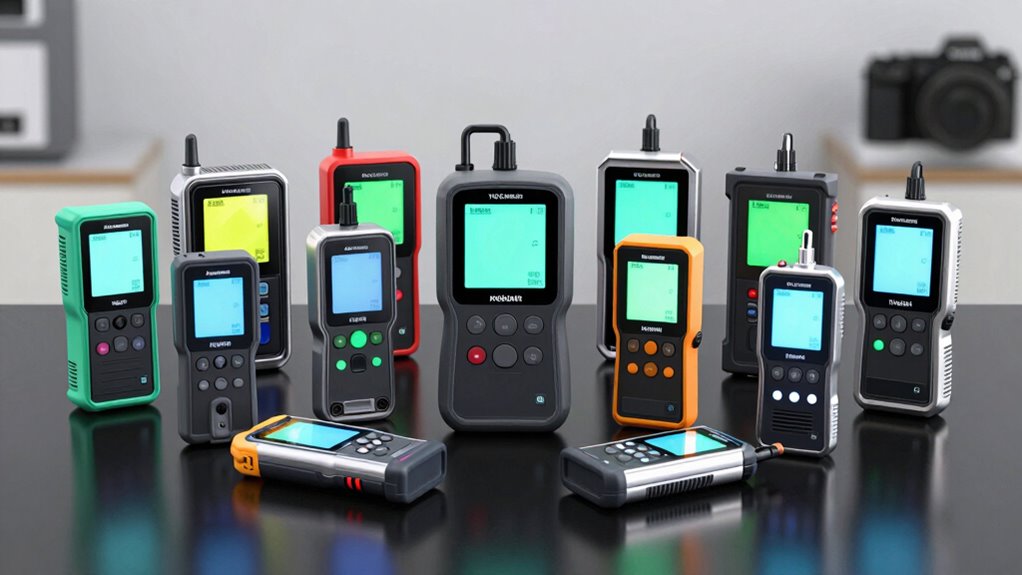

Choosing a handheld hydrogen gas detector in 2026 requires balancing accuracy, durability, and ease of use. For those prioritizing overall reliability, the Hydrogen Gas Detector, Meter & Analyzer by Forensics stands out due to its NIST calibration and explosion-proof design. If portability and multi-parameter monitoring appeal more, the Hydrogen Gas Detector 0-1000 PPM by B0F5Q5KZBX offers high precision and additional environmental sensors. For industrial environments demanding ruggedness, the Hydrogen Gas Analyzer with NIST Calibration by B09XWBS34V provides durability and detailed data logging. Meanwhile, battery room monitors like the Hydrogen Gas Detector for Battery Room Monitoring by Forensics excel in continuous, heavy-duty detection, while the MSA ALTAIR 2X is better suited for low-level H2S detection but not hydrogen. Understanding these core differences helps in selecting the right device for your specific safety context.

Get travel and outdoor gear delivered free with Prime
- Fast, free delivery on millions of items
- Prime Video, Amazon Music and more included
- Member-only deals all year
Complete the kit


Key Takeaways
- Accuracy and calibration standards are vital for reliable hydrogen detection, especially in safety-critical settings.
- Durability and industrial-grade protections are essential for heavy-duty environments like battery rooms.
- Portability and additional environmental monitoring features enhance usability for on-the-go inspections.
- Range limitations (usually up to 1000 ppm) are common, so consider your detection needs carefully.
- Additional features like data logging, alarms, and connectivity can influence overall value depending on use case.
| Hydrogen Gas Detector, Meter & Analyzer by Forensics |  | Best Overall for Reliable Hydrogen Detection | Measurement Range: 0-1000 ppm | Calibration: NIST Certified | Power: USB Rechargeable | VIEW ON AMAZON | See Our Full Breakdown |
| Hydrogen Gas Detector 0-1000 PPM, High Accuracy H2 Monitor with Alarm, Rechargeable, Portable |  | Best for Portable, Multi-Parameter Monitoring | Detection Range: 0-1000 ppm | Resolution: 0.1 ppm | Alarm Modes: Visual, audible, vibration | VIEW ON AMAZON | See Our Full Breakdown |
| Hydrogen Gas Analyzer with NIST Calibration, 0-1000ppm Range, Built-in Pump & 4ft Probe |  | Best for Fast, Accurate Data Logging | Range: 0-1000 ppm | Resolution: 1 ppm | Calibration: NIST traceable | VIEW ON AMAZON | See Our Full Breakdown |
| Hydrogen Gas Detector for Battery Room Monitoring by Forensics |  | Best for Heavy-Duty Industrial Use | Detection Range: 0-1000 ppm | Housing Protection: IP65 | Calibration: NIST traceable | VIEW ON AMAZON | See Our Full Breakdown |
| MSA ALTAIR 2X Single-Gas Detector – Hydrogen Sulfide (H2S-LC), Charcoal |  | Best for Low-Level H2S Monitoring | Sensor Life: 4 years | Detection Range: 5-10 ppm | Water/Dust Resistance: IP67 | VIEW ON AMAZON | See Our Full Breakdown |
| hydrogen gas detector handheld | Calibration | Detection Range |
|---|---|---|
| Hydrogen Gas Detector | NIST Certified | — |
| Hydrogen Gas Detector 0-1000 P | — | 0-1000 ppm |
| Hydrogen Gas Analyzer with NIS | NIST traceable | — |
| Hydrogen Gas Detector for Batt | NIST traceable | 0-1000 ppm |
| MSA ALTAIR 2X Single-Gas Detec | — | 5-10 ppm |
More Details on Our Top Picks
Hydrogen Gas Detector, Meter & Analyzer by Forensics
This model excels for users needing consistent, accurate hydrogen measurement with a strong emphasis on safety. Its NIST calibration ensures measurement reliability, a key factor when hydrogen safety is critical. The dust and explosion-proof design makes it suitable for industrial environments, and USB rechargeability enhances convenience. Compared with other options, it offers a straightforward, dedicated hydrogen detection solution, though it lacks additional environmental sensors or connectivity features. Its primary tradeoff is that it detects only hydrogen, which may limit versatility in environments where multiple gases are monitored.
Pros:- Accurate detection with NIST calibration
- Explosion-proof and dust-proof design
- Rechargeable via USB
Cons:- Limited to hydrogen detection only
- No raw data output or advanced environmental features
Best for: Industrial safety managers and laboratory technicians needing precise hydrogen monitoring.
Not ideal for: Users requiring multi-gas detection or environmental data logging beyond hydrogen levels.
- Measurement Range:0-1000 ppm
- Calibration:NIST Certified
- Power:USB Rechargeable
- Protection:Dust & Explosion Proof
Our verdict“A dependable, straightforward choice for hydrogen safety with excellent calibration and durability.”
Hydrogen Gas Detector 0-1000 PPM, High Accuracy H2 Monitor with Alarm, Rechargeable, Portable
This device offers high-precision detection with 0.1 ppm resolution, making it ideal for detailed safety assessments in industrial and laboratory settings. Its portability, combined with features like temperature and humidity monitoring, makes it versatile for various environments. Multiple alarm modes—visual, audible, vibration—enhance safety, especially in noisy or hands-busy conditions. Compared with more rugged industrial models, it sacrifices some durability features for lighter weight and user-friendliness. Its main limitation is that it cannot test hydrogen water, which might matter in some specialized applications.
Pros:- High accuracy with 0.1 ppm resolution
- Multi-modal alarms
- Portable with environmental sensors
Cons:- Limited to hydrogen detection up to 1000 ppm
- No wireless connectivity
Best for: Field technicians and safety personnel needing precision and environmental context.
Not ideal for: Heavy industrial environments where durability and continuous operation are priorities.
- Detection Range:0-1000 ppm
- Resolution:0.1 ppm
- Alarm Modes:Visual, audible, vibration
- Display:2.8-inch adjustable-brightness LCD
- Power:Rechargeable battery
- Materials:Explosion-proof ABS
Our verdict“An excellent portable detector providing high accuracy and environmental data for detailed safety checks.”
Hydrogen Gas Analyzer with NIST Calibration, 0-1000ppm Range, Built-in Pump & 4ft Probe
This analyzer is geared toward professionals needing quick, reliable readings with data recording. Its 1 ppm resolution and NIST traceable calibration ensure trustworthy measurements, while the color display and graph functions facilitate easy interpretation. The inclusion of a 4-foot probe and built-in pump enables fast sampling of distant or hard-to-reach areas. Compared with simpler detectors, this model offers more comprehensive data management, though its power reliance on USB charging and limited detection range (up to 1000 ppm) might hinder continuous use in some scenarios. Its rugged, water-resistant build enhances its suitability for fieldwork.
Pros:- High precision with 1 ppm resolution
- NIST calibration traceability
- Durable, water- and dust-resistant
Cons:- Limited to 0-1000 ppm range
- Requires USB for charging
Best for: Environmental technicians and industrial operators requiring detailed data logging and high accuracy.
Not ideal for: Users needing wireless connectivity or detection beyond 1000 ppm.
- Range:0-1000 ppm
- Resolution:1 ppm
- Calibration:NIST traceable
- Display:Color screen and graph functions
- Probe Length:4 ft
- Protection:Shock, water, dust resistant
Our verdict“A highly accurate, durable analyzer suited for detailed environmental and safety assessments.”
Hydrogen Gas Detector for Battery Room Monitoring by Forensics
This unit is built for demanding environments like battery rooms, offering continuous hydrogen detection with a rugged, explosion-proof design. Its IP65 housing and relay outputs allow for automation and external control, making it suitable for large-scale industrial safety systems. The NIST traceable calibration guarantees measurement accuracy over time, but its complexity and need for professional installation can be drawbacks for smaller operations. It’s limited to hydrogen detection and does not include wireless features, which might limit flexibility in some setups.
Pros:- Heavy-duty, explosion-proof construction
- Relay outputs for automation
- NIST traceable calibration
Cons:- Limited to hydrogen detection
- Requires professional setup
Best for: Industrial facilities requiring robust, continuous hydrogen monitoring and automation capabilities.
Not ideal for: Small-scale or portable use where lightweight or multi-gas detection is needed.
- Detection Range:0-1000 ppm
- Housing Protection:IP65
- Calibration:NIST traceable
- Explosion Proof Grade:Exd ⅡC T6 Gb
Our verdict“A durable, industrial-grade detector designed for continuous, heavy-duty hydrogen monitoring in demanding environments.”
MSA ALTAIR 2X Single-Gas Detector – Hydrogen Sulfide (H2S-LC), Charcoal
This detector is tailored for monitoring low concentrations of hydrogen sulfide rather than hydrogen, making it less suitable for hydrogen safety but ideal for H2S environments. Its rugged IP67 design withstands tough conditions, and the large LCD display makes operation easy, even with gloves. Its long sensor life and data logging are advantages, but it lacks wireless connectivity and is limited to H2S detection. For users needing hydrogen-specific devices, this would be an incorrect choice.
Pros:- Durable, IP67 rated
- Long sensor life
- Easy to operate with gloved hands
Cons:- Limited to hydrogen sulfide detection
- No wireless features
Best for: Industrial safety teams focusing on hydrogen sulfide rather than hydrogen gas.
Not ideal for: Those needing hydrogen detection or multi-gas capabilities.
- Sensor Life:4 years
- Detection Range:5-10 ppm
- Water/Dust Resistance:IP67
- Operation:One-button, gloved operation
Our verdict“A robust, reliable detector for H2S environments, but not suitable for hydrogen monitoring.”

How We Picked
Our selection process focused on devices that are widely available, tested for accuracy, and suitable for handheld use. We prioritized models with NIST calibration or traceability, durable construction, and multiple alarm options. We compared detection range, resolution, battery life, and additional features like data logging and environmental sensors. Devices were selected for both industrial safety and general use, ensuring options for various application needs. Limitations such as detection range and power sources were considered to help users find the best balance of reliability and usability.
| hydrogen gas detector handheld | Calibration |
|---|---|
| Hydrogen Gas Detector | NIST Certified |
| Hydrogen Gas Detector 0-1000 P | — |
| Hydrogen Gas Analyzer with NIS | NIST traceable |
| Hydrogen Gas Detector for Batt | NIST traceable |
| MSA ALTAIR 2X Single-Gas Detec | — |
Factors to Consider When Choosing Hydrogen Gas Detector Handheld
When selecting a handheld hydrogen gas detector, consider your specific safety environment, required detection accuracy, and whether additional features like environmental sensors or data logging are necessary. The decision often hinges on whether you need a device for industrial, laboratory, or field use. Durability, calibration standards, and ease of use also play key roles in making the best choice for your safety protocols.
Detection Range and Accuracy
The core feature to evaluate is the detector’s measurement range and resolution. Most handheld devices cover up to 1000 ppm, suitable for typical safety thresholds. For precision in sensitive environments, look for models with 0.1 ppm or 1 ppm resolution and NIST calibration to ensure measurement reliability. Devices with higher accuracy reduce false alarms and improve safety decisions.
Durability and Industrial Suitability
Devices designed for industrial environments often feature explosion-proof, dust-proof, and water-resistant housings. For continuous or heavy-duty use, models with IP65 or IP67 ratings, and certifications like Exd or T6, ensure longevity and safe operation in challenging conditions. Consider whether the device requires professional calibration or integration with automation systems for your setup.
Portability and Additional Features
For fieldwork, portability—lightweight design, back clips, and rechargeable batteries—are important. Additional sensors for temperature and humidity, data logging, alarms, and connectivity options like Bluetooth or USB enhance usability. Decide if you need simple hydrogen detection or an all-in-one environmental monitoring tool to match your safety workflow.
Frequently Asked Questions
What is the typical detection range for handheld hydrogen gas detectors?
Most portable hydrogen detectors cover a range from 0 to 1000 ppm, which is sufficient for detecting leaks and ensuring safety in most environments. If your application involves higher concentrations, you should verify whether the device can handle those levels or if multiple devices are needed.
Why is NIST calibration important for hydrogen gas detectors?
NIST calibration guarantees that the measurements provided by the detector are traceable to national standards, ensuring consistent accuracy over time. This reliability is critical in safety-sensitive environments where false readings could lead to dangerous situations or unnecessary shutdowns.
Are portable hydrogen detectors suitable for industrial use?
Yes, particularly models with explosion-proof and rugged construction, designed to withstand harsh environments. For continuous industrial monitoring, devices with relay outputs and data logging provide additional automation and record-keeping capabilities, making them suitable for process safety management.
Can handheld hydrogen detectors measure other gases?
Most dedicated hydrogen detectors focus solely on hydrogen, with some combining multiple sensors in larger, stationary systems. If you need multi-gas detection, look for models explicitly designed for that purpose, but most handheld units are specialized for hydrogen or a specific gas like H2S.
How often should I calibrate my hydrogen gas detector?
Calibration frequency depends on usage and manufacturer recommendations, but a common practice is to calibrate every 6 to 12 months. Regular calibration ensures measurement accuracy, especially for devices used in critical safety applications. Many models include calibration reminders or can be calibrated in-house with proper standards.
Conclusion
For industrial environments or safety-critical settings, the Hydrogen Gas Detector, Meter & Analyzer by Forensics offers reliable calibration and rugged design. Field technicians and safety inspectors needing high precision and environmental monitoring may prefer the High Accuracy H2 Monitor by B0F5Q5KZBX. Heavy-duty industrial sites should consider the Battery Room Hydrogen Detector by Forensics for continuous, automated monitoring. Users primarily interested in low-level detection or working with hydrogen sulfide should look at the MSA ALTAIR 2X, though it’s not suitable for hydrogen. Select based on your environment, required accuracy, and whether portability or automation is more important.
Fall Picks
fall essentials
As an affiliate, we earn on qualifying purchases.