The right portable power station for camping depends almost entirely on what you’re powering: a 90Wh unit keeps phones and headlamps alive for a weekend, while a 1,000Wh model runs coolers, laptops, and camp lighting for days. My top overall pick is the Jackery Explorer 1000 v2, which pairs genuine appliance-grade capacity with a well-rounded port selection, making it the safest single purchase for mixed-use camping. For budget-minded campers, the GRECELL 500W (519Wh) delivers the most stored energy per dollar in this lineup, and the Anker SOLIX C300 stands out for lightweight weekend trips thanks to its refined build and efficient design. The core tradeoffs you’ll face are weight versus capacity, battery chemistry (LiFePO4 lasts far longer than older lithium-ion), and whether you want solar charging for off-grid extensions. Keep reading for the full breakdown of all 15 models and who each one actually suits.

Get travel and outdoor gear delivered free with Prime
- Fast, free delivery on millions of items
- Prime Video, Amazon Music and more included
- Member-only deals all year
Complete the kit


Key Takeaways
- Capacity in this lineup spans a huge range — from the 88Wh MARBERO M82 to the ~1,070Wh Jackery Explorer 1000 v2 — and that single number matters more than any other spec for camping, since it determines whether you’re charging phones or running a 12V fridge overnight.
- LiFePO4 battery chemistry (found in the ALLWEI 300W, VTOMAN FlashSpeed 300, and both Daran units) roughly triples usable lifespan compared to standard lithium-ion models like the smaller Jackery and GRECELL units — a real factor if you camp several times a year.
- Under-300Wh stations dominate this list (10 of 15 products), which reflects what most campers actually need: phone, camera, lantern, and headlamp charging rather than appliance power.
- Pure sine wave AC output separates the safer, electronics-friendly options (Jackery, Anker, GRECELL 500W) from budget units better suited to resistive loads like lights and small fans.
- The smallest units (MARBERO 88Wh, Daran 89.6Wh, HOWEASY 120W) only make sense as emergency backups or solo-trip chargers — they can’t be expected to run anything with a heating element or compressor.
| Jackery Explorer 300 Portable Power Station, 292Wh |  | Best Overall Small Station | Capacity: 292Wh | Peak Surge: 600W | Battery Chemistry: LiFePO4 | VIEW LATEST PRICE | See Our Full Breakdown |
| Anker SOLIX C300 DC Portable Power Station, 288Wh, 300W |  | Best for Fast Recharging | Battery Capacity: 288Wh | Output Wattage: 300W | Battery Type: LiFePO4 | VIEW LATEST PRICE | See Our Full Breakdown |
| HOWEASY Portable Power Station, 120W |  | Best Budget Ultralight Pick | Capacity: 88Wh | Continuous AC Output: 120W (240W peak) | Ports: 8 (2 AC, 1 USB-C, 3 USB-A, 2 DC) | VIEW LATEST PRICE | See Our Full Breakdown |
| GRECELL 500W Portable Power Station, 519Wh |  | Best for Family Base Camps | Capacity: 519Wh (140,400mAh) | AC Outlets: 2 pure sine wave, 110V | Other Outputs: 3x USB-A QC 18W, USB-C PD 60W, 2x DC, car port, 10W wireless | VIEW LATEST PRICE | See Our Full Breakdown |
| GRECELL Portable Power Station 330W, 230.88Wh Solar Generator |  | Best for CPAP and Overnight Devices | Capacity: 230.88Wh | Output Power: 330W (600W surge) | Waveform: Pure sine wave | VIEW LATEST PRICE | See Our Full Breakdown |
| Anker SOLIX C300 Portable Power Station, 288Wh |  | Best Mid-Size for Device-Heavy Campers | Capacity: 288Wh | Output: 300W (600W surge) | Ports: 8 total, including 2 × 140W USB-C | VIEW LATEST PRICE | See Our Full Breakdown |
| Portable Power Station, 300W, 192Wh |  | Best Budget Pick | Capacity: 192Wh | Output: 300W (600W surge) | Battery: LiFePO4, 4,000+ cycles | VIEW LATEST PRICE | See Our Full Breakdown |
| Jackery Explorer 1000 v2 Portable Power Station |  | Best for Appliance-Level Power | Battery capacity: 1,070Wh LFP | AC output: 1,500W (3,000W surge) | Ports: 3 AC, 2 USB-C, 1 USB-A, 1 DC car port | VIEW LATEST PRICE | See Our Full Breakdown |
| ALLWEI 300W Portable Power Station, 256Wh LiFePO4 Battery |  | Best Lightweight Value | Capacity: 256Wh LiFePO4 | Output: 300W continuous, 600W peak | Ports: 1 AC, 2 DC5521, 1 car, 1 USB-A 18W, 1 USB-C PD 60W | VIEW LATEST PRICE | See Our Full Breakdown |
| MARBERO M82 Portable Power Station, 88Wh, 120W Surge |  | Best Ultralight Backup | Capacity: 88Wh (24,000mAh) | Output: 80W (120W surge) | Ports: 8 total | VIEW LATEST PRICE | See Our Full Breakdown |
| Daran Portable Power Station, 89.6Wh LiFePO4 Battery, 100W Output |  | Best Ultralight Pick | Battery capacity: 89.6Wh | Battery type: LiFePO4 | Output power: 100W (200W peak) | VIEW LATEST PRICE | See Our Full Breakdown |
| Anker SOLIX C1000 Gen 2 Portable Power Station |  | Best for Base Camp | Capacity: 1,024Wh | Output: 2,000W (3,000W peak) | Recharge time: 49 min AC; 1.8 hr with 600W solar | VIEW LATEST PRICE | See Our Full Breakdown |
| VTOMAN FlashSpeed 300 Portable Power Station, 300W, 230Wh LiFePO4 Battery |  | Best Small-Group Weekend Pick | Battery capacity: 230Wh | Battery chemistry: LiFePO4 | Output wattage: 300W (600W peak) | VIEW LATEST PRICE | See Our Full Breakdown |
| Daran 300W Portable Power Station with 192Wh LiFePO4 Battery |  | Best Balance of Weight and Ports | Battery capacity: 192Wh | Battery chemistry: LiFePO4 | Output: 300W (600W peak) | VIEW LATEST PRICE | See Our Full Breakdown |
| ZeroKor 300W Portable Power Station, 280Wh | 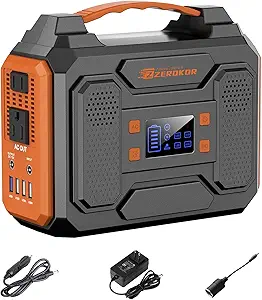 | Best Budget Weekend Option | Battery capacity: 280Wh | AC output: 300W max, 110V | AC outlets: 2 | VIEW LATEST PRICE | See Our Full Breakdown |
| portable power stations for camping | Weight | Ports | Capacity |
|---|---|---|---|
| Jackery Explorer 300 Portable | 7.1–7.5 pounds (listing varies) | 2 AC, 100W USB-C PD, 2 USB-A, 120W car port | 292Wh |
| Anker SOLIX C300 DC Portable P | — | 7 total (car socket, 3x USB-C, 2x USB-A) | — |
| HOWEASY Portable Power Station | 2.3 pounds | 8 (2 AC, 1 USB-C, 3 USB-A, 2 DC) | 88Wh |
| GRECELL 500W Portable Power St | — | — | 519Wh (140,400mAh) |
| GRECELL Portable Power Station | — | 1 AC, USB-C PD 60W, USB-C PD 18W, 2x USB-A QC 18W, car port | 230.88Wh |
| Anker SOLIX C300 Portable Powe | — | 8 total, including 2 × 140W USB-C | 288Wh |
| Portable Power Station | 8.8 lbs | — | 192Wh |
| Jackery Explorer 1000 v2 Porta | 23.8 lbs | 3 AC, 2 USB-C, 1 USB-A, 1 DC car port | — |
| ALLWEI 300W Portable Power Sta | 6.4 lbs | 1 AC, 2 DC5521, 1 car, 1 USB-A 18W, 1 USB-C PD 60W | 256Wh LiFePO4 |
| MARBERO M82 Portable Power Sta | 3.2 lbs | 8 total | 88Wh (24,000mAh) |
| Daran Portable Power Station | 2.54 lbs | 2 AC, 2 USB-C, 2 USB-A, DC5521 | — |
| Anker SOLIX C1000 Gen 2 Portab | 11.3 kg (about 25 lbs) | — | 1,024Wh |
| VTOMAN FlashSpeed 300 Portable | 7.4 lbs | — | — |
| Daran 300W Portable Power Stat | 5.84 lbs | 2 AC, 2 USB-C, 1 USB-A, 1 car outlet, 2 DC5521 | — |
| ZeroKor 300W Portable Power St | 5.1 lbs | — | — |
More Details on Our Top Picks
Jackery Explorer 300 Portable Power Station, 292Wh
This option stands out for balancing real usable capacity with genuine portability, which is exactly what a car-camping weekend demands. The 292Wh LiFePO4 battery is rated for over 4,000 charge cycles, meaning it will outlast cheaper lithium-ion units like the GRECELL 330W by years of seasonal use. Compared with the Anker SOLIX C300 DC, it trades slightly slower recharging for a more conventional layout that includes two AC outlets and a 100W USB-C port. The main tradeoff is real: solar panels cost extra, so off-grid charging requires budgeting for a separate panel. The listing also shows conflicting weight figures (7.1 vs. 7.5 lbs), a small but honest annoyance when packing.
Pros:- 292Wh capacity in a carry-friendly size
- LiFePO4 chemistry rated for 4,000+ cycles
- Six ports including 100W USB-C PD
- Solar-ready for off-grid recharging
Cons:- Solar panel sold separately
- Conflicting weight figures in the listing
Best for: Weekend car campers who want a durable, long-lived mid-size station for phones, laptops, lights, and a small fan
Not ideal for: Backpackers — at over 7 pounds it’s too heavy to carry far, unlike the 2.3-lb HOWEASY
- Capacity:292Wh
- Peak Surge:600W
- Battery Chemistry:LiFePO4
- Charge Cycles:Over 4,000 to 70% capacity
- Ports:2 AC, 100W USB-C PD, 2 USB-A, 120W car port
- Battery Charge Time:4 hours
- Weight:7.1–7.5 pounds (listing varies)
- Solar Panel:Not included
Our verdict“If you want one do-everything station for years of camping trips, this is the safest all-around pick in this batch.”
Anker SOLIX C300 DC Portable Power Station, 288Wh, 300W
Where this model separates itself from the Jackery Explorer 300 is recharge speed: with dual PD 3.1 USB-C input it hits 80% in roughly an hour, versus the Jackery’s four-hour full charge. For campers who top up between outings — or during a lunch stop on a road trip — that difference genuinely changes how you use the station. The seven-port layout is the most generous in this batch, with multiple USB-C options for laptops, cameras, and drones. Frustrations are worth flagging: the shoulder strap and wall charger are not included, and it won’t pair with Anker’s PS30, PS200, or PS400 panels, so solar buyers need to verify panel compatibility before committing.
Pros:- 80% recharge in about 1 hour via dual USB-C
- Seven ports including dual 140W USB-C
- 30% more compact than similar stations
- Smart temperature control and impact-resistant build
Cons:- Shoulder strap and wall charger not included
- Incompatible with Anker PS30/PS200/PS400 solar panels
Best for: Tech-heavy campers and van-lifers who recharge frequently and juggle multiple USB-C devices
Not ideal for: Solar-first off-gridders — the panel compatibility restrictions make building a solar setup awkward
- Battery Capacity:288Wh
- Output Wattage:300W
- Battery Type:LiFePO4
- Ports:7 total (car socket, 3x USB-C, 2x USB-A)
- Recharge Options:USB-C, solar, car
- Recharge Time:80% in ~1 hour with dual PD 3.1
- Warranty:3-year guarantee
Our verdict“This pick makes the most sense for anyone who values quick turnaround between trips over solar flexibility.”
HOWEASY Portable Power Station, 120W
At 2.3 pounds and pocket-sized dimensions, this is the lightest option here by a wide margin — the GRECELL 330W more than doubles its capacity but also its bulk. That makes it the clear choice for paddle-in campsites, motorcycle trips, or emergency kits where every ounce counts. The built-in LED light with SOS mode is a genuinely useful camping feature the bigger stations don’t offer. Be realistic about limits, though: 120W of continuous AC output covers phones, headlamps, and a small fan, but nothing beyond that, and the 88Wh capacity means one laptop charge eats a big share of the tank. Fast USB-C is absent at 18W, so device charging is noticeably slower than on the Anker.
Pros:- Featherweight 2.3-lb build that fits in a pack
- Eight output ports including two AC sockets
- AC, solar, and car recharging options
- Built-in LED with steady, flashing, and SOS modes
Cons:- 120W continuous output limits what it can power
- 18W USB-C is slow by current standards
Best for: Ultralight adventurers and budget buyers who need basic device charging plus a camp light
Not ideal for: Anyone running a CPAP, mini-fridge, or laptop-heavy setup — the capacity and wattage simply won’t support it
- Capacity:88Wh
- Continuous AC Output:120W (240W peak)
- Ports:8 (2 AC, 1 USB-C, 3 USB-A, 2 DC)
- Charging Methods:AC, solar (15–24V, panel not included), 12V/24V car
- Weight:2.3 pounds
- LED Modes:Steady, flashing, SOS
- Cycle Life:More than 1,500 cycles
- Warranty:24 months
Our verdict“Buy it for featherweight basics; skip it if any of your gear draws real wattage.”
GRECELL 500W Portable Power Station, 519Wh
This is the capacity champion of the batch at 519Wh — nearly double the Jackery Explorer 300 — which translates into running a 12V fridge, recharging everyone’s devices, and still having headroom for lights on a three-day trip. With up to ten devices at once, including wireless charging and three QC USB-A ports, it suits a family base camp better than any smaller rival here. The pure sine wave output protects sensitive electronics the same way the GRECELL 330W does. Tradeoffs are real: 6–7 hours on a wall outlet is slow, and leaving AC output enabled drains the battery even when idle, which can catch you off-guard mid-trip if you don’t power it down between uses.
Pros:- 519Wh capacity for multi-day trips
- Up to 10 simultaneous outputs including wireless charging
- Pure sine wave AC for sensitive electronics
- Wall, car, and solar recharging (100W/200W panels)
Cons:- Slow 6–7 hour wall recharge
- AC output drains battery when left on
- Solar panel not included
Best for: Families and group campers running a fridge, multiple devices, and long weekends away from outlets
Not ideal for: Solo minimalists — the extra capacity means extra weight you’ll carry without using it
- Capacity:519Wh (140,400mAh)
- AC Outlets:2 pure sine wave, 110V
- Other Outputs:3x USB-A QC 18W, USB-C PD 60W, 2x DC, car port, 10W wireless
- Recharge Methods:Wall outlet, car charger, 100W/200W solar panel
- Recharge Time:6–7 hours (wall); 6–9 hours (100W solar)
- Protections:Temperature, overvoltage, overcurrent, short circuit
- Solar Panel:Not included
Our verdict“The right choice when one station needs to power the whole camp for days, not just your phone.”
GRECELL Portable Power Station 330W, 230.88Wh Solar Generator
This model occupies a smart middle ground between the HOWEASY 120W and the GRECELL 500W: enough capacity and clean pure sine wave power to run a CPAP machine or mini-fridge overnight, without the weight of the big unit. The built-in MPPT controller is its quiet advantage — it extracts meaningfully more from a solar panel than stations with basic charge circuitry, a real benefit for multi-day off-grid stays. Compared with the Jackery Explorer 300, you get more output wattage (330W vs. 300W rated) but a less durable standard lithium battery and only a single AC outlet, which forces choices when packing power strips. The 330W ceiling also rules out kettles, hair dryers, and most hot plates.
Pros:- Pure sine wave output safe for CPAP and sensitive gear
- MPPT controller maximizes solar charging efficiency
- USB-C PD 60W charges laptops quickly
- Dual silent cooling fans for quiet overnight use
Cons:- Single AC outlet limits simultaneous appliances
- 330W ceiling excludes most cooking appliances
Best for: CPAP users and overnight campers who need reliable sine-wave power for one critical device across two nights
Not ideal for: Multi-appliance cooks — one AC outlet and 330W won’t run a hot plate alongside anything else
- Capacity:230.88Wh
- Output Power:330W (600W surge)
- Waveform:Pure sine wave
- Ports:1 AC, USB-C PD 60W, USB-C PD 18W, 2x USB-A QC 18W, car port
- Recharging:AC outlet, solar panel (not included), car outlet
- Battery Type:Lithium
- Features:MPPT controller, overload/overcharge/short-circuit protection, dual silent fans
Our verdict“The best fit for campers whose priority is keeping one medical or overnight device running cleanly off-grid.”
Anker SOLIX C300 Portable Power Station, 288Wh
This option stands out for port selection and charging speed: eight ports, including dual 140W USB-C, mean a family can top off laptops, cameras, drones, and phones at once without fighting over outlets. The 50-minute recharge to 80% is unusually quick for this capacity class, beating the ALLWEI 300W’s three to four hours by a wide margin, which matters when you only have a few hours near an outlet between trips. The LiFePO4 chemistry and 5-year warranty also give it a durability edge over cheaper rivals. The tradeoff is portability: unlike the 6.4 lb ALLWEI, the shoulder strap is sold separately, and solar compatibility is limited to select Anker panels. Compared with the Jackery Explorer 1000 v2, capacity is far smaller, so this pick makes the most sense for electronics-heavy campers rather than appliance runners.
Pros:- Eight ports including two 140W USB-C for fast laptop charging
- Reaches 80% charge in about 50 minutes from a wall outlet
- LiFePO4 battery rated for 3,000 cycles with a 5-year warranty
- Whisper-quiet at 25dB, fine for tent-adjacent use
Cons:- Shoulder strap sold separately, making it awkward to carry on hikes
- Not compatible with several Anker solar panel models
Best for: Campers who charge lots of small electronics — laptops, cameras, drones, phones — and want fast recharges between trips
Not ideal for: Off-grid campers planning to rely on solar charging, since compatibility with several Anker panel models is missing and third-party panels won’t work
- Capacity:288Wh
- Output:300W (600W surge)
- Ports:8 total, including 2 × 140W USB-C
- Recharge time:80% in 50 minutes via wall outlet
- Battery type:LiFePO4, 3,000 cycles
- Noise level:25dB at 3.3 ft
- Warranty:5 years
Our verdict“Choose this if your campsite power needs revolve around charging many devices quickly and quietly rather than running appliances.”
Portable Power Station, 300W, 192Wh
At the value end of this lineup, this model covers the basics well: six outputs, a 4,000+ cycle LiFePO4 battery, and a 10ms UPS function that doubles it as home backup for a router or modem. Compared with the similarly priced MARBERO M82, it delivers more than twice the capacity for a still-manageable 8.8 lbs, making it the smarter buy for anyone camping beyond a single night. The 1-hour recharge to 80% also outpaces the ALLWEI 300W considerably. Where it cuts corners is accessories — solar panel and car charger aren’t included — so off-grid plans require extra spending, and like all 300W-class units here it can’t touch a hair dryer or coffee maker. For car campers who mainly need lights, phones, and a small fan, this is a hard deal to beat.
Pros:- 4,000+ cycle LiFePO4 battery, the best cycle life in this batch
- 10ms UPS switch makes it useful as home emergency backup
- Reaches 80% charge in about an hour via AC
- Six output ports plus a built-in emergency LED light
Cons:- Solar panel and car charger not included
- 192Wh capacity fills fast when running multiple devices
Best for: Budget-conscious car campers who want reliable weekend capacity and a bonus UPS function for home outages
Not ideal for: Buyers wanting a complete solar kit out of the box — the panel and car charger cost extra
- Capacity:192Wh
- Output:300W (600W surge)
- Battery:LiFePO4, 4,000+ cycles
- Recharge time:0–80% in 1 hour via AC
- Outputs:2 AC, 1 USB-C PD 65W, 2 USB-A, 1 car outlet
- UPS switch time:≤10ms
- Weight:8.8 lbs
Our verdict“A sensible low-cost entry point for casual campers who mostly need device charging and a little redundancy at home.”
Jackery Explorer 1000 v2 Portable Power Station
This is the heavy hitter of the batch, and the only one here that can genuinely run real appliances — a portable fridge, an electric kettle, a blender — thanks to 1,500W of AC output and a 3,000W surge peak. With 1,070Wh on tap, it holds roughly four times the energy of the Anker SOLIX C300, translating into multi-day trips without recharging. The app-controlled charging modes, including a 30dB quiet overnight setting, are a thoughtful touch the smaller units lack. The costs are real, though: at 23.8 lbs it’s roughly four times the weight of the ALLWEI 300W, solar charging is locked to Jackery’s own panels, and the headline one-hour recharge only activates if you dig into the app’s emergency mode. This model suits basecamp and car-camping setups where the vehicle does the hauling.
Pros:- 1,500W AC output with 3,000W surge handles appliances no other pick here can
- 1,070Wh capacity supports multi-day trips between charges
- LFP battery retains over 70% capacity after 4,000 cycles
- App modes include quiet 30dB overnight charging
Cons:- At 23.8 lbs, it’s the heaviest and least portable option in this group
- Solar charging works only with Jackery-brand panels
- One-hour fast charging requires enabling emergency mode in the app
Best for: Car campers and basecamp groups who want to run fridges, kettles, or other appliances for multiple days
Not ideal for: Backpackers or paddlers — at 23.8 lbs it’s far too heavy to carry any real distance
- Battery capacity:1,070Wh LFP
- AC output:1,500W (3,000W surge)
- Ports:3 AC, 2 USB-C, 1 USB-A, 1 DC car port
- Charging time:1 hour (emergency mode); 1.7 hours default
- Cycle life:Over 70% capacity after 4,000 cycles
- Noise level:30 dB in quiet mode
- Weight:23.8 lbs
Our verdict“If your camping involves a cooler-turned-fridge or morning coffee from a real machine, this is the only pick in the batch that can do it.”
ALLWEI 300W Portable Power Station, 256Wh LiFePO4 Battery
At 6.4 lbs, this is the lightest meaningful-capacity option in the roundup, sitting in a sweet spot between the tiny 88Wh MARBERO M82 and the heavier 288Wh Anker C300. Its standout trick is combined AC + solar charging, which cuts recharge time to 2–2.5 hours — a flexibility no other product in this batch advertises, and one that helps when sun windows are short. The 5-year warranty matches Anker’s despite the lower price point. The tradeoffs are slower standalone charging (3.5–4 hours on AC alone) and a single AC outlet, so multi-appliance campsites should look to the Jackery Explorer 1000 v2 instead. With only one AC socket and DC5521 ports geared toward small gadgets, this is a camper’s companion rather than a home-power solution.
Pros:- Lightest unit here with more than 200Wh of capacity
- Combined AC + solar charging cuts recharge to 2–2.5 hours
- LiFePO4 battery rated for 3,000 cycles with a 5-year warranty
- Six ports plus an LED light with SOS mode
Cons:- Slow AC-only recharge at 3.5–4 hours
- Only one AC outlet limits simultaneous appliance use
Best for: Weight-conscious campers and hikers with a basecamp who want solid capacity without hauling a big unit
Not ideal for: Anyone running multiple plug-in appliances — one AC outlet and 300W output cap what’s possible
- Capacity:256Wh LiFePO4
- Output:300W continuous, 600W peak
- Ports:1 AC, 2 DC5521, 1 car, 1 USB-A 18W, 1 USB-C PD 60W
- Recharge time:AC: 3.5–4 hrs; solar: 4–5 hrs; AC + solar: 2–2.5 hrs
- Weight:6.4 lbs
- Warranty:5 years
Our verdict“The best pound-for-pound choice for campers who count ounces but still want enough power for a long weekend of devices and lights.”
MARBERO M82 Portable Power Station, 88Wh, 120W Surge
Sometimes you just need enough juice for a phone, headlamp batteries, and a lantern — and that’s exactly the job the M82 does at 3.2 lbs. It’s the lightest option in this roundup by half, tucking into a backpack side pocket where even the 6.4 lb ALLWEI would be a burden. Eight ports is generous for this size, and the three-level LED with SOS mode is a genuine safety feature for solo travelers. But the limits are hard: 80W continuous output rules out anything beyond small USB devices and tiny appliances, and the 88Wh capacity means roughly two phone-and-accessory recharges before you’re hunting for an outlet. Campers needing real runtime should step up to the ALLWEI or Anker C300; this is a supplement, not a primary power source.
Pros:- Featherweight at 3.2 lbs with an ergonomic handle
- Eight ports for a unit this size
- Three-level LED light with SOS mode
- Reaches 80% charge in about two hours with the included adapter
Cons:- 80W output can’t run most appliances
- 88Wh capacity drains quickly under multi-device use
Best for: Backpackers, day hikers, and solo minimalists who need phone and light recharges without added weight
Not ideal for: Anyone expecting primary power for a campsite — capacity and wattage are too small for sustained use
- Capacity:88Wh (24,000mAh)
- Output:80W (120W surge)
- Ports:8 total
- Recharge time:0–80% in 2 hours with included adapter
- Solar charging:Compatible with MARBERO 30W/60W panels
- Weight:3.2 lbs
Our verdict“An emergency-and-essentials unit for weight-sensitive trips — pair it with a bigger station if you’re powering a full camp.”
Daran Portable Power Station, 89.6Wh LiFePO4 Battery, 100W Output
At 2.54 pounds, this Daran is the lightest option in the roundup by a wide margin, and that changes what kind of camping trip it belongs on. Compared with the ZeroKor 300W at 5.1 pounds or the VTOMAN FlashSpeed 300 at 7.4 pounds, this one disappears into a backpack rather than demanding space in the trunk. Capacity is predictably modest at 89.6Wh, but the LiFePO4 chemistry rated beyond 3,500 cycles means it will survive many more seasons than the older battery types found in similarly tiny units. Seven ports is generous for this size class, and the 1.5-hour charge to 80% is quick for topping off between stops. The 100W ceiling is the real limit: it handles phones, cameras, drones, and a laptop, but nothing bigger.
Pros:- Featherweight at 2.54 pounds with a built-in carrying handle
- LiFePO4 battery rated for more than 3,500 cycles
- Seven ports and four charging methods in a tiny chassis
- Silent operation plus a 4-level LED flashlight with SOS mode
Cons:- 100W output ceiling severely limits which devices it can run
- Solar panel and cable must be purchased separately
Best for: Backpackers, moto-campers, and solo travelers who count every ounce but still want AC power for a laptop or camera gear
Not ideal for: Anyone hoping to run a portable fridge, fan, or CPAP overnight — 89.6Wh and a 100W ceiling rule out most appliances
- Battery capacity:89.6Wh
- Battery type:LiFePO4
- Output power:100W (200W peak)
- Weight:2.54 lbs
- Ports:2 AC, 2 USB-C, 2 USB-A, DC5521
- Charging methods:AC, USB-C PD, car, optional solar
- Charge time:0–80% in about 1.5 hours
- Battery life:More than 3,500 cycles
Our verdict“This pick makes the most sense for ounce-counting adventurers who need device charging, not appliance power.”
Anker SOLIX C1000 Gen 2 Portable Power Station
This is the heavy hitter of the batch, and it plays a completely different game than everything else here. With 1,024Wh of capacity and 2,000W of output, it can run a portable fridge, an electric kettle, or a camp kitchen setup — things the VTOMAN FlashSpeed 300 or the ZeroKor 300W simply cannot touch. The standout is recharge speed: 49 minutes on AC or 1.8 hours with 600W of solar input, which matters when you’re cycling it daily on a longer trip. The sub-10ms UPS switchover also makes it double as home backup. The tradeoff is obvious: at 11.3 kg (about 25 pounds), this is car-camping gear, not something you carry far from the vehicle. The conflicting port counts in the product listing (9 versus 10) are a minor annoyance worth verifying before you rely on a full port complement.
Pros:- 1,024Wh capacity and 2,000W output handle appliances other picks can’t run
- Extremely fast recharging: 49 minutes via AC, 1.8 hours with 600W solar
- UPS switchover under 10 ms doubles it as home backup power
- Rated for at least 80% capacity after 4,000 cycles
Cons:- Heavy at 11.3 kg, limiting it to vehicle-based camping
- Product listing gives conflicting outlet counts (9 vs. 10) worth clarifying
Best for: Car campers and overlanders running fridges, lighting, and cooking gear who need serious capacity and fast solar recharging
Not ideal for: Backpackers and anyone transporting gear on foot — at roughly 25 pounds, it stays at base camp or in the vehicle
- Capacity:1,024Wh
- Output:2,000W (3,000W peak)
- Recharge time:49 min AC; 1.8 hr with 600W solar
- Solar input:600W, 60V maximum
- Battery lifespan:80%+ capacity after 4,000 cycles
- UPS switchover:Under 10 ms
- Weight:11.3 kg (about 25 lbs)
- Dimensions:15.1 × 8.2 × 9.6 in
Our verdict“This model is better suited to base-camp and RV campers who need appliance-grade power and will accept the weight that comes with it.”
VTOMAN FlashSpeed 300 Portable Power Station, 300W, 230Wh LiFePO4 Battery
The FlashSpeed 300 sits in the crowded 200–300Wh middle of this roundup, and it earns its slot with the strongest charging flexibility in its class: four input methods including a 100W USB-C PD port that works both directions, which the Daran 300W (60W PD) and the ZeroKor 300W can’t match. That means one USB-C brick or power bank can top it up, alongside wall, car, and solar inputs. Seven outlets let a small group keep phones, headlamps, and a drone charging at once, and the digital display removes guesswork about remaining runtime. The LiFePO4 cells rated beyond 3,000 cycles give it a durability edge over older-chemistry rivals like the Jackery Explorer 300. Just know that 300W caps out before most cooking appliances, and at 7.4 pounds it’s heavier than rivals with similar capacity.
Pros:- Four charging methods including 100W bidirectional USB-C PD
- Seven outlets power a small group’s devices simultaneously
- LiFePO4 battery rated for over 3,000 cycles
- Digital display, overload protection, and LED light with SOS modes
Cons:- 300W ceiling rules out higher-powered appliances
- At 7.4 pounds it’s heavier than comparable-capacity rivals
- Product listing shows conflicting weights (7.4 lbs vs. 7 lbs)
Best for: Pairs and small groups on 2–3 day trips who juggle multiple devices and want flexible recharging from a laptop charger or car
Not ideal for: Weight-conscious solo campers — rivals like the Daran 89.6Wh or ZeroKor offer lighter options, and 300W won’t run hot plates or kettles
- Battery capacity:230Wh
- Battery chemistry:LiFePO4
- Output wattage:300W (600W peak)
- Outlets:7: 2 AC, 1 USB-C, 3 USB-A, 1 DC
- USB-C power:100W input and output
- Charging methods:Wall, solar, car, USB-C PD
- Weight:7.4 lbs
- Battery life:Over 3,000 cycles
Our verdict“This pick makes the most sense for small-group campers who prioritize charging flexibility and port count over raw wattage.”
Daran 300W Portable Power Station with 192Wh LiFePO4 Battery
This Daran carves out a niche between its smaller sibling and the heavier mid-size options. At 5.84 pounds with 192Wh, it delivers more runtime than the Daran 89.6Wh ultralight while staying nearly two pounds lighter than the VTOMAN FlashSpeed 300 — a sensible compromise for campers who walk their gear from car to tent. The port selection is unusually rich for the class: eight outputs including two AC sockets, dual USB-C, and two DC5521 barrel ports for 12V accessories like camp lights or a small fan. The 3,500-cycle LiFePO4 rating matches the smaller Daran and outlasts older-chemistry units. The tradeoffs are familiar: 300W caps it at small appliances, and you’ll need to add a solar panel if off-grid recharging is part of the plan.
Pros:- Eight output ports including dual USB-C and two DC5521 for 12V gear
- LiFePO4 battery rated for over 3,500 cycles to 80%
- Lighter than comparable 300W stations at 5.84 pounds
- Recharges via AC, solar, or 12V car socket
Cons:- 300W output limit excludes most kitchen appliances
- Solar panel required for off-grid charging is sold separately
Best for: Campers who want a middle-weight unit — more capacity than an ultralight, less bulk than a full-size station — with plenty of ports for 12V accessories
Not ideal for: Anyone planning to run heating or cooking appliances, or off-grid travelers unwilling to buy a separate solar panel
- Battery capacity:192Wh
- Battery chemistry:LiFePO4
- Output:300W (600W peak)
- Ports:2 AC, 2 USB-C, 1 USB-A, 1 car outlet, 2 DC5521
- USB-C output:60W PD
- Recharging:AC, solar, 12V car socket
- Weight:5.84 lbs
- Battery life:Over 3,500 cycles
Our verdict“This option stands out for campers who want a well-connected middle ground between ultralight and full-size stations without paying the weight penalty.”
ZeroKor 300W Portable Power Station, 280Wh
The ZeroKor makes its case on simple value: 280Wh for just 5.1 pounds, which is more capacity than the VTOMAN FlashSpeed 300 (230Wh) at over two pounds less weight. For a two-person weekend of phone charging, headlamp top-ups, and maybe a small string of camp lights, that math works. The protection suite — short circuit, over-current, over-voltage, and overload — plus temperature-controlled cooling gives it a more defensive build than many entry-level rivals. Where it trails the pack is charging sophistication: no USB-C PD input at all, so topping up requires AC, a car socket, or a separately purchased solar panel, while the VTOMAN can sip from a laptop charger. And unlike the LiFePO4-based Daran and VTOMAN units here, it also asks for regular recharging during storage, which adds a maintenance chore.
Pros:- 280Wh capacity in a light 5.1 lb chassis
- Multiple AC, DC, and USB ports for mixed device charging
- Four-way battery protection with temperature-controlled cooling
- LED flashlight with reading and SOS modes
Cons:- No USB-C charging input, unlike the VTOMAN FlashSpeed 300
- Solar panel sold separately
- Requires regular recharging during storage to protect the battery
Best for: Budget-minded weekend campers who want maximum runtime per pound for basic device charging and don’t need USB-C recharging
Not ideal for: Set-and-forget types and off-grid campers — it needs periodic recharge maintenance and lacks the USB-C input and solar panel included setups of rivals
- Battery capacity:280Wh
- AC output:300W max, 110V
- AC outlets:2
- DC output:9V–12.6V / 10A max
- USB ports:3 × 5V/3A max
- Charging methods:AC outlet, 12V car adapter, optional solar
- Weight:5.1 lbs
- Protection:Short circuit, over-current, over-voltage, overload
Our verdict“This pick makes the most sense for casual weekend campers chasing runtime-per-dollar who can live with slower, less flexible recharging.”

How We Picked
I evaluated every model against four camping-specific criteria rather than raw spec sheets. Usable capacity versus real-world demand came first: I judged each station by how many phone charges, headlamp top-ups, or laptop sessions it could realistically deliver, not just the watt-hour number on the box. Output type and ceiling came second — a 300W station cannot start a mini-fridge no matter how large its battery, so I matched each model’s inverter limits to realistic camp loads. Battery chemistry and cycle life was the third filter, favoring LiFePO4 units for campers who will drain the battery repeatedly over years of trips.
Finally, I weighed portability and charging flexibility — packed weight matters when the station rides in a backpack versus a car trunk, and solar input determines whether a station works for extended off-grid stays. The ranking leans toward models that do one job very well for a clear buyer type. Larger, refined stations like the Jackery Explorer 1000 v2 and Anker SOLIX C1000 Gen 2 sit at the top for versatility, while compact units are ranked strictly on how well they serve the minimalist camper who values ounces over watt-hours.
Factors to Consider When Choosing Portable Power Stations For Camping
Before settling on a model from the list above, it helps to understand the broader patterns and pitfalls in this category. These are the factors that most often cause buyers to pick the wrong station for their camping style.Match Capacity to Trip Length, Not Ambition
The most common mistake I see is buying a big battery for small needs — or the reverse. A reasonable planning rule is 30–50Wh per person per day for basic electronics (phones, headlamps, cameras), which means a couple on a two-night trip lives comfortably under 200Wh. Add a laptop, a drone, or a portable fridge and that number can triple. The trap is that capacity costs weight: a 1,000Wh station approaches the size of a car battery, and hauling it to a walk-in campsite defeats the purpose. Ask yourself how far the station travels from the vehicle — that answer narrows the list faster than any spec comparison.
LiFePO4 Chemistry Is Worth Prioritizing for Regular Campers
Battery chemistry rarely appears in marketing copy, but it shapes long-term value more than almost anything else. LiFePO4 cells tolerate 2,000–3,000 charge cycles before degrading, versus roughly 500 for the lithium-ion cells in many budget and older-brand units. If you camp monthly, that difference spans a decade versus two or three seasons. Occasional campers can safely choose lithium-ion — the lighter weight and lower cost per watt-hour work in their favor — but anyone storing the station in a hot vehicle or draining it fully each trip should lean LiFePO4. Heat and deep discharge are exactly the conditions that kill standard lithium-ion cells fastest.
Inverter Type and Surge Ratings Protect Your Gear
AC output comes in two flavors: modified sine wave and pure sine wave. Sensitive electronics — laptops, camera chargers, CPAP machines, anything with a motor — run cleaner and cooler on pure sine wave, while modified sine wave can cause hum, heat, or gradual damage. Surge ratings matter just as much: a mini-fridge may draw 60W running but demand 400W+ for a split second at compressor startup. A station that trips offline when your cooler kicks on isn’t a bargain at any price. Check the surge spec against your single most demanding device before buying anything under 500W of continuous output.
Solar Input Decides Whether You Can Extend a Trip
If your camping stays under three nights, wall charging before you leave is all you need, and solar compatibility is a nice-to-have. Beyond that, a station’s solar input ceiling becomes the difference between a fixed battery and a renewable system. Look for MPPT charge controllers (they extract meaningfully more power from panels in partial shade than older PWM controllers) and check whether the station accepts common panel connectors. A realistic planning figure is 60–80% of a panel’s rated output in good sun — so a 100W panel adds roughly 400–500Wh over a full day, enough to fully recharge most sub-300Wh stations in this roundup.
Port Layout and Pass-Through Charging Are the Hidden Differentiators
Two stations with identical capacity can feel completely different at camp. A model with dedicated USB-C PD ports lets you charge modern laptops without wasting an AC outlet (and inverter overhead) on a brick charger. Pass-through charging — running devices while the station itself recharges from solar or a wall — turns one battery into an always-on hub instead of a device you have to rotate. Also count the outlets you’ll genuinely use: a family charging four phones overnight needs multiple simultaneous USB ports, while a solo photographer cares more about one high-watt USB-C port and a regulated 12V output for gear.
When It Pays to Spend More — and When It Doesn’t
Premium pricing in this category buys three things: better cell quality, smarter battery management, and more refined charge circuitry that wastes less energy as heat. That justifies the cost for frequent or off-grid campers. But for occasional car campers, mid-tier brands have closed most of the practical gap — a $150-class 250Wh LiFePO4 unit will serve a twice-a-year camper just as long as a flagship model. The money is better spent on a quality solar panel or a second small unit for redundancy. The real premium tier starts around 1,000Wh, where build quality, thermal management, and surge handling genuinely separate flagships from budget attempts at the same capacity.
Frequently Asked Questions
What size portable power station do I need for a weekend camping trip?
For a typical weekend with basic electronics — phones, headlamps, a camera, maybe a tablet — plan on 30–50Wh per person per day. A couple can get through two nights on a station in the 200–300Wh range, which covers most of the models in this roundup, like the Anker SOLIX C300, ALLWEI 300W, or VTOMAN FlashSpeed 300. Add a laptop for remote work or a portable fridge and you’ll want 500Wh or more, moving you into GRECELL 500W or Explorer 1000 v2 territory. The mistake to avoid is buying for your biggest imagined trip instead of your typical one; extra capacity sits unused in a trunk 90% of the time while adding weight and cost.
Is LiFePO4 really better than regular lithium-ion for camping?
For regular campers, yes, and the gap is bigger than marketing suggests. LiFePO4 cells handle roughly 2,000–3,000 cycles before dropping below 80% capacity, while standard NMC lithium-ion cells typically manage around 500. The chemistry is also more thermally stable, which matters when a station lives in a hot car between trips — heat is what kills lithium-ion batteries fastest. The tradeoffs are weight and size: LiFePO4 stores less energy per pound, so a 300Wh LiFePO4 unit will feel heavier than an equivalent lithium-ion one. Occasional campers can take the lighter lithium-ion option without regret, but anyone camping monthly should treat LiFePO4 as the default.
Can a 300W power station run a portable fridge or cooler while camping?
It depends entirely on the surge rating, not the watt-hour capacity. A typical 12V compressor fridge draws 40–60W while running — well within a 300W station’s limits — but the compressor startup can briefly demand 300–500W. If the station’s surge rating doesn’t cover that spike, it will shut down every time the fridge cycles on. Check the surge spec before buying; the GRECELL 500W and larger Jackery models handle it comfortably, while several budget 300W units in this category list surge ratings that are marginal. Also budget the math: a fridge running 40% duty cycle overnight consumes roughly 200Wh, which drains most sub-300Wh stations before morning.
Are cheap portable power stations under 300Wh safe for charging phones and cameras?
Generally yes, with one caveat about output type. For USB charging of phones, cameras, and headlamps, budget stations are electrically simple — regulated 5V USB output doesn’t depend on the quality of the AC inverter, and even the least expensive models here handle it fine. The caveat is AC output quality: many budget units use modified sine wave, which is fine for lights and fans but can cause laptops and sensitive chargers to run hot or hum. If your gear connects via USB-C or USB-A only, the price gap between budget and premium buys you mostly build quality and warranty support rather than safety. Where you shouldn’t economize is with unknown brands and no listed battery certifications — stick to units with documented overcharge, over-discharge, and temperature protection.
Do I need solar charging, or is a wall-charged station enough for camping?
For trips of three nights or less at drive-in campgrounds, a wall-charged station is genuinely all you need — solar adds cost, bulk, and planning complexity you won’t use. Solar starts earning its place on trips beyond three nights, backpacking-adjacent basecamps, or any off-grid stay where recharging isn’t possible. Realistic expectations matter: even a good 100W panel delivers 400–500Wh per full sunny day, and shade, clouds, and panel angle can halve that. If you go solar, check that your station’s input ceiling and connector match the panel, and favor MPPT controllers over PWM — they pull meaningfully more power in imperfect conditions. For most campers, a bigger battery plus occasional wall top-ups beats a small battery plus solar.
Conclusion
After comparing all 15 models, the right choice comes down to your camping style more than any spec war. For best overall, the Jackery Explorer 1000 v2 handles everything from a weekend of device charging to running a fridge and laptop, with enough capacity that you stop thinking about power entirely. The Anker SOLIX C1000 Gen 2 is the best premium pick for campers who want faster charging and refined build in the same capacity class. For best value, the GRECELL 500W delivers 519Wh at a price that undercuts the big brands, while the ALLWEI 300W and VTOMAN FlashSpeed 300 represent the smartest mid-size buys thanks to LiFePO4 chemistry. Beginners should start with the Anker SOLIX C300 or Jackery Explorer 300 — simple, dependable, and enough capacity to learn what you actually use. For minimalists and solo travelers, the MARBERO M82 or Daran 89.6Wh keep pack weight down while covering phone and headlamp duty. Buy for the trips you actually take, not the expedition you’re imagining, and any of these will serve you well.
Halloween Picks
halloween
As an affiliate, we earn on qualifying purchases.