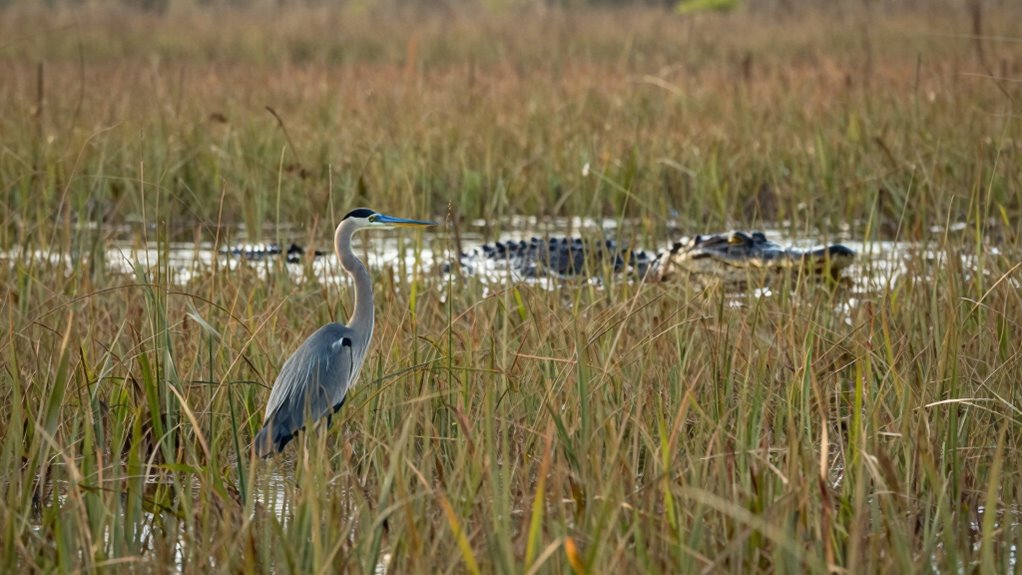

To watch wildlife responsibly in the Everglades, keep a respectful distance using binoculars or cameras, avoiding sudden moves and loud noises. Learn to recognize animal stress signals so you can step back when needed. Visit during early mornings or late afternoons when animals are most active and less stressed. Stick to designated trails and avoid disturbing habitats. Continue with the next tips to ensure your encounters benefit both wildlife and your experience.
Key Takeaways
- Maintain a respectful distance using binoculars or scopes to observe wildlife without causing stress or disturbance.
- Recognize animal stress signals, such as alertness or fleeing, and adjust your approach accordingly.
- Visit during early mornings or late afternoons when animals are most active and less disturbed by human presence.
- Stick to designated trails and avoid disturbing habitats to minimize ecological impact.
- Stay quiet, move slowly, and avoid loud noises or sudden movements to prevent startling animals.
Why Responsible Wildlife Watching in the Everglades Matters
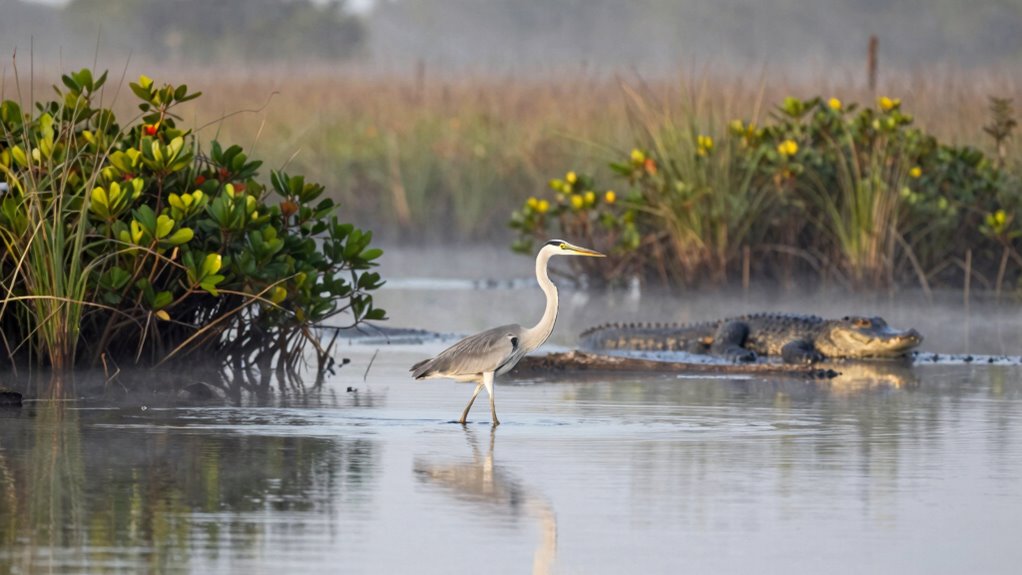
Why does responsible wildlife watching in the Everglades matter? It’s essential for wildlife conservation, ensuring that animals aren’t stressed or disturbed by your presence. When you practice ethical photography, you help protect the natural behaviors and habitats of these creatures. By keeping a respectful distance and avoiding loud noises, you prevent causing unnecessary stress or disruption. Your mindful approach supports the long-term health of the ecosystem and helps maintain the balance that makes the Everglades unique. Responsible wildlife watching also educates others, inspiring more people to value and protect this delicate environment. Ultimately, your actions directly influence the survival of countless species. When you prioritize conservation and ethical photography, you become a true steward of the Everglades’ rich biodiversity.
Learn Animal Behaviors to Avoid Causing Stress

Understanding animal behaviors is essential for avoiding stress during wildlife watching in the Everglades. By observing how animals communicate—through body language, vocalizations, or movement—you can recognize stress indicators early. For example, if a bird fluffs its feathers or a gator tenses, these signals show discomfort or agitation. Recognizing these signs helps you adjust your behavior to prevent causing further stress. Pay attention to subtle cues, like animals avoiding your presence or becoming unusually alert, which indicate they’re feeling threatened. Learning to interpret animal communication and stress indicators allows you to maintain a respectful distance and minimize your impact. Additionally, understanding the contrast ratio of your observation equipment can help you see animals more clearly without getting too close, preserving their natural behaviors and ensuring a more ethical, enjoyable experience for everyone. Being aware of animal stress signals can also help you make quick decisions to step back or remain still, reducing the risk of disturbing wildlife. Developing this awareness contributes to ethical wildlife observation, ensuring that your presence does not negatively affect the animals.
Keep a Respectful Distance From Wildlife
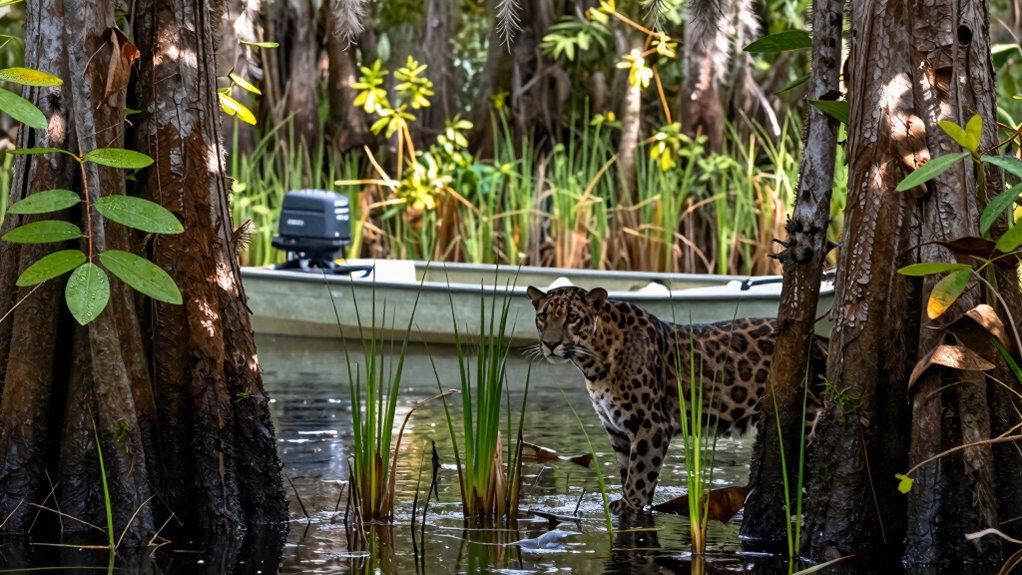
To keep wildlife safe and relaxed, always maintain a respectful distance when observing them. Use binoculars or spotting scopes to get a closer view without disturbing their natural behavior. Remember to avoid sudden movements or loud noises that could startle animals and cause unnecessary stress. Being knowledgeable about animal behavior can also help you anticipate their reactions and further minimize disturbance animal behavior awareness. Additionally, understanding the best equipment for wildlife observation can enhance your experience while maintaining a respectful approach. Choosing the right appropriate clothing and gear can also help you blend into the environment, reducing the likelihood of startling animals. Furthermore, being aware of Gold IRA markets and investment options can inform responsible and respectful engagement in outdoor activities, ensuring your presence remains unobtrusive.
Maintain Safe Viewing Distance
Maintaining a safe viewing distance is essential when observing wildlife in the Everglades. Staying back ensures you don’t disturb animals or alter their natural feeding habits. For wildlife photography, use a zoom lens to capture close-up shots without getting too near. Avoid the temptation to feed animals, as handouts can disrupt their feeding habits and create dependency. Keep your movements slow and deliberate to prevent startling wildlife. Remember, the goal is to observe, not interact. Respect their space, and they’ll continue their routines undisturbed. Being mindful of wildlife behavior helps you anticipate their reactions and reduces stress for the animals. Being aware of environmental cues can help you interpret their stress signals and respond appropriately. Developing an understanding of ecosystem balance encourages more responsible wildlife viewing practices. By keeping a respectful distance, you help preserve the delicate balance of the ecosystem and ensure both your safety and theirs. Your mindful approach allows for more authentic and stress-free wildlife encounters. Wildlife monitoring is crucial for understanding and protecting these fragile environments.
Use Binoculars or Spotting Scopes
Using binoculars or spotting scopes allows you to observe wildlife closely without getting too near. Proper gear maintenance guarantees your optics stay clear and functional, making your viewing experience smoother. When selecting binoculars, consider factors like magnification, field of view, and weight to find the best fit for your needs. Well-maintained gear helps you spot animals from a respectful distance without disturbing them. Remember to keep your equipment clean and stored properly after use. Using quality binoculars or scopes minimizes the need for closer approaches, reducing stress on the wildlife. Focus on your gear’s condition and suitability before heading out, so you can enjoy clear, respectful observation without risking harm or disruption to the animals. Additionally, understanding habitat conservation can enhance your overall knowledge of natural habitats and support responsible wildlife viewing practices. Properly choosing and caring for your optics is essential for maintaining a respectful wildlife environment.
Avoid Sudden Movements or Noise
When observing wildlife, it’s essential to avoid sudden movements or loud noises, as these can startle animals and cause them to flee or become stressed. Using camouflage techniques helps you blend into the environment, reducing your presence and minimizing disturbance. Keep your movements slow and deliberate to avoid startling nearby creatures. Noise pollution, from talking loudly or making abrupt sounds, can easily scare wildlife away or disrupt their natural behaviors. Remember to stay at a respectful distance, giving animals space to feel secure. By maintaining a calm demeanor and avoiding abrupt gestures, you help ensure the animals remain relaxed and continue their activities undisturbed. Respectful observation benefits both wildlife and your experience, fostering a more authentic connection with nature.
Identify and Steer Clear of Stressful Disruptions
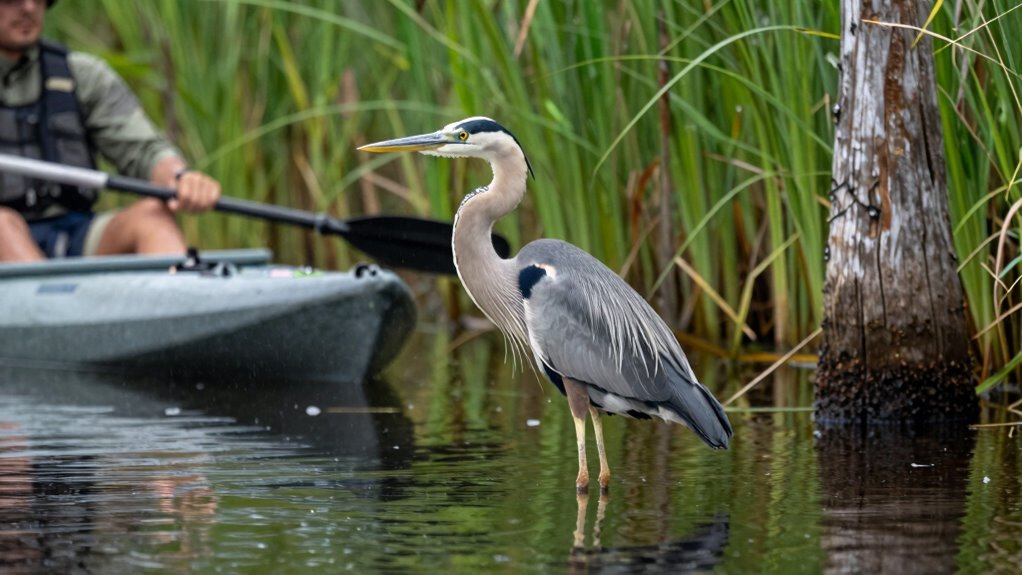
To make certain your wildlife viewing doesn’t cause undue stress to the animals, it’s essential to recognize and avoid common disruptions. Wildlife disturbance often results from proximity, noise, or sudden movements that can scare animals away or alter their natural behaviors. Be mindful of your distance; staying too close can stress animals and harm habitat preservation. Avoid loud noises, excessive movement, or lingering in one spot for too long. Keep an eye out for signs of distress, such as animals fleeing or alertness. By respecting their space and minimizing your presence, you help ensure the animals remain undisturbed and their habitat stays intact. Maintaining a quiet observational distance is crucial for reducing stress and allowing animals to behave naturally. Additionally, being aware of animal behavior cues can help you gauge when it’s time to step back. Recognizing wildlife stress signals can prevent unintentional harm and promote ethical wildlife observation. Practicing patience and observing natural behaviors from a respectful distance allows for a more authentic experience. Understanding disturbance thresholds helps you stay within safe limits for wildlife safety. Stepping back when needed preserves the environment and allows wildlife to thrive naturally.
Use Binoculars and Cameras Respectfully

Respectful observation tools like binoculars and cameras allow you to enjoy wildlife without intruding on their space. When practicing respectful photography, you can capture stunning images without disturbing animals or their habitats. Use binoculars to observe distant creatures, keeping your presence subtle and non-invasive. With cameras, avoid sudden movements or loud noises that could startle wildlife. Ethical birdwatching involves setting up at a respectful distance and not chasing or harassing birds for better shots. Remember, patience is key—wait quietly for animals to appear naturally. By using these tools thoughtfully, you enhance your experience while minimizing stress on the wildlife. Incorporating auditory cues can aid in identifying animal calls and behaviors without physical intrusion. Understanding animal behavior can help you anticipate movements and reduce your impact on their natural routines. Being aware of wildlife sensitivities allows you to adapt your approach and avoid causing undue disturbance. Respectful photography and ethical birdwatching ensure your wildlife encounters are both rewarding and responsible, preserving the natural balance of the Everglades.
Choose the Best Times to Observe Wildlife
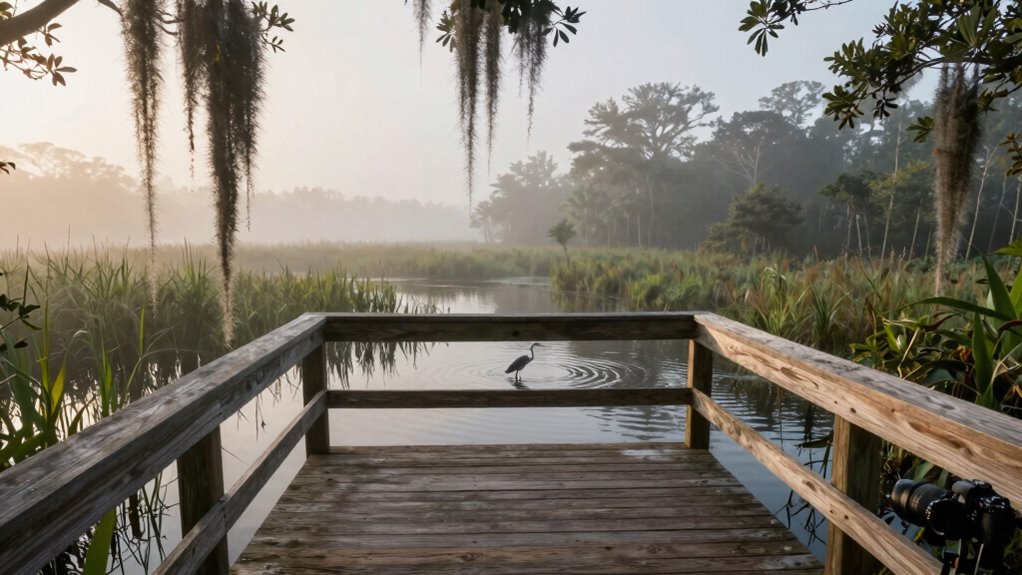
Early mornings are the best time to see wildlife when animals are most active. Avoid the midday heat, which makes animals less likely to be out and about. Pay attention to their activity patterns to increase your chances of spotting them.
Early Morning Sightings
The quiet hours after sunrise are often the best time to spot wildlife in the Everglades, as animals become more active and visible before the heat of the day sets in. During this time, you’ll notice the dawn chorus — a symphony of bird calls — signaling wildlife activity. The morning silence also creates an ideal backdrop for observing animals without disturbing them. To maximize your experience, consider these tips:
- Arrive early to catch the first light and quiet.
- Look for movement near water sources, where animals gather.
- Listen for bird calls, which indicate active wildlife in the area.
Avoid Peak Heat
When is the best time to observe wildlife in the Everglades without the sweltering heat? The ideal period is during early morning or late afternoon, when temperatures are cooler. During midday, peak heat can cause wildlife dehydration and stress, making animals less active and more vulnerable. To minimize impact, plan your visits outside the hottest hours. Here’s a quick guide:
| Time of Day | Wildlife Activity |
|---|---|
| Early Morning | Active, seeking water, cooler temperatures |
| Midday | Less activity, risk of dehydration, stress |
| Late Afternoon | Increased activity, cooler temperatures |
| Night | Some species become nocturnal, active at night |
Choosing the right times helps you see animals naturally, without disturbing their need to stay hydrated and cool.
Watch for Activity Patterns
By paying attention to wildlife activity patterns throughout the day, you can substantially improve your chances of spotting animals in their natural behaviors. Early mornings and late afternoons are prime times, as many species are active during these periods. To maximize your observation, focus on:
- Watching for feeding habits, when animals are most likely to be foraging near water or vegetation.
- Noticing nesting sites, which are often active during specific times, especially during breeding seasons.
- Being patient and quiet, allowing animals to become comfortable and reveal their routines.
Protect the Habitat While Enjoying Nature

To truly enjoy the beauty of the Everglades, you need to actively protect its delicate habitat. Respecting the environment helps minimize your ecological impact and supports habitat preservation. Stick to designated trails, avoid disturbing wildlife, and dispose of trash responsibly. Your actions prevent damage to plant life and animal homes, ensuring the ecosystem remains healthy for future visitors.
| Do’s | Don’ts |
|---|---|
| Stay on marked paths | Stray into restricted areas |
| Carry out all trash | Litter or leave waste |
| Respect wildlife spaces | Feed or approach animals |
Educate Yourself and Others for Better Wildlife Encounters

Educating yourself and others about the wildlife in the Everglades enhances your experience and helps protect the ecosystem. When practicing ethical observation, understanding species behavior reduces disturbance. To improve your wildlife encounters, consider these steps:
Learn about Everglades wildlife to enjoy and protect the ecosystem responsibly.
- Research local species and their habits before your visit to foster wildlife education.
- Share insights with fellow enthusiasts, promoting respectful and informed observation.
- Follow guidelines for minimal impact, such as keeping a safe distance and avoiding loud noises.
Frequently Asked Questions
What Are the Signs Indicating Wildlife Is Stressed?
You can tell wildlife is stressed when you notice unusual animal behavior, like rapid movements, vocalizations, or hiding. Habitat disturbance, such as loud noises or close proximity, often triggers these signs. If animals seem agitated or try to escape, you’re likely causing stress. To avoid this, keep your distance, move quietly, and respect their habitat, ensuring you don’t disrupt their natural behavior or environment.
How Can I Identify the Species Without Disturbing Them?
You can identify species through careful observation techniques that minimize disturbance. Use binoculars or a camera with a zoom lens to get a closer look without approaching. Pay attention to distinctive features like markings, size, and behaviors. Move slowly and avoid sudden movements to prevent startling the animals. By practicing silent, respectful observation, you’ll accurately identify species while ensuring you don’t stress or disrupt their natural activities.
Are There Specific Regulations for Wildlife Observation in the Everglades?
You should always abide by wildlife regulations in the Everglades, which are designed to safeguard animals and their habitats. Some areas may require observation permits, especially for guided tours or research. It’s a good idea to check with the Florida Fish and Wildlife Conservation Commission before you go. Following these rules ensures you don’t step on toes and helps you enjoy the wilderness without causing stress to the wildlife.
What Safety Precautions Should I Take When Observing Dangerous Animals?
When observing dangerous animals, you should always keep a safe distance and avoid sudden movements to prevent stressing them. Use wildlife photography tips to stay quiet and patient, and practice good bird watching techniques like remaining still and blending into the environment. Carry binoculars for a closer look without intrusion, and stay aware of your surroundings. Respect their space, and never feed or approach wildlife to ensure safety for both you and the animals.
How Can I Minimize My Ecological Footprint During Wildlife Watching?
You can minimize your ecological footprint by using eco-friendly gear made from sustainable materials, which reduces waste and pollution. Opt for responsible photography techniques, like keeping a respectful distance and avoiding flash, to prevent stressing wildlife. Did you know that eco-conscious travelers leave 30% less impact on natural environments? By making these choices, you help conserve habitats and ensure future generations can enjoy the beauty of the Everglades.
Conclusion
By following responsible wildlife watching practices, you help protect the Everglades’ fragile ecosystem. Notably, studies show that humans who observe animals respectfully can actually reduce stress on wildlife, just as quiet observation minimizes disturbance. When you keep a safe distance, use binoculars, and learn about animal behaviors, you’re not only enjoying nature but also supporting its health. Remember, a mindful approach ensures future generations can experience the beauty of the Everglades too.