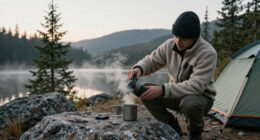
Choose and pack a compact cookware kit that lets you prepare your planned meals outdoors without carrying unnecessary pieces. This guide is for beginner campers selecting gear for backpacking, car camping, or short trips. Allow 30-45 minutes to check your stove, compare kit sizes, and pack the items you need.

Get travel and outdoor gear delivered free with Prime
- Fast, free delivery on millions of items
- Prime Video, Amazon Music and more included
- Member-only deals all year
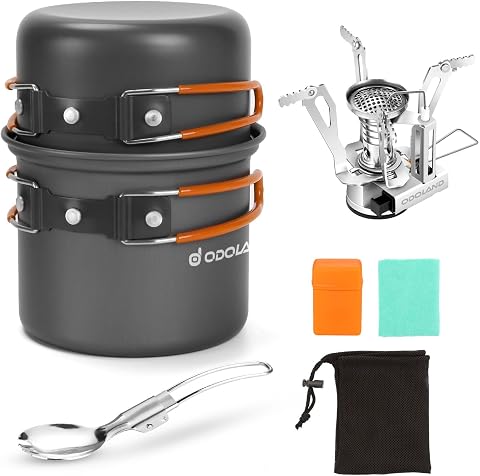
Odoland Camping Cookware Mess Kit – Lightweight Pot, Stove & Spork Set
- ✔ Weight: 0.47 kg
- ✔ Pieces: 6
- ✔ Material: Aluminum, silicone, and stainless steel

Camping Cookware Kit – 0.33 gal Pot, 0.17 gal Pan, 0.08 gal SUS304 Cup with Fork, Knife & Spoon – Backpacking, Hiking, Picnic
- ✔ Weight: 1.3 pounds
- ✔ Pieces: 7
- ✔ Material: Hard-anodized aluminum and SUS304 stainless steel

17pcs Camping Cookware Mess Kit for Camping, Backpacking, Picnic
- ✔ Weight: About 2.4 pounds
- ✔ Pieces: 17
- ✔ Material: Hard-anodized aluminum
Difficulty: Beginner | Time: 30-45 minutes to choose and pack; cooking time varies
What You’ll Need
Tools & Materials:
- Your camping stove and fuel system, if you plan to cook with one
- A list of the meals and number of people you will cook for
- A backpack or storage bin to check fit
- Dish soap and a small sponge or cloth for cleanup
Knowledge:
- Basic familiarity with your stove, or its manufacturer instructions
- The number of campers and meals the cookware must support
Check the stove maker’s instructions for compatible cookware and safe use. If you are still buying a stove, choose the stove first or compare cookware against the stove model you plan to purchase. Never use a camping stove inside a tent, vehicle, or other enclosed space.
Odoland Camping Cookware Mess Kit – Lightweight Pot, Stove & Spork Set
When pack weight is the first constraint, the Odoland 6-piece kit is the clearest fit: its listed weight is 0.47 kg, the lowest of the three, and a foldable stove comes in the set. That combination can simplify a compact cooking setup because we do not have to source a separate stove to use alongside the pots. Its anodized aluminum pots are described as non-stick, and foldable handles help the pieces pack together in the mesh bag.Compared with the 1.3-pound THTYBROS 7-piece kit, Odoland gives up the explicitly listed stainless steel cup and the fork, knife, and spoon set in favor of the stove. Compared with the 17-piece THTYBROS kit, it is much more focused on cooking than serving a group. That makes it a useful choice for a solo camper who wants a compact, basic system, but a less flexible one for meals that require more tableware or larger portions.The main uncertainty is capacity: the supplied specifications do not state pot volumes, so we cannot confidently recommend it for a particular serving size. Its kit is also limited in accessories and does not list a dedicated pot lid. The non-stick surfaces may simplify cooking and cleanup, but buyers should consider whether that cookware style suits how they plan to use and care for their gear. We rank it first for low listed weight plus a stove, not for maximum capacity or completeness.
Pros:
- Lowest listed weight of these three sets at 0.47 kg.
- Includes a foldable stove alongside two non-stick aluminum pots.
- Foldable handles and a mesh bag support compact packing.
- Spork and cleaning cloth cover a couple of basic meal and cleanup needs.
Cons:
- Pot capacities are not provided, making meal-size planning difficult.
- The kit has fewer dining accessories than either THTYBROS set.
- No dedicated lid is listed.
Best for: Solo campers and weight-conscious hikers who want a foldable stove bundled with compact cookware.
Not ideal for: Groups, cooks who need a known pot capacity, or anyone who wants a cup and full cutlery set included.
Bottom line: Choose Odoland when minimizing listed weight and having a stove in the kit matter more than capacity details or a broad set of accessories.
“Choose Odoland when minimizing listed weight and having a stove in the kit matter more than capacity details or a broad set of accessories.”
Camping Cookware Kit – 0.33 gal Pot, 0.17 gal Pan, 0.08 gal SUS304 Cup with Fork, Knife & Spoon – Backpacking, Hiking, Picnic
The THTYBROS 7-piece kit sits between the minimal Odoland setup and the kitchen-like 17-piece alternative. At a listed 1.3 pounds, it adds a pot, pan, stainless steel cup, and separate fork, knife, and spoon without taking on the 17-piece set’s full load of plates and cleaning accessories. For a compact trip where we want recognizable cookware and a cup in one package, that is a sensible middle ground.Its hard-anodized aluminum pot and pan keep the cooking pieces focused on light transport, while the SUS304 cup provides a different material for drinking. Foldable handles help the set stow more neatly, and the storage bag keeps the pieces together. Unlike Odoland, it does not list an included stove, so we need to account for that separately. Unlike the larger THTYBROS set, its 0.33-gallon pot and 0.17-gallon pan suit smaller portions rather than a broader camp meal for several people.The stated capacities make planning easier than with Odoland, but also reveal the constraint: this is not the choice for group cooking. The package description calls it seven pieces while naming a pot, pan, cup, and three utensils, so buyers should avoid assuming additional gear beyond what is specified. We place it second because it offers a practical weight and essentials balance, though its small cooking volume and lack of a stove keep it from being the most self-contained pick.
Pros:
- Listed weight is 1.3 pounds, below the 17-piece set’s 2.4 pounds.
- Includes both a hard-anodized aluminum pot and pan.
- SUS304 stainless steel cup adds a distinct drinking vessel.
- Foldable handles and a storage bag make the set easier to pack.
Cons:
- The 0.33-gallon pot is small for larger group portions.
- No stove is listed, unlike the Odoland kit.
- Does not include the plates and cleaning accessories found in the 17-piece set.
Best for: Solo campers or pairs who want a compact pot-and-pan set with a steel cup and basic cutlery.
Not ideal for: Group cooks, buyers who need a stove included, or campers who want plates and cleaning tools bundled.
Bottom line: This is the strongest middle-ground choice when we want compact cookware and basic cutlery without carrying a full dining kit.
“This is the strongest middle-ground choice when we want compact cookware and basic cutlery without carrying a full dining kit.”
17pcs Camping Cookware Mess Kit for Camping, Backpacking, Picnic
For campers who would rather pack a coordinated set than assemble cookware and tableware separately, the THTYBROS 17-piece kit covers the most ground. It combines a 1.70-liter pot, a 1.15-liter kettle, and a 7-inch pan with stainless steel cups and plates, cutlery, a bamboo spoon, cleaning accessories, and a mesh carry bag. Those extra pieces can make campsite meals easier to serve and clean up, particularly when more than one person is eating.That breadth separates it from the other two options: the Odoland kit includes a stove and weighs less, while the seven-piece THTYBROS set is lighter and sticks to basic cookware and utensils. The 17-piece set instead trades a longer carry for a more complete camp kitchen. At about 2.4 pounds, it is the heaviest option here, so its bundle is less compelling for a backpacker who counts every ounce or already has a preferred cup and cutlery.The hard-anodized aluminum cookware is described as lightweight, quick-heating, and corrosion-resistant, and the silicone handle is intended to improve grip around hot cookware. Yet this set has meaningful compromises: there is no dedicated lid for the larger pot, and the nylon mesh bag offers limited protection from impacts and moisture. It also uses aluminum for its metal components according to the supplied description, which may not suit buyers seeking stainless steel cookware throughout. We rank it third for compact carry, but first for capacity and included dining gear.
Pros:
- The 17-piece bundle includes cookware, cups, plates, cutlery, and cleaning accessories.
- Largest specified pot capacity in the lineup at 1.70 liters.
- Separate kettle and 7-inch pan offer more cooking flexibility than the smaller kits.
- Nesting design packs into a compact mesh bag.
Cons:
- At about 2.4 pounds, it is the heaviest set compared here.
- No dedicated lid is included for the larger pot.
- The mesh bag provides limited protection from rough handling or moisture.
Best for: Car campers, picnic cooks, and small groups who value bundled cookware, tableware, and cleaning accessories.
Not ideal for: Ultralight backpackers, people cooking only solo portions, or anyone who needs a protective hard-sided carry case.
Bottom line: Pick this set when serving flexibility and a broad bundle matter more than minimizing the weight of a backpacking kitchen.
“Pick this set when serving flexibility and a broad bundle matter more than minimizing the weight of a backpacking kitchen.”
As an Amazon Associate we earn from qualifying purchases.
Before You Start
Decide whether you need to boil water, cook full meals, or do both. A solo camper who rehydrates meals may need only one small pot and a cup; a group preparing shared meals needs greater capacity and may benefit from a second pot or pan. Weight and pack size matter most when you carry the kit on foot. For car camping, sturdiness and cooking comfort may matter more.
Check local fire restrictions before your trip. If you plan to use a campfire, confirm the cookware is designed for that use and follow the site’s fire rules. Keep handles, flames, and hot cookware away from children and loose gear.
Step-by-Step Instructions
Step 1: List the meals you will cook
Write down the meals you plan to prepare and how many people will eat each one. Mark whether each meal requires boiling water, simmering, frying, or only reheating. Note any meals that can be prepared in the same pot, such as boiling water for drinks and a rehydrated meal.
Tip: Choose cookware for the meals you will actually make. A large pan adds bulk if your menu only needs boiled water.
Check: Your list shows the cooking method and serving count for every planned meal.
Step 2: Set your weight and space limits
Decide how much space you can give cookware in your pack or vehicle. For backpacking, compare the packed kit’s weight and dimensions with your other gear and the space available. For car camping, measure the storage bin or shelf where you will keep it.
Tip: Check the weight of the complete packed set, including the lid, handles, cups, and storage bag. Product listings may show the pot’s weight separately from accessories.
Check: You have a practical maximum weight or storage size to use when comparing sets.
Step 3: Match cookware to your stove
Read your stove instructions and cookware specifications. Check that the pot or pan fits securely on the stove supports, leaves the burner clear as directed, and uses a material the stove maker permits. Compare the pot’s base diameter with the stove’s supported range, if the manufacturer provides one.
Tip: A narrow pot can wobble on a wide burner support, while an oversized pot can interfere with some stoves. Do not assume that a nesting set is compatible just because it fits inside your backpack.
Check: The selected pot sits securely on the stove when it is off and cool, and the manufacturers’ instructions permit the pairing.
Step 4: Choose a practical material and set size
Select a pot capacity that suits your largest planned meal, then choose the smallest set that covers your cooking methods. Aluminum cookware is generally light and heats quickly; stainless steel is typically durable but heavier. Titanium is very light, but can heat unevenly and may be less suited to simmering without careful heat control. Compare actual specifications rather than relying on material names alone.
Tip: For boiling water, a single pot with a lid may be enough. For frying or cooking separate components, add a pan only if the menu calls for it. Check that the pot is not filled to the brim during cooking; leave room to stir safely.
Check: The set has enough usable capacity for your largest meal and contains no piece without a planned purpose.
Step 5: Check handles, lid, and nesting
Inspect how handles lock in place and whether they remain clear of the flame during use. Check that the lid fits securely and has a way to lift it without touching hot metal. If the kit nests, place each piece inside the next and confirm that the stack closes without forcing it.
Tip: Some compact kits use removable handles. Pack the handle where you can find it quickly, and never lift a hot pot by a handle that has not locked securely.
Check: The pot and lid fit together, the handle stays attached when locked, and the nested kit closes without pressure.
Step 6: Pack only useful accessories
Add only accessories you expect to use, such as a spoon, cup, pot gripper, or small cleaning cloth. Check whether your stove canister or other small items may safely fit inside the pot; keep sharp or dirty items wrapped and avoid packing fuel contrary to its label or transport rules. Put small parts in a pouch so they do not get lost.
Tip: Do not store a fuel canister inside cookware that will later be placed over a flame. Remove all packed contents before heating, and follow fuel-maker guidance for transport and storage.
Check: The packed kit contains the needed accessories, and nothing will be left inside the pot when it is heated.
Step 7: Test the kit at home
Set the cookware on your stove outdoors or in a location approved for that stove, then follow the stove instructions to boil the amount of water or prepare a simple meal. Check stability, handle clearance, lid fit, and how easily you can pour or stir. Let the cookware cool fully before touching or packing it.
Tip: Start with a small amount of water and a low flame. Avoid heating an empty pot, and keep children and flammable materials away from the burner.
Check: The cookware stays stable, heats as expected, and can be handled safely using its intended grip or pot gripper.
Step 8: Clean, dry, and pack the set
Wash the cooled cookware with a small amount of soap and a sponge or cloth. Rinse if needed, dry each piece thoroughly, and pack it in its storage bag or designated space. Review the kit against your meal list and remove unused pieces.
Tip: Food residue and moisture can cause odors or damage during storage. Follow the cookware maker’s care instructions, especially for coated surfaces.
Check: The cookware is clean and dry, all small parts are accounted for, and the kit fits your planned storage space.
Common Mistakes to Avoid
- Buying a set with more pieces than the trip requires. — Choose cookware from your meal list and leave out accessories that have no planned use.
- Assuming a pot will fit safely on any camping stove. — Compare the pot’s base and the stove supports, then confirm compatibility in the manufacturers’ instructions.
- Packing by the pot’s listed weight alone. — Check the total weight and packed size of the full kit, including the lid and removable handle.
- Heating a pot with accessories or fuel packed inside. — Empty the pot completely before setting it on a burner, and store fuel according to its label.
Troubleshooting
Problem: The pot wobbles on the stove.
Solution: Turn off the stove and let it cool. Check whether the stove supports the pot size, and switch to compatible cookware or a stove specified for that pot.
Problem: Food scorches or sticks during cooking.
Solution: Lower the flame, stir more often, and add liquid or oil as the recipe requires. Check the cookware care instructions and avoid heating an empty pot.
Problem: The kit will not nest or close properly.
Solution: Remove bulky accessories, arrange pieces in the order shown by the maker, and do not force the lid or latch. Choose a larger storage space or a different set if it still does not fit.
Problem: The handle becomes hot or feels loose.
Solution: Stop cooking if it is safe to do so, turn off the burner, and use a suitable pot gripper only if the cookware maker permits it. Let the pot cool and inspect or replace the handle before the next use.
What Success Looks Like
Your finished kit matches the planned meals and group size, fits the stove securely, stays within your weight or storage limit, and packs with all required parts. During a safe home test, the cookware remains stable and its handle and lid work as intended. After cooking, you can clean, dry, and repack the set without leaving loose pieces behind.
Next Steps
Store the clean, dry cookware with its handle and small accessories. Before each trip, check for dents, loose locking parts, damaged coatings, or a missing lid. Review current fire restrictions and stove instructions at your destination, and replace any damaged component before cooking outdoors.
Frequently Asked Questions
What is the smallest cookware kit for one camper?
For meals that only need boiling water, one appropriately sized pot with a lid may be enough. Add a cup or spoon if your meals require them. Bring a pan only when your menu includes food that needs frying or separate cooking.
Is titanium cookware a good choice for camping?
Titanium can reduce pack weight and works well for boiling water. Its thin construction may heat unevenly, so it can take more attention when simmering or cooking food that sticks. Match the material to your cooking style and compare the full kit’s weight.
Can I put a fuel canister inside a cooking pot?
Only pack a canister that way if its maker’s transport guidance permits it and the pot protects it without pressure or damage. Remove the canister before cooking, and keep it away from heat and flame.
How do I choose a pot size?
Use the largest planned meal and the number of servings as your guide. Check the pot’s usable capacity and leave room for stirring and bubbling; a pot filled to the rim is difficult to cook with safely.
How should I clean cookware outdoors?
Let the cookware cool, remove food scraps, and wash it with a small amount of soap and water where local rules allow. Follow campsite guidance for wastewater and food disposal, then dry the cookware before packing it.
Black Friday Picks

Kindle Paperwhite Signature Edition 32GB (2024 Model) – Metallic Black
As an affiliate, we earn on qualifying purchases.