
Compact camping cookware usually asks you to choose between carrying less and cooking with more control. Hard-anodized aluminum pots and pans are compact, relatively affordable, and spread heat more evenly; titanium sets cut pack weight but can scorch food more readily. The difference matters most when you cook more than boil water, or when every gram counts on a long hike. Choose aluminum for better everyday cooking value and titanium for the lightest practical kit.

Get travel and outdoor gear delivered free with Prime
- Fast, free delivery on millions of items
- Prime Video, Amazon Music and more included
- Member-only deals all year

17pcs Camping Cookware Mess Kit for Camping, Backpacking, Picnic
- ✔ Weight: About 2.4 lb
- ✔ Pieces: 17
- ✔ Material: Hard-anodized aluminum; stainless-steel cups

Camping Cookware Kit – 0.33 gal Pot, 0.17 gal Pan, 0.08 gal SUS304 Cup with Fork, Knife & Spoon – Backpacking, Hiking, Picnic
- ✔ Weight: 1.3 lb
- ✔ Pieces: 7
- ✔ Materials: Hard-anodized aluminum and SUS304 stainless steel
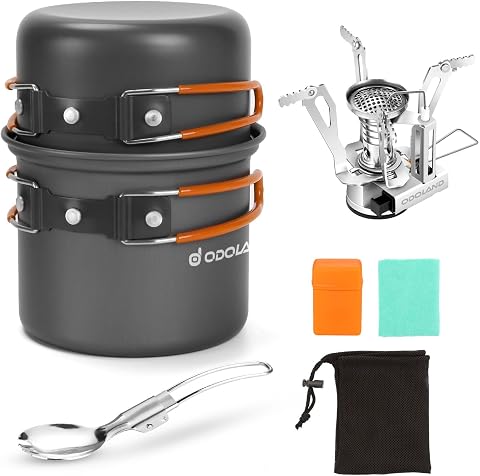
Odoland Camping Cookware Mess Kit – Lightweight Pot, Stove & Spork Set
- ✔ Weight: 0.47 kg
- ✔ Pieces: 6
- ✔ Materials: Aluminum, silicone, and stainless steel
At a Glance
| Criteria | Hard-anodized aluminum cookware | Titanium cookware | Winner |
|---|---|---|---|
| Pack weight | Light, though generally heavier than a comparable titanium pot | Usually the lightest choice for a similar capacity | B |
| Heat distribution | More even heating; less prone to hot spots | Heats quickly but unevenly; food can scorch in concentrated hot spots | A |
| Cooking versatility | Better for simmering, reheating, and simple one-pot meals | Best for boiling water and simple meals; requires care for frying or simmering | A |
| Durability | Hard-anodized surface resists wear, but can be damaged by rough handling | Strong for its weight, but thin pots can dent and food may stick | Depends |
| Packability | Many sets nest neatly, though handles and lids add bulk | Compact single pots and nesting sets suit weight-conscious packs | Tie |
| Price and value | Usually the more affordable choice | Often costs more; weight savings matter most on long or demanding hikes | A |
| Best trip fit | Best for car camping, shorter hikes, and cooks who want flexibility | Best for ultralight backpacking and trips centered on boiling water | Depends |
17pcs Camping Cookware Mess Kit for Camping, Backpacking, Picnic
The THTYBROS 17-piece kit earns the top spot for campers who want one nested bundle to cover cooking, serving, and cleanup. Its 0.45-gallon pot and 7-inch pan give it more stated cooking capacity than the lighter 7-piece THTYBROS set, while the 0.30-gallon kettle adds a separate way to heat water. Plates, stainless-steel cups, cutlery, a bamboo spoon, and cleaning accessories make the kit notably more self-contained than either competitor.That completeness has a carrying cost: at about 2.4 pounds, it is nearly twice the stated weight of the 7-piece kit. The aluminum pieces nest into a 7.5-inch-square package, so the footprint is compact, but compact does not mean featherweight. Hard-anodized aluminum can heat quickly, and the silicone handle is designed for a secure grip; still, the larger pot has no dedicated lid, a meaningful limitation for simmering or keeping food covered. The mesh bag organizes the set but offers little protection from impacts or damp conditions.Compared with the other two options, this is the clearest choice for a pair or a camper who values tableware and meal flexibility over minimum carry weight. Skip it if every ounce matters or if you prefer stainless cookware throughout: the main cookware is aluminum, and the additional pieces add weight that a minimalist may not use.
Pros:
- Broad 17-piece assortment covers cooking, serving, utensils, and basic cleanup.
- Nesting design packs into a compact 7.5 x 7.5 x 5-inch bundle.
- 0.45-gallon pot, kettle, and 7-inch pan support more varied meal preparation than the smaller kits.
- Hard-anodized aluminum and a heat-resistant silicone handle are suited to repeated outdoor cooking.
Cons:
- At about 2.4 pounds, it is the heaviest option with a stated weight.
- The larger pot does not include a dedicated lid.
- The mesh carry bag gives limited protection from moisture and rough handling.
Best for: Campers who want cookware, cups, plates, utensils, and basic cleaning gear bundled together for shared or car-supported trips.
Not ideal for: Ultralight backpackers, solo hikers who need only one small pot, or buyers who require a lidded larger pot.
Bottom line: Choose this set when having most camp kitchen essentials together matters more than minimizing pack weight.
“Choose this set when having most camp kitchen essentials together matters more than minimizing pack weight.”
Camping Cookware Kit – 0.33 gal Pot, 0.17 gal Pan, 0.08 gal SUS304 Cup with Fork, Knife & Spoon – Backpacking, Hiking, Picnic
At 1.3 pounds, this 7-piece THTYBROS kit is the practical middle ground for someone who wants cooking basics without carrying the 17-piece set’s serving assortment. The 0.33-gallon pot and 0.17-gallon pan provide a compact cooking pair, while the stainless-steel cup, fork, knife, and spoon cover the basics at mealtime. Foldable handles help the pieces pack down, and the included storage bag keeps the small kit together.Its strongest advantage over the 17-piece set is simple: it sheds more than a pound by leaving out plates, kettle, and cleaning accessories. Against Odoland, it offers a stated pot and pan capacity plus a stainless-steel cup, but it does not include a stove. The 0.33-gallon pot is a constraint for anyone cooking larger portions, and a seven-piece bundle leaves less flexibility for serving a group. Hard-anodized aluminum keeps the cooking vessels light; buyers who want stainless steel for all cookware should note that only the cup is specified as SUS304 stainless steel.This is our best fit for a light, basic cook kit when the user already has a stove or cooking system. It is less suited to group meals or trips where an all-in-one cookware-and-stove package is the goal. The product information does not give packed dimensions, so compare the actual nested footprint with your available pack space before relying on it for a tight loadout.
Pros:
- The stated 1.3-pound weight is substantially lower than the 17-piece kit.
- Includes a pot, pan, stainless-steel cup, and basic cutlery.
- Foldable handles and a storage bag support compact transport.
- Hard-anodized aluminum cooking vessels keep the kit oriented toward low carry weight.
Cons:
- The 0.33-gallon pot may be too small for larger portions.
- No stove is listed as included, so the cooking system requires separate equipment.
- Packed dimensions are not provided in the supplied specifications.
Best for: Solo campers and hikers who already have a compatible stove and want a light pot, pan, cup, and eating utensils.
Not ideal for: Groups needing larger portions, campers who want tableware for several people, or buyers seeking a cookware bundle with a stove included.
Bottom line: Pick this kit for a lighter essentials bundle when you can supply your own stove and do not need group-sized capacity.
“Pick this kit for a lighter essentials bundle when you can supply your own stove and do not need group-sized capacity.”
Odoland Camping Cookware Mess Kit – Lightweight Pot, Stove & Spork Set
Odoland’s six-piece kit stands apart because it includes a foldable stove alongside two non-stick aluminum pots. For campers assembling a simple cooking setup, that bundling can reduce the number of separate pieces to source and pack. The pots and stove have foldable handles, and the mesh bag gathers the set into one carry bundle. At 0.47 kg, it is lighter than the 17-piece THTYBROS kit, though heavier than the 1.3-pound 7-piece kit by the supplied figures.Its compactness comes with a narrower scope. The listed contents include a spork and cleaning cloth, but not the cups, plates, or broader cutlery collection in the 17-piece set. Unlike the 7-piece THTYBROS kit, the supplied details do not state pot capacities, so we cannot tell from this information how well the two pots support different portion sizes. And although a stove is included, fuel type and compatibility details are not given; confirm those before planning a trip around it.This makes Odoland a compelling small cook-system bundle for a camper who values an included stove and simple packing. It is a weaker match for group cooking, since the product notes that the pots are small, or for buyers who want a fuller table setup. The non-stick surfaces can simplify cooking and cleaning, but require more careful handling than a buyer might give rugged bare cookware. Compared with the 7-piece THTYBROS, the decision hinges on whether the bundled stove matters more than a stated stainless cup and clearer vessel capacities.
Pros:
- Includes a foldable stove with two non-stick aluminum pots.
- Foldable handles help reduce the packed shape.
- Pots, stove, spork, and cleaning cloth fit into an included mesh bag.
- At 0.47 kg, the stated weight is below the 17-piece THTYBROS set.
Cons:
- The product description identifies the pots as small, limiting larger portions.
- Fuel type and stove compatibility are not specified in the supplied details.
- It lacks the cups and plates provided by the 17-piece THTYBROS kit.
Best for: Campers seeking a compact basic cooking bundle with a foldable stove and who can verify fuel compatibility for their setup.
Not ideal for: Group cooks, anyone needing specified pot capacity before purchase, or buyers who want included cups and plates.
Bottom line: Choose Odoland if an included foldable stove is your priority and its small pots and fuel requirements suit your trip.
“Choose Odoland if an included foldable stove is your priority and its small pots and fuel requirements suit your trip.”
As an Amazon Associate we earn from qualifying purchases.
Key Differences
The meaningful choice is not simply aluminum versus titanium. It is whether lower pack weight is worth giving up some cooking control. Titanium saves weight in the pot itself, which helps most when you carry your kitchen over long distances. Aluminum distributes heat more evenly, so it is easier to simmer, warm sauces, or cook a basic meal without tending the pot constantly. For boiling water to rehydrate meals, that advantage matters far less.
Both materials can work in compact, nesting kits, and neither makes a complete set automatically useful. Check capacity, lid fit, handle design, and whether the pot works with your stove and fuel plan. A larger titanium set can erase its weight advantage; an aluminum pot you rarely use is poor value at any price. Most occasional campers will get more practical use from aluminum. Frequent backpackers who count every gram have a stronger reason to pay for titanium.
Detailed Comparison
Pack weight (Titanium cookware wins — major)
Titanium wins by a moderate to major margin for comparable pot capacity. Its low weight adds up on long hikes, especially when the rest of the kit is already pared down. For a short walk from the car or a nearby campsite, the difference is less likely to change the trip.
Heat distribution (Hard-anodized aluminum cookware wins — moderate)
Hard-anodized aluminum wins by a moderate margin. It spreads heat more evenly, giving you more room to simmer or stir a simple meal. Titanium heats fast but can create hot spots, so food may scorch before the rest of the pot warms evenly. That makes the material difference noticeable for cooks, but minor for water boiling.
Cooking versatility (Hard-anodized aluminum cookware wins — moderate)
Aluminum is better for varied meals, by a moderate margin. Its more forgiving heat makes it a better fit for oatmeal, rice, sauces, and basic one-pot dinners. Titanium can handle those foods, but it asks for closer attention and careful heat control. If your meals are mostly dehydrated food and hot drinks, the gap shrinks.
Durability (minor difference)
This is a tradeoff, so the winner depends on use. Hard-anodized aluminum resists corrosion and ordinary wear, but rough impacts or careless packing can damage its surface. Titanium has high strength for its weight, yet a thin pot can still dent or bend. Neither material is immune to damage; pot thickness, construction, and how you pack it matter.
Packability (minor difference)
Neither material wins by itself. Compactness comes mainly from the pot’s shape, nesting design, handle, lid, and the rest of the kit. Titanium sets are often designed for small backpacking loads, while aluminum kits also nest well. Compare the packed dimensions and what fits inside before deciding.
Price and value (Hard-anodized aluminum cookware wins — moderate)
Hard-anodized aluminum wins for most buyers, by a moderate margin. It typically costs less while providing more forgiving cooking performance. Titanium’s premium buys lower weight, not better all-around cooking. Pay more for it when reduced carry weight has clear value over repeated hikes; otherwise aluminum is the stronger practical buy.
Best trip fit (moderate difference)
The winner depends on how you camp. Titanium suits long backpacking trips where weight has a daily cost and meals are simple. Aluminum better suits car campers, weekend hikers, and anyone who cooks at camp. Match the pot to your usual trips rather than an occasional special outing.
Hard-anodized aluminum cookware: Pros and Cons
Pros:
- More even heating for simmering and simple meals
- Usually costs less than titanium
- Good choice for mixed cooking and water boiling
Cons:
- Heavier than a comparable titanium pot
- Surface can suffer from rough impacts or poor packing
- Weight saving may matter less to car campers than durability and capacity
Titanium cookware: Pros and Cons
Pros:
- Very low weight for backpacking
- Strong material for its weight
- A good match for compact kits and meals that mainly need boiling water
Cons:
- Can develop hot spots that scorch food
- Often costs more than aluminum
- A premium pot can be wasted on short trips or cooking that needs even heat
Who Should Choose What
Choose Hard-anodized aluminum cookware if:
- You cook oatmeal, rice, sauces, or simple one-pot meals.
- You want a useful camp pot at a lower price.
- You mostly camp by car or take shorter hikes where a small weight difference is acceptable.
Choose Titanium cookware if:
- You backpack often and want to reduce the weight you carry each day.
- You mainly boil water for drinks or rehydrated meals.
- You are willing to pay more for weight savings and will use them on demanding trips.
Skip both if: Neither may fit if your main need is high-volume cooking for a group; compare larger, sturdier cookware with enough capacity for everyone.
Value for Money
For most campers, hard-anodized aluminum is the better value: it costs less and handles a wider range of camp cooking with less fuss. Titanium is worth the higher price when you backpack regularly, keep meals simple, and value every reduction in carried weight. If your trips are short or mostly car-based, the extra expense is unlikely to pay off in comfort or cooking performance. Compare complete kits by capacity, packed size, lid, and handles as well as material; a light pot that does not suit your meals is not a bargain.
Final Verdict
Choose hard-anodized aluminum if you want one compact pot for varied camp cooking at a sensible price. It is the stronger choice for most casual campers and weekend hikers because it is easier to cook with and typically costs less. Choose titanium if you backpack frequently, carry your gear for long distances, and mostly boil water; the weight saving can justify its premium for that user. The deciding factor is how you cook: if your pot is a water boiler, buy for weight; if it is a meal pot, buy aluminum.
Frequently Asked Questions
Is titanium camping cookware worth the extra cost?
It can be if you hike often and want a lighter pack. For car camping, short walks, or meals that need steady heat, aluminum usually offers more useful performance for less money.
Which material is better for cooking meals instead of boiling water?
Hard-anodized aluminum is generally easier for simmering and one-pot meals because it heats more evenly. Titanium can cook meals too, but hot spots make careful heat control more important.
Does titanium cookware last longer than aluminum?
Neither material guarantees a longer service life. Titanium is strong for its weight, while hard-anodized aluminum resists ordinary wear; construction, thickness, and packing habits affect how well either holds up.
Which compact cookware is better for a beginner camper?
Hard-anodized aluminum is the easier starting point for someone who wants to cook at camp and keep costs down. Titanium makes more sense when low weight is a clear priority and meals are simple.
Black Friday Picks

Kindle Paperwhite Signature Edition 32GB (2024 Model) – Metallic Black
As an affiliate, we earn on qualifying purchases.