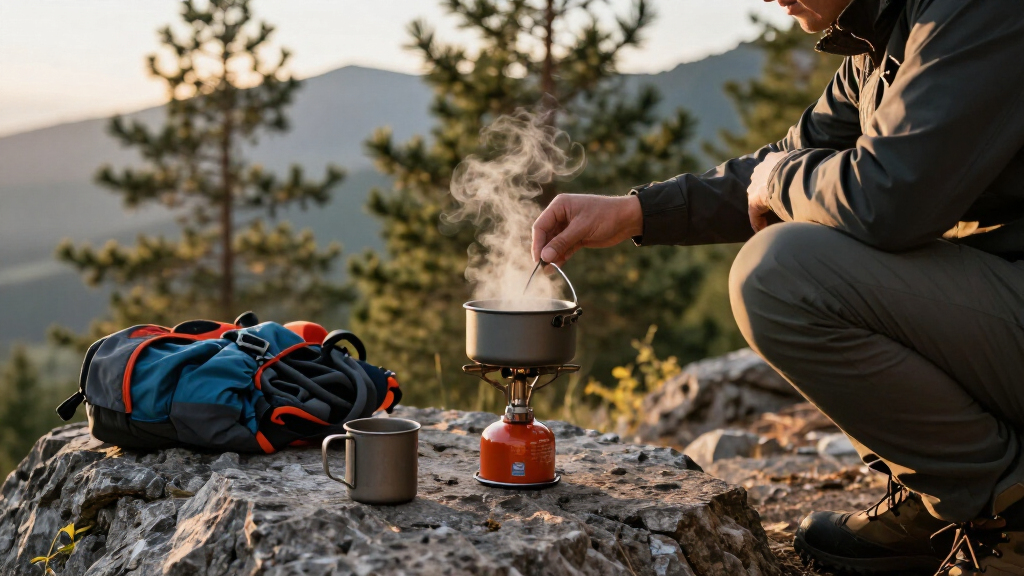

Compact camping stoves usually fall into two useful categories: a small burner that screws onto a fuel canister and works with a separate pot, or an integrated system that connects a purpose-made pot to its burner. They solve the same basic problem, but make different compromises. The separate-stove setup is usually lighter, less costly, and more flexible for cooking with different pots. The integrated system is designed to boil water efficiently, with a close-fitting pot and wind protection that can make camp meals quicker and less wasteful.

Get travel and outdoor gear delivered free with Prime
- Fast, free delivery on millions of items
- Prime Video, Amazon Music and more included
- Member-only deals all year

CAMPINGMOON XD-2F Regulated Canister Top Camping Stove with Z41 Canister Stabilizer
- ✔ Combined weight: 4.15 oz (119 g), including stabilizer
- ✔ Stove weight: 3.2 oz (92 g)
- ✔ Stabilizer weight: 0.95 oz (27 g)
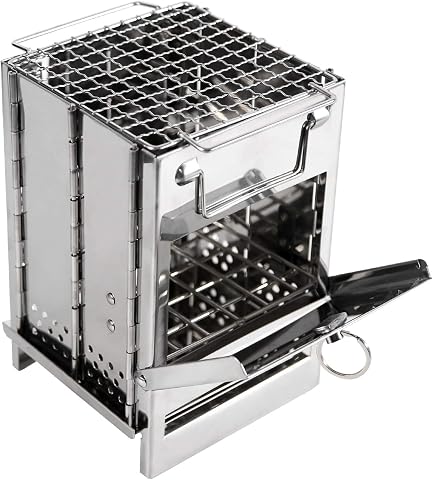
REDCAMP Wood Burning Folding Camp Stove – Portable Collapsible Stainless Steel Backpacking Stove
- ✔ Fuel type: Wood, including twigs and leaves
- ✔ Material: Stainless steel
- ✔ Weight: 1.9 lb

Gas One GS-3400P Dual Fuel Portable Camping Stove with Carrying Case
- ✔ Fuel types: Butane and propane
- ✔ Butane capacity: 8 oz cartridge
- ✔ Propane capacity: 16.4 oz cylinder
The real choice is whether you want a small, adaptable cooking setup or a coordinated system built around fast boiling. For solo hikers and campers who mostly heat water, an integrated system can be worth carrying and paying more for. For people who want to fry, simmer, use their own cookware, or keep costs down, a compact canister stove is generally the better fit. Neither category is automatically best in severe cold or exposed wind, so conditions and cooking habits matter as much as packed size.
At a Glance
| Criteria | Compact canister stove with a separate pot | Integrated canister stove system | Winner |
|---|---|---|---|
| Packed weight and size | Usually lighter and more compact, though the separate pot adds to the total kit. | Often bulkier as a system, though burner and pot may nest together. | A |
| Boiling speed and fuel use | Adequate for routine boiling, but exposed burners and ordinary pots can lose more heat. | Usually boils water faster and uses less fuel, especially in breezy conditions. | B |
| Cooking versatility | Works with a range of compatible pots and is better suited to varied cooking. | Best for boiling and rehydrating; less suitable for broad, controlled cooking. | A |
| Wind performance | More exposed to wind; may need a sheltered cooking spot or compatible windscreen. | Integrated pot design and heat exchanger often reduce wind-related heat loss. | B |
| Stability | Small burner supports a separate pot, with stability depending on pot width and ground. | The pot locks or nests with its burner in many designs, but the tall setup can still tip on uneven ground. | Depends |
| Cost and value | Typically the lower-cost way to assemble a basic canister cooking kit. | Higher upfront cost; efficiency can reduce fuel use, particularly for frequent water boiling. | A |
| Cold-weather performance | Standard canister fuel can struggle in low temperatures; performance depends on fuel, canister temperature, and stove design. | Canister limitations remain; some systems offer better performance, but cold conditions still demand planning. | Depends |
CAMPINGMOON XD-2F Regulated Canister Top Camping Stove with Z41 Canister Stabilizer
The CAMPINGMOON XD-2F is the clearest choice when compact means keeping a backpacking kitchen exceptionally light. The stove and included Z41 stabilizer weigh 4.15 ounces combined, so we get a complete, supported setup without adding much to a pack. Its built-in ignition and adjustable flame reduce the need to carry a separate lighter and make it easier to move from a simmer to a boil than a basic fixed-output burner.Its pressure regulator is the differentiator against the other gas option here. It is designed to maintain more consistent gas flow as conditions change, a useful feature for campers who do not want flame performance to vary as readily with temperature or fuel level. Gas One offers broader fuel compatibility, but it is a more substantial portable cooking format; the CAMPINGMOON is the clear pick for minimizing carried weight. The included stabilizer also helps support a canister-top arrangement, though it cannot compensate for uneven ground or careless placement.There are real limits to this small-burner approach. At 3.3 kW (11,260 BTU/h), it is not the lineup’s obvious choice for large-pot cooking or feeding a group quickly. It connects to EN417 Lindal-valve threaded isobutane canisters, so it does not share Gas One’s butane-and-propane flexibility. It is also not compatible with heat-exchanger cookware, which rules out some specialized pot-and-stove combinations. For one or two people using compatible cookware, however, the low combined weight and regulated flame make it the most balanced compact option.
Pros:
- Stove and stabilizer weigh just 4.15 oz combined.
- Pressure regulator is designed to maintain more consistent gas flow in changing conditions.
- Built-in piezo ignition and adjustable flame control simplify cooking.
- Includes a three-leg Z41 canister stabilizer and storage pouch.
Cons:
- 3.3 kW output is a more modest fit for larger meals and group cooking.
- Does not work with heat-exchanger cookware and requires compatible EN417 canisters.
- For outdoor use only; the stabilizer does not make an uneven cooking site safe.
Best for: Backpackers and solo or two-person campers who prioritize minimum carried weight, adjustable flame control, and a regulated EN417 canister stove.
Not ideal for: Groups cooking large meals, campers committed to heat-exchanger cookware, or anyone who needs propane or other non-EN417 fuel compatibility.
Bottom line: We recommend the CAMPINGMOON XD-2F as the best overall compact stove for backpackers who value a very light, regulated canister-top setup over higher-volume cooking or broad fuel choice.
“We recommend the CAMPINGMOON XD-2F as the best overall compact stove for backpackers who value a very light, regulated canister-top setup over higher-volume cooking or broad fuel choice.”
REDCAMP Wood Burning Folding Camp Stove – Portable Collapsible Stainless Steel Backpacking Stove
The REDCAMP folding wood stove approaches compactness differently from the gas models: it folds to 8.3 x 5.9 x 1.5 inches and lets campers use twigs and leaves rather than pack a canister. That can make fuel planning simpler on trips where dry natural fuel is abundant and local rules permit wood fires. Its stainless-steel construction and cuboid shape create a defined cooking platform, unlike the small canister-top burner on the CAMPINGMOON.That platform comes with a significant portability tradeoff. At 1.9 pounds, REDCAMP is much heavier than the 4.15-ounce CAMPINGMOON kit, even though it folds relatively flat. We see it as a better fit for short approaches, car camping, or campers who value using found fuel more than shaving pack weight. Gas One is also more straightforward when reliable gas heat is the priority; REDCAMP requires collecting and feeding wood, so cooking can take more attention and depends on conditions.Fuel availability is the main practical uncertainty. Twigs and leaves are not a dependable option after rain, and fire restrictions may rule out wood burning altogether. The supplied carry bag helps contain the folded stove, but a buyer should account for the full packed weight rather than judging compactness by thickness alone. Product information also notes that protective film may remain on the stove and need removal before use; we should inspect and prepare it according to its instructions. This is a specialized choice, not our default recommendation for lightweight backpacking.
Pros:
- Uses twigs and leaves rather than requiring a gas canister.
- Folds to 1.5 inches thick for straightforward storage.
- Stainless-steel construction and a cuboid cooking platform.
- Includes a carry bag.
Cons:
- At 1.9 lb, it is far heavier than the CAMPINGMOON canister stove kit.
- Cooking depends on finding and managing suitable natural fuel.
- Wet conditions and fire restrictions can make its fuel approach impractical.
Best for: Campers on short hikes or car-based trips who want a fold-flat wood burner and expect access to suitable dry natural fuel where fires are allowed.
Not ideal for: Long-distance backpackers, trips with wet or scarce firewood, or locations where wood fires are prohibited or tightly restricted.
Bottom line: We would choose REDCAMP when flat storage and natural-fuel use matter more than low carried weight or predictable fuel performance.
“We would choose REDCAMP when flat storage and natural-fuel use matter more than low carried weight or predictable fuel performance.”
Gas One GS-3400P Dual Fuel Portable Camping Stove with Carrying Case
The Gas One GS-3400P is the most adaptable choice when compact cooking means bringing a portable stove to a campsite, rather than carrying the lightest possible burner deep into the backcountry. It runs on either an 8-ounce butane cartridge or a 16.4-ounce propane cylinder, with a propane converter regulator included. That flexibility can help campers use the fuel format already available to them or pack for a base camp with different supply needs.Compared with the CAMPINGMOON, Gas One is less focused on saving every ounce: the CAMPINGMOON’s 4.15-ounce stove-and-stabilizer kit is much more appealing for a backpack. Gas One instead offers a carrying case, automatic piezo-electric ignition, and an adjustable heat dial in a portable stove format suited to a camp table or emergency kit. The ignition removes the need for matches or a separate lighter for normal starting, while the dial provides a way to adjust heat rather than simply running the burner at one setting.Its safety details need careful interpretation. The described pressure-sensor cartridge ejection and gas-flow cutoff features apply to butane use; the ejection system does not apply when using propane. Fuel cartridges are not included, so buyers must plan for compatible fuel and carry it separately. Against REDCAMP, Gas One offers a more predictable gas-fueled option when natural wood is wet or unavailable, but it does not provide REDCAMP’s freedom from packaged fuel. This is the lineup’s best choice for broad fuel compatibility, not for minimal backpack weight.
Pros:
- Accepts both 8 oz butane cartridges and 16.4 oz propane cylinders.
- Includes a propane converter regulator and carrying case.
- Automatic piezo-electric ignition and adjustable heat dial.
- Includes described cartridge ejection and gas-flow cutoff features for butane operation.
Cons:
- Fuel cartridges and propane cylinders are not included.
- The pressure-sensor ejection safety feature is for butane use, not propane.
- Larger and less suited to weight-conscious backpacking than the CAMPINGMOON.
Best for: Car campers, base-camp cooks, and emergency-kit planners who want one portable stove compatible with both butane cartridges and propane cylinders.
Not ideal for: Ultralight backpackers, buyers seeking a stove that includes fuel, or anyone who wants the butane-specific safety features to apply while using propane.
Bottom line: We recommend the Gas One GS-3400P for campers who value butane-and-propane flexibility and a portable camp-kitchen format more than ultralight packing.
“We recommend the Gas One GS-3400P for campers who value butane-and-propane flexibility and a portable camp-kitchen format more than ultralight packing.”
As an Amazon Associate we earn from qualifying purchases.
Key Differences
The biggest difference is what each stove is designed to do. A compact canister burner is a small, flexible heat source; the user supplies a pot and manages the cooking setup. That flexibility makes it a stronger choice for meals that need stirring, simmering, or a wider cooking surface. An integrated system is a coordinated burner-and-pot package, often with a heat exchanger and a lid or handle designed for the pot. Its advantage is efficiency: it can bring water to a boil quickly with less heat escaping around the cookware.
That efficiency matters most when boiling water is the routine, such as making drinks or rehydrating meals after a long day. It matters less if you cook slowly, use a large pan, or need one stove to work with cookware you already own. The integrated system may also pack neatly because its parts nest, but the complete package can be heavier or more awkward than a bare burner. Compare total carried weight, including pot, fuel canister, and any accessories, rather than judging a stove by burner weight alone.
There are limits to both. A compact canister stove is not automatically stable with a large pot, and an integrated system can be tall enough to tip on rough ground. Wind and cold also affect canister stoves regardless of category. An integrated wind-resistant design helps conserve heat, but it does not turn a standard canister into a reliable severe-cold solution. The right choice follows your menu, weather, group size, and willingness to trade flexibility for faster water boiling.
Detailed Comparison
Packed weight and size (Compact canister stove with a separate pot wins — moderate)
Winner: A, usually; the difference is moderate. A small burner can weigh very little and packs into a pot or side pocket, but it does not tell the whole story: add the pot you intend to carry. Integrated systems can nest the burner and fuel canister inside their pot, making a tidy bundle, yet the purpose-made pot may be heavier or bulkier than a minimalist cooking vessel. For a solo traveler counting grams, a burner paired with a very light pot often wins. For someone who values one organized package, the integrated design can be easier to pack even if it is not the lightest.
Boiling speed and fuel use (Integrated canister stove system wins — major)
Winner: B; the difference is moderate to major for frequent boiling. An integrated system’s pot and burner are designed to work together, and a heat exchanger can capture more heat that would otherwise escape. That often means shorter waits and less fuel for the same water-boiling task. A separate burner can still boil water effectively, but results vary with pot shape, wind, flame adjustment, and conditions. If every meal is a boil-and-pour meal, the saved time and fuel can justify the higher purchase cost. If you only boil occasionally, the practical gain may be small.
Cooking versatility (Compact canister stove with a separate pot wins — major)
Winner: A; the difference is major for cooks who make meals rather than just boil water. A separate burner can support a compatible pot or pan, giving you more choice over cookware and cooking surface. That makes it easier to simmer, stir, and prepare varied meals, though a tiny burner still limits how evenly a wide pan heats. Integrated systems usually perform best with their matching pot and are optimized for boiling. Some can cook other foods, but the narrow pot and concentrated heat can make careful temperature control harder. Choose the integrated option for simplicity; choose the separate burner if your menu is broader.
Wind performance (Integrated canister stove system wins — moderate)
Winner: B; the difference is moderate in breezy conditions. A heat-exchanger pot and close-fitting burner arrangement can reduce heat loss, so an integrated system often keeps boiling more efficient when the air is moving. A separate burner’s flame is more exposed and may take longer or use more fuel in wind. Neither should be used carelessly with an enclosed windscreen around a canister, which can trap heat and create a hazard. Instead, use a naturally sheltered location and follow the stove maker’s instructions. In calm weather, the advantage is less meaningful.
Stability (minor difference)
Winner: Depends; the difference is minor and setup-specific. A separate burner sits on the canister, so the footprint and stability can be limited, particularly with a tall or heavy pot. An integrated pot may attach securely to the burner, but the combined setup can stand higher and still be vulnerable to uneven ground or a knock. Some systems offer a canister support accessory; some compact burners have a wide pot support. For either type, cook on a firm, level surface and avoid putting the stove where someone can trip or bump it. Group cooks with large pots should pay close attention to the stove’s stated limits.
Cost and value (Compact canister stove with a separate pot wins — moderate)
Winner: A for most occasional campers; B can win for frequent boil-focused trips. A compact burner is usually the cheaper entry point, especially if you already own suitable cookware. An integrated system costs more because it includes a coordinated pot and efficiency features. That premium is easier to justify for regular trips where faster boiling and lower fuel use add up, or when a self-contained kit reduces packing hassles. It is harder to justify for occasional outings or elaborate camp cooking, where the integrated pot’s specialization may go unused. Pay more only when the efficiency and convenience match your routine.
Cold-weather performance (major difference)
Winner: Depends; neither category is a dependable cold-weather fix by itself. Both options commonly use pressurized canister fuel, and low temperatures can reduce canister pressure and stove output. Integrated systems may conserve heat well, but their efficient pot does not remove the fuel’s cold-weather limits. Performance varies by fuel blend, stove construction, canister temperature, and conditions. If winter use is frequent, prioritize a stove and fuel setup explicitly suited to those conditions rather than buying an integrated system on the assumption it solves cold. Follow manufacturer guidance and keep fuel handling safe.
Compact canister stove with a separate pot: Pros and Cons
Pros:
- Lower-cost entry point for a basic cooking kit.
- Compatible with a wider range of suitable pots and pans.
- Better for simmering and varied camp meals.
- Burner is small and easy to pack separately.
Cons:
- Cooking efficiency depends more on pot choice and shelter from wind.
- May take longer and use more fuel for repeated boils.
- Canister-mounted setups may feel unstable with large or tall cookware.
- Requires choosing and carrying a separate pot.
Integrated canister stove system: Pros and Cons
Pros:
- Often boils water faster and makes better use of fuel.
- Purpose-matched pot and burner are convenient for simple meals.
- Components may nest into a compact, organized package.
- Often handles breezy conditions more efficiently than an exposed burner.
Cons:
- Higher upfront cost.
- Purpose-made pot can add weight or limit cookware choices.
- Less convenient for frying, simmering, and cooking for several people.
- A tall system can still tip, and standard canister fuel remains vulnerable to cold.
Who Should Choose What
Choose Compact canister stove with a separate pot if:
- You want the lowest-cost practical setup and already own a suitable pot.
- You cook varied meals and want the option to use different cookware.
- You value low burner weight more than fast, fuel-efficient boiling.
- You camp occasionally and do not expect frequent use to repay an efficiency premium.
Choose Integrated canister stove system if:
- Most of your camp meals involve boiling water or rehydrating food.
- You take frequent trips and value quicker boils and lower fuel consumption.
- You prefer a coordinated kit whose components can pack together.
- You are willing to pay more and accept less cookware flexibility for convenience.
Skip both if: If you regularly cook for a large group with heavy cookware, need reliable performance in severe cold, or need a stove style designed for conditions beyond standard canister use, compare larger or condition-specific stove systems instead.
Value for Money
The separate compact burner is the better default value for occasional campers, budget-conscious buyers, and anyone who wants to use existing cookware. Its lower purchase cost leaves room for a good pot or other equipment, and its broader cooking range can be more useful than efficiency gains that only matter during frequent boiling. The integrated system’s premium buys a particular kind of convenience: faster, more efficient water heating in a matched package. That can be worthwhile for regular solo hikers or boil-and-eat users, especially when carried fuel matters over repeated trips. Do not pay extra simply because an integrated system looks more complete; pay more when its boil-focused design matches how you actually cook.
Final Verdict
For most campers who want one affordable, versatile compact stove, choose the separate canister burner. It gives you more freedom with cookware and meals, and its lower cost makes more sense if trips are occasional or cooking is varied. Choose an integrated system if you regularly hike or camp with a boil-and-pour menu and value speed, fuel efficiency, and an all-in-one kit enough to accept a higher price and less flexibility. The biggest deciding factor is not the burner’s appearance or advertised boil time; it is whether your meals call for repeated water boiling or actual cooking. If your usual use is boiling water, the integrated system earns its premium. If not, the separate stove is the stronger buy.
Frequently Asked Questions
Is an integrated camping stove always faster?
No. Integrated systems are designed to boil efficiently and often have an advantage, particularly in breezy conditions, but actual results depend on weather, altitude, water temperature, pot size, and fuel. A separate stove can still boil quickly in calm conditions with a suitable pot.
Which type is better for cooking real meals?
A compact burner with a separate pot or pan is generally better for varied meals. It offers more cookware choice and usually makes stirring or simmering easier. Integrated systems are strongest at boiling water and may be less convenient for foods that need broad heat or close temperature control.
Does an integrated stove save enough fuel to pay for itself?
It can for frequent users who boil water on most meals and trips, but there is no universal payback point. Occasional campers may save too little fuel to offset the higher initial cost. Compare the system premium with your trip frequency and how much fuel you typically carry.
Which compact stove works better in cold weather?
Neither category automatically solves canister performance problems in low temperatures. Integrated designs may conserve heat, but fuel blend, canister temperature, and stove construction still matter. For regular cold-weather trips, choose equipment specifically rated and recommended for those conditions, and follow its safety instructions.
Halloween Picks
halloween
As an affiliate, we earn on qualifying purchases.