
Sailing relies on wind as your primary power source, offering a fuel-free adventure. You’ll need to understand wind direction and speed for effective navigation and sail adjustment. Use charts, compasses, and GPS to plot your course and avoid hazards. Always keep safety gear, like life jackets and communication tools, onboard and in good condition. Mastering the art of trimming sails and adjusting to wind dynamics will enhance your experience, making every journey a joyful exploration. Discover more exciting tips ahead!
Key Takeaways
- Understanding wind dynamics is crucial for effectively harnessing natural energy in sailboats, unlike fuel-dependent motorboats.
- Navigation relies on reading charts, using compasses, and understanding wind direction to plot efficient sailing courses.
- Essential safety equipment, including life jackets and communication tools, must be onboard and in good condition before departure.
- Adjusting sails to catch the wind effectively involves trimming, tacking, and jibing based on wind direction.
- Embrace the sailing experience by developing navigation skills and enjoying the journey rather than just focusing on reaching the destination.

Whether you’re dreaming of gliding across crystal-clear waters or exploring hidden coves, sailing can be an unforgettable adventure. To make the most of your journey, it’s essential to grasp some sailing basics. Understanding wind dynamics is crucial, as nature’s breath is your primary engine. Unlike motorboats that rely on fuel, sailboats harness the wind, allowing you to navigate with a sense of freedom and connection to the environment.
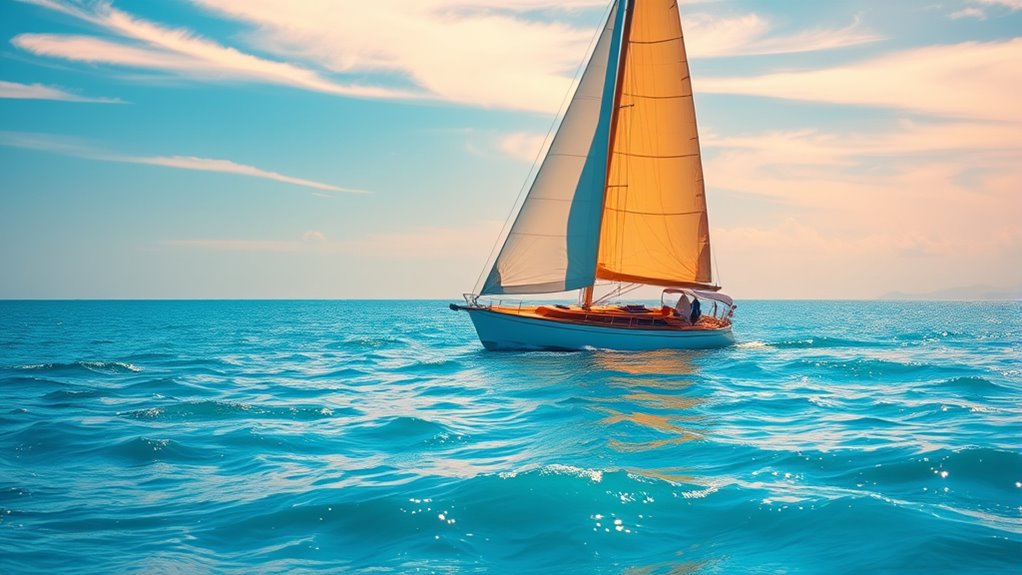
Sailing offers a unique adventure, connecting you to the wind and water while navigating breathtaking landscapes.
Before you set sail, familiarize yourself with navigation techniques. Knowing how to read charts, understand weather patterns, and use navigational aids is vital. You’ll want to plot a course that takes into account the wind direction and speed. Learning to use a compass is a fundamental skill, as it helps you maintain your intended heading. Don’t underestimate the importance of keeping an eye on your surroundings, too. Other vessels, buoys, and potential hazards can affect your route and require your attention.
Safety equipment is another non-negotiable aspect of sailing. Before you commence your adventure, make sure your boat is equipped with essential gear. Life jackets are a must for everyone on board. You should also have a first-aid kit, flares, and a fire extinguisher handy. It’s wise to guarantee your boat has a reliable means of communication, like a VHF radio, so you can call for help if needed. Having a GPS system can also enhance your navigation techniques, providing accurate tracking of your position.
Once you’re out on the water, remember to adjust your sails according to the wind. Trim the sails to catch the breeze effectively while maintaining balance. This is where understanding wind direction becomes practical. You’ll learn to recognize when to tack or jibe, changing your boat’s direction to harness the wind’s power.
As you sail, keep practicing your navigation techniques. The more you do, the more intuitive it becomes. You’ll develop a keen sense for judging distances and currents, which will enhance your overall experience.
Sailing is not just about reaching a destination; it’s about enjoying the journey. With the right navigation techniques and safety equipment, you’ll feel confident and prepared for whatever the sea throws your way. So, grab your gear, feel the wind, and set sail for an adventure of a lifetime!
Frequently Asked Questions
What Should I Wear While Sailing for Comfort and Safety?
When you’re sailing, wear comfortable, moisture-wicking clothing that protects you from the sun and wind. Opt for lightweight, quick-dry fabrics like polyester or nylon. Don’t forget to bring a waterproof jacket in case of rain. For safety gear, always wear a life jacket and consider sun protection like a wide-brimmed hat and sunglasses. Sturdy, non-slip shoes are essential for grip on wet surfaces, ensuring you stay safe while enjoying your adventure.
How Do I Handle Seasickness During a Sailing Trip?
When it comes to handling seasickness, remember: “An ounce of prevention is worth a pound of cure.” You can try medication options like over-the-counter antihistamines or prescribed patches. If you prefer natural remedies, ginger tea or acupressure wristbands might help. Stay hydrated and avoid heavy meals before sailing. Fresh air and focusing on the horizon can also ease your symptoms. Don’t let seasickness ruin your trip—be prepared!
What Are Some Essential Items to Pack for a Sailing Journey?
When you’re packing for a sailing journey, make certain to include navigation charts, an emergency kit, sunscreen, and a first-aid kit. Don’t forget comfortable clothing, a hat, and sunglasses to protect yourself from the sun. You’ll also want to pack snacks and plenty of water to stay hydrated. Finally, bring a camera to capture those beautiful moments at sea. Preparing well guarantees you enjoy your adventure to the fullest!
Can I Sail in Bad Weather Conditions?
Sailing in bad weather’s like dancing with the devil; it can be risky. You shouldn’t sail unless you’re well-prepared for the weather hazards ahead. Always check forecasts and have an emergency plan in place. Make certain your gear’s in top shape, and carry safety equipment like life jackets and flares. If conditions worsen unexpectedly, know when to turn back. Remember, it’s better to be safe than sorry when steering stormy seas.
How Do I Communicate With Other Boats While Sailing?
To communicate with other boats while sailing, you’ll primarily use navigation signals and radio communication. When you see another vessel, signaling with flags or lights can convey your intentions. For longer distances, a VHF radio is vital; you can call out to nearby boats or listen to channel updates. Always identify yourself and your position clearly. Keeping communication open guarantees safety and smooth sailing, so don’t hesitate to reach out!
Conclusion
As you set sail on your adventures, remember the old saying, “The wind and the waves never listen to your words.” Embrace the unpredictability of sailing, and let the wind guide you to new horizons. With every gust, you’ll discover the true essence of freedom that comes from harnessing nature’s power. So, whether you’re steering calm seas or choppy waters, trust in your skills, stay curious, and enjoy every moment on your journey.