
Choosing between panniers and bikepacking bags depends on your trip’s duration, terrain, and gear needs. Panniers offer larger capacity and better weather resistance, making them ideal for multi-day journeys with heavier loads. Bikepacking bags are great for shorter, faster rides, providing better balance and aerodynamics. Consider your adventure style and conditions to pick what’s best. Keep exploring to discover more details that can help you decide confidently.
Key Takeaways
- Choose panniers for larger cargo capacity and longer trips with heavy gear, especially in wet or rugged conditions.
- Opt for bikepacking bags for lighter loads, shorter rides, and improved bike handling on technical terrain.
- Panniers offer better weather resistance and easier packing, ideal for multi-day adventures.
- Bikepacking bags provide a more streamlined setup, enhancing speed and maneuverability for quick or technical rides.
- Consider your trip duration, terrain, and weather when selecting, as panniers excel in capacity and durability, while bikepacking bags favor agility.
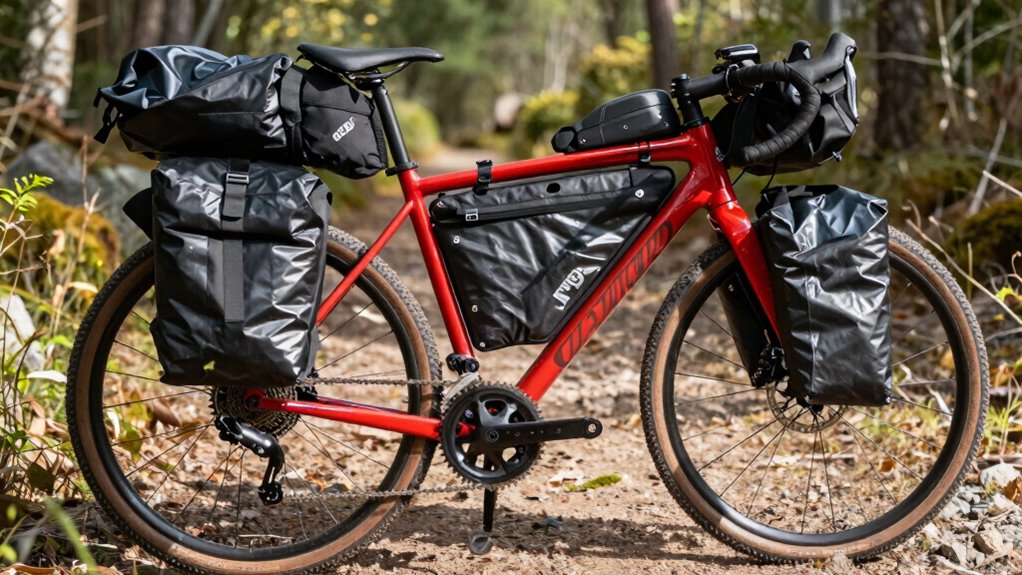
When choosing gear for your bike adventures, understanding the differences between panniers and bikepacking bags is essential. Both options serve to carry your gear, but they each have unique strengths, especially when it comes to cargo capacity and weather resistance. Panniers, typically mounted on racks attached to your bike’s rear or front wheel, generally offer larger cargo capacity. This makes them ideal for longer trips or when you need to carry heavier loads. Their spacious design allows you to pack more gear comfortably, and because they’re often made from durable, weather-resistant materials, they can protect your belongings from rain, mud, and splashes. If you anticipate riding in wet conditions or unpredictable weather, panniers provide peace of mind that your gear will stay dry.
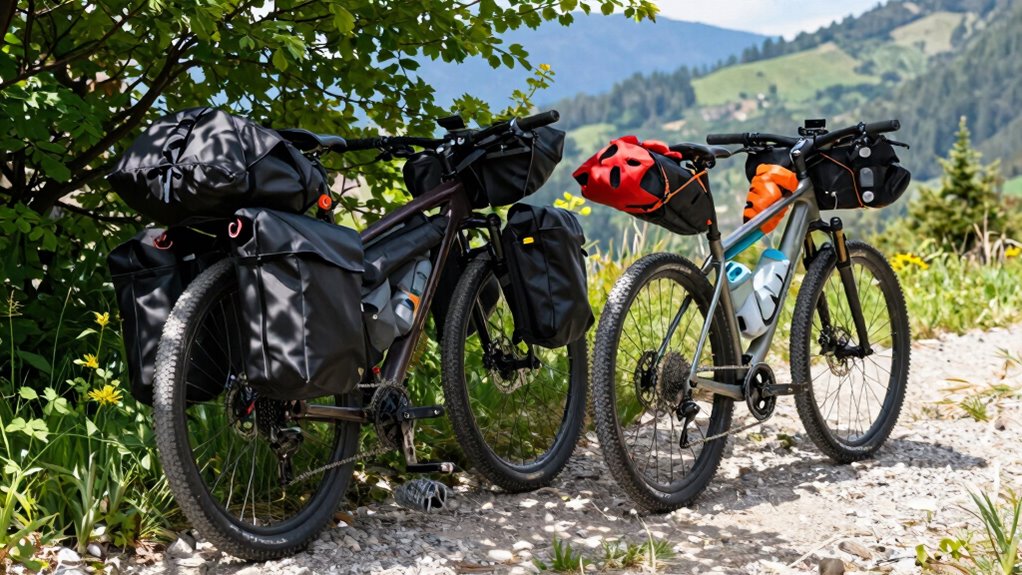
Bikepacking bags, on the other hand, are designed to fit directly onto your bike frame, handlebars, or seat post. While they usually have less cargo capacity than panniers, they excel in weight distribution and aerodynamics, keeping your bike balanced and nimble. They’re perfect for shorter trips, fast rides, or when you prefer a more streamlined setup. Weather resistance varies among bikepacking bags; some are made from high-quality, water-resistant materials, and include waterproof liners or zippers to keep your gear dry. However, others may require additional rain covers, especially in heavy downpours. If you’re riding through variable weather or encountering sudden rainstorms, choosing bikepacking bags with proven weather resistance will help protect your gear without adding significant bulk or weight.
Your choice also depends on how much gear you need to carry. If you’re planning a multi-day adventure with lots of supplies, panniers tend to be more practical because of their larger capacity. They also make loading and unloading easier since you can pack them like suitcases. Conversely, if your trip involves lighter packing or a focus on speed and agility, bikepacking bags keep your bike lightweight and agile, making it easier to navigate technical terrain or tight trails.
Frequently Asked Questions
Can Panniers and Bikepacking Bags Be Used Together?
Yes, you can definitely use panniers and bikepacking bags together. If you’re mountain biking or urban commuting, combining them gives you extra storage space and versatility. Attach panniers on your rack for heavier gear, while using bikepacking bags on your frame or handlebars for quick-access items. This setup optimizes your bike’s capacity, making it easier to carry everything you need for different rides or adventures.
Which Bag Type Offers Better Aerodynamics?
Like a knight with a well-sharpened sword, bikepacking bags often offer better aerodynamics than panniers, thanks to their streamlined design. They improve aerodynamic efficiency and enhance riding stability by reducing wind resistance and keeping weight centered. Panniers, with their bulkier profile, tend to create more drag, making your ride less smooth. So, if speed and stability are your goals, bikepacking bags are the way to go.
Are Bikepacking Bags Suitable for Long-Distance Touring?
Yes, bikepacking bags are suitable for long-distance touring. They’re designed with bike durability in mind, ensuring they hold up over extended rides. Plus, they offer excellent gear organization, allowing you to pack efficiently and access your essentials easily. The secure attachment system keeps everything stable, even on rough roads. With the right setup, bikepacking bags help you enjoy a comfortable, well-organized journey, making long-distance touring more enjoyable.
How Do Weatherproof Features Compare Between the Two?
Weatherproof features wick away worries with waterproof zippers and seam sealing, keeping your gear dry regardless of rain or rough weather. Panniers often boast robust, water-resistant materials and sealed seams for superior protection, while bikepacking bags rely on tough, waterproof fabrics and strategic seam sealing. You’ll find panniers tend to offer more consistent weather resistance, but quality bikepacking gear can also stand up to storms with proper waterproofing.
What Are the Weight Limits for Panniers and Bikepacking Bags?
You should verify the weight limits of your panniers and bikepacking bags, as they vary based on material durability and ease of installation. Panniers typically support heavier loads, often up to 50 pounds, thanks to sturdy racks and durable materials. Bikepacking bags usually have lower weight limits, around 10-20 pounds, but are easier to install and remove. Always verify the manufacturer’s specifications to ensure your gear stays secure during your trip.
Conclusion
Ultimately, whether you choose panniers or bikepacking bags depends on your trip’s needs. You might find yourself surprised how a simple switch in gear transforms your riding experience—sometimes, the perfect setup just clicks. As you plan your next adventure, consider what feels right. After all, the best gear is the one that makes your journey smoother and more enjoyable. Who knows? Your ideal bikepacking setup might be waiting just around the corner.