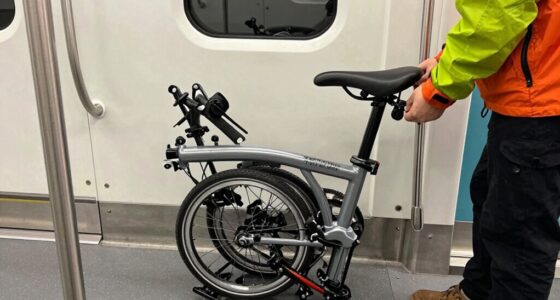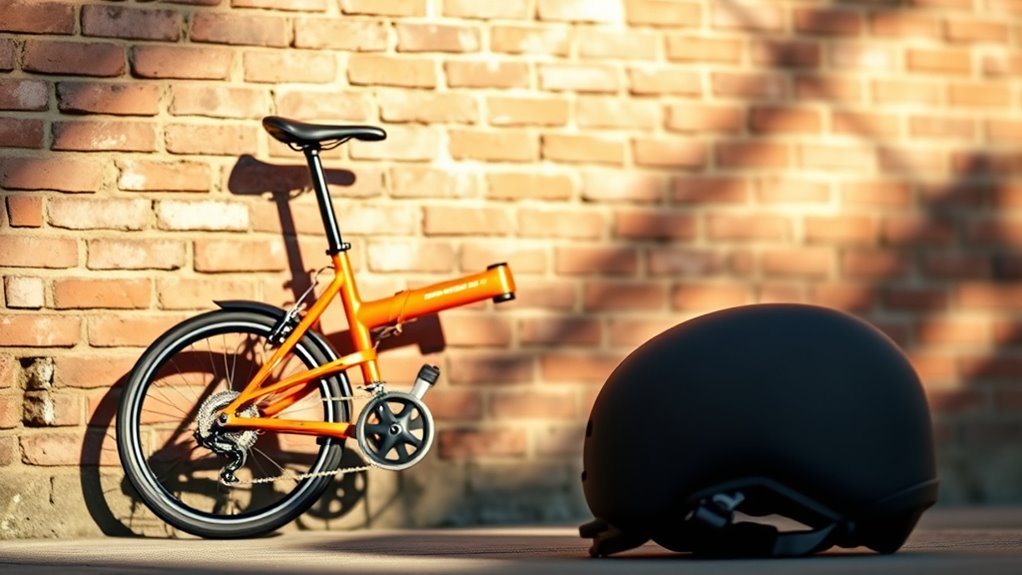

Packable helmets and folding bikes offer great benefits for urban cyclists, like convenience and portability. These items make it easier to store and transport your gear, especially on public transit. However, comfort and performance might take a hit, with some helmets lacking proper ventilation and folding bikes having smaller wheels that affect stability. Weighing these pros and cons can help you decide the best fit for your cycling habits and safety needs, and there’s more to consider.
Key Takeaways
- Packable helmets offer portability and convenience but may compromise comfort and ventilation compared to traditional helmets.
- Folding bikes facilitate easy storage and transport in urban environments but often have smaller wheels, affecting ride performance.
- Both innovations enhance urban cycling accessibility while maintaining safety standards, crucial for user safety.
- Users should consider the trade-offs in comfort and performance when selecting packable helmets and folding bikes for long-term use.
- Embracing these advancements can improve cycling convenience and support flexible transportation options in crowded cities.
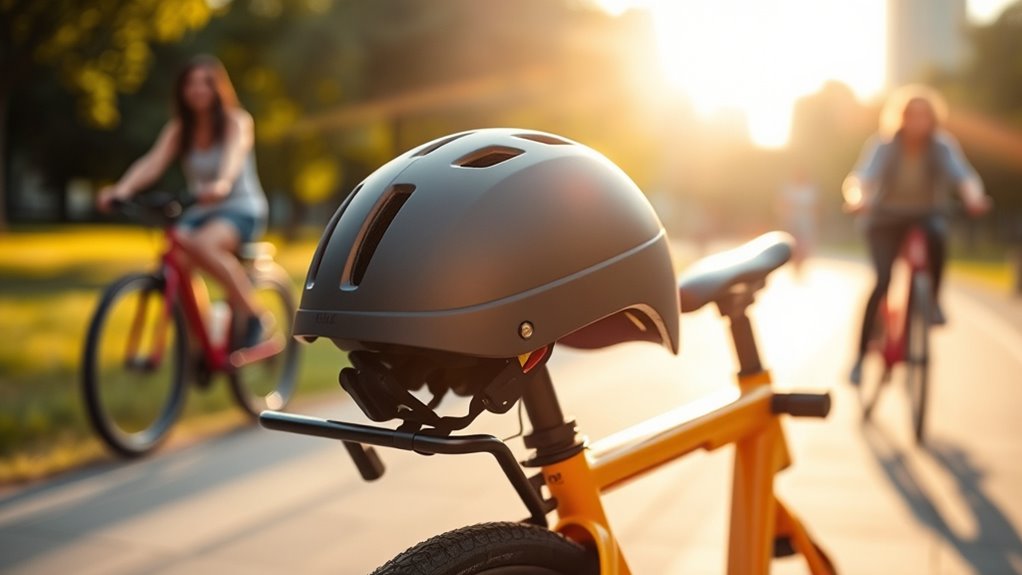
As you explore the world of cycling, you’ll quickly realize that convenience and safety go hand in hand, especially when it comes to packable helmets and folding bikes. These two innovations address common challenges faced by cyclists, particularly in urban settings where space and safety are paramount. With bike portability being a significant factor, many now consider how easily they can store or transport their bikes. Folding bikes offer a practical solution, allowing you to stow them away in tight spaces or carry them on public transport without hassle. This convenience means you can enjoy cycling even in crowded cities or during your travels.
Convenience and safety are essential in cycling, especially with packable helmets and folding bikes designed for urban living.
When we talk about helmet safety, packable helmets come into play as a game-changer. Traditional helmets can take up a lot of space and can be cumbersome to carry, especially if you’re hopping on and off public transport or commuting. Packable helmets, on the other hand, can be folded down to fit into a backpack or a bag, making it much easier for you to always have one handy. Helmet safety remains a top priority, and these helmets maintain the necessary safety standards without compromising on protection. Many models are designed with innovative materials that ensure they meet safety regulations while remaining lightweight and compact.
However, while the benefits of packable helmets and folding bikes are clear, they do come with some drawbacks. Packable helmets, despite being convenient, may lack the same level of comfort or fit that a traditional helmet offers. You might find that they don’t provide the same level of ventilation, which can make long rides uncomfortable. Similarly, folding bikes, while portable, often sacrifice some performance or stability compared to standard bikes. You might notice that they have smaller wheels or less robust frames, which can affect your ride quality on varied terrains.
Ultimately, it’s about balancing convenience and safety to suit your needs. If you prioritize bike portability and often ride in urban environments, investing in a folding bike and a packable helmet could enhance your cycling experience. Just remember to weigh the pros and cons carefully, keeping in mind your riding habits and safety requirements. Embracing these innovations can lead to a more enjoyable and practical cycling journey, allowing you to navigate the world on two wheels with ease and confidence. Additionally, ensuring proper skin protection during outdoor cycling is essential for long-term health.
Frequently Asked Questions
Are Packable Helmets Suitable for All Types of Cycling?
Packable helmets aren’t suitable for all types of cycling. While they meet basic safety standards, they often lack the ventilation features found in traditional helmets. If you’re riding in hot conditions or for long distances, you might feel uncomfortable in a packable helmet. However, for short commutes or casual rides, they can be a convenient option. Always consider your cycling needs and environment when choosing the right helmet for your ride.
How Do Folding Bikes Perform on Rough Terrain?
Folding bikes generally struggle on rough terrain when it comes to mountain biking. Their smaller wheels and lighter frames can make trail performance less stable compared to traditional mountain bikes. You might find them suitable for light trails or urban environments, but if you’re tackling rocky paths or steep inclines, a standard mountain bike will likely perform better. For serious off-roading, it’s best to stick with bikes designed specifically for that purpose.
Can Packable Helmets Be Used for Other Sports?
You can definitely use packable helmets for other sports, but keep in mind they’re designed primarily for cycling. While they often meet helmet safety standards, their ventilation might not be as suitable for activities like skiing or skateboarding. It’s a bit like trying to fit a square peg in a round hole; you may get by, but it’s not ideal. Always prioritize your safety and comfort, especially when engaging in high-impact sports.
What Is the Average Lifespan of a Folding Bike?
The average lifespan of a folding bike is typically around 5 to 10 years, depending on factors like bike frame durability and maintenance. If you choose a high-quality frame made from durable materials, you’ll likely enjoy a longer lifespan. Just like with helmet materials, where durability matters for safety, ensuring your folding bike is well-made and properly cared for will keep it functioning efficiently for years to come.
Are There Weight Limits for Using Packable Helmets?
Surprisingly, packable helmets don’t come with strict weight limits; after all, who wouldn’t want a helmet that’s both light and safe? However, helmet safety isn’t just about weight. It’s essential to confirm that your helmet fits properly and meets safety standards. While you might not find specific weight restrictions, consider your own comfort and stability when using one. Always prioritize safety over convenience, even if it means carrying a little extra weight.
Conclusion
In the world of urban cycling, packable helmets and folding bikes are like the perfect dance partners—each complementing the other’s moves. They offer convenience and versatility, transforming the way you navigate the concrete jungle. However, keep an eye on comfort and safety, as these innovations can be a double-edged sword. Embrace the freedom they bring, but weigh the pros and cons carefully. With the right choices, you’ll glide through your city with style and ease!