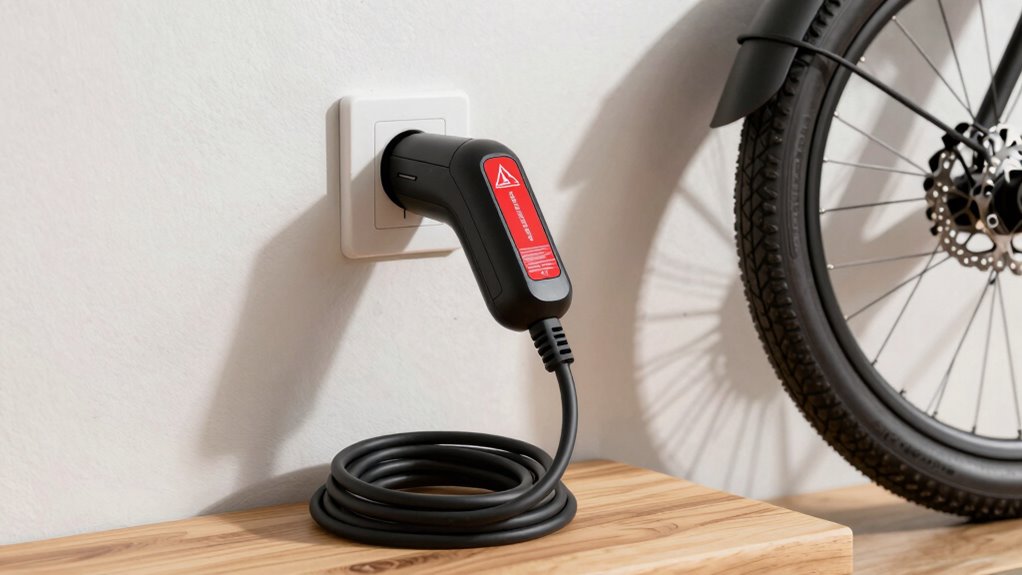

Fast charging your e-bike might seem convenient, but it can actually harm your battery over time. Quick charges generate more heat and stress, which speeds up battery cell degradation and shortens lifespan. Slower, standard charging rates help preserve your battery’s health and capacity, reducing risks like overheating or damage. To keep your e-bike safe and reliable, it’s better to avoid frequent fast charges. Keep going to discover essential tips for safe charging practices and protecting your battery long-term.
Key Takeaways
- Fast charging generates excess heat, increasing the risk of battery overheating and potential safety hazards.
- Rapid charging accelerates battery cell degradation, reducing overall battery lifespan and performance.
- Using standard, slower charging rates helps maintain battery health and prevents damage over time.
- Proper installation and a safe charging environment minimize electrical risks associated with fast charging.
- Accessible charging stations encourage responsible charging habits, reducing the need for quick charges and associated dangers.
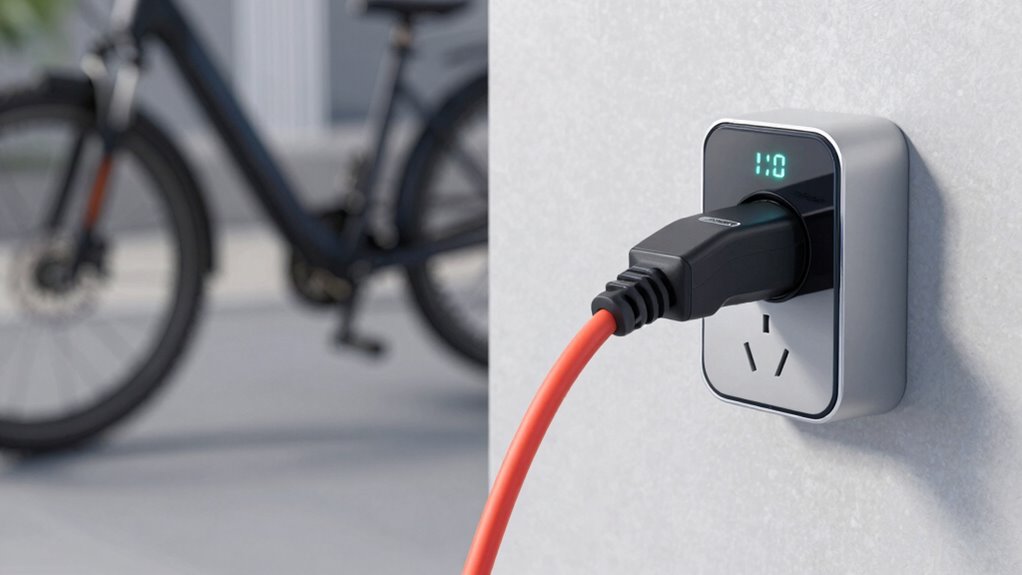
Charging your e-bike safely is essential to prevent accidents and extend the life of your battery. When you take care of your charging habits, you not only ensure your safety but also maximize your battery’s lifespan. One key factor to contemplate is how you approach charging speed. While fast charging might seem convenient, it can actually have a negative impact on your battery over time. Rapid charging generates more heat and stress, which can degrade battery cells faster, leading to a shorter overall lifespan. If you rely heavily on quick charges, you could find yourself replacing your battery sooner than expected, ultimately costing you more in the long run. Instead, sticking to standard charging rates helps preserve battery health. Slow, deliberate charging allows the cells to replenish safely, maintaining their capacity and performance for a longer period. Proper safe installation practices are also crucial to prevent electrical issues and ensure your charger operates reliably.
Another important aspect to reflect on is the accessibility of charging stations. If charging stations are easily accessible, you’re more likely to keep your battery properly charged and avoid the temptation of rushing through fast charging sessions. When charging stations are conveniently located, you can plan regular top-ups without feeling pressured to hasten the process. This reduces the temptation to rely on quick chargers, which are often used out of convenience rather than necessity. Accessibility also encourages responsible charging habits, such as unplugging once your battery is full and avoiding overcharging, which can harm the battery’s longevity. Ensuring that charging stations are well-maintained and user-friendly promotes safer, more efficient charging experiences, helping you avoid making risky decisions like plugging into damaged outlets or using incompatible chargers that could cause electrical issues.
Frequently Asked Questions
Can I Use a Generic Charger for My E-Bike?
You shouldn’t use a generic charger for your e-bike because it might not match your battery’s compatibility or meet charger certification standards. Using the wrong charger can damage your battery or cause safety hazards. Always check your e-bike manufacturer’s recommendations, verify the charger is certified, and matches your battery’s voltage and capacity. This ensures safe, efficient charging and prolongs your e-bike’s battery life.
How Do I Identify a Safe Fast Charger?
To identify a safe fast charger, check its compatibility with your e-bike, ensuring it matches your battery’s voltage requirements. Look for chargers with clear specifications and labels indicating voltage matching and compatibility with your model. Avoid generic chargers that don’t specify these details, as mismatched voltage can damage your battery. Always prefer reputable brands that meet safety standards, and consult your e-bike’s manual for recommended charging options.
Is It Safe to Leave My E-Bike Charging Overnight?
Leaving your e-bike charging overnight is like leaving a candle burning unattended—you risk battery overheating, which can lead to damage or fire. While modern chargers have safety features, it’s safer to unplug once the battery reaches full charge. Overnight charging can be convenient, but always monitor your e-bike, use a reliable charger, and avoid leaving it unattended for extended periods to prevent potential hazards.
What Are Signs of a Faulty E-Bike Charger?
You’ll notice signs of a faulty e-bike charger if it’s not compatible with your bike’s specifications. Look for issues like inconsistent charging, overheating, or strange noises. Poor charger compatibility or voltage instability can cause these problems, so always verify your charger matches your e-bike’s requirements. If you see these signs, stop using it immediately and replace it with a compatible, stable-voltage charger to prevent damage and ensure safety.
Does Charging Temperature Affect Battery Lifespan?
Yes, charging temperature definitely affects your battery lifespan. If you charge your e-bike in extreme temperatures, it can accelerate battery degradation, reducing overall lifespan. Proper temperature regulation during charging helps maintain battery health and extends its life. Always charge your e-bike in a cool, dry place and avoid hot or freezing conditions. Keeping the temperature ideal ensures better battery performance and longevity over time.
Conclusion
Remember, rushing to charge your e-bike with fast chargers might seem like a time-saver, but it can do more harm than good. Cutting corners often leads to safety risks, like damaging your battery or causing malfunctions. It’s best to play it safe and follow the manufacturer’s recommendations. After all, slow and steady wins the race—especially when it comes to your e-bike’s health and safety. Prioritize proper charging to keep your ride smooth and safe.