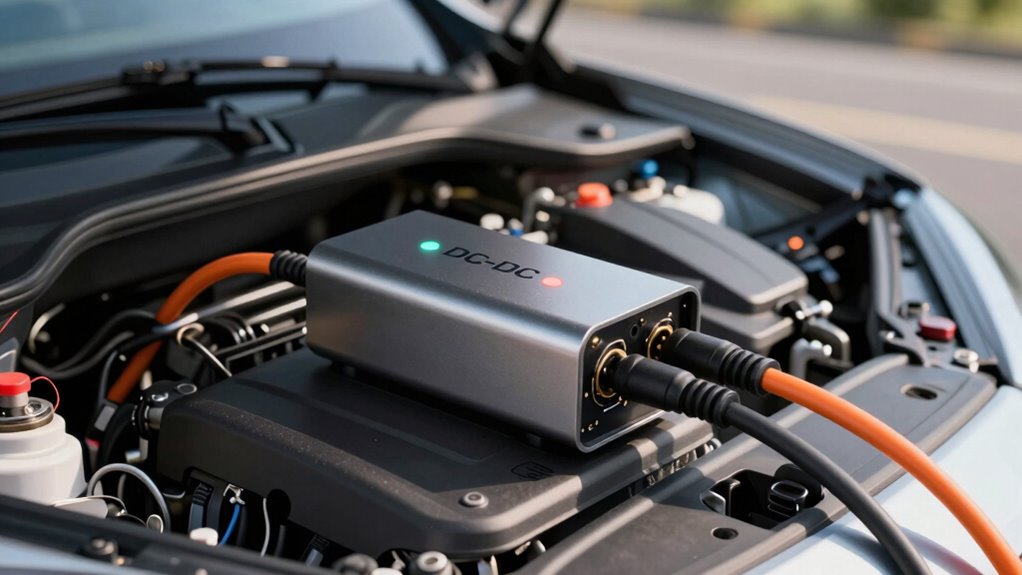

A DC-DC charger is a handy device that safely transfers power from your car’s battery to your gadgets or extra batteries. It controls the voltage and current, making sure your devices get the right amount of power without damage. This helps charge phones, cameras, or batteries quickly and safely, even when you’re on the go. Want to know how this simple device can improve your travel power setup? Keep exploring to learn more.
Key Takeaways
- DC-DC chargers safely transfer power from your vehicle’s battery to other devices or batteries.
- They control voltage and current to prevent damage and ensure efficient charging.
- Compatible with solar panels, allowing flexible off-grid power solutions.
- They simplify mobile power setups by managing multiple power sources smoothly.
- Ideal for road trips, camping, or remote work to keep devices charged safely on the go.
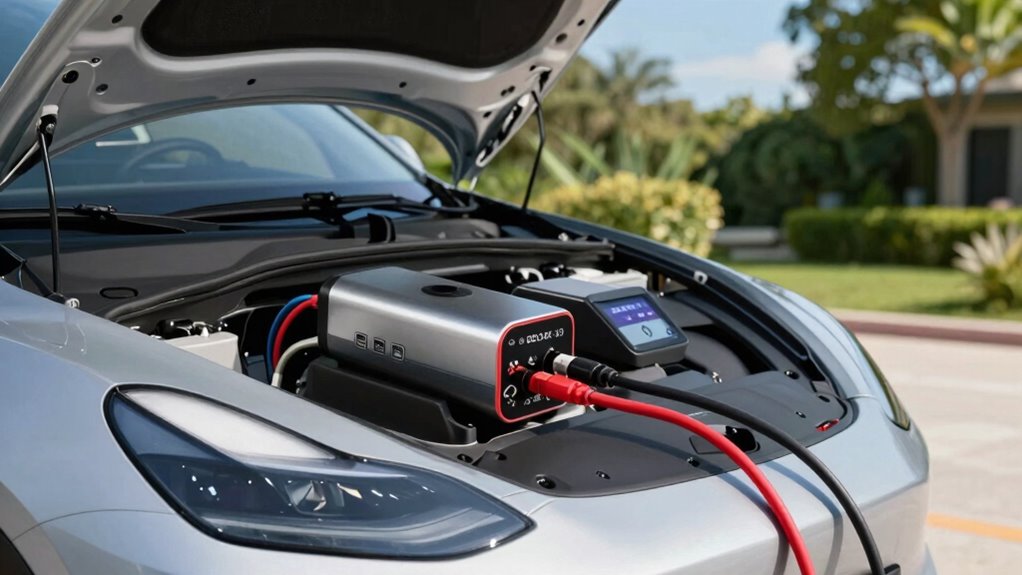
Charging from a car offers a convenient way to power devices or recharge batteries when you’re on the go. Whether you’re camping, traveling, or just away from traditional power sources, understanding how to efficiently use your vehicle’s electrical system can make a big difference. One key component in this setup is the DC-DC charger, which helps manage the power flow between your car’s battery and your devices or batteries. Unlike simple adapters, these chargers are designed to optimize power transfer, ensuring your gear gets the right amount of electricity without risking damage. They are especially useful if you need a reliable power source for sensitive electronics, cameras, or even larger batteries for off-grid projects.
Using a DC-DC charger from your car ensures safe, efficient power transfer for sensitive devices on the go.
A major advantage of these chargers is their solar compatibility. If you’re using solar panels to supplement your power needs, a DC-DC charger can seamlessly integrate with your solar setup. This means you can charge your batteries directly from your panels while on the move, or draw power from your vehicle’s electrical system without any fuss. This compatibility is vital because it helps maximize your overall power output, making sure you get the most energy possible from your solar panels and vehicle’s alternator. As a result, you can extend your off-grid adventures or work longer without worrying about running out of juice.
Power output is another important factor to consider. A good DC-DC charger is capable of delivering a steady, controlled flow of electricity, matching the demands of your devices and batteries. It regulates voltage and current, preventing overloads that could damage your gear. This precise control ensures safe, efficient charging, whether you’re powering a few small devices or larger batteries. The ability to adjust power output based on your needs adds to the versatility, letting you optimize your setup for different scenarios. For example, if you’re charging high-capacity batteries, a charger with higher power output can handle the load more effectively, reducing charging time and increasing efficiency.
In practical terms, using a DC-DC charger means you don’t need to worry about your devices or batteries being undercharged or overcharged. It simplifies the process, making your mobile power solution safer and more reliable. Plus, many models are designed to work with various power sources, including solar, making them adaptable to your specific setup. Whether you’re trying to keep your gadgets alive during a long road trip or charging batteries for a remote off-grid cabin, understanding the role of a DC-DC charger can help you get the most out of your vehicle’s electrical system. It’s a smart investment that guarantees your power needs are met efficiently, safely, and with maximum compatibility. Additionally, employing natural filtration systems in your natural pools can help maintain water quality without chemicals.
Frequently Asked Questions
Can I Use a DC-DC Charger With Any Vehicle?
You can’t use a DC-DC charger with any vehicle without verifying vehicle compatibility. Different vehicles have varying electrical systems and charging limitations, so some chargers might not work properly or could cause damage. Before installing, confirm your vehicle’s electrical system matches the charger’s specifications. Always consult the manufacturer’s guidelines or a professional to avoid issues, and remember that not all vehicles support every type of DC-DC charger.
Do I Need Special Tools to Install a DC-DC Charger?
You don’t usually need special installation tools for a DC-DC charger, but having basic wiring tools like wire strippers, crimpers, and screwdrivers makes the process smoother. Make sure you comprehend the wiring requirements, such as proper gauge wiring and secure connections, to guarantee safety and efficiency. If you’re unsure, consulting the installation manual or a professional can help prevent mistakes and ensure everything’s set up correctly.
How Long Does It Take to Charge a Device Using a Car Charger?
Imagine the gentle hum of your car’s engine as you plug in your device, expecting a quick boost. Charging time varies based on your device’s battery capacity and the charger’s charging speed, typically taking anywhere from 30 minutes to a few hours. Smaller devices like smartphones recharge faster, while larger batteries, like tablets or cameras, need more time. You’ll notice the steady, reassuring glow signaling your device is regaining power.
Are DC-DC Chargers Safe for Sensitive Electronics?
Yes, DC-DC chargers are safe for sensitive electronics because they feature voltage regulation, which maintains a steady output, preventing damage. Plus, they often include surge protection, safeguarding your devices from power spikes. As long as you select a quality charger designed for sensitive electronics, it will provide reliable, stable power without risking harm. Always check the specifications to ensure it meets your device’s needs.
What Maintenance Is Required for a Car DC-DC Charger?
Think of your DC-DC charger as a trusted garden hose. To keep it flowing smoothly, you need to regularly check the battery for corrosion or wear and inspect the connections for tightness. Just like watering plants, this maintenance guarantees your charger stays reliable and efficient. Make it a habit to perform these simple checks monthly, and you’ll prevent issues before they sprout, keeping your electronics powered without any hiccups.
Conclusion
Charging from a car is simpler than you think, thanks to DC-DC chargers. They efficiently convert power, making your EV charging smoother and more convenient. Did you know that the global EV market is expected to grow by over 40% annually until 2030? This rapid growth highlights how essential understanding charging tech is. So, next time you plug in, remember how these chargers keep you moving efficiently, saving time and energy on every journey.