
When it comes to wildlife tourism ethics, prioritize responsible tours that support conservation and local communities. Keep a safe distance from animals to prevent stress, and stick to designated paths to minimize your environmental impact. Always pack out your trash and avoid disruptive behaviors. Educate yourself about local species and share your knowledge to promote responsible practices. These choices can help protect ecosystems while enriching your travel experience. Discover more tips to guarantee ethically sound wildlife tourism.
Key Takeaways
- Prioritize tours that emphasize conservation and support local communities while ensuring ethical practices are upheld by the operators.
- Maintain a safe distance from wildlife to prevent stress, using binoculars or zoom lenses for observation.
- Stick to designated paths and carry out all litter to minimize environmental impact and preserve habitats.
- Educate yourself about local species and share conservation knowledge to promote responsible wildlife tourism practices.
- Choose eco-friendly transportation and local experiences to reduce your carbon footprint during travels.
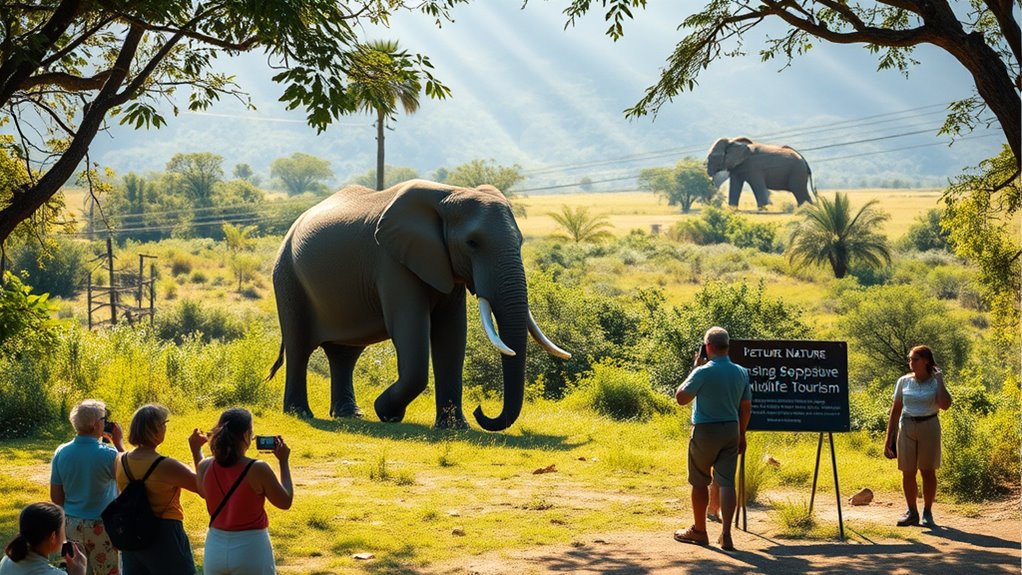
As you set out on an adventure in wildlife tourism, it’s essential to take into account the ethical implications of your choices. You might be enthusiastic to witness animals in their natural habitats, but how you approach this experience can considerably impact both the wildlife and the environment. By adopting eco-friendly practices, you not only enhance your experience but also contribute positively to the ecosystems you visit.
First, always opt for tours and activities that prioritize conservation. Research the companies you’re considering; choose those that are transparent about their practices and support local communities. When you book with responsible operators, you’re encouraging sustainable tourism that respects the delicate balance of nature. This means avoiding companies that exploit animals or disrupt their habitats. Remember, your choices can either harm or help wildlife, so choose wisely.
Choose wildlife tours that prioritize conservation and support local communities to ensure your travel positively impacts nature.
While you’re out in the field, practice respectful observation. Keep a safe distance from animals and avoid making excessive noise. Disturbing wildlife can cause stress and impact their natural behavior. Instead, take your time to observe quietly and appreciate the beauty of these creatures. Use binoculars or a zoom lens on your camera to capture moments without intruding on their space. This not only allows you to have a more enriching experience but also protects the animals from unnecessary stress.
When you engage in activities like hiking or camping, stick to designated paths and areas. This minimizes your impact on sensitive habitats. Littering is a definite no-go; always carry out what you bring in. By leaving no trace, you help preserve the environment for future visitors and the wildlife that resides there. Simple acts like these can have a lasting impact on the ecosystems you explore.
It’s also essential to educate yourself about the species you’ll encounter. Understanding their behavior and needs can enhance your experience and deepen your respect for them. Share this knowledge with others to promote awareness and encourage responsible practices among fellow travelers. Moreover, engaging in data-driven marketing strategies can help promote ethical wildlife tourism and raise awareness about conservation efforts.
Lastly, always consider your carbon footprint when planning your wildlife adventures. Opt for eco-friendly transportation methods when possible or choose local experiences that reduce travel distances. By being proactive in your choices, you play a crucial role in wildlife conservation.
Frequently Asked Questions
What Types of Wildlife Tourism Experiences Are Considered Ethical?
Ethical wildlife tourism experiences focus on wildlife conservation and promote eco-friendly practices. You can participate in guided tours that educate you about local ecosystems while supporting conservation efforts. Engaging in volunteer programs that help protect habitats or participating in responsible wildlife photography also fits the bill. Always choose operators who prioritize animal welfare and sustainability, ensuring your adventures contribute positively to both wildlife and the environment. Enjoy nature while making a difference!
How Can I Identify Ethical Wildlife Tourism Operators?
To identify ethical wildlife tourism operators, look for those with eco certification, as it shows commitment to sustainable practices. Research their wildlife conservation efforts, checking if they support local habitats and communities. Read reviews and seek recommendations from trusted sources. Consider operators that promote responsible interactions with wildlife, ensuring minimal disturbance to animals. If they prioritize education about conservation, you’re likely on the right track to an ethical experience.
Are There Specific Destinations Known for Ethical Wildlife Tourism?
Yes, there are specific destinations known for ethical wildlife tourism. Places like Costa Rica and Kenya stand out, offering eco-friendly accommodations and conservation-focused tours. You’ll find that these locations prioritize sustainability and animal welfare, ensuring a responsible experience. Researching operators in these areas can help you support initiatives that protect wildlife and their habitats. When you choose wisely, you’re contributing to conservation efforts while enjoying unforgettable wildlife encounters.
What Should I Do if I Witness Unethical Wildlife Tourism Practices?
If you witness unethical wildlife tourism practices, take responsible interaction seriously. Document what you see, including photos or videos if possible. Then, report unethical practices to local authorities or wildlife organizations that can address the issue. Sharing your experiences on social media can raise awareness and encourage others to act responsibly. Remember, your voice can help protect wildlife and promote ethical tourism, so don’t hesitate to speak up!
How Can Wildlife Tourism Positively Impact Local Communities?
You know what they say, “A rising tide lifts all boats.” Wildlife tourism can empower local communities by creating jobs and income through sustainable development. When you support eco-friendly tours, you help preserve natural habitats and engage locals in conservation efforts. This not only boosts their economy but also fosters a sense of pride and responsibility towards wildlife. By choosing responsible tourism, you’re directly contributing to community empowerment and a healthier environment.
Conclusion
In the end, remember that wildlife tourism isn’t just about seeing animals; it’s about respecting their homes, protecting their future, and supporting their well-being. By choosing responsible practices, you contribute to conservation efforts, promote sustainable tourism, and inspire others to do the same. So, as you set out on your adventures, embrace the beauty of nature, honor its inhabitants, and leave only footprints behind. Together, we can guarantee that wildlife thrives for generations to come.