
By following the “Two-Bag” rule, you can considerably cut your carbon footprint while making travel easier. Focus on packing only the essentials in a carry-on and personal item, choosing versatile, eco-friendly clothes, and using efficient packing strategies like rolling clothes and using organizers. This approach minimizes weight, reduces emissions, and boosts your travel freedom. Keep exploring for practical tips to help you pack smarter and travel lighter with confidence.
Key Takeaways
- Limit luggage to a carry-on and personal item to promote minimalism and reduce overall weight.
- Choose versatile, eco-friendly clothing that can be mixed, matched, and layered for various activities.
- Use packing cubes and rolling techniques to maximize space and prevent overpacking.
- Pack only essential tech and accessories, avoiding duplicates and bulky items to lighten your load.
- Tailor packing strategies to trip duration and climate, focusing on lightweight, multi-use items to emit less environmental impact.
What Is the Two-Bag Rule and Why Travel Light Matters
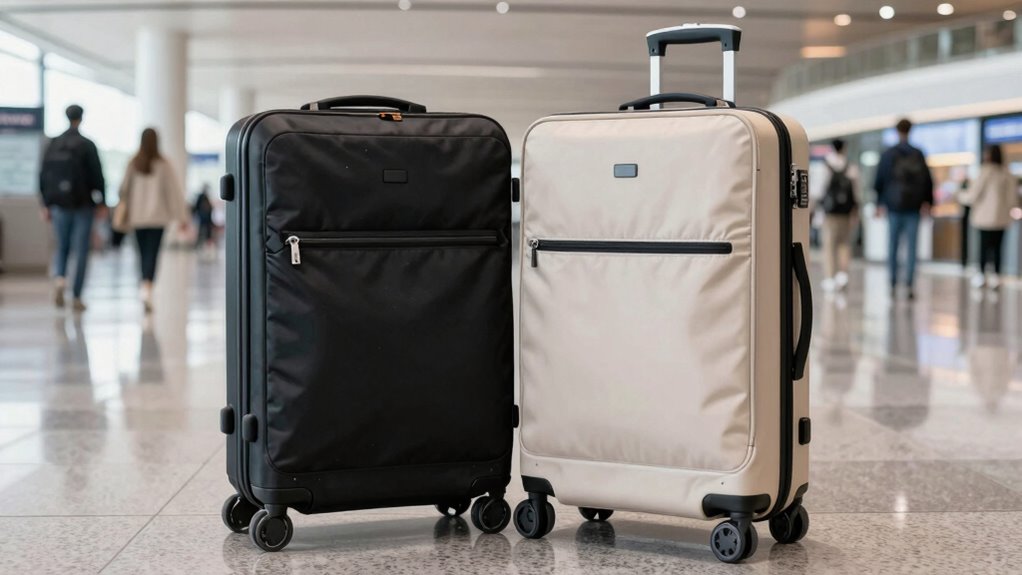
Have you ever struggled with lugging around too much luggage during travel? That’s where the two-bag rule comes in. It’s a simple guideline that encourages you to limit yourself to just two pieces of luggage—usually a carry-on and a personal item. Your travel habits and packing philosophy play a big role here. By adopting this rule, you prioritize essentials and avoid overpacking, making your journey smoother. This approach not only saves you time at airports but also reduces stress and physical strain. The two-bag rule promotes smarter packing, pushing you to think critically about what you truly need. Additionally, understanding contrast ratio can help in choosing the right portable electronics or screens to enhance your travel entertainment. Ultimately, it’s about traveling lighter, more efficiently, and with greater freedom.
Why Packing Light Helps Reduce Your Carbon Footprint
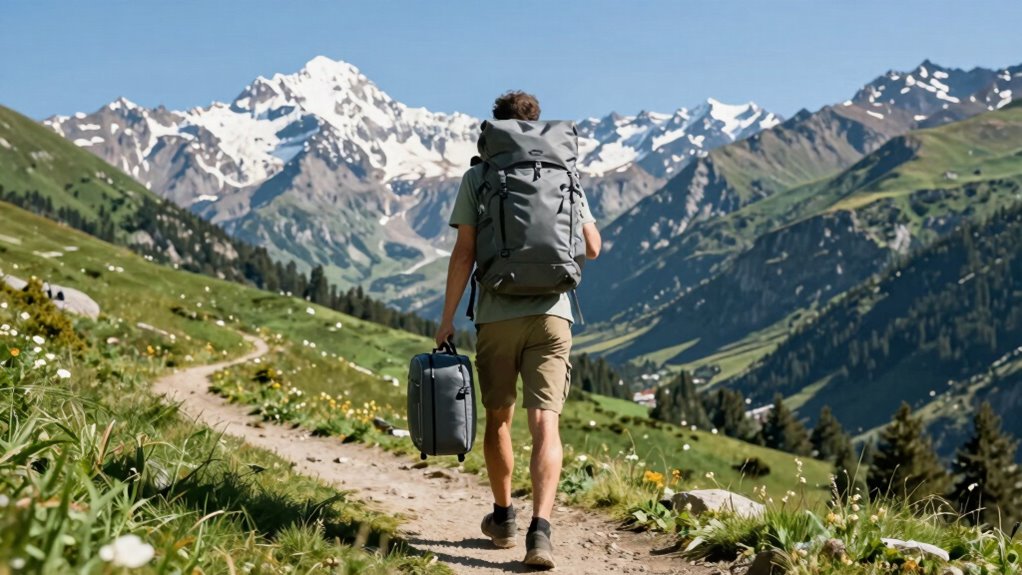
Packing light not only makes travel more convenient but also considerably lowers your environmental impact. When you limit your packing, you reduce the weight your transportation needs to carry, which decreases fuel consumption and emissions. Choosing eco friendly fabrics for your clothing, like organic cotton or recycled materials, further minimizes your carbon footprint. Sustainable packing encourages you to bring only what’s necessary, avoiding excess waste and overproduction. Additionally, lightweight gear such as electric bikes can help you travel more efficiently and sustainably. Incorporating European cloud innovation into your travel planning can inspire more eco-conscious choices and reduce reliance on resource-intensive technologies. Understanding art care can help you select appropriate packing and handling methods to extend the life of your belongings and reduce waste. Being aware of aviation regulations can assist you in making compliant and environmentally responsible packing choices. By adopting this approach, you help decrease the demand for resource-intensive manufacturing and reduce landfill waste. Less luggage means fewer trips, less energy use, and a smaller overall environmental footprint. Incorporating Sustainable packing techniques into your routine can further amplify your positive impact on the planet, promoting eco-friendly travel habits.
How to Choose the Best Bags for Your Travel Style
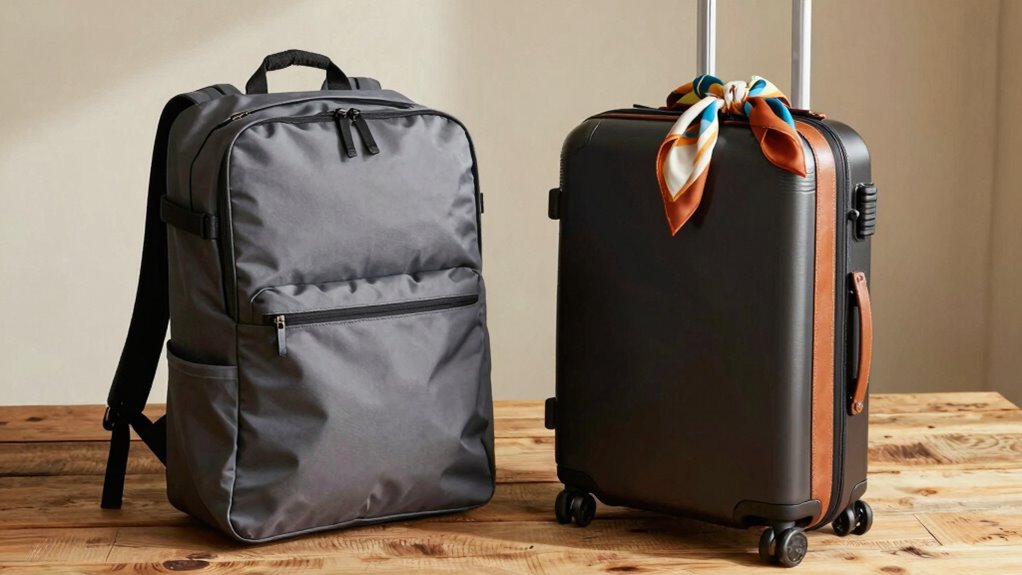
Choosing the right travel bags depends on your specific needs and travel style. Consider how you pack and what you’ll carry daily—do you prefer a sleek backpack, a versatile duffel, or a lightweight suitcase? Your choice of bag materials matters too; durable, lightweight fabrics like nylon or polyester keep weight down, while sturdy leather offers longevity. Packing accessories, such as packing cubes or organizers, can help you stay organized and maximize space within your chosen bags. Think about your destination, climate, and duration to determine the best style. If you move around a lot, a comfortable backpack might suit you; for longer stays, a spacious duffel or suitcase could be preferable. Selecting bags aligned with your travel habits makes packing easier and more efficient. Additionally, selecting lightweight fabrics in your bags helps reduce overall weight, making your travel experience more comfortable and less burdensome. Incorporating deaf-friendly features like tactile tags or easy-to-open zippers can also enhance convenience for travelers with hearing impairments. When choosing your bags, considering specialized features tailored to your needs can improve your overall travel experience. For example, integrating soundproof compartments can help protect sensitive electronics and reduce noise during transit. Being aware of ergonomic designs can further enhance comfort during long carries or trips.
Tips for Packing Efficiently and Maximizing Space
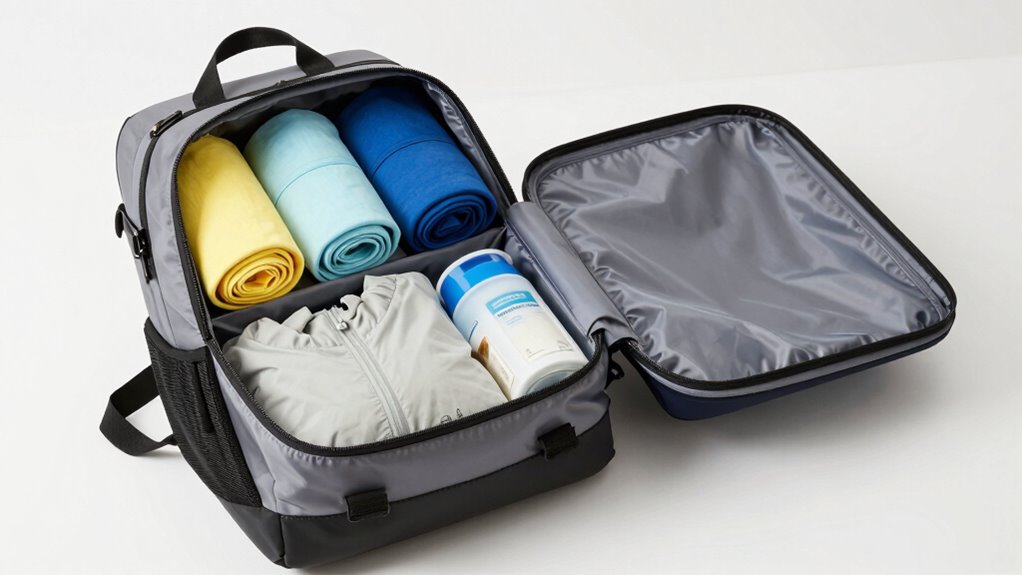
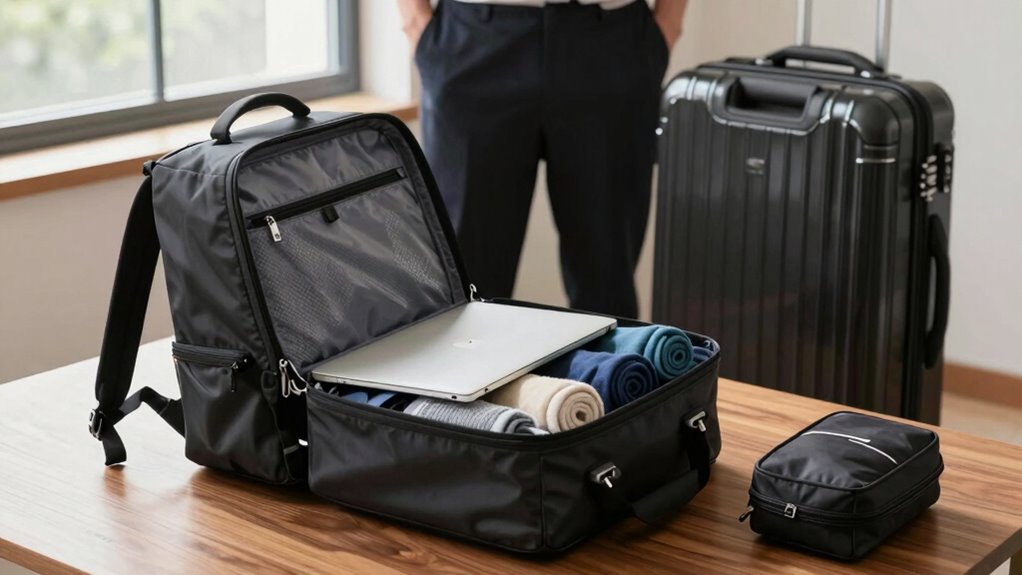
To pack efficiently and maximize space, start by rolling your clothes instead of folding them; this technique reduces bulk and helps prevent wrinkles. Use folding techniques that optimize each item’s shape and fit. Incorporate packing cubes to organize your belongings, making it easier to access items without unpacking everything. Choose the right size cubes for different clothing types and essentials. Here’s a helpful guide:
| Packing Item | Recommended Technique |
|---|---|
| T-shirts | Roll tightly for space-saving |
| Pants | Fold flat or roll for compactness |
| Underwear | Use small cubes or fold neatly |
| Socks | Bundle or roll together |
| Toiletries | Use leak-proof bags or small cubes |
This approach streamlines packing, keeps your bag organized, and maximizes every inch of space. Incorporating efficient packing techniques can further enhance your ability to travel light and reduce overall luggage weight. Additionally, selecting compact luggage designs with smart compartments can help optimize space even more. Being mindful of weight distribution ensures that your luggage remains manageable and easier to handle during travel. Considering packing accessories like compression bags or vacuum storage can also significantly increase packing efficiency. Remember, using appropriate packing methods is key to a stress-free travel experience and can make a big difference in your overall packing efficiency.
How to Pack Only What You Really Need

After organizing your belongings with efficient techniques, the next step is to focus on what truly needs to go in your bag. To do this, adopt a minimalist wardrobe approach, selecting versatile pieces that can mix and match easily. Capsule packing is key—choose clothing that serves multiple purposes and suits different settings. Avoid overpacking by asking yourself if each item is essential for your trip’s activities. Limit yourself to a few neutral-colored tops, a couple of bottoms, and a couple of accessories. Remember, you don’t need a full wardrobe for a short trip. Embracing intentional packing ensures you carry only what’s necessary, making your bag lighter and your travel more streamlined. Incorporating versatile clothing can help you adapt your wardrobe for various occasions without adding extra items. Additionally, focusing on efficient packing techniques can further minimize your load while maximizing your outfit options. Being mindful of packing light techniques aligns with the goal of reducing weight and increasing convenience. Finally, understanding the importance of clothing weight can help you make smarter choices about which items to bring.
Common Mistakes to Avoid When Applying the Two-Bag Rule
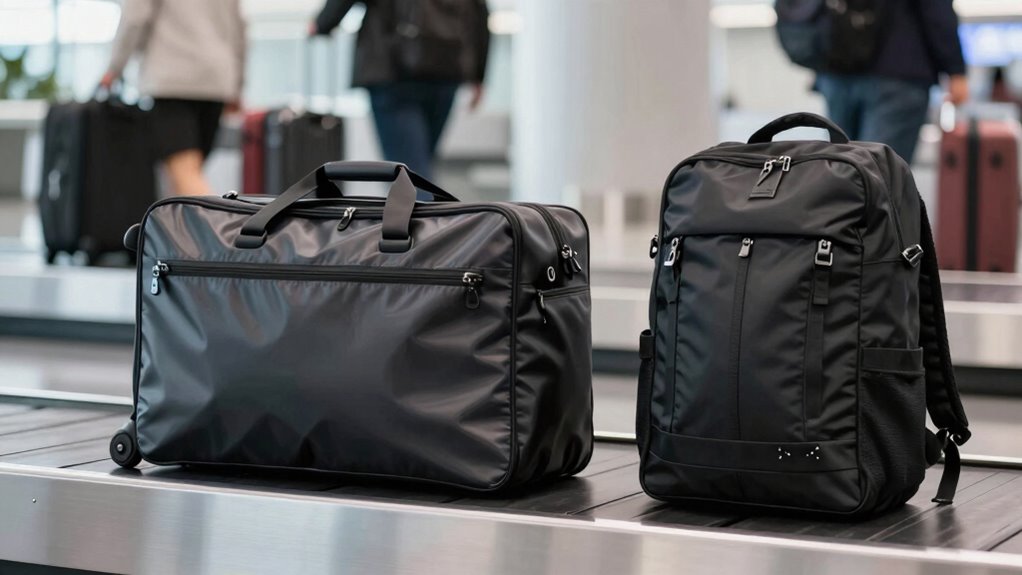
One common mistake is overpacking items you think you’ll need but rarely use, which defeats the purpose of the two-bag rule. Ignoring climate variations can lead you to forget essentials or pack too much, making your bags heavier than necessary. Stay mindful of your destination’s weather to avoid these pitfalls and pack smarter. Additionally, considering Free Floating options for versatile packing can help optimize space and reduce weight. Incorporating Architectural Solutions such as modular or multi-use items can further enhance your packing efficiency and adaptability.
Overpacking Common Items
Overpacking common items is a frequent mistake when applying the two-bag rule, often leading to unnecessary bulk and weight. Many travelers overestimate how much they need, especially when it comes to a minimalist wardrobe. Instead of sticking to versatile pieces, you might pack duplicates or bulky clothing, which defeats the purpose of light packing. Similarly, tech gadgets are tempting to bring in multiple chargers or accessories, but often, one multi-use device suffices. Focus on essentials that serve multiple functions, and resist the urge to pack extras for every possible scenario. Keeping your wardrobe simple and limiting gadgets to just what you need guarantees your two bags stay manageable, reducing weight and making your trip more comfortable.
Ignoring Climate Variations
Ignoring climate variations can quickly turn your minimalist packing strategy into a burden. Climate variability and seasonal packing are critical factors often overlooked. Failing to take into account these can lead to discomfort or overpacking. To avoid this mistake:
- Assess the typical weather during your trip window.
- Include versatile clothing suitable for temperature swings.
- Prepare for unexpected weather changes, like rain or cold snaps.
- Limit reliance on specialized gear that may only be needed in specific seasons.
Adapting the Two-Bag Approach for Different Trips and Durations
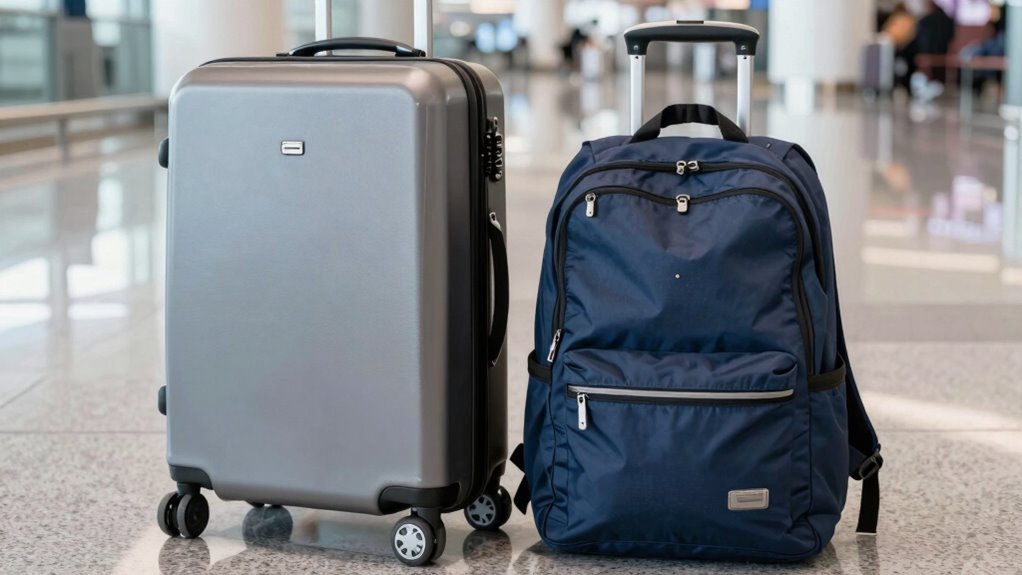
When planning trips of different lengths, you’ll need to adjust what goes into each bag to stay efficient. Shorter trips often require fewer essentials, while longer journeys mean packing more carefully. Make sure your packing list matches the trip’s duration and activities to stay organized and light.
Travel Duration Adjustments
Have you ever wondered how to adapt the two-bag rule for trips of varying lengths? When adjusting for travel duration, your clothing choices and travel accessories become vital. For shorter trips, focus on versatile clothing that mixes and matches easily. Longer journeys demand packing items that can be layered or reused. Keep in mind these key points:
- Limit clothing to essentials, prioritizing multi-use pieces.
- Pack compact travel accessories that serve multiple functions.
- Adjust the number of clothing sets based on trip length.
- Use lightweight, packable items to maximize space and reduce weight.
Packing Essentials for Varied Trips
Adapting your packing essentials to suit different trips and durations guarantees you stay organized and efficient, no matter how long you’re away. Focus on building a minimalist wardrobe that includes versatile pieces you can mix and match, reducing the number of items needed. Opt for eco-friendly materials like organic cotton, recycled fabrics, and sustainable blends, which are lightweight, durable, and environmentally conscious. For shorter trips, pack a small, streamlined bag with essentials, while longer trips might require a second bag with additional versatile clothes. Keep accessories and toiletries minimal but functional. By tailoring your packing list to the trip length and purpose, you minimize excess, stay eco-friendly, and make the most of your two-bag approach.
The Benefits of Traveling With Less: Less Stress and More Freedom
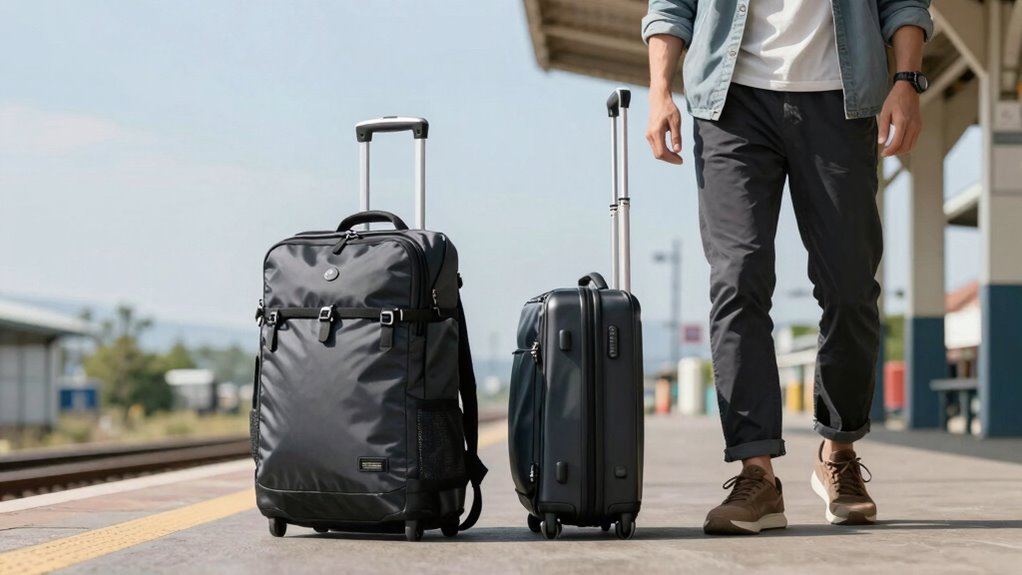
Traveling with fewer bags can greatly reduce the stress of packing and maneuvering airports. When you embrace a minimalist lifestyle, you focus on what truly matters, making travel more enjoyable. Less baggage means fewer worries about lost items or extra fees. It also encourages travel mindfulness, helping you stay present and appreciate each moment. Here are four benefits:
- Increased freedom to move quickly and easily through crowded spaces
- Reduced physical strain from carrying heavy luggage
- More space in your accommodations for comfort and relaxation
- Enhanced mental clarity by avoiding clutter and overwhelm
Frequently Asked Questions
Can the Two-Bag Rule Be Applied to Business Trips?
Yes, you can apply the two-bag rule to business trips by focusing on minimalist packing. Carry one bag with your business trip essentials like a laptop, chargers, and formal outfits, and use the second for personal items and casual wear. This approach helps you stay organized, reduces luggage weight, and streamlines your journey, making it easier to stay efficient and environmentally conscious during your trip.
What Are the Best Materials for Lightweight Travel Bags?
You should look for travel bags made from durable fabrics like ballistic nylon or high-denier polyester, which withstand wear and tear. Eco-friendly materials like recycled PET or cork are also excellent choices, offering sustainability without sacrificing strength. These materials keep your bag lightweight, durable, and environmentally conscious, making them ideal for frequent travelers. Prioritize these options to guarantee your bag lasts longer and reduces your ecological footprint.
How Do I Handle Toiletries While Packing Light?
When packing toiletries, opt for travel-sized containers to save space and meet airline regulations. Use multi-purpose toiletries, like a combined moisturizer and sunscreen, to reduce the number of items you carry. Transfer your essentials into clear, leak-proof bottles, and prioritize versatile products that serve multiple purposes. This way, you stay lightweight, organized, and prepared without sacrificing your needs during travel.
Is the Two-Bag Rule Suitable for Extended Trips?
Every journey is a new chapter, and the two-bag rule can work for extended trips if you adapt it. You’ll want to contemplate seasonal packing and cultural considerations, selecting versatile clothing and essentials that fit different climates and customs. Think of it as packing smart, not heavy—so you can embrace the adventure without being weighed down. Yes, with careful planning, this rule suits longer travels, making your experience smoother and more enjoyable.
How Can I Stay Organized With Only Two Bags?
You can stay organized with just two bags by practicing minimalist packing and focusing on versatile items. Use packing cubes and compression bags to maximize space and keep your travel organization on point. Prioritize essentials, limit duplicates, and plan outfits ahead of time. This way, you maintain order, easily access what you need, and guarantee your two bags hold everything necessary for your trip without clutter.
Conclusion
By embracing the two-bag rule, you’ll travel lighter and leave a smaller footprint—like a feather drifting on the breeze. It’s about more than just packing less; it’s about gaining freedom, reducing stress, and making your adventures more enjoyable. So, start small, stay mindful, and watch how effortless your trips become. With each trip, you’ll feel lighter and freer, as if you’re gliding through your journey on wings of simplicity.