To plan your mobile solar input effectively, focus on choosing high-efficiency batteries with low self-discharge and fast charging capabilities. Position your panels for maximum sunlight exposure, facing south or north depending on your hemisphere, and use adjustable mounts for seasonal tweaks. Incorporate MPPT charge controllers to optimize energy transfer, keep everything clean and well-maintained, and avoid shadows. This key setup guarantees reliable power on the go—continue exploring for more tips to perfect your system.

Get travel and outdoor gear delivered free with Prime
- Fast, free delivery on millions of items
- Prime Video, Amazon Music and more included
- Member-only deals all year
Key Takeaways
- Prioritize high-efficiency batteries like lithium-ion with low self-discharge for reliable energy storage.
- Position solar panels with minimal shading and face south (or north in the southern hemisphere) for maximum sunlight.
- Use adjustable mounts to optimize panel angles seasonally and adapt to changing conditions.
- Incorporate MPPT charge controllers to maximize energy transfer from panels to batteries.
- Regularly maintain and clean components to sustain system efficiency and prevent energy loss.
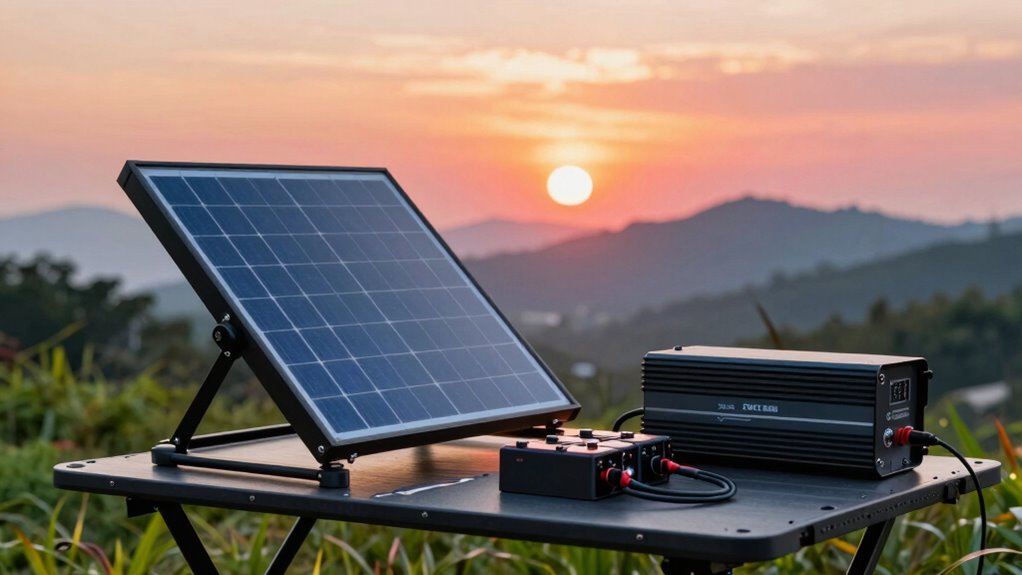
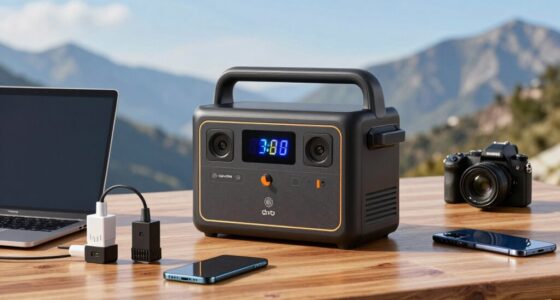
Planning your solar input for mobile setups can be tricky, but with the right approach, you’ll guarantee reliable power wherever you go. The key lies in understanding how to maximize battery efficiency and solar panel placement. When you’re on the move, every watt counts, so making sure your system is as efficient as possible helps you get the most out of the sun’s energy. Battery efficiency directly impacts how long your power supply lasts. Modern batteries with advanced chemistry, like lithium-ion, can store more energy while charging faster and losing less over time. When selecting batteries, look for ones with high charge/discharge efficiency and low self-discharge rates. This guarantees you’re not wasting energy during storage or transfer, which is vital when sunlight is limited or inconsistent.
Maximize battery efficiency with lithium-ion cells for reliable, long-lasting power on the move.
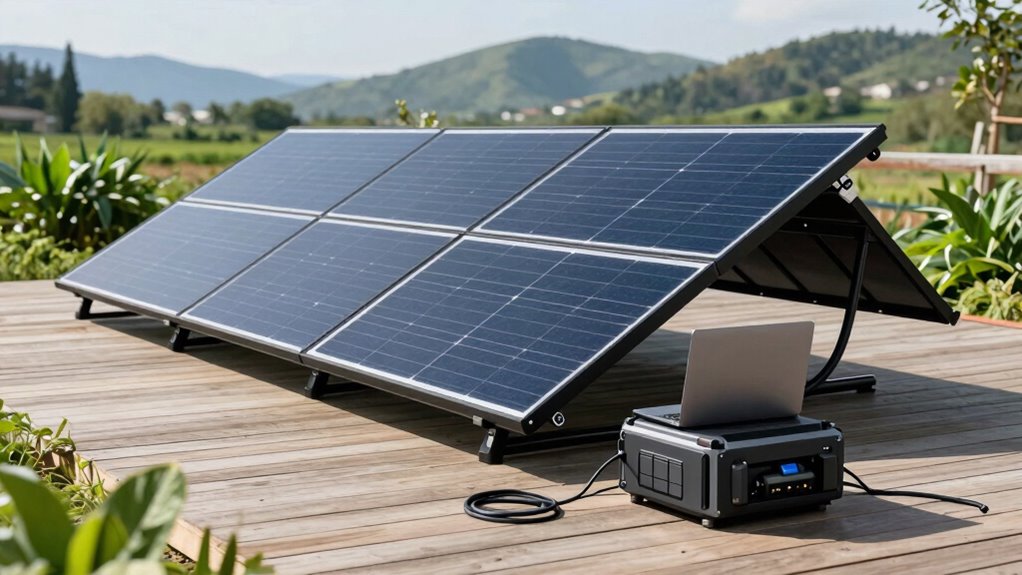
Solar panel placement is another essential factor. You want your panels to receive maximum sunlight, which means positioning them in an area with minimal shading throughout the day. Think about the orientation and tilt angle—generally, panels should face the sun directly, which in most locations means facing south (north if you’re in the southern hemisphere). Adjust the tilt based on your latitude to maximize exposure during peak sunlight hours. It’s also wise to consider adjustable mounts, so you can modify the angle seasonally or depending on your location. Proper placement not only boosts your panels’ efficiency but also helps prevent shadowing from nearby objects or your vehicle, which can greatly reduce energy generation. Additionally, understanding the importance of solar panel placement can significantly improve your overall setup’s performance.
To further improve your setup, keep an eye on your system’s overall efficiency. Use MPPT (Maximum Power Point Tracking) charge controllers—they adjust their input to match the best voltage and current, ensuring your batteries get the most energy possible from your panels. Combine this with well-placed panels and high-quality batteries, and you’ll create a robust, reliable system. Remember, consistency in maintenance—like cleaning dust or debris from your panels and checking connections—also helps keep your system running smoothly.
Ultimately, planning your solar input with a focus on battery efficiency and solar panel placement guarantees you won’t be left powerless during your adventures. It’s about smart choices—selecting the right batteries, positioning your panels thoughtfully, and maintaining your system regularly. When you do this, you’ll enjoy a dependable energy source that keeps your mobile setup powered up, no matter where the road takes you.
lithium-ion portable solar battery pack
As an affiliate, we earn on qualifying purchases.
As an affiliate, we earn on qualifying purchases.
Frequently Asked Questions
How Does Weather Affect Solar Panel Efficiency in Mobile Setups?
Weather considerably impacts your solar panel efficiency in mobile setups. Cloud cover reduces sunlight intensity, meaning your panels generate less power when the sky is overcast. Sudden weather changes, like rain or snow, can also block sunlight and cool panels, decreasing their efficiency. To maximize output, you should monitor weather forecasts regularly, position your panels ideally, and be prepared for fluctuations caused by varying sunlight intensity and cloud cover.
What Are the Best Portable Solar Panel Options for On-The-Go Use?
Did you know portable solar panels can generate up to 100 watts, enough to power small devices? For on-the-go use, choose lightweight, foldable options like the Renogy 100 Watt Portable Solar Panel or Jackery SolarSaga. These panels provide reliable portable power and integrate smoothly with solar storage solutions, ensuring you’re always ready for adventures or emergencies. They’re compact, efficient, and perfect for maximizing solar input in mobile setups.
How Do I Calculate the Total Solar Power Needed for My Devices?
To calculate the total solar power you need, start by checking your devices’ power consumption in watts. Then, consider your battery capacity to determine how long you’ll run them. Add up each device’s wattage, multiply by the hours you’ll use them, and compare that to your solar panel’s output. This way, you guarantee your solar setup supplies enough power while maintaining adequate battery capacity for your mobile needs.
Can Flexible Solar Panels Be as Effective as Rigid Ones?
Flexible solar panels can be quite effective, but they generally don’t match the rigid ones in efficiency. You’ll find flexible panels excel in durability and adaptability, especially on curved surfaces, making them ideal for mobile setups. However, if maximum energy output is your priority, rigid panels often provide higher efficiency. Consider your environment and needs—flexible panels offer durability, but rigid panels deliver better performance.
What Maintenance Is Required for Mobile Solar Systems?
Oh, the joy of maintenance—it’s almost like a vacation, right? You should regularly clean your solar panels to maximize efficiency, check connections, and monitor battery lifespan. Don’t forget to perform system troubleshooting if you notice performance issues. Keep an eye on battery health to extend their life, and guarantee all components stay in tip-top shape. A little upkeep keeps your mobile solar system running smoothly and avoids costly surprises.
Conclusion
By planning your solar input carefully, you guarantee your mobile setup stays powered no matter where you go. For instance, imagine a van lifer who initially struggled with insufficient energy during long trips. After optimizing their solar system based on real usage data, they now enjoy reliable power, even off-grid. Taking a strategic approach saves you time and money while keeping your devices running smoothly—making every adventure more enjoyable and stress-free.
Halloween Picks
halloween
As an affiliate, we earn on qualifying purchases.