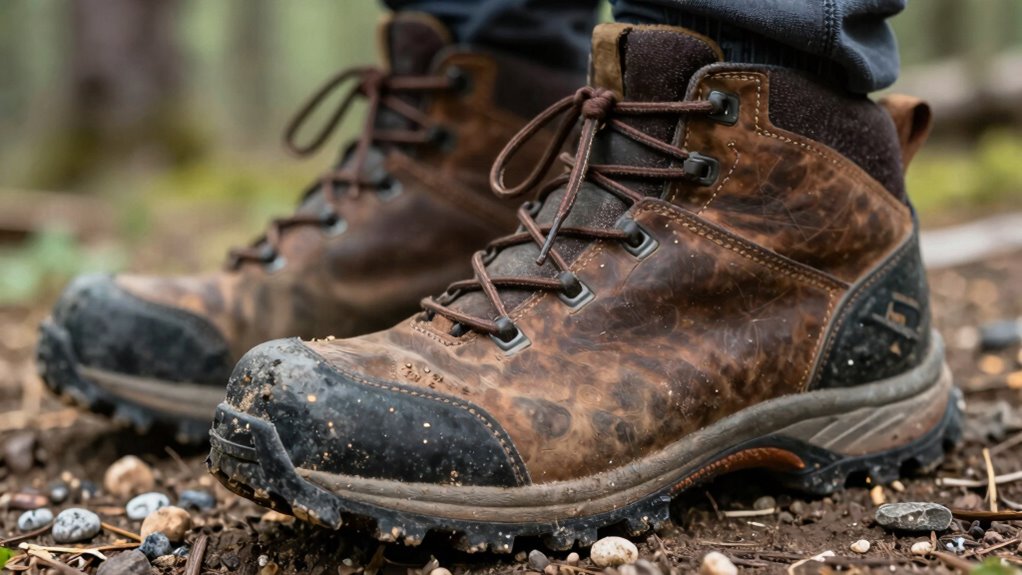
To make your trail shoes last longer, focus on proper maintenance and care. Regularly clean off dirt and mud gently, and let them dry naturally away from direct heat. Inspect for signs of wear and reinforce high-stress areas like toe caps and heel counters. Rotate between pairs to reduce overall wear, and store them in a cool, dry place. Effective upkeep extends their durability, helping you get the most from each trip—stay tuned for more tips to maximize their lifespan.
Key Takeaways
- Regularly clean and dry shoes properly to prevent material degradation and maintain waterproofing.
- Inspect for signs of wear and reinforce high-stress areas like toes and heels.
- Rotate multiple pairs of trail shoes to distribute wear evenly.
- Use appropriate waterproofing treatments and store shoes in a cool, dry place.
- Replace worn-out insoles and laces promptly to support longevity and comfort.
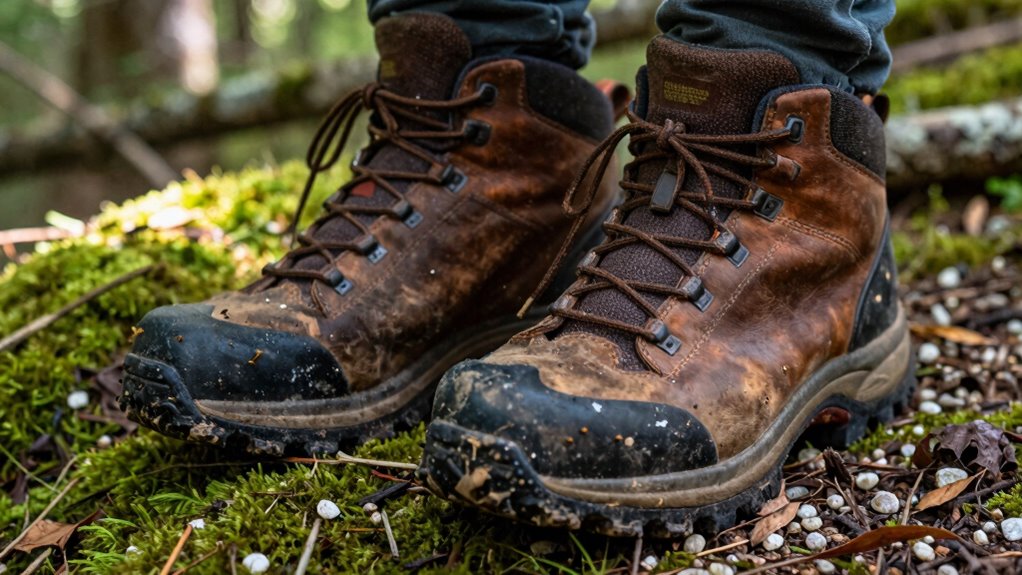
When it comes to trail footwear, understanding how long your shoes will last is key to guaranteeing safety and performance on rugged terrains. The durability of your shoes largely depends on the shoe material resilience, which varies based on the materials used in the shoe’s construction. Leather tends to last longer and withstand rough conditions better than some synthetic fabrics, but it requires regular maintenance to keep its strength. Synthetic materials, like nylon or mesh, are lightweight and breathable but can wear out faster if exposed to abrasive surfaces or excessive moisture. Knowing the material composition of your shoes helps you anticipate their lifespan and choose the right footwear for your adventures. Proper footwear maintenance plays a vital role in extending your trail shoes’ longevity. After each trip, take the time to clean off mud, dirt, and debris, as these can degrade materials over time. Use gentle brushes and avoid harsh chemicals that might weaken the fabric or compromise waterproof membranes. Dry your shoes naturally away from direct heat sources, which can cause materials to crack or warp. Regularly inspecting your shoes for signs of wear—such as thinning soles, frayed laces, or damaged uppers—allows you to address issues early before they become major problems. Reinforcing areas prone to abrasion, like toe caps or heel counters, can prolong their lifespan and prevent unexpected failures during a hike. Additionally, proper footwear maintenance includes managing the shoe’s structural components. Replace worn-out insoles to maintain proper support and comfort. Rotating between multiple pairs of trail shoes can reduce overall wear on each pair, giving them extra time to recover from heavy use. When storing your shoes, keep them in a cool, dry place away from direct sunlight, which can weaken materials over time. Applying waterproofing treatments periodically helps preserve the shoe’s water resistance, especially if your shoes are exposed to rain or muddy conditions frequently. Using appropriate cleaning methods and following manufacturer guidelines can further extend their lifespan. These simple steps not only improve comfort and safety but also considerably extend the functional life of your trail footwear.
Understanding shoe materials helps predict durability and select the best footwear for rugged adventures.
Ultimately, understanding how long your shoes will last involves paying close attention to shoe material resilience and practicing proper footwear maintenance. By selecting shoes suited to your terrain and taking good care of them, you maximize their performance and safety on every trip. Remember, investing a little time in regular upkeep can save you money in the long run and ensure your shoes remain dependable through countless adventures. Keeping your trail footwear in good shape means longer-lasting shoes that support you on every rugged step of your journey.
Frequently Asked Questions
How Can I Tell When My Trail Shoes Need Replacing?
You can tell your trail shoes need replacing by checking shoe wear indicators like worn-out tread, thinning soles, or exposed midsole. If you notice decreased grip or noticeable discomfort, it’s time for a replacement. Typically, consider a replacement timeline of every 300-500 miles, depending on terrain and usage. Regularly inspecting your shoes ensures you avoid injury and maintain ideal performance on your trips.
Are There Specific Brands Known for Longer-Lasting Trail Footwear?
Some brands are known for longer-lasting trail footwear because of their strong reputation and high material quality. Brands like Salomon, Merrell, and La Sportiva consistently produce durable shoes that stand up to tough terrain. You’ll want to look for those with reinforced toe caps, sturdy midsoles, and quality uppers. Investing in reputable brands guarantees your shoes last longer, saving you money and keeping you comfortable on your adventures.
Can Cleaning and Maintenance Significantly Extend Shoe Lifespan?
Yes, cleaning and maintenance can markedly extend your shoe lifespan. Regularly wash your trail shoes, remove dirt, and inspect for damage. Use shoe repair techniques to fix worn-out soles or torn fabric promptly. Applying waterproofing techniques helps prevent water damage, keeping your shoes in good condition longer. Proper care minimizes wear and tear, ensuring your trail footwear stays durable and supportive on all your adventures.
What Are the Best Storage Practices for Trail Shoes?
Like a treasure chest, store your trail shoes in a cool, dry place away from direct sunlight to preserve their integrity. Use shoe material care to maintain flexibility and prevent cracking. Avoid storing them in damp or humid areas, which can cause mold. A well-ventilated closet or shoe rack works best. Keep them clean and dry before storage, ensuring your footwear stays ready for your next adventure.
How Do Different Terrains Affect Shoe Durability Over Time?
Different terrains impact your shoes’ durability; rocky terrain causes quicker sole wear, while muddy trails can lead to faster material breakdown. You might find that shoes on rocky paths need more frequent sole replacements, and wet, muddy conditions accelerate fabric erosion. To extend shoe life, clean and dry your footwear promptly after muddy hikes, and consider trail-specific shoes designed for these challenging terrains. Proper care helps your shoes last longer on diverse adventures.
Conclusion
To make your trail footwear last longer, take good care of them by cleaning and drying properly after each trip. Did you know that on average, hikers replace their shoes every 500 miles? By following these tips, you can extend that lifespan and save money in the long run. Remember, investing a little time now keeps your shoes in top shape, so you can enjoy more adventures without worrying about unexpected wear and tear.